Book review

The great Soviet gameshow

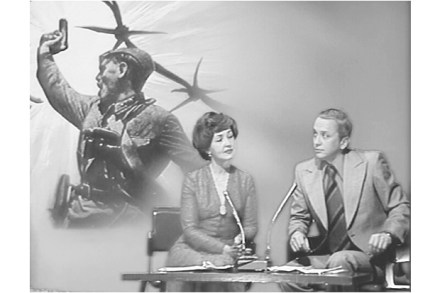
In the opening chapter of her history of Soviet Central Television, Christine E. Evans observes two Russian televisual displays of 2014. February saw the opening ceremony of the Sochi Winter Olympics — which sought to depict a millennium of national history using glitter and gameshow grandiosity. April brought the stern, but no less theatrical, Direct Line with Vladimir Putin — an annual phone-in — during which the president celebrated Crimea’s annexation with an orgy of televisual patriotism. Although more glitzy than their Soviet-era equivalents, both can be seen as displays of continuity in Russian broadcasting, rather than incidences of invention.

Meaty matters

I’m writing this in the Highlands. Through the window I can see Loch Maree, being ruffled into white-tipped skirls by the westerly wind and a squall of cloud that’s shrouding Slioch, the Place of the Spears. The Munroes are steeples at the end of the water, a bastion reminder of Scotland’s eternal war between the fastness and the wetness. I’m up here for the stalking. I come every year. I haven’t taken a shot for some time. I love the stalk: stalking is to walking what opera is to whistling. And I also love going out with people who have never done it before, or for whom pulling the trigger is still the pinch-point of life, death and everything.

Highly undesirable

Most of us just live in cities, or travel to see them and take them pretty much as they come, for good or bad, save for moaning about how much better they used to be. Does anyone ever say of their home city how greatly it has improved? But aside from all the travel writers, there is a cadre of critics and academics which is endlessly fascinated by cities as physical organisms. This field of study is very distinct from, and considers itself rather grander than, mere architecture, from Stalinist housing estates to the wreckage of post-industrial Detroit. Its status has increased since the moment was reached, some time in the early 21st century, when finally more of the human race lived in cities than in agricultural communities.

Fierce indignation

In an autobiographical note written late in his life, Jonathan Swift set down an astonishing anecdote from his childhood. When he was a baby in Dublin, he was put into the care of an English wet nurse, and one day she heard that one of her relatives back in England was close to death. Hoping for an inheritance, the wet nurse jumped on a boat back to Whitehaven in Cumbria, taking the infant Swift with her. ‘When the Matter was discovered,’ Swift wrote, ‘His Mother sent orders by all means not to hazard a second voyage, till he could be better able to bear it.’ So the wet nurse kept Swift in England for two or three years, and by the time he returned home, Swift recalled, he could read the Bible from cover to cover.

Special K | 20 October 2016

Our collective attention spans may not be as short as is widely cited, but they are pretty short. Take the case of the art historian Kenneth Clark. If anyone remembers anything about him, it is as the presenter of Civilisation, a TV series of the 1960s that rocketed him to stardom, and the author of the accompanying book, which sold over a million copies. He died in 1983 when he was a mythical figure, and any attempt to show his human dimensions was anathema, as I discovered to my cost. My own biography of Clark was published a year later. Nowadays, one can hardly get anyone to take him seriously. One reviewer dismissed Civilisation as a period piece, the narrator ‘a patrician’ in a tweed suit. Another spoke of ‘a figure of derision’.

A matter of life and death | 20 October 2016

Shades of The Master and Margarita haunt Rabih Alameddine’s sixth book, in which Jacob, a Yemeni-born poet with a day job in IT, battles with drugs, insanity, visions of the Devil and a variety of Christian saints while trying to come to terms with the fallout from the Aids crisis. As that crisis wore on, ignored by the powers-that-be, Jacob’s lover and all of his closest friends died, leaving him with an apartment full of ashes and an eye-watering variety of instructions for their disposal. Yet, while echoes of Bulgakov’s masterpiece inform The Angel of History from first to last (there is even a cat named Behemoth), Alameddine has created a scintillating, original work whose moral complexity and detail of observation are wholly contemporary and entirely his own.

In the company of queens

Steven Runciman, the historian of Byzantium, is a puzzling figure. He was an outrageous snob, once remarking that he would have enjoyed being the widower of a Spanish duchess, which would have made him a dowager duke in Castile. He particularly relished the company of queens (of the female variety), and he took the Queen Mother out to lunch once a year at the Athenaeum. But as Minoo Dinshaw shows in this richly original life, the snobbery was a subtle pose. Runciman was a tease who liked to play games with people, and he made a career out of being enigmatic. His family were wealthy shipbuilders in Northumberland. His parents were both dedicated public servants — his father was a minister in the last Liberal governments.

Apples for our eyes

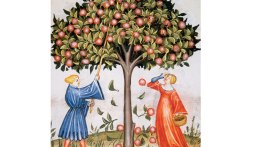
Apple Day, on 21 October, is a newish festival, created in 1990, by the venerable organisation, Common Ground. Intended to be a celebration of the apple, its purpose is also to raise awareness of the importance of apples in landscape, ecology and culture. All over the country there will be many revels where you can taste apple varieties, jellies, chutneys and drinks; try apple-bobbing, take apples from your own garden for identification by experts, buy apple trees and all sorts. These are charming festivities, much better behaved than the ancient cider-makers’ ritual, wassailing.

Time is of the essence | 20 October 2016

Christopher Priest, now 73, has been quietly turning out oddly mesmerising fiction for nearly half a century but, like the protagonists of his 2005 novel The Glamour, somehow has the knack of never quite being noticed. It is true that he has devoted admirers; he has won awards; he was on Granta’s original list of best young novelists — scraping in on age, not quality — and Christopher Nolan filmed, cleverly, his even cleverer novel The Prestige (1995), which was about Victorian illusionists and duplicity.

A bit player in the great drama

There’s a glorious scene in Astrid Lindgren’s first Pippi Longstocking book in which her fearless, freckled heroine strides to the centre of a circus ring and briskly lays out the World’s Strongest Man. Like most of the adults who expect to control her, he quickly learns that his inflated size, age and title are no match for the child’s bold pin-wielding attitude. As a little fan myself in the early 1980s I probably giggled as the strongman toppled. But reading it to my own children this summer I also felt a deep lurch of sadness. The strongman’s name was Adolf, and the book (published in 1945) was written as an equally ridiculous Adolf was sending train loads of bright little Pippis to their ‘final solution’.

Intoxicated with ink

One of the charms and shortcomings of biography is that it makes perfectly normal situations sound extraordinary. According to Michel Winock, Gustave Flaubert (1821–80), the author of Madame Bovary and L’Éducation sentimentale, contracted ‘an early and profound aversion to mankind’. To Gustave the schoolboy, man was nothing but a coagulation of ‘mud and shit… equipped with instincts lower than those of the pig or the crab-louse’. This might have been the influence of his freethinking father, an eminent Rouen surgeon, but perhaps it was just the spirit of the age. The Napoleonic adventure was over; the sun of Romanticism had set.

A study in alienation

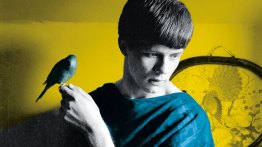
Looking for the Outsider is the biography of a novel, from conception through publication to critical reception. Alice Kaplan’s life-story of L’Étranger (The Outsider in English translations, The Stranger in American) is a lovely work, lucid and thought-provoking. It makes one feel afresh the sheer strangeness of Albert Camus’s imagination. All genius is, perhaps, freakish; but Camus’s sprang from peculiarly unpromising soil. He was born in a white working-class area of Algiers. His father was killed in the battle of the Marne before he was one. His mother was deaf and illiterate, with a vocabulary of about 400 words; she worked as a cleaner. His uncle was also deaf and nearly mute, and made barrels.

Courting the Iron Lady

This is a strange book. Peter Stothard, the editor of the TLS, is packing up his office. It is a year after Margaret Thatcher’s death, and Murdoch’s Wapping site is being destroyed to make way for new, expensive flats. As the national memory of Thatcher fades, and transmutes into myth and caricature, so the physical scene of one of the seminal battles of her time, where the old print unions and their rackets were destroyed, crumbles into dust. Into his room comes Miss R, a young and mysterious historian, to interview him for her thesis about Thatcher’s courtiers.

A parable of good and evil

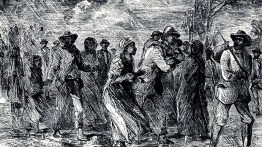
It is difficult to write well about slavery. As with the Holocaust, the subject’s horrific nature lends itself too easily to mawkishness. This tendency is one that Colson White-head consummately avoids in this impressive novel. The Underground Railroad, set before the American civil war, tells the story of Cora, a young slave on a cotton plantation in Georgia, and her escape with a fellow slave, Caesar, via the Underground Railroad, a secret network of routes and activists that enabled slaves to reach the free states of America’s north. It tells it beautifully.

England’s unloved king

Aethelred the Unready (c.968—1016) has not, as Levi Roach acknowledges, enjoyed a good press. In recent times there may have been some attempt in academic circles to take a more measured view of his calamitous reign, but the fact remains that if most us would have trouble saying quite what he did or did not do, or even what ‘unraed’ actually means, we all know how it ended. ‘And that is called paying the Dane-geld;’ wrote Kipling, But we’ve proved it again and again, That if once you have paid him the Dane-geld You never get rid of the Dane. On the face of it the revisionists have an uphill battle, too, because when Aethelred came to the throne as a child the kingdom was looking in pretty good shape.

Too good to be true

The McNulty family in the novels of Sebastian Barry have a definite claim to be one of the unluckiest in all fiction. After serving with the Brits in the first world war, the main character in The Where-abouts of Eneas McNulty is branded a traitor to Ireland, and spends the rest of his days in bleak and terrified exile. In The Secret Scripture, his sister-in-law Roseanne is locked up for life in a Sligo mental asylum for having an illegitimate baby (that’s taken from her). In The Temporary Gentleman, Eneas’s brother Jack is an ageing alcoholic reflecting on the failure of virtually everything he’s ever done.

He blew his mind out in a car

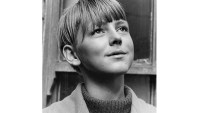
There was a touch of Raymond Radiguet, the young literary sensation of 1920s Paris, about Tara Browne. In life poetically beautiful, poetry-imbued, tender and trusting, deliciously precocious and eerily presumptive, androgenous in looks but not desires, Tara died —‘without knowing it’, as Cocteau said of Radiguet — tragically, but given his penchant for very fast cars, unsurprisingly young. And, like Radiguet, having touched the lives of those who knew him with a kind of iridescence that remained with them more than half a century later.

Paintbrushes at the ready

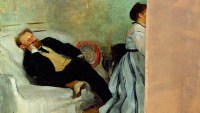
When the old curmudgeon Edgar Degas died in 1917, a stunning trove of works by Edouard Manet — eight paintings, 14 drawings and 60 prints — was discovered in his studio. There, too, was a portrait of Manet and his wife Suzanne, painted by Degas 50 years earlier. But its right-hand third was missing — which included half of Suzanne’s body and all of the piano she was playing. For some reason, Manet had put a knife through the canvas and sent Degas packing with what remained. The duo’s relationship is one of four ‘friendly rivalries’ considered by the Boston Globe art critic, Sebastian Smee, in his new book (Matisse vs Picasso, Pollock vs de Kooning and Bacon vs Freud being the others).