Book review

Rifling through a writer’s desk

Frantumaglia isn’t strictly a book by Elena Ferrante. Frantumaglia isn’t strictly a book at all. It’s a celebration of the life of the novel and a manifesto for the death of the author, told in a collection of interviews, letters from journalists requesting interviews, letters within letters, stories within letters, and letters from Ferrante’s editor in which the idea of publishing all these letters, dating from 1991 to the present day, is initially proposed. The whole caboodle is a dizzying ‘jumble of fragments’, ‘a miscellaneous crowd of things’, a mass of ‘contradictory sensations’ which ‘make a noise in your head’.

When reasoning goes wrong

It’s the intellectual bromance of the last century. Two psychologists — Danny, a Holocaust kid and adviser to the Israel Defence Forces, and Amos, a former child prodigy and paratrooper — meet at the end of the 1960s, and sparks immediately begin to fly. They spend countless hours locked in rooms together at Hebrew University and elsewhere, and eventually co-write a series of papers that will revolutionise the field, and lead to the surviving partner being awarded the Nobel prize in economics. Not, however, before this extraordinary partnership has itself fallen apart, like a love affair, in regret and mutual recrimination.

For king and countryside

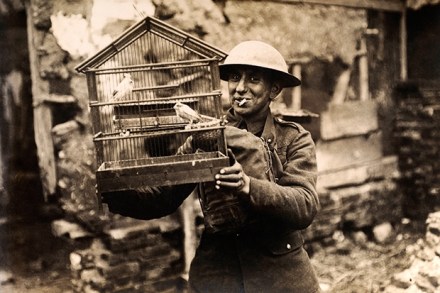
In July 1915 the poet Edward Thomas enlisted as a soldier with the Artists’ Rifles, even though, at the age of 37, he had no obligation to do so. When his friend Eleanor Farjeon asked why, he scooped up a handful of earth and replied: ‘Literally, for this.’ John Lewis-Stempel’s new book is persuasive that Thomas and his contemporaries’ love of the natural world informed both their motivation to fight and their conduct during the first world war. Theirs was the prelapsarian Britain of Thomas’s poem ‘Adlestrop’, which records a brief, unscheduled halt aboard a steam train on a hot June afternoon in 1914: peaceful, inviolate, chiming with birdsong, loved and understood by a generation of young men who knew willowherb from meadowsweet.

Blackouts and white coats

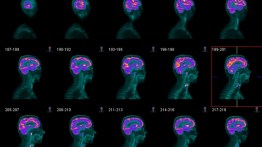
In the cult Steve Martin film The Man With Two Brains, a doctor falls in love with a surgically removed brain. The object of his desire (fizzing, if I remember rightly, in a demijohn of formaldehyde) makes for an enduring gothic comedy of the mind. On the movie’s release in the early 1980s, neuroscience was still in its infancy. Men in white coats were cutting up monkey brains and their laboratories smelled of monkey urine. In recent years, however, neuro-imaging has changed the study of the human mind completely. Rainbow-coloured images on the scanner screen reveal our most precious and mysterious organ in all its alien complexity. Computer imaging may yet fathom the mystery of epilepsy.

Joking apart | 24 November 2016

A horse walks into a bar.… David Grossman takes the opening line of an old joke for his title, which could be a signal of comedy to come; and indeed he strews his novel’s pages with punchlines — good, bad-taste and groan-worthy. But this is gallows humour at its darkest: Grossman beckons us into a basement comedy club in an Israeli town, and uses the world of stand-up to explore not jokes but the nature of guilt. We stick with the comedian Dovaleh G from the moment he stumbles on to the stage till he exits two hours later. There are Israeli in-jokes — ‘How do paratroopers commit suicide? Jump off their ego onto their IQ’ — but long before the end, laughs have faded and applause has given way to hostility.

Falling out with Love

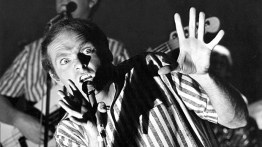
Volcanic fallings out within bands are an ever-recurring motif in the history of rock music. There’s an obvious reason for this: most musicians pick up an instrument in the first place not because they hear the call of Euterpe but because they’re sailing on the HMS Ain’t Gettin’ None. They dream of fame, fortune and the cream of international crumpet, so they form a band with like-minded fellows — and then find that not all musos are created equal. One member will inevitably become the focus of female attention. Usually it’s the lead singer, who will often be the prettiest; imagine how the three ugly Doors felt, expertly playing their instruments while teenage girls screamed with lust at drunk, shambling, beautiful Jim Morrison.

A choice of art books | 24 November 2016

Suitably for a year so full of cataclysms and disturbing portents, 2016 is the quincentenary of the death of Hieronymus Bosch. He was of course the supreme painter of hell, with choking darkness, livid flames and the most grippingly monstrous menagerie of devils in the history of art — duck-billed figures on skates, demons with bat’s wings, lizard’s claws and cat’s whiskers. His panoramic vista of naked humanity inflamed by desire in ‘The Garden of Earthly Delights’ features giant birds and fruit, weird mineral formations, and — in one case — a couple making love in a cosy mussel shell.

Christmas cookbooks

New books by Raymond Blanc and Pierre Koffmann retell the truth that British food came back from the brink. If it were not for the émigré chefs, I hate to think what we would be eating in British restaurants now. Fishfingers à la King, with pea jelly ring? Such horrors existed, or let’s say they were perpetrated, in the 1970s, by Sainsbury’s recipe cards, the Good Housekeeping Institute and in the books of that serial offender Robert Carrier. An embarrassment of showboat dishes are in Anna Pallai’s 70s Dinner Party: The Good, the Bad and the Downright Ugly of Retro Food (Square Peg, £9.99).

A mystery, even to herself

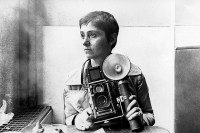
Armed with their tiny Leicas and Nikons, most of the great postwar ‘street’ photographers liked to be unobtrusive; they wanted to capture life unobserved. Garry Winogrand and Henri Cartier-Bresson haunted the city in search of the ‘decisive moment’. Somebody I know was photographed by Robert Doisneau, a very ghostly snapper. Doisneau entered the room and then left. His subject was baffled; he had not seen him take any shots at all. And then along came Diane Arbus. She was small but very noticeable, partly because of her childlike good looks but mainly because of the big flash and brick-heavy and breeze-block-sized Rolleiflex or Mamiya slung round her neck.

Pandora’s box

While I’ve read plenty of books worse than Television: A Biography, I can’t immediately think of any that were more disappointing. After all, here’s David Thomson — a film critic about whom it’s hard not to use the word ‘doyen’ — looking back on more than 60 years of TV viewing for what should be a magisterial summation of the whole medium. Yet, although some of his analyses of individual shows are as sharp as ever, the overall result is often contradictory, occasionally incomprehensible and at times plain weird. At first, it seems as if the main problem will merely be the traditional snootiness of the intellectual movie buff towards telly, and the damage it supposedly does to all of us by offering only mind-numbing reassurance.

Atlas shrugs

In his Forward Prize-winning collection of 2014, A Cartographer Tries to Map a Way to Zion, Kei Miller’s hero describes his craft thus: ‘My job is to imagine the widening/ of the unfamiliar and also/ the widening ache of it;/ to anticipate the ironic/ question: how did we find/ ourselves here.’ This bringing of the unfamiliar into scope looms large in three new collections of cartographic curiosities which tell us about places that never were, places we’ve never been and places we will never go to. Edward Brooke-Hitching’s beautifully illustrated The Phantom Atlas presents the stories of over 50 locations that unwarrantedly found their way on to maps.

A choice of first novels | 17 November 2016

Constellation by Adrien Bosc (Serpent’s Tail, £12.99) picks nimbly along the divide between fiction and non-fiction. It’s really a speculative group biography, telling the story of a Air France plane crash in the Azores in 1949, and the lives of the plane’s passengers, mostly (except for a quintet of migrating Basque shepherds) of an appropriately stellar socio-economic stratum.

Things fall apart | 17 November 2016

Ali Smith is that rare thing in Britain: a much-beloved experimental writer. Part of her attraction for readers is that she continually connects formal innovation and the freedom to reinvent a story with the freedom to reinvent the self. It’s a beguiling proposition that can make liberation seem like a matter of style. Following the success last year of How To Be Both, the most dazzling and accomplished of her novels, Smith planned to write a long-gestated novel quartet, its four volumes reflecting successive seasons — an idea that would allow her to pursue her fascination with what is perhaps the novel’s greatest subject: time.

Christmas stocking fillers

The gift books come in all shapes and sizes this year: big, little, tiny, huge, long, short, fat and thin, rather like their writers, I would guess. Biggest and fattest of them all is The Art of Aardman (Simon & Schuster, £16.99). This is a coffee-table book, pure and simple, that celebrates 40 years of animation at Aardman Studios, who make Wallace & Gromit, Shaun the Sheep and others, and I would suggest that you have known since the beginning of this sentence whether or not you want this book for Christmas. It’s everything you would wish for from such a volume, featuring stills from the films, drawings from the animators’ sketchbooks, portraits of sets, technical drawings for props, manifold character studies and very, very few words indeed.

A fateful squiggle on the map

When turbaned warriors from Daesh (or Isis) advanced on Raqqa in Syria two years ago, they whooped wildly about having ‘broken the Sykes-Picot Agreement’. They were celebrating athe destruction of national frontiers which had stood for nearly a century, since the fall of the Ottoman empire in 1918. They were also venting their spleen against the two villains (as they saw it) of the piece — one British, Sir Mark Sykes, and the other French, François Georges-Picot, who, after months of diplomatic haggling, had drawn metaphorical lines in the desert sand to reach their secret 1916 agreement apportioning Ottoman lands and creating the modern Middle East. In doing so, Sykes and Picot set aside promises of an Arab homeland made to Sharif Hussein of Mecca.

Figures in a landscape | 10 November 2016

Timothy Hyman’s remarkable new book makes the case for the relevance of figurative painting in the 20th century, a period effectively dominated by modernist abstraction. He identifies an alternative tradition of potent human-centred painting, coming out of Cubism and Expressionism and tracing its lineage through Chagall and Leger, the Italians Carlo Carra and Mario Sironi, the Germans Max Beckmann, Otto Dix and George Grosz, to Stanley Spencer, Edward Burra and William Roberts. Hyman claims many of the great independent artists for his argument — Balthus, Kirchner, Bonnard, Ensor — and registers them as resistance fighters in the war of influence and received opinion.

A very special relationship

You learn startling things about the long entanglement of the British with Spain on every page of Simon Courtauld’s absorbing and enjoyable new book, which is not a travelogue but a collection of historical vignettes arranged geographically. Did you know, for instance, that the first Spanish football team was founded by two Scottish doctors working for Rio Tinto in Huelva, and that in 1907 a team of seminarians from the English College in Valladolid defeated one representing Real Madrid? Or that the first visit by a reigning British monarch to Spain occurred when Queen Victoria went to have lunch with Queen Maria Cristina at the Aiete Palace in San Sebastián, travelling by train from Biarritz and returning the same afternoon?

Worse than Big Brother

The California novelist T.C. Boyle has often taken true stories and created alternative histories, from John Harvey Kellog and the birth of the breakfast cereal in The Road to Wellville to Alfred Kinsey and the creation of sexology in The Inner Circle. This might draw comparisons with James Ellroy, Boyle’s exact contemporary, except that where Ellroy aims at the very darkest version of a tabloid reality, Boyle takes a New Age perspective conveyed though whimsy and surrealism. Ellroy, of course, was born in California while Boyle chose to live there. He is a native of the culture rather than the territory. This is a problem in The Terranauts, where the assumptions and aspirations of a group of scientists inside a giant geo-desic dome are left unexplained.