Stephen Robinson

South Africa is a breath of fresh air compared to Britain

From our UK edition

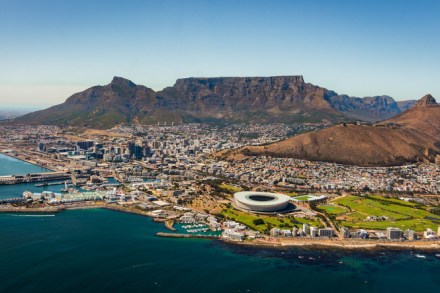
You only realise how depressing it has become to live in Keir Starmer’s Britain when you land in Cape Town towards the end of an interminable northern winter. Your mood immediately lifts – and it’s not only because of the warm ocean air or the diamond sky above Table Mountain. There is a contented buzz about the place.  Take your seat in a bar or restaurant in one of the coastal suburbs spread out around either side of the Cape peninsula, and the mood is upbeat and relaxed. The multi-racial staff are young and cheerful, diligently going about their business. No one is grumbling about the price of energy. The proprietor won’t be telling you how he is having to lay off half the waiting staff because of Rachel Reeves’s National Insurance raid.
Labour MPs would be mad to ditch Keir Starmer

From our UK edition

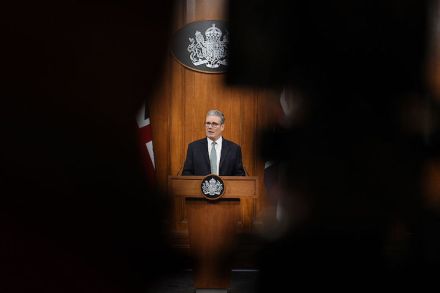
Keir Starmer used to be our MP and I have always had a soft spot for the blinking dafty ever since I wrote to him at the height of the antisemitic triumphalism of the Corbyn era. I warned him of the strength of feeling in our corner of north London, and suggested he be careful if he planned to come canvassing down our mews. Our elderly Jewish neighbour, like Starmer a keen Arsenal man, had put me on standby to run any Labour activists up the hill to Royal Free A&E should they take their chances by knocking on his front-door. Pretty much everything is going the way of Labour’s new intake of mulish left-wing backbenchers To his credit, Starmer replied to my email with more than boilerplate.

Fraud victim? Don’t bank on getting your money back

From our UK edition

Lloyds Bank has been running a new advertising campaign which updates its long-standing black horse corporate branding. The horses no longer thunder along a beach, but interact with people who we assume are actual or potential customers. The soothing payoff slogan goes: ‘Lloyds Bank. By your side.’ The latest episode features a girl who slightly puts me in mind of our 17-year-old daughter. She happens to bank with Lloyds, but there the happy parallel ends. On a Saturday afternoon in March, a person unknown withdrew £440 from our daughter’s account via an ATM. At that precise time, our daughter was playing her clarinet during an audition for a London orchestra.

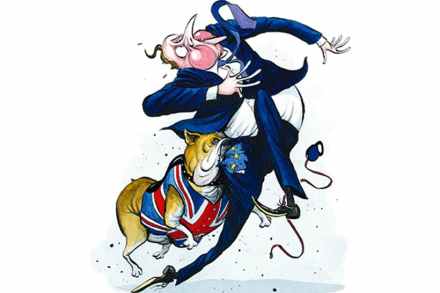
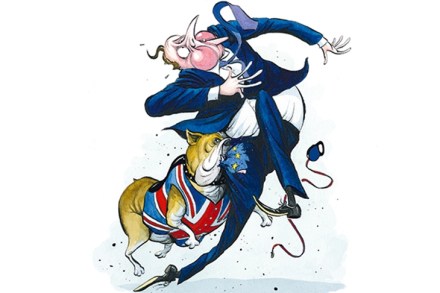
Brexit means Boris: we need a leader who can cheer us up

From our UK edition

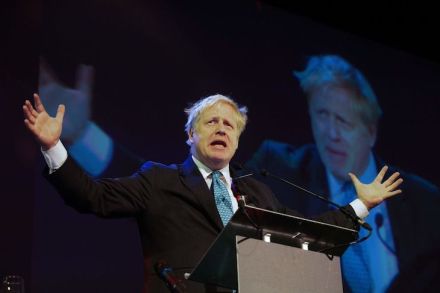
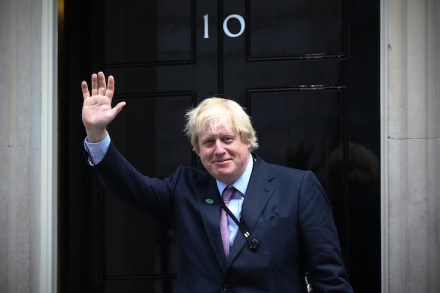
A few months before he died in 2007, Bill Deedes asked if I would come to see him at his home in Kent and bring Boris Johnson along with me. I was writing a biography of Bill at the time, and I knew he was miserable because he had broken his hip and could no longer come up to London. Boris jumped at the idea and I remember our lunch as the last time I saw Bill exuberantly happy. Boris knew instinctively what a 93-year-old journalist who was struggling to write his weekly column needed, and filled him in hilariously on the London political and media gossip. The only slight awkwardness came when Bill stressed his admiration for David Cameron, and Boris’s impenetrable eyes momentarily turned just a little beady.

Life after No. 10 is not what David Cameron was hoping for

From our UK edition

It can be cruel, the way politics plays out. At the very moment George Osborne was telling the bemused staff of the London Evening Standard that his working life in politics had obscured a passionate desire to become a newspaper editor, a familiar figure could be seen in the fresh meat department of the Whole Foods supermarket almost directly underneath the paper’s Kensington newsroom. That man was David Cameron, and inevitably someone with journalistic instincts spotted him, snapped him on her phone, and tweeted it. We congratulate ourselves on the ‘here today, gone tomorrow’ nature of British politics.

Life after No. 10 is not what David Cameron was hoping for | 2 November 2018

From our UK edition

It can be cruel, the way politics plays out. At the very moment George Osborne was telling the bemused staff of the London Evening Standard  that his working life in politics had obscured a passionate desire to become a newspaper editor, a familiar figure could be seen in the fresh meat department of the Whole Foods supermarket almost directly underneath the paper’s Kensington newsroom. That man was David Cameron, and inevitably someone with journalistic instincts spotted him, snapped him on her phone, and tweeted it. We congratulate ourselves on the ‘here today, gone tomorrow’ nature of British politics.

Brexit means Boris

From our UK edition

A few months before he died in 2007, Bill Deedes asked if I would come to see him at his home in Kent and bring Boris Johnson along with me. I was writing a biography of Bill at the time, and I knew he was miserable because he had broken his hip and could no longer come up to London. Boris jumped at the idea and I remember our lunch as the last time I saw Bill exuberantly happy. Boris knew instinctively what a 93-year-old journalist who was struggling to write his weekly column needed, and filled him in hilariously on the London political and media gossip. The only slight awkwardness came when Bill stressed his admiration for David Cameron, and Boris’s impenetrable eyes momentarily turned just a little beady.

Writing behind bars

From our UK edition

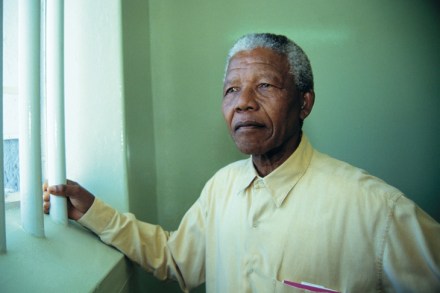
So much rubbish has been written over the years by those who feared, revered or pretended to know Nelson Mandela that it is useful, finally, to be able to read about him and the privations of his prison years in his own contemporaneous, understated prose. At more than 600 pages including annotations, The Prison Letters of Nelson Mandela might be regarded as a volume strictly for the liberation struggle obsessive. But this collection tells us more about the man — in his fearlessness, grace and occasional pomposity — than almost all of the good and bad books that have been written about him. The key point about Mandela, often overlooked, is that he was high born, the son of a chief of the Thembus.

Life after No. 10 is not what David Cameron was hoping for | 7 August 2017

From our UK edition

This article originally appeared in the Spectator in March. It is being reposted on Coffee House after the former Prime Minister was pictured letting his hair down at a festival It can be cruel, the way politics plays out. At the very moment George Osborne was telling the bemused staff of the London Evening Standard last week that his working life in politics had obscured a passionate desire to become a newspaper editor, a familiar figure could be seen in the fresh meat department of the Whole Foods supermarket almost directly underneath the paper’s Kensington newsroom. That man was David Cameron, and inevitably someone with journalistic instincts spotted him, snapped him on her phone, and tweeted it.

Cameron adrift

From our UK edition

It can be cruel, the way politics plays out. At the very moment George Osborne was telling the bemused staff of the London Evening Standard last week that his working life in politics had obscured a passionate desire to become a newspaper editor, a familiar figure could be seen in the fresh meat department of the Whole Foods supermarket almost directly underneath the paper’s Kensington newsroom. That man was David Cameron, and inevitably someone with journalistic instincts spotted him, snapped him on her phone, and tweeted it. Stephen Robinson and James Forsyth discuss Cameron and Osborne's diverging retirement plans: We congratulate ourselves on the ‘here today, gone tomorrow’ nature of British politics.

A race apart

From our UK edition

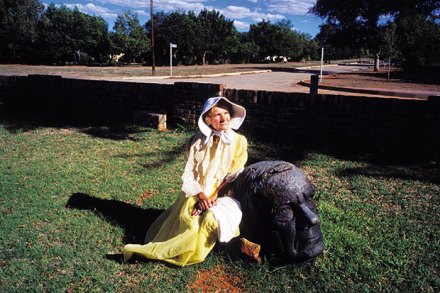
South African democracy has not, on the whole, been kind to the Afrikaner. During Nelson Mandela’s benign oversight of the Rainbow Nation, liberal Afrikaners persuaded themselves that all would turn out well in the end. But in their hearts, they sensed it would go wrong. And so it has. At the time of writing, President Zuma is aggressively defenestrating his finance minister, one of the few competent figures in his tawdry administration, and the rand is sinking so fast as to make post-Brexit sterling seem positively muscular. Kajsa Norman notes that, since the first democratic election in 1994, at least 117,000 whites have been purged from the civil service, traditionally home to poorly educated Afrikaners.

I’m not surprised Zac Goldsmith lost – his campaign was a catastrophe

From our UK edition

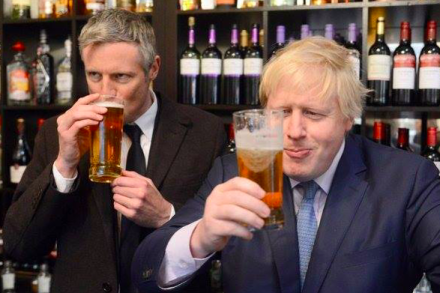
Zac Goldsmith has spent much of the past few weeks telling us that the London mayoral vote 'will be very close'. But it wasn't, in the end: he lost by a fairly large margin. Some political campaigns are failures; others are simply tragedies, and Zac Goldsmith’s falls into the latter category. As I found out when I spent some time on the campaign trail with him. The candidate himself is an amiable enough soul, though his thin CV and past business failures scarcely qualify him to stand up as the candidate of enterprise against what he classes as the ‘divisive’ figure of Sadiq Khan.

A toe-curling tragedy

From our UK edition

Zac Goldsmith spent almost every day out on the stump during his London mayoral campaign dressed in the formal dark suit he inherited from his father, and had recut on his death in 1997. At least that is what a member of his team told me as I was out observing proceedings one day. I think that detail was offered as a bit of journalistic ‘colour’ to show Zac’s sense of filial duty, but that was the only sense in which his painfully understated campaigning could be said to have owed anything to Sir James Goldsmith’s bombastic, manic style when he ran the Referendum party. Some political campaigns are failures; others are simply tragedies, and Zac Goldsmith’s falls into the latter category.

Zac Goldsmith’s London campaign has been a toe-curling embarrassment

From our UK edition

Zac Goldsmith spent almost every day out on the stump during his London mayoral campaign dressed in the formal dark suit he inherited from his father, and had recut on his death in 1997. At least that is what a member of his team told me as I was out observing proceedings one day. I think that detail was offered as a bit of journalistic ‘colour’ to show Zac’s sense of filial duty, but that was the only sense in which his painfully understated campaigning could be said to have owed anything to Sir James Goldsmith’s bombastic, manic style when he ran the Referendum party. Some political campaigns are failures; others are simply tragedies, and Zac Goldsmith’s falls into the latter category.

The halo slips

From our UK edition

Peter Popham is commendably quick off the blocks with this excellent account of the run-up to last November’s Burmese general election, in which Aung San Suu Kyi’s National League for Democracy swept the board. At the time of writing this review, Suu is taking four ministries, including foreign affairs. So she will do what she did during her years of house arrest — offer a beautiful human face to the outside world of a country still under the heel of the generals. Popham seems to enjoy Burma and to understand it as much as any westerner can. Notwithstanding recent liberalisation, Burma is perhaps the second weirdest state on earth after North Korea, with impossibly complicated ethnic and religious fault lines that are cannily exploited by the army.

The return of the fountain pen

From our UK edition

Every working day before I start pounding the keyboard of my ridiculously flashy 27-inch iMac, I perform a little ritual. I straighten the fountain pens I keep on my desk, and make sure they are fully inked. Though I always have an eye for my next acquisition, I currently have just six pens, which are fuelled by four bottles of ink I keep next to them — Waterman black and serenity blue, Pelikan turquoise and Parker red. Three of the pens are Parkers, and my clear favourite is the greatest mass-produced pen of all time, the sleek Parker 51, with the distinctive hooded nib which first appeared in 1941, yet looks like the front end of a futuristic high-speed train. I have a particular reason to love this pen as it belonged to the great W.F. Deedes.

Harry Shearer on bringing out Richard Nixon’s feminine side

From our UK edition

Hollywood tends to treat Richard Nixon as an oafish B-movie villain, so it is ambitious and original of Harry Shearer to try to convince a British audience of the very feminine side of the 37th American president. As a veteran comedy actor and the ‘voice’ of several of the Simpsons cartoon characters — including Mr Burns, Smithers, and Ned Flanders — Shearer has the vocal range to get almost anyone right if he puts his mind to it. But voice work was not the main challenge in the forthcoming Sky Arts drama. Shearer is more intrigued by the physical aspects of the central role in Nixon’s the One, which he insists is not an impersonation, but a characterisation.

Private grief

From our UK edition

Two or three mornings a week I walk our four-year-old down to his Catholic primary school in Camden Town. As we pass an expensive though rather bad private school, we have to squeeze our way through the mayhem of north Londoners decanting their pampered progeny from their double-parked 4x4s. I can’t say I like the look of the boys that much. If I were teaching them, I would tell them to do up their ties and get their ruddy hair cut. But it is the parents I find seriously disturbing, for they have absolutely no sense of the impact their cars, children and dogs have on our neighbourhood. I am ashamed to admit that as I peer in through the tinted windows of their Porsche Cayennes at the vacant, entitled mothers texting their pedicurists, I feel the red mist descending.