Book review

The lonely passion of Beatrix Potter

The story of the extraordinary boom in children’s literature over the last 100 years could be bookended with a ‘Tale of Two Potters’ — Beatrix and Harry. The adventures of the latter have sold millions, but the foundations of his success were laid by the former, whose series of ‘little tales’ Matthew Denison estimates in his equally condensed new biography, ‘are purchased somewhere in the world every 15 seconds’. That is not bad for an author whose first book, The Tale of Peter Rabbit, came out in 1902 — 40 million copies sold so far, and counting — with neither the benefit of the internet or a movie franchise to spread the word. Much has been presumed about the effect of J.K.
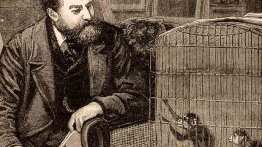
Rhinoceros pie, anyone?

Forgotten? Though I can rarely attend their dinners (in Birmingham), I am a proud member of the Buckland Club (motto: Semper in ventrem aliquid novi). Dedicated to the memory and gastronomic exploits of Francis Trevelyan (Frank) Buckland (1826–1880), the Oxford-born surgeon, natural historian and popular writer who aspired to eat a member of every living animal species, the Club’s repasts are unfailingly interesting, if seldom so ambitious. Frank’s penchant for zoöphagy came from his father, William (1784–1856), a Canon and Dean of Christ Church, where he served up delicacies such as mice on toast, pickled horse tongue, puppies, hedgehog, crocodile and bear.

Poor bewildered beasts

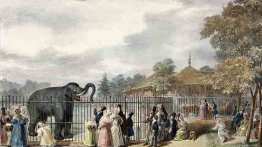
If you’ve ever read a history of the early days of the Foundling Hospital, you’ll remember the shock: expecting to enjoy a heartwarming tale of 18th-century babies being rescued from destitution and brought to live in a lovely safe place, you will have found instead that the tale was mostly about babies dying after they arrived. So it is with this fascinating book about the early days of London Zoo. Expecting to read about lions, tigers and monkeys in all their boisterous aliveness, you wade instead into disturbing descriptions of the illnesses they suffered and their pitiful early deaths.

A girl in a million

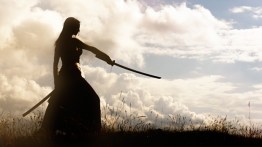
All readers know that good novels draw us into other worlds. I cannot think of another, however, which so alarmed me as this one, just as events alarmed and frightened its central character. She is Okatsu, a young woman from the samurai Satsuma Clan in mid-19th-century Japan. The country has been ruled by the shogunate, a military caste, since the early 17th century; the emperors were remote figures until their restoration to power in 1868. China is already under attack and exploitation by Britain and the US, and many Japanese fear they may be next. Some urge driving the foreigners off, while others — realists — insist that treaties must be signed that yield some sovereignty to the westerners even while Japan is modernising.

Arms and the woman

In August 1939, Clare Hollingworth, a 28-year-old aid-worker, had been employed as a reporter for less than a week by the Daily Telegraph when she landed her first serious journalistic coup. Using feminine wiles and diplomatic skills extraordinaire, she convinced a friend in the Foreign Office to lend her his chauffeured car. Stocking up with supplies in soon to be starving Poland, and charming the border guards, she crossed into Germany with nothing but her gut instinct and her smarts — the most important of a reporter’s tools (together with ‘ratlike cunning, a plausible manner and a little literary ability’, in the words of the late Nicholas Tomalin). She didn’t disappoint her editors.

Port in any storm

Cometh the hour, cometh the book, and so Christmas brings us once again a tidal wave of titles relating to food and drink: cookbooks of seasonal dishes from around the world, never once to be consulted, and endless tomes of wine connoisseurship for all of us dedicated cheapskate consumers of Lidl and Aldi plonk. So the question is: are Thomas Tylston Greg’s Through a Glass Darkly and Henry Jeffreys’s Empire of Booze destined to last any longer than your turkey carcass and your festive case of supermarket Prosecco? Both books are undoubtedly charming.

Snow on snow

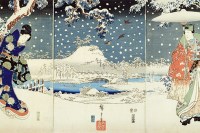
Here is William Diaper in 1722, translating Oppian’s Halieuticks (a Greek epic poem on the loves of the fishes): As when soft Snows, brought down by Western Gales, Silent descend and spread on all the Vales . . . Nature bears all one Face, looks coldly bright, And mourns her lost Variety in White. Unlike themselves the Objects glare around, And with false Rays the dazzled Sight confound. Lost variety is the nub: before it is anything else, snow is Nature’s alienation-effect, making all things look the same and ‘unlike themselves’ — even while we watch, or else behind our backs, noiselessly.

Crime fiction for Christmas

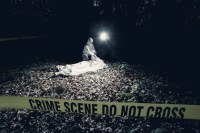
Imagine receiving an anonymous suicide note addressed to you by mistake. Would you try to find that person, to help them in some way? This is the opening dilemma in Bernard Minier’s Don’t Turn Out the Lights (Mulholland Books, £14.99), and Christine Steinmeyer’s failure to locate the letter’s sender turns her life in Toulouse upside down. Her dog disappears, she’s accused of harassment at work and her fiancé walks out on her. She believes that someone — some unknown person — is to blame for her misfortunes; but are the threats real, or is Christine losing her mind? This is a super-accelerated version of a Hitchcock thriller, with thrills and shocks on nearly every page.

Love at first bite

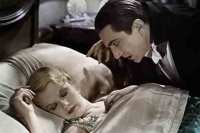
Legends cling to Bram Stoker’s life. One interesting cluster centres on his wife, Florence. She was judged, in her high years, a supreme London beauty. She preserved her Dresden perfection by denying her husband conjugal access. Bram consoled himself with warmer but more dangerous ladies of the night; such satisfactions came at greater cost than a few sovereigns. According to David J. Skal, a quarter of men of Stoker’s bohemian class (including all of those central to his book) were infected with syphilis. And Bram? Skal thinks so too. Florence Balcombe, when a young Dublin beauty, was courted by Oscar Wilde as well as Bram. Oscar she was not inclined to — because of his ‘curly teeth’ quite possibly.

Double trouble | 8 December 2016

Cousins is a curious novel. If I’d been a publisher’s reader, I’d have consigned it to the rejection pile after reading the first quarter. It seems to be a dreary saga about three generations of the Tye family. The background is of an intellectual, comfortably off, left-wing family from a milieu in which Polly Toynbee would be happy. Grandpa was a Cambridge-educated conscientious objector during the second world war. The characters fail to interest. It all seems to have been said before. Then suddenly the plot develops and the narrative pace accelerates. Perseverance is rewarded. Mysteries unfold, complex moral issues are explored, some left hanging for the reader to decide on later, and many aperçus about the way we live now are there for us to ponder.

The unkindest cult of all

When I was 22 I met a man called Yisrayl Hawkins who said his coming had been prophesied in the Book of Isaiah. Yisrayl (born Bill) lived with his many disciples and several wives in a compound carved out of the red dirt scrub near Abilene, Texas. His cult was called the House of Yahweh, and as a sign of their commitment, his 400 followers had all changed their names to Hawkins. Yisrayl was a narcissist, as most cult leaders are, and this made him tremendously boring. As he droned on about being chosen, and his conviction that Satan was in fact female, I watched the ferrety little Hawkins children dart between mobile homes and Airstream caravans, and his wives, the many Mrs Hawkinses, all in headscarves. They were good-looking women, and educated too.

To earth from heaven

When I was a child, the highlight of the summer holidays was when my cousin Simon came to stay. We shared a common obsession: aliens. Day after fruitless day, we would scan the skies, looking for UFOs. At night, long after we were supposed to have gone to sleep, we would get out our torches and pore over books on extraterrestrial life. These ranged from the sternly scientific — tomes on astronomy or space flight — to paperbacks with altogether more lurid copy. One in particular, filled with vivid images of flying saucers and Area 51, was a focus of our almost superstitious fascination. This was because it contained a picture that —to my deep embarrassment now — we had mutually decided was the scariest we had ever seen.

We’re all snobs really

D.J. Taylor’s clever dissection of snobs is really two books in one. Scattered throughout are entertaining, delicious (initially), solemnly related nuggets of hardcore snobbery. He writes brilliantly, for example, about the diarist and National Trust employee James Lees-Milne, who liked a world that knew its place (ideally beneath him). Lees-Milne was steeped so far in snobbery that he couldn’t bear the vulgarity of calling a garage a garage and so called his the ‘motor-house’. Either the absurdity of this makes you snort with laughter or it doesn’t. It does me, though I have to say the cumulative effect of a zillion snobberies is nauseating. You find yourself thinking, ‘My God, these terrible people’ on every other page.

From man to beast and back again

If there’s one shared characteristic of the so-called ‘new nature writing’ it is a failure, with a few notable exceptions, even to approach what up until very recently writing about the non-human had as its core ambition; that is, to dissolve the ego, to melt the self in the recognition of the other and, through that and in a wonderful paradox, to stretch the knowledge of what it is to be human. The solipsistic trait of the age is, it seems, pandemic; try consciously and ostentatiously to be a beast and you’ll succeed only in being a beast of a human being. Emblematic of this is a kind of empathetic glee in the suffering of animals, as if the evolutionary botch of Homo sapiens could ever be as pure and as perfect in its predations as, say, an otter or a sparrowhawk.

Children’s books for Christmas | 1 December 2016

Maurice Sendak, no mean judge, observed that William Nicholson’s Clever Bill was ‘among the few perfect picture books for children’. I’d go along with that if I didn’t think Nicholson’s other picture book, The Pirate Twins, even better, with its lovely opening, ‘One evening, on the sands, Mary found the pirate twins.’ Now Clever Bill (Egmont, £9.99) is back in print, 90 years after it was first published, so you can see for yourself what a genius little book it is. Nicholson (better known as the illustrator of The Velveteen Rabbit) wrote very few words, but what a tremendous narrative it is. Mary is invited to visit her aunt, and in the rush leaves behind her friend, the toy soldier clever Bill Davis. He sets off in pursuit.

High priestess of horror

A film critic friend, astonished that I had never heard of Shirley Jackson, told me to go and read her immediately. That was ten years ago and she has since become one of a handful of talismanic writers I reach for when craving literary succour. An undisputed master of the gothic and the uncanny— We Have Always Lived in the Castle and Hangsaman are both masterclasses in the unearthly and the opaque — she plumbs domestic and familial horror in a way which manages to be both universal and chillingly particular. She is also, in Britain anyway, still ridiculously underrated, even unknown. This new biography by the New Yorker critic Ruth Franklin, therefore, could not be more welcome or timely.

Ripeness is all

‘Blessed are the cheesemakers.’ The line from Life of Brian is followed by: ‘It’s not meant to be taken literally. It refers to any manufacturer of dairy products.’ In fact, cheese animates the Bible and — building on Job’s searing image of the womb — its coagulation became an emblem of the Immaculate Conception, endorsed by no less than Hildegard of Bingen. This is just one of innumerable thoughts prompted by this Oxford Companion’s elegant, double-columned, well-illustrated pages. Here is a strong, pleasingly ripe case for cheese’s global role in social, political and economic history. It all makes for many ‘cheese adventures’.