Book review

A strange vibration

Among the many curiosities revealed in this book, few are more startling than the fact that at the height of the so called ‘summer of love’ in 1967 the British historian Arnold Toynbee, on a visit to San Francisco, made his way to the Haight-Ashbury district — hippy central — to catch a concert by one of the Bay Area’s most popular bands, Quicksilver Messenger Service. Just what Toynbee, who was 78 at the time, made of the group’s epic exercise in free form, psychedelic improvisation, ‘The Fool’, Goldberg does not mention.
A choice of first novels | 29 June 2017

Patty Yumi Cottrell’s blackly comic and sophisticated debut Sorry to Disturb the Peace (And Other Stories, £10) opens with Helen Moran learning that her brother —adopted, as she was — has committed suicide. Helen lives in New York, working with troubled teenagers who have dubbed her ‘Sister Reliability’. Against familial expectations she returns to Milwaukee to her adoptive parents’ home for the funeral. But Helen has not arrived simply to grieve: Perhaps to investigate his death would revitalise my own life, and if I could communicate my eventual findings to them, it would strengthen and support the lives of my adoptive parents as well.

High flyers

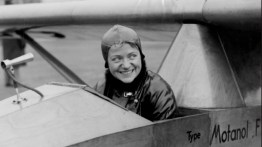
It is conventional wisdom in the publishing industry that, despite the old adage, readers do indeed judge books by their covers. So, it seems, do passengers on the No. 29 bus. For a middle-aged man reading Clare Mulley’s The Women Who Flew for Hitler, some of the looks I got made me so uncomfortable that I took to hiding the cover behind a newspaper. So let’s get one thing straight from the beginning: this is not a niche book for Third Reich enthusiasts, nor a seedy excuse to fantasise about women in Nazi uniforms. Do not be put off by the awful title: it is in fact a serious double biography of two of the most remarkable women in the history of aviation. The first of Mulley’s subjects, and the more famous of the two, is Hanna Reitsch.

Life classes

It has taken much of a celebrated literary life for Elif Batuman to produce a novel. At the beginning of her wonderful 2010 book The Possessed —a chimera of memoir, travelogue and literary criticism — she declares: I remember believing firmly that the best novels drew their material and inspiration exclusively from life... and that, as an aspiring novelist, I should therefore try not to read too many novels. Selin, the Turkish-American protagonist of her first novel, is engaged in gathering writerly experience at Harvard, reading novels and falling for Ivan, a Hungarian mathematics student with a girlfriend. The pair begin an online relationship at the dawn of email.

Whimsical digressions

The practical difficulties of extracting keys from the pockets of tight-fitting trousers while ascending stairs; the logistical hazards of seducing pub landladies; the absurdity of certain idiomatic expressions if interpreted too literally; the qualitative difference between homemade and shop-bought pizza. Such are the disparate matters occupying the mind of Simon Okotie’s unnamed detective protagonist as he goes about investigating the disappearance of a colleague. In the Absence of Absalon holds a plethora of whimsical digressions in a wafer-thin plot, as Okotie’s story-telling is repeatedly driven off-piste.

Size matters | 29 June 2017

Trust scientists to ruin all our fun. The spectacularly beautiful 2014 film reboot of Godzilla, it turns out, is anatomically misleading. At 350ft tall, such a beast would simply collapse under its own weight, because an animal’s mass cubes with a doubling of its size, while the strength of its supporting limbs only squares. The basic principle was known to Galileo, and it turns out that the simple observation that things do not scale linearly can tell us much else besides, as this quite dazzling book amply demonstrates.

The appeal of mysticism

This extraordinary book has two main characters: Gershom Scholem (1897–1982), an early Zionist and the founder of the modern study of traditional Jewish mysticism, and the author George Prochnik, who was 28 when he first moved with his then wife to make a new life in Israel. Stranger in a Strange Land has as subtitle ‘Searching for Gershom Scholem and Jerusalem’; but it also tells the story of Prochnik’s search for his own identity. If this sounds complicated, it is. The reader needs to pay attention to the shifts from one period and place to another. Scholem went to Palestine in 1923 when hardly anybody from the German bourgeoisie made that move.

Fad fury

Anthony Warner is angry. He’s angry about diets. He’s angry about detoxes. He’s angry about pseudoscience — and he has good reason. Fad diets are nothing new: for centuries, there have been charlatans whose dubious diets will help you lose weight, love life and beat cancer. But the rise of social media over the past 15 years has given such charlatans unprecedented reach. Their regimes and recipes, their coffee table books and Instagram posts suck in the young, the gullible and the vulnerable. Anthony Warner’s mission is to set the record straight. Warner has been writing as ‘The Angry Chef’ on his blog and elsewhere for several years.

Worthy, but wordy

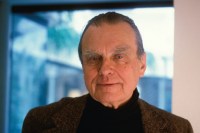
Milan Kundera’s novel Immortality wryly depicts Goethe preparing for immortality — neatly laying out his life in Dichtung und Warheit and arranging for Johann Eckermann to record his conversation. He is, says Kundera, designing a handsome smoking jacket, posing for posterity. He wants to look his best. Then along comes the young Bettina von Arnim, a platonic flirtation from his past, with an alternative, memorably ridiculous version, ostensibly admiring, in which Goethe’s wife Christiane is portrayed as ‘the crazy, fat sausage’. There is immortal egg on the facings of that smoking jacket. In the case of Czesław Miłosz, we have a variant on this paradigm.

A policeman’s lot

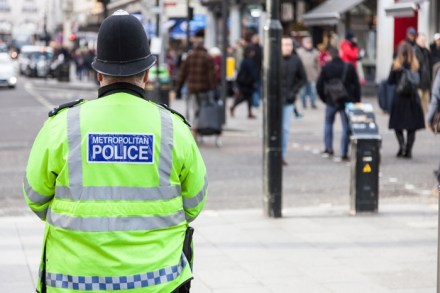
Described by the publisher as a ‘moving and personal account of what it is to be a police officer today’, John Sutherland’s memoir is most to be admired for its frank depiction of mental breakdown. Sutherland has spent more than 20 years in the Met and this memoir, presented in a sequence of short, staccato episodes told in the present tense (which feel like expanded blog entries), covers his entire career to date, including a number of high-profile cases that readers will be familiar with. Andrew O’Hagan talks about his new book The Secret Life – a funny, alarming and disturbing picture of what happens when digital fantasy meets analogue reality.

Borne back ceaselessly into the past

‘I do not like the idea of the biographical book,’ F. Scott Fitzgerald told his editor Max Perkins in 1936. Fitzgerald may not have liked it, but he certainly let himself in for it. As he wrote, with a grin, in 1937: ‘Most of what has happened to me is in my novels and short stories, that is, all the parts that could go into print.’ Of all the male American modernist writers with tragic lives, including Ernest Hemingway, Hart Crane and Eugene O’Neill, F. Scott Fitzgerald still serves to many people as the defining figure.

A barren prospect

In many ways this is a very old-fashioned novel. Jerome is 53, and a lacklustre professor at Columbia; his wife, Sylvie, 35, is a former topless dancer and aspiring film-maker. Sylvie has a dog but wants a baby. Together they will cross the former Soviet bloc looking for a child of their own, despite Sylvie having already had three abortions: Romania is their chosen finale, where, of course, orphans are two-a-penny. There is much to admire in it; but the clever bits aren’t funny and the funny bits aren’t clever. The novel is littered with references to continental theorists. Blanchot, Lefebvre, Baudrillard, Deleuze, Guattari, Lacan all show up — poor old Derrida, left out! — but they are there as intellectual window-dressing.

The disgrace of the British left

Giles Udy did not start out with the intention of writing this book. He was in Russia about 15 years ago and happened to hear about Norilsk, a remote, frozen part of Siberia where the Soviet Union had established forced labour camps. Udy managed to get permission to visit the place. The temperature there could fall to as low as 50C and many thousands died due to this, low rations and barbaric treatment. The inmates were too weak to dig deep graves in the ice-hardened ground for the ones who died, so sometimes the slow movement of the Earth still brings bones to the surface. Udy’s original idea was to write about the 300,000 people who passed through Norilsk over the years.

The evil that men do

Early one summer’s morning in 1994, Paul Jennings Hill, a defrocked Presbyterian minister, gunned down a doctor, John Britton, as he arrived for work at an abortion clinic in Florida. Unrepentant by the time of his execution nine years later, Hill (who I really don’t recommend Googling) was associated with the Army of God (ditto), which urges the murder — or ‘justifiable homicide’ — of abortion providers in the United States. Given how often Joyce Carol Oates’s awesomely prolific output concerns male violence and women’s bodies, it’s no surprise to find her using this as material; with Trump vowing to undo Roe vs Wade, it’s timely.

Verse and worse

Molly Brodak, a fair, young Polish-American born in Michigan, is a winner of the Iowa Poetry Prize. Iowa: that hotbed of academic creative writing! Her poems, published in A Little Middle of the Night, are intensely private, pointillist compositions of unconnected images. Now, teaching at Emory University in Atlanta, she has written her first book of prose, which is entirely different, an intimate communication in clear language of shocking candour. Without any evident self-pity, it is as frankly accusative and confessional as an ideal patient’s revelations on a psychiatric couch. Molly analyses her family and herself, evidently achieving understanding, perhaps even forgiveness, of some excruciating emotional entanglements.

She-devils on horseback

Rumour will run wild about a society of warrior women, somehow free from the world of men. We all feel we know the Amazons, even if we struggle to connect them with the planet’s largest rainforest, river and internet company. But the historical reality of that thrilling and threatening tribe proves to be elusive. Even two millennia ago, the Greek geographer Strabo marvelled at his fellow men’s credulity about the Amazons: ‘the same stories are told now as in early times, although they are wondrous and beyond belief.’ Now John Man, the enthusiastic historian of Asia, dissects the Amazons with sharp scalpel and acute scepticism.

Patience on a monument

As a food writer Patience Gray (1917–2005) merits shelf-space with M.F.K. Fisher, Elizabeth David and Jane Grigson. Fleeing from the dreary predictability of her Home Counties upbringing, Gray became, among other things, the first women’s page editor of the Observer; co-author of a bestselling cookery book (the 1957 Plats du Jour with Primrose Boyd); and, nearly 30 years later, sole author of a classic, the 1986 Honey from a Weed. She was also a jewellery maker; textile designer; student at the LSE, where one of her tutors was Hugh Gaitskell; an intrepid traveller; research assistant to H.F.K.

Another gone girl

Adam Thorpe’s latest novel, Missing Fay, examines the lives of a disparate group of people in Lincolnshire, all touched in some way by the disappearance of the titular Fay, a sparky, gobby 14-year-old girl from a council estate. This is an England of motorways, dull campsites, immigrants and nursing homes: where transience is the norm, where those who sit still gently simmer. The landscapes and interiors are rendered with the delicate strokes of a painter, whether the bucolic tainted by sudden violence, the ancient streets of Lincoln, or the underpasses and playgrounds haunted by local youths. In contrast, played out on televisions in the background, are the Davos summit and the kinds of talent shows that promise instant fame.