Book review

Mysticism and metamorphosis

‘I frankly hate Descartes,’ states a character in Nicole Krauss’s new novel, Forest Dark: ‘The more he talks about following a straight line out of the forest, the more appealing it sounds to me to get lost in that forest …’ Like the author, this character is called Nicole, lives in Brooklyn, and is a writer and mother. Struggling with her work and her marriage, life is indeed a ‘forest dark’, and we follow her through the tangle of it.


Stage fright | 31 August 2017

Patrick McGrath is a master of novels about post-traumatic fragmentation and dissolution, set amid gothic gloom. His childhood years spent at Broadmoor, where his father was medical superintendent, have given him a solid grounding in psychiatric illness for these disquieting dramas. His ninth novel is set in London’s theatreland in 1947, and the grey, skeletal remains of the bombed East End. As usual with McGrath, the narrator is far from straightforward; in this case it is the ladies of the local theatre-world chorus, who are omniscient, knowing each character’s thoughts.

City of dreadful dusk

Fantastic fiction loves contrasts made explicit: Eloi and Morlocks, orcs and elves, and above all humans battling vampires, Martians or robots. Small wonder that Claude Lévi-Strauss specifically invoked science fiction for his theory of ‘binary opposition’. Sometimes these tensions are in the mise-en-scene — not just Earth vs. outer space, but settings — Lilliput and Brobdingnag, say — which try to make themes concrete. Classics of that sort are Edwin Abbott’s Flatland (set in two dimensions) and Lewis Carroll’s Alice books.

Well of sorrows

The Red-haired Woman is shorter than Orhan Pamuk’s best-known novels, and is, in comparison, pared down, written with deliberate simplicity — ostensibly by a narrator who knows that he is not a writer, but only a building contractor. Polyphonic narratives are replaced by a powerful, engaging clarity. This simplicity is the novel’s greatest strength, yet at certain points seems as if it might become a weakness. Part one, which takes up the first half of the book, is superbly concentrated. It describes one summer in 1986 in the life of Cem, a middle-class 16-year-old boy who takes on a summer job 30 miles outside Istanbul to earn money before cramming for university entrance exams.

Finally tired of London

Iain Sinclair is leaving London — like the croakiest of the ravens taking flight from the Tower. It is a proper blow: across five decades, he has been prowling the streets, part poet, part satirist, part prophet. Very few authors have fashioned a London more real than the one we see: Dickens, Conan Doyle, Patrick Hamilton, Angela Carter. Sinclair is firmly among them. While his contemporary Peter Ackroyd understands London as a city of eternally recurring patterns and echoes, Sinclair sees something more malign and gangrenous: forces that endlessly conspire to bend perception and bleach the streets of their real meaning. Oh: and he is also extremely funny.

The writer behind the brand

Few publishing phenomena in recent years have been as gratifying as Chris Kraus’s cult 1997 masterpiece I Love Dick becoming a signifier of Twitter and Instagram chic. The ‘lonely girl phenomenology’ it exemplified has now attained cultural status, with first person, inventive writing by women often enjoying centre stage. It’s interesting, then, that just as the wider culture has caught up with her, Kraus has pivoted away, delivering ‘what may or may not be a biography of Kathy Acker’ — the underground punk novelist who is still, even 20 years after her death, awaiting the recognition she deserves.

Mozart’s mischievous muse

If you were to compare Mozart to a bird it wouldn’t be the starling. Possibly the wood thrush or nightingale, with their beautiful, haunting songs; or maybe the lyrebird with its astonishing ear for imitation; or perhaps the composer would find his match in the exotic rarity of the ivory-billed woodpecker or giant ibis. But the common starling? More pest than pet in its adoptive North American home, this ‘ubiquitous, non-native, invasive species’ seems an unlikely fit for a singular prodigy. So thought the ecophilosopher and naturalist Lyanda Lynn Haupt, when she started work on this book, exploring the composer’s relationship with the bird he bought after hearing it singing one of his piano concertos, and kept as a pet until its death.

The fruits of imperialism

Imagine yourself a middle-class person in England in the 1870s. You sit down to drink a cup of tea while reading The Spectator. It probably doesn’t cross your mind, but in your hand you hold products from around the world. Your tea is from Ceylon, the sugar in it from Jamaica, and your porcelain cup was made in China. Your afternoon refreshment is the culmination of global trade developed over centuries. In A Thirst for Empire, Erika Rappaport traces how tea became a staple of the British diet after arriving in the 17th century, and has not lost its popularity yet. This is a detailed work, at over 400 pages of small print, but provides interesting explorations of the health-giving powers attributed to tea, and how it came to be seen as a wholesome and vital drink.

The search for meaning

He’s not what you’d call prolific, Bernard MacLaverty. Midwinter Break is his fifth novel in 40 years, and his first in 16. And, in that time, it could be argued that Irish writers have moved away from his bare and declarative style into the wildness of, say, a Barry or a Barrett or a Baume; word-typhoons, of an affinity with the febrile and fervid times. What cannot be doubted, though, is MacLaverty’s awareness of, and wide aliveness to, the world’s flux, its writhings in the decades since his first novel Lamb; in his latest, his deep familiarity with, and angry love for, the workings of the UK, and Europe, and the globe are displayed stark and clear, the stylistic precision of their expression becoming a haven from a hot and hyper-active mediated age.

Change and decay | 17 August 2017

Writing of his grandmother’s cremation, Kushanava Choudhury reflects in The Epic City that, while his expatriate Indian cousins are separated from the occasion, ‘I was sipping tea in Nimtala, present in the moment at the centre of our world’. It’s Choudhury’s longing to be back in this centre, which might have seemed less than obviously central to a metropolitan American, that takes him to Calcutta after he graduates from Princeton. He spends a few years working at the Statesman, Calcutta’s most venerable English newspaper, and later returns to the city, eventually getting married to his girlfriend, who happens also to be an American of Bengali origin.

A countercultural upheaval

‘New York stories in a way are always real estate stories,’ says the journalist Alan Light in Lizzy Goodman’s bustling oral history of the city’s music scene at the dawn of the century. The same goes for all music scenes. Talent clusters and thrives only where there are cheap places to live, hang out, play shows and, crucially, fail. New York in 2001 was such a location. The Lower East Side was still affordably sketchy and Brooklyn far from hip. When Dave Sitek from TV on the Radio moved to Williamsburg and invited his Manhattan friends to visit, ‘It was like I was asking them to go to China on a single--engine prop plane.’ Now Williamsburg, like Manhattan, belongs to the well-heeled.

The man who disappeared

Walking out of one’s own life — unpredictably, perhaps even without premeditation and certainly without anything approaching a plan — is a common staple of fantasy, and therefore fiction. But why, when we spend so much of the rest of the time fretting about losing what we have and hatching plans to safeguard it? In this short, powerful novel, the Swiss writer Peter Stamm, suggests some oblique but compelling possibilities. Thomas and Astrid have returned from a holiday with their two children and begun the ordinary business of resettling: unpacking, laundry, a last glass of wine in the garden. As Astrid tends to the house, Thomas walks down the path and, after only a momentary hesitation, through the gate.

A bad taste in the mouth

Here is the opening sentence of Karl Ove Knausgaard’s meditation on beds.: With its four legs and its flat, soft surface, the bed gently accommodates one of our most basic needs: it is good to lie down in bed, and it is good to sleep in them through the night. Well, you learn something every day. Actually you do, if you are very young, or at least you are meant to. For this is one of Knausgaard’s letters to his unborn daughter, and he’s written one book for each season, 20 letters per month, for her to be able to see the world, or for Knausgaard to see it again, anew. It is a mission freighted with honourable intent.

The roots of witchcraft

Until the mid-1960s many historians believed witchcraft was a pre-Christian pagan fertility ritual, witches worshipping the Horned God, whose consort was the Triple Goddess. The most notable advocate of this theory was the Egyptologist Margaret Murray. Then came revisionists led by Norman Cohn. Examination of witch trials suggested there had been no witchcraft: it was a ‘social construct’ of the Christian patriarchy persecuting innocent women, as it had innocent Jews indicted for the same satanic practices. Professor Hutton is a follower of Cohn.

The end of brotherly love

You can never completely leave a religious cult, as this strange and touching memoir demonstrates. Patterns of thinking, turns of mind, will linger with and haunt former members long after they escape. Rebecca Stott was born in 1964 into the Brethren, a low-church sect that had broken away from the Anglican church in the early 19th century and then broken away from itself, bifurcating into factions as movements set on purity and unity usually do. Cult is a strong word, but Stott’s branch of the Brethren really earned it. Her great grandfather, a sail-maker, joined the Brethren in Eyemouth, a fishing village not far from where I grew up in Northumberland. Back then the Brethren there was founded on frustration with the tax-collecting Kirk.

Two enquiring minds

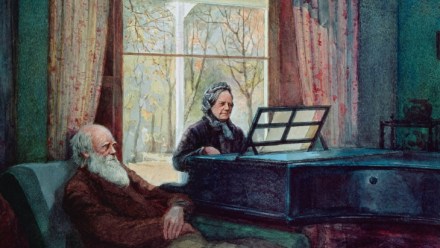
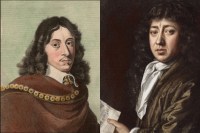
Samuel Pepys, wrote John Evelyn, was ‘universally beloved, hospitable, generous, learned in many things’ and ‘skilled in music’. John Evelyn, wrote Pepys, ‘must be allowed … for a little conceitedness; but he may well be so, being a man so much above others’. Pepys’s assessment of Evelyn was made early in their relationship, in 1665, and Evelyn’s assessment of Pepys was made on the day that his fellow diarist died, in 1703. So rest the reputations of our two great recorders of Restoration England: Pepys, the middle-class son of a tailor, was a man of the people; Evelyn, the heir of a country gentleman, was a notch or two above.

Heroines of the Soviet Union

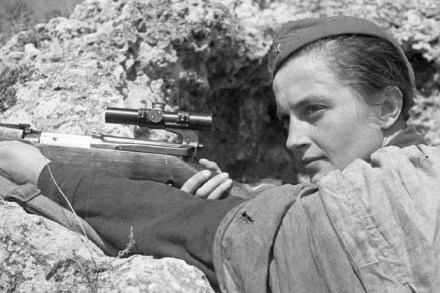
Klara Goncharova, a Soviet anti-aircraft gunner, wondered at the end of the second world war how anyone could stand to give birth after learning about Auschwitz and Dachau. But as it turned out, she was already pregnant. Anastasia Voropaeva, a corporal and searchlight operator, recalled a pretty Russian girl in liberated territory who had been raped and impregnated by her German ‘boss’ and had hanged herself after victory rather than give birth to a ‘little Fritz’. Albina Gantimurova remembered nearly shooting an adolescent member of the German Volkssturm in Berlin before he burst into tears and took her hand. Svetlana Alexievich finished The Unwomanly Face of War, the first of her astonishing oral histories of Soviet life, in 1983.

The evil that men do | 3 August 2017

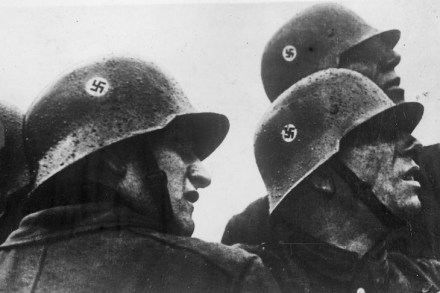
The first thing to say about Claudio Magris’s new novel is that it is, in an important sense, unreadable. There is no possibility of turning page after page engaged in finding out what comes next, of being lost in the characters’ stories. The usual pleasures of fiction are so thoroughly absent that the reader emerges at the other end blinking into the light, struggling to remember what all the fuss about books is anyway. This is apt, perhaps, for a novel about historic suffering and man’s inhumanity to man. The conceit is that an unnamed collector has amassed a hangar-sized museum of war, full of weaponry and the historical accoutrements of conflict.