Book review

A choice of first novels | 3 August 2017

Remember Douglas Coupland? Remember Tama Janowitz? Remember Lisa St Aubin de Terán? Banana Yoshimoto? Françoise Sagan? The voice of your generation? (If you’ve forgotten the voice of your generation, the brilliant Christopher Fowler’s forthcoming The Book of Forgotten Authors will provide you with the necessary reminder. The voice of my generation, as far as I’m able to recall, was a poet called Attila the Stockbroker, who we used to go and see perform in Harlow, and who did an excellent Peel session. Whatever the hell happened to Attila the Stockbroker?) Three new debut novels might all properly be acclaimed as representing the voice of their generation — though who knows, only time will tell.


Torn between envy and contempt

Arriving at boarding school with the wrong shoes and a teddy bear in his suitcase, the hero of Elizabeth Day’s fourth novel is the latest in a long literary line of suburban lost boys sucked into the intoxicating orbit of a wealthy friend. F. Scott Fitzgerald, Evelyn Waugh, Patricia Highsmith, Ian McEwan, Alan Hollinghurst and Gillian Flynn have all done it before and we know the story never ends well. Day drops references to them all into her book, like olives into an increasingly dirty martini. We know from the outset that a crime has been committed. We first meet Martin Gilmour in a police interview room, the day after his friend Ben Fitzmaurice’s 40th birthday party in the summer of 2012.

No pain, no gain

It is an unexpected pleasure when fiction has a soundtrack to accompany the work of reviewing. H(A)PPY is ‘best enjoyed in conjunction with Agustin Barrios: The Complete Historical Guitar Recordings’, Nicola Barker advises before her text gets underway. It’s tempting to dismiss this as a gimmick. But Barrios’s music strikes a deep chord with the rebellion at the heart of Barker’s 12th novel. Born in the 1880s, the Paraguayan’s playing was ridiculed because he preferred his guitar strings to be made of steel rather than fashionable gut. His dissonant art, like Barker’s today, could not be accused of courting admiration.

A cacophony of complaint

What sort of monster gives a bad review to a book by someone who was gang raped as a 12-year-old and subsequently goes on to eat herself to over 40 stone? Probably the sort of monster who’s never read a book about fatness as a feminist issue which she found convincing. Here we go again: ‘This is what most girls are taught — we should be slender and small. We should not take up space. And most women know this — that we are supposed to disappear.’ This ignores the fact that plump women were a benchmark of beauty in the past — when women had no rights whatsoever — and still are in cultures where, again, women have very few rights.

… trailing strands in all directions

Letters of Intent — letters of the intense. Keen readers of Cynthia Ozick (are there any other kind?) will of course already have copies of the books from which these often fiery essays have been selected. There’s a broad range of work represented here, from personal essays through to Ozick’s often rather profound philosophical enquiries into the meaning of art and religion — though the inclusion of no fewer than five essays on Henry James, two on Kafka, two on Virginia Woolf and two on Saul Bellow might make one wish for a little more breathing room, a little more room to roam. But this is a quibble. This is Cynthia Ozick, for goodness sake.

Spirits from the vasty deep…

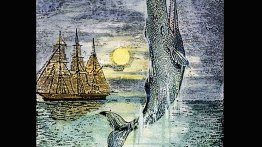
‘The sea defines us, connects us, separates us,’ Philip Hoare has written. His prize-winning Leviathan, then a collection of essays called The Sea Inside and now RISINGTIDEFALLINGSTAR together make a loose, meditative trilogy on people, the ocean, its inhabitants, its threats and delights, the comings and goings, the whole tidal business, its excitements and its ever-present grip on our minds and imaginations. The sea ‘deals life and death for innocent and guilty alike’, he says, and that all-pervasiveness is both his subject and his method. The rather exciting slidtogether words of this title (and of all his chapter titles) give a hint of what the book is about. This is not the sea in any historical, scientific or practical sense.

The dark side of creativity

In Eureka, Anthony Quinn gives us all the enjoyable froth we could hope for in a novel about making a film in the 1960s — champagne, drugs, threesomes, gangsters, a Silver Cloud Rolls-Royce, hula-hooping girls and Pucci scarves flung over smears of vomit. Underneath, however, lies an intellectual question. The film is an adaptation of Henry James’s ‘The Figure in the Carpet’, a story about obsessively trying to understand the secret key that unlocks an author’s work: ‘The idea that governs the whole and gives it meaning… a string that my pearls were strung on.’ (Ought I admit that I enjoyed Quinn’s saucy 1960s screenplay, spliced between chapters of the novel, more than James’s original?

Black prince or white knight?

We cannot know for sure how Edward the Black Prince earned his sobriquet. For some it was the volatile mixture of his aggressive temperament and brutal conduct in war; for others it derives from his armour, as displayed on his tomb at Canterbury Cathedral. The cover of Michael Jones’s splendid new biography of this compelling warrior depicts the latter, with Edward arrayed in his suit of plate, his long moustache drooping over the mail of his aventail and the palms of his gauntlets pressed together in prayer, as if seeking God’s forgiveness for all the death and misery he has wrought in his bloody career. Jones convincingly argues that Edward should not be too readily condemned, as he often is by a more censorious modern age.

His own worst enemy | 27 July 2017

One fail-safe test of a writer’s reputation is to see how many times his or her books get taken out of the London Library. Here, alas, John Lodwick (1916–1959) scores particularly badly. If The Butterfly Net (‘filled with a lot of booksy talk and worldly philosophising,’ Angus Wilson pronounced in 1954) has run to all of five borrowers in the last five years, then The Starless Night (1955) seems not to have left the shelves since 1991. All this suggests that the title of Geoffrey Elliott’s valiant attempt to reconstruct Lodwick’s lost, vagrant and sometimes violent life is painfully accurate.

Down – if not out – in Paris

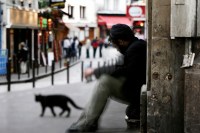
Virginie Despentes remains best known in this country for her 1993 debut novel, Baise-Moi, about two abused young women who set off on an orgiastically murderous road-trip round France. In 2000, she became notorious when she collaborated on the hardcore film of the book, which ran into certification problems, with Alexander Walker fulminating about the complete collapse of public decency. Despentes has now published some 15 novels altogether, celebrated in France as grunge or ‘trash’ fiction — and a polemical, erratically feminist, memoir, King Kong Theory, describing her own experience of rape and prostitution, and calling for a new aggression in female sexuality.

Towering extravagance

The Shard is an unnecessary building. Nobody apart from its developer asked for it to be built. Nobody was crying out for a big spike of concrete, steel and glass filled with a mix of superluxury hotel, ultraprime apartments and loads of speculative offices right above London Bridge station, with an expensive viewing gallery as a sop to public accessibility. Had it never happened, we would not regard the air it did not fill as a waste of atmosphere. The Shard is merely a gigantic financial speculation, majority-funded by Qatari money. And yet it is a very good piece of architecture. Its veteran Italian architect, Renzo Piano, succeeded in designing a (by London standards) startlingly tall tower that is not like other very tall towers.

Drowning in mud and blood

George Orwell’s suggestion that the British remember only the military disasters of the first world war is certainly being borne out by the centenary commemorations. The focus of each year so far has been Gallipoli, the Somme and now the Third Battle of Ypres, popularly known as Passchendaele. The basic story is familiar. On 31 July 1917, in torrential rain, General Haig launched an attack against German positions in the Ypres Salient. The troops had to advance over ground that rapidly turned into a quagmire, shells having already destroyed the area’s network of drainage ditches. The attacks would continue sporadically, against the advice of those on the ground and often in atrocious weather, until November.

A choice of short stories

It can’t be easy to switch between editing others people’s fiction and writing your own: how do you suspend that intuitive critical impulse? Gordon Lish, who is best known as the editor of Raymond Carver’s short stories but has also written plenty of fiction in his own right, is familiar with this dilemma, and in White Plains (Little Island Press, £18.99) he has fun with it. These stories are replete with parenthetical um-ing and ah-ing over synonyms, punctuation and grammatical solecisms — a prolix testament to the agonies of prose composition: ‘Losing tone here, not retaining purchase on stance here, falling to pieces with the coward’s frolic along the phraseological here.

By Patten or design?

My old friend Richard Ingrams was said always to write The Spectator’s television reviews sitting in the next-door room to the TV set. I’m more assiduous: I have actually read this book under review. And Chris Patten’s latest memoir is a very enjoyable read — the account of a life of considerable privilege. Born into a middle-class family in suburban London, Patten won an exhibition to Balliol before — after a brief dalliance with US politics — he became a Conservative apparatchik and, in due course, an MP.

The infamous four

Most books about British traitors feature those who spied for Russia before and during the Cold War, making it easy to forget that we also spawned a few who worked for the Germans in the second world war. This book concerns four of them: John Amery, wastrel son of a Conservative cabinet minister; William Joyce, the Irish-American Nazi propagandist better known as Lord Haw-Haw; Harold Cole, soldier and petty criminal who sent 150 or more Resistance members to their deaths; and Eric Pleasants, a circus strong-man who disavowed national loyalties while donning German uniform. Their motives were mixed but, treachery apart, they had one thing in common: an insistence on their own rightness and thus their entitlement to whatever they wanted at the expense of all others.

Playing Stalin for laughs

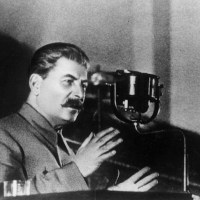
Christopher Wilson’s new novel is much easier to enjoy than to categorise. And ‘enjoy’ is definitely the right word, even though The Zoo tackles subject matter that should, by rights, make for a punishingly bleak read. The narrator is 12-year-old Yuri, whose misfortunes start with the fact that he’s growing up in Moscow in 1953 — and that a road accident when he was six damaged his brain, leaving him with a curious set of symptoms that couldn’t be worse suited to life under Stalin: a total lack of guile, a tendency to ask awkward questions and a face so angelically trustworthy that everybody tells him their deepest secrets.

Something in the water

‘It was a shock, and an epiphany,’ says Fiona Sampson, to realise that many of her favourite places were built on and out of limestone: the cosy Cotswold village of Coleshill, the shambolic hamlet of Le Chambon in the Dordogne, the limestone Karst region of western Slovenia, and the honeycombed hills of Jerusalem and the Holy Land. ‘Surely, I thought, this has to be more than mere coincidence.’ From a strictly demographic point of view, it isn’t even much of a coincidence: about one quarter of the world’s population lives in limestone country or depends on it for its water. But the mind of a poet can feed on the slightest chance connection.

The new age of the refugee

After years of estrangement in a foreign land, what can immigrants expect to find on their return home? The remembered warmth and blazing beauty of Jamaica have remained with some British West Indians for over half a century of exile. Yet 100 changes will have occurred since they left. Long brooding over the loss of one’s homeland can exaggerate its charm and sweetness. The first mass immigration to British shores occurred in the late 19th century, when Ashkenazim arrived by the thousand after escaping the pogroms in Tsarist Russia. Many changed their names and even their accents. The trappings of orthodoxy — beards, sidelocks — left them vulnerable to anti-Semitic abuse as they settled in cramped London streets north of Whitechapel Road.