David Butterfield

David Butterfield is professor of Latin at Ralston College, senior fellow at the Pharos Foundation, literary editor of the Critic and editor of Antigone.

Most-read 2024: Decline and fall – how university education became infantilised

From our UK edition

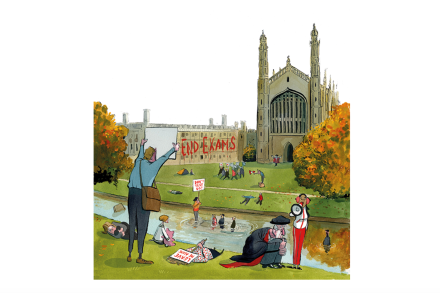
We’re closing 2024 by republishing our five most-read articles of the year. Here’s No. 2: David Butterfield’s cover piece from October on the decline of British universities. Last month, after 21 years studying and teaching Classics at the University of Cambridge, I resigned. I loved my job. And it’s precisely because I loved the job I was paid to do, and because I believe so firmly in preserving the excellence of higher education, in Britain and beyond, that I have left. When I arrived in Cambridge two decades ago, giants were still walking the earth. Students could attend any lecture, at any level, in any department; graduate and research seminars were open to any interested party, and you could sit at the feet of the greats.
Please, leave the Lake District out of identity politics

From our UK edition

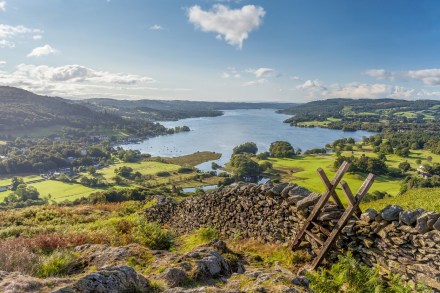
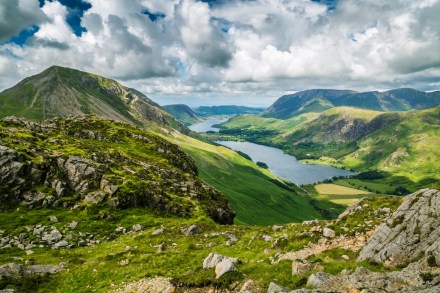
In these times of political upheaval, we have at least one consolation – that we can escape into the countryside and leave petty partisanship behind. That’s a sweet idea, but now rather behind the times. Richard Leafe, Chief Executive of the Lake District, has announced that the country’s largest and most popular national park needs to change. Nature is not doing enough to be relevant, as Mr Leafe explains: ‘We are deficient in terms of young people, we are deficient in terms of black and minority ethnic communities and we are not particularly well-visited by those who are less able in terms of their mobility...

Cambridge in crisis, Trump’s wicked humour & the beauty of AI ceramics

From our UK edition

53 min listen

This week: Decline and Fall – how our greatest universities are betraying students.Our greatest universities are betraying students, writes David Butterfield, who has just resigned from teaching Classics at Cambridge after 21 years. What went wrong? First, class lists of exam results became private, under alleged grounds of ‘data protection’, which snuffed out much of the competitive spirit of the university. Now even the fate of examinations hangs in the balance. Grade inflation is rampant, and it is now unheard of for students to be sent down for insufficient academic performance. For students, the risks have never been lower.

Decline and fall: how university education became infantilised

From our UK edition

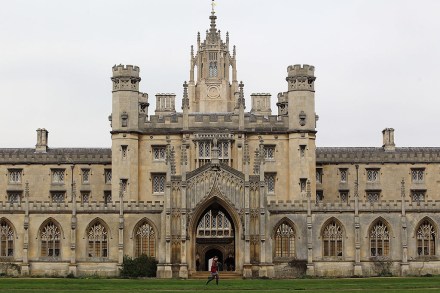
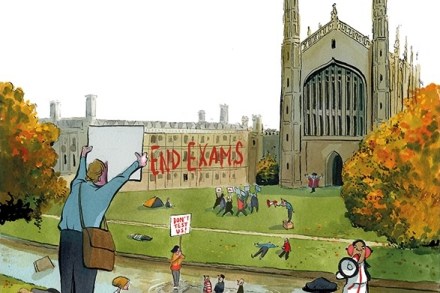
Last month, after 21 years studying and teaching Classics at the University of Cambridge, I resigned. I loved my job. And it’s precisely because I loved the job I was paid to do, and because I believe so firmly in preserving the excellence of higher education, in Britain and beyond, that I have left. When I arrived in Cambridge two decades ago, giants were still walking the earth. Students could attend any lecture, at any level, in any department; graduate and research seminars were open to any interested party, and you could sit at the feet of the greats. Unforgettable gatherings of everyone from undergraduates to professors would discuss the big questions late into the night.
The secret to The Spectator’s 196 years of success

From our UK edition

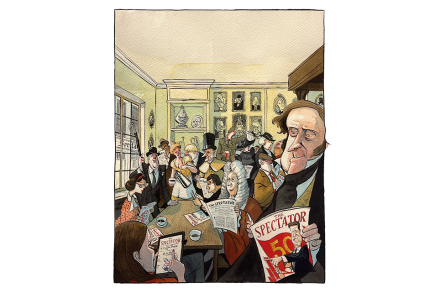
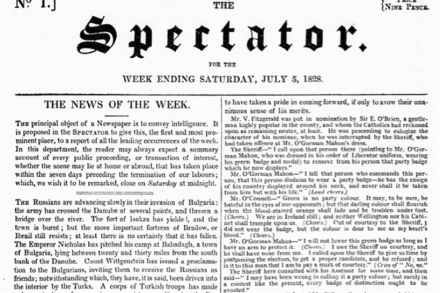
What explains The Spectator’s unprecedented success? No weekly in the world has matched its longevity: 196 years and 10,200 issues. In my history of The Spectator, 10,000 Not Out, I talk about the battles that shaped the magazine. It has long been a voice for classic liberal values and in its best moments, kept doing so even when support for those causes was unpopular. But when we look at its history, we see its best moments – and its shakier ones. The founding spirit of The Spectator was a humble-born Scotsman, whose energy and principle took London’s media class by storm. Robert Rintoul’s career south of the border began with the weekly newspaper The Atlas, but after two years he left in protest at owners who sought to ‘vulgarise and betwaddle’ the title.

What would it mean to ‘decolonise’ the Classics?

From our UK edition

We classicists peering into the past can sometimes be blindsided by the present. 2020 brings the charge that our discipline promotes racism. Last month, America’s Society for Classical Studies announced ‘the complicity of Classics as a field in constructing and participating in racist and anti-black educational structures and attitudes’. A pre-doctoral fellow at Princeton has enjoined ‘white classicists’ to ‘unlearn white supremacy in themselves’. And, closer to home, Oxford’s Faculty of Classics is being petitioned by many of its students to ‘acknowledge explicitly its own role in the proliferation of racist, colonialist, and white supremacist attitudes’. Have I really chosen the career of racism-pedlar?

Two athletes who took on the fells – and won

From our UK edition

In a summer where sport as we know it has been cruelly cancelled, opportunities to celebrate athletic heroism are hard to seek. But today, not one but two titanic achievements occurred independently – and only a few miles from each other. Both have a strong chance of being the country’s most impressive running feats of the coming decade, if boasting weren’t anathema to them. The 24-Hour Fell Record is what it sounds like: you have precisely one day of continuous running to cover as many of the Cumbrian mountains as possible, so long as you get back to the spot from where you started. When the early Victorian tourists first came to Lakeland, to survive a single ascent was deemed a pedestrian feat.

Countryfile is wrong about racism and the countryside

From our UK edition

At last, with the partial easing of lockdown, we have the consolation of an escape into the countryside. There, in the unquestioning simplicity of it all, we can leave society’s struggles behind. A sweet idea, but now rather behind the times, as shown by BBC Countryfile’s recent stirring into action. In its programme last night, Dwayne Fields delivered a piece on how the countryside needs to lose its ‘barriers’ and become truly welcoming to all communities. Ethnic minorities, he worried, feel that they ‘don’t belong’ in the countryside. Fields has done a great deal to introduce inner-city communities to the countryside and is unquestionably an admirable man. But his framing of this subject is mistaken.

The 10,000th

From our UK edition

40 min listen

This week, the Spectator commemorates its 10,000th edition. On the podcast, Cindy Yu speaks to David Butterfield and Fraser Nelson about the magazine's two centuries of history, finding out about how the publication started, discussing whether it is still the same now as it was originally intended, and hearing about what David calls its 'industrial drink culture'. Find out more about the history of the magazine with David's new book, 10,000 Not Out. Also on the podcast, Cindy speaks to James Forsyth and former Director of Comms at No 10, Craig Oliver. As James writes in the issue this week, when Boris Johnson comes back to work, he returns to a split Cabinet and a difficult decision - how and when to ease the lockdown?

The Spectator’s archives are full of surprises

From our UK edition

The Spectator now has now reached a milestone unmatched in the global press, by becoming the first magazine to publish a 10,000th issue. To do justice to the history of the world’s oldest weekly magazine is a complex, perhaps even foolhardy task. Having spent the last three years piecing together its past, I can confirm that half a million multi-columned pages demand energetic trawling and patient sifting. For most of its life, The Spectator has been more a newspaper than a magazine. Until the Second World War its first pages were occupied exclusively with summarising the previous week’s events. So the historian’s focus falls instead on the comment pieces that digest this news.

The Spectator’s love affair with satire

From our UK edition

The Spectator has always known when and how to wield the scalpel. A tour through its history reveals how, from the get-go, it mercilessly parodied the world in which it lived. When still six weeks young, The Spectator savaged the morbid obsessions of late-Georgian society. The caricaturist George Cruikshank exposed the press’s fetishisation of a contemporary murder: the accompanying article, ‘Points of Horror!!!!’, tartly noted that ‘the taste for murder in the enlightened public’ was ‘so extravagantly eager, that murderers will come to be held in the light of public benefactors’.

Why The Spectator is a true survivor

From our UK edition

As print titles battle logistical disruption and falling sales from Covid-19, it’s worth saluting The Spectator’s long-lasting tenacity. It has appeared without fail now for 192 years, week in, week out. Its publication has continued through both world wars, numerous strikes and protests, power cuts, cholera outbreaks and terrorist attacks. Today, even as the country has gone into lockdown, it has maintained its rhythm, with staff compiling issues from their studies and kitchen tables. And next week, on St George’s Day, The Spectator will turn out its 10,000th issue, a benchmark reached by no other magazine in history. The path has not always been easy.

The case for a national hardship fund

From our UK edition

As normal life rapidly shuts up shop around us, there’s a need to salvage something positive from the chaos. So perhaps there’s a good story yet to be written about that oldest but most unfashionable of virtues, charity. Before you roll your eyes, I am not saying that, in a time of such sudden and sharp economic downturn, we must dig deep into our pockets to help those struggling more than us. That’s admirable behaviour at any time, and if it’s still an option for you, all power to your elbow. Instead, I have in mind those businesses and entrepreneurs that – by virtue of this sudden inversion of human behaviour – now find their profits soaring.

‘Desolate, despairing and awful’: Britain’s uninhabitable island

From our UK edition

In 1978, an invitation was sent to some 200 members of Oxford’s Dangerous Sports Club, which simply read: ‘Tea, Rockall, Black Tie.’ The good news was that invitees had never visited this part of the UK; the bad was that it is way out west. Forget Land’s End, or the Western Isles, or even far-flung Fermanagh. First get to the Outer Hebrides and then head into the Atlantic for 230 miles or so. There a single tooth of granite, 60-foot high, will emerge from the waves. Welcome to Rockall, the last acquisition of the British Empire. Though known to the Vikings, and to map-makers since the 16th century, Rockall was until 1955 terra nullius: land claimed by no one. No wonder.

Oxford is in danger of making an epic mistake

From our UK edition

Sparks are flying across Oxford quads: an alarming proposal is afoot to make the study of Homer and Virgil, the two most influential poets of the ancient world, optional for Classics students. So why has it become national news for one university course to stop treating two ancient authors as compulsory set texts? Most of the noise is easy to understand. Homer’s Iliad and Odyssey stand alongside Virgil’s Aeneid as the dominant texts of the classical tradition. Western literature literally begins with the complex melting pot of ‘Homer’. And, for many, the subsequent evolution of ancient literature reaches its zenith with Virgil, whose epic follows a troubled prince on his rocky journey from defeat at Troy to the hostile shores of Italy.

The Spectator becomes the world’s longest-lived current affairs magazine

From our UK edition

This weekend The Spectator reaches a truly historic milestone. For forty years, it has been the oldest current-affairs or literary magazine in the UK, since Blackwood’s Magazine (1817-1980) at last came to an end. But now, in its 2,300th month, it becomes the longest-running news magazine in the world, taking that title from the journal that started the genre. The Gentleman’s Magazine that appeared in 1731 was not just any magazine: it was the venture that first launched this word in print, repurposing the French/Arabic magasin/makhazin (‘storehouse’) to describe its novel medley of current affairs, news gazette, literary criticism and antiquarian speculation.

Pub names

From our UK edition

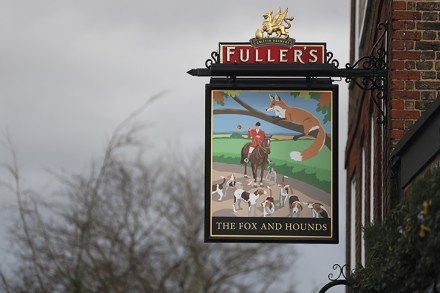
An easy one: what links Jack Straw’s Castle, The Labouring Boys and The Jolly Taxpayer? No, not the parliamentary expenses scandal of yesteryear, but the weird and whimsical world of British pub names. It was in 1393 that Richard II ordered brewers to announce their beery business by a prominent sign. Colourful names quickly abounded, invented by publicans and patrons alike. The intervening six centuries have given ample scope for praise and play. The commonest names across the UK’s 50,000 or so pubs gesture to royal heraldry: The Red Lion, Crown, Royal Oak and White Hart make up the top four; Rose and Crown, Queen’s Head and King’s Arms come close behind.

Cambridge’s slavery inquiry will raise more questions than it answers

From our UK edition

Can the past hold the present to ransom? Can we be culpable for our predecessors’ actions? Knotty questions of this kind have long been debated in British universities. But now these abstractions are finding new and controversial expression. Yesterday, the University of Cambridge made headlines by launching an academic investigation into its historical relationship – direct or otherwise – with the slave trade. The panel will spend two years scrutinising whether Cambridge profited from ‘the Atlantic slave trade and other forms of coerced labour during the colonial era’. For academics, the enquiry will certainly be interesting. But serious problems inevitably arise when historical discoveries are deemed to have moral consequence for the present.

Cairns

From our UK edition

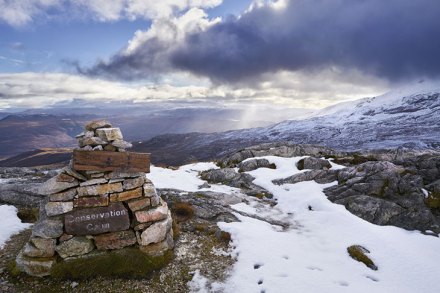
There are piles of stones and then there are piles of stones. Anyone can place one rock upon another, but it takes a special endeavour to get the Ordnance Survey to take notice. Once a clutch of cartographers formally recognise a cairn, it will stay mapped for centuries, if not millennia. Wander around Britain’s fells, moors and coastline and you’ll find all manner of rock piles punctuating the landscape. Often some 5,000 years old, these are our island’s most ancient standing constructions. Although they might look similar, cairns are not all the same. Summit cairns, for instance, indicate the precise pinnacles of hills.

Trade, Tory splits and electoral defeat – is history about to repeat itself?

From our UK edition

Parliament, we are told, is in uncharted territory: the government looks unable to get the Prime Minister’s peculiar brand of Brexit through Parliament, and the House of Commons remains unready to realise the decision of the referendum three years ago. The European Question, that bête noire of Conservative collegiality, has once more split the party. While it is completely unclear what will happen in the near future, the present impasse is not entirely new. The latest episode of The Long View, just broadcast on Radio 4, looks at parallels - including the role played by The Spectator. And there’s quite a story to tell.