Mick Brown

Why shamanism shouldn’t be dismissed as superstitious savagery

From our UK edition

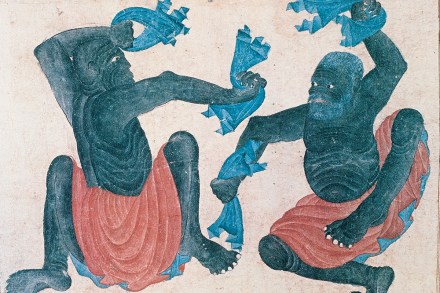
In 2014, in the course of his inquiry into shamanism, the anthropologist Manvir Singh spent time with the Mentawai people on the Indonesian island of Siberut. He estimated that among the 265 residents he managed to interview, 24 were male shamans, or sikerei. These ‘specialists’, as he puts it, were uniquely empowered to commune with spirits and provide a range of services which included healing, divination and raining down afflictions on enemies. Over the course of two extended visits, living on a diet of fried grubs, boiled pangolin and pigs’ testicles, Singh witnessed ceremonies characterised by ‘turmeric coated sikerei decked out in leaves and beads... the dissonant clanging of bells and the hellish squeals of sacrificed pigs’.

The tyranny of 1970s self-help gurus

From our UK edition

As any book about the rise of that most nebulous idea ‘wellness’, should, James Riley’s Well Beings begins with Gwyneth Paltrow, purveyor of ‘This Smells Like My Vagina’ candles, ‘Metabolism-Boosting Super-powder’ and nostrums about mindfulness and ‘self-care’ – for which read self-indulgence. In 2019 Paltrow’s company Goop chartered a luxury liner for a ‘Goop at Sea’ extravaganza, at which attendees were invited to spend $4,200 for the ‘basic’ cruise and a suite at the ship’s onboard spa, and a further $750 for the event itself, the highlight of which would be an appearance by the high priestess of wellness herself. Goop at Sea was cancelled due to Covid.

A strange vibration

From our UK edition

Among the many curiosities revealed in this book, few are more startling than the fact that at the height of the so called ‘summer of love’ in 1967 the British historian Arnold Toynbee, on a visit to San Francisco, made his way to the Haight-Ashbury district — hippy central — to catch a concert by one of the Bay Area’s most popular bands, Quicksilver Messenger Service. Just what Toynbee, who was 78 at the time, made of the group’s epic exercise in free form, psychedelic improvisation, ‘The Fool’, Goldberg does not mention.

Beautiful thoughts for all occasions

From our UK edition

Kahlil Gibran was 40 years old, a short — he was just 5’3” — dapper man with doleful eyes and a Charlie Chaplin moustache, and in the first throes of the alcoholism that would result in his early death, when in 1923 he published The Prophet. A collection of 26 prose-poems, written in quasi-Biblical language, the book takes the form of sermons by a fictional sage named Al Mustapha, on the big questions of life: family, friendship, love, work and death. These range from the profound to the banal. ‘Love gives naught but itself and takes naught but from itself. Love possesses not nor would it be possessed; For love is sufficient unto love.’ And who could argue with that? But then again.

Was Chris for real?

From our UK edition

I still don’t know whether I’ve been had I have been wondering what to do about Chris…. Well, I call him Chris, but the truth is that I’ve only met him once and I’d hardly say our brief acquaintance qualifies as friendship. How does one get oneself into these quandaries? Four weeks ago, I was walking along Buckingham Palace Road, towards the coach station, when I noticed Chris. He was a couple of steps ahead of me, talking on the telephone, and in a state of agitation. He was talking to a friend. His father had died that afternoon, and he needed to borrow the fare — 30 quid — for the coach to Leeds. Could his friend help? I was alongside with him by then, and glanced over.

The great enemy of dogma

From our UK edition

Nobody could accuse Pankaj Mishra of lacking ambition. A mixture of memoir, history, political and philosophical treatise, An End to Suffering sets out to tell the historical story of the Buddha and to contextualise his teachings in the development of the Western philosophical tradition. Hindu by birth and rationalist by disposition, Mishra leads us on his own journey from India, to Europe, to America, to the mountains of the Hindu Kush. Descartes, Schopenhauer and Hume jostle for attention, along with pensées on the rise of the nation state, the end of history and Islamic fundamentalism. It sounds an almighty mess. The extraordinary thing is that it works, and triumphantly.