Lead book review

Reading the classics should be a joy, not a duty

Writing the history of the novel, even covering a limited period, is a challenge. No one could possibly read every novel that has been published. Even if you read 100 a year you would scarcely scratch the surface. It isn’t like writing a history of most other subjects, where the important matters select themselves. You wouldn’t guess from this book how hilarious Lolita is, or some of the best passages of Ulysses No one could say with certainty that the most noteworthy novels are those which once made, or now make, the most impact. Indeed, a history that included many of the bestsellers of the day would be unusual – one, for instance, that took in G.W.M.

Books of the Year II

Peter Parker The New Zealand novelist Catherine Chidgey ought to be much more celebrated in this country than she is. Do not be put off by the fact that The Axeman’s Carnival (Europa, £14.99) is narrated by a magpie; whimsy is entirely absent from this highly original, thrillingly dark and often very funny novel. The bird is adopted by the wife of a cash-strapped farmer and learns to speak, becoming an internet sensation and so providing useful income. At the same time, its guileless chatter includes picked-up phrases that inadvertently expose what is really going on in the household where it has made its home. Treat of the year was Sheila Robinson’s Balance, Humanity and Nature (Random Spectacular, £27.

Books of the Year I

Jonathan Sumption Barbara Emerson’s The First Cold War: Anglo-Russian Relations in the 19th Century (Hurst, £35) is an outstanding account of Britain’s relations with Russia at a time when ambassadors mattered and Britain was the only world power. No one has explained the Great Game in Central Asia or the intricacies of European dynastic politics so well. Anne Somerset’s Queen Victoria and Her Prime Ministers (Collins, £30) overlaps with it, since one of the abiding themes of the queen’s relations with the eight men who occupied No. 10 in her long reign was her enthusiasm for going to war with Russia. Victoria was opinionated and outspoken, but easy to manipulate if you knew the codes.

Is it up to pop stars to save the planet now?

‘Walking by the banks of the Chao Praya on a breezy evening after a day of intense heat,’ writes Sunil Amrith at the start of his melancholic new book, ‘I struggled to connect the scene before me.’ While the river that flows through Bangkok looked idyllic, ‘crowded with noisy pleasure boats festooned with lights’, Amrith was struck by the realisation that half of the city ‘could be underwater by the end of this century’. This thought was the latest stage in a process that he says has taken him time to work out: ‘I can no longer separate the crisis of life on Earth from our concerns with justice and human freedom that inspired me to become a historian in the first place.

The demonising of homosexuals in postwar Britain

Not every human culture leaves clear and legible accounts of itself. Here we have a comparatively recent way of life which we know thousands of men led. It was proscribed, and those who lived within it had good reasons to conceal their participation and nature, usually taking care not to leave any records. Invisible and, even at this short distance, impossible completely to understand, the culture of male homosexuals in London was only partially legalised in 1967. Before that has to be interpreted through material which is intrinsically unsatisfactory. A comparison might be drawn to the textual means historians have of understanding another proscribed culture, the early Christians in Rome.

Politics as Ripping Yarns: the breathless brio of Boris Johnson’s memoir

It is, perhaps, hard to imagine a collaboration between Virgil and Captain W.E. Johns, a fusion of the Aeneid and Biggles Pulls It Off, but that is how Boris Johnson’s memoir reads. Our intrepid hero travels round the world, wooing Gulf potentates, sticking it to Vladimir Putin, snatching submarine contracts from under Emmanuel Macron’s snooty Gallic nose and then makes it home in time for some uniting and levelling up before settling down to a well-deserved glass of Tignanello. He also, like Aeneas, endures a thousand ordeals and makes himself father of the world’s greatest city (while also making some truly dreadful puns: ‘Was it H.J. Eysenck who gave me that idea? Eysenck it was...’).

Few rulers can have rejoiced in a less appropriate sobriquet than Augustus the Strong

Augustus the Strong (1670-1733), Elector of Saxony and King of Poland, is often labelled one of the worst monarchs in European history. His reign is billed by Tim Blanning’s publishers as ‘a study in failed statecraft, showing how a ruler can shape history as much by incompetence as brilliance’. Yet this thorough and often hilarious study of Augustus’s life and times reveals these harsh headline words to be exaggerated. Indeed the man comes across as quite a good egg, as much sinned against as sinning.

A wish-fulfilment romance: Intermezzo, by Sally Rooney, reviewed

An earworm from the time of Covid: the sound of Connell and Marianne having breathless sex, bedsprings squeaking. I’m talking not about 2020’s hit TV adaptation of Sally Rooney’s bestselling second novel, Normal People but about the relentless piss-take featured on BBC Radio 4’s Dead Ringers. After every few skits the show would cut to an audio clip of the two undergraduates going hard at it. The joke was in the repetition – an exaggeration of the extraordinary density of earnest sex scenes in Rooney’s writing. It was crude, cruel and very funny.

The SAS explode from the shadows in six days that shook Britain

Ben Macintyre has a knack of distilling impeccably sourced information about clandestine operations into clear, exciting narrative prose. His latest book, about the April 1980 Iranian embassy siege in London, starts as it means to go on – with a snapshot of seven Range Rovers, two Ford Transit vans and two furniture lorries pulling out of Bradbury Lines, the then headquarters of the Special Air Service (SAS) in Hereford. Lying low inside were 45 soldiers and ‘enough weaponry to fight a medium-sized war’. Each man carried a submachine gun, mostly the ‘reliably lethal’ Heckler & Koch MP5, which fires 13 rounds a second, with four 30-round magazines of 9x19mm parabellum bullets.

From ugly duckling into swan – the remarkable transformation of Pamela Digby

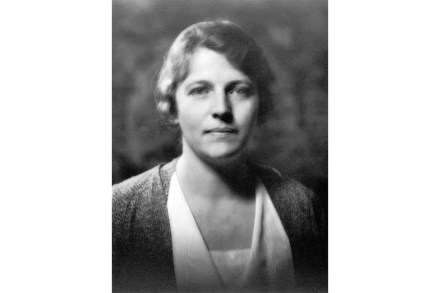
The tramp of lovers marching through our heroine’s bedroom in the first half of Sonia Purnell’s Kingmaker almost deafens the reader. But then not for nothing did Pamela Digby Churchill Hayward Harriman become known as the alpha courtesan of the 20th century. What is perhaps not so well covered is her decade-long influence on American politics before becoming the United States Ambassador to France under (no, not literally) Bill Clinton. The Hon Pamela Digby was born on 20 March 1920 and brought up quietly in Dorset, riding, hunting and meeting only those her parents (her father was the 11th Baron Digby) considered above the social plimsoll line. Early on she realised that what gave a woman supreme independence was great wealth – usually acquired through a man.

The great French painter who had no time for France

In 1855, Paul Gauguin’s widowed mother Aline returned to her husband’s family in Orleans after seven years in Peru. She brought back her daughter Marie, eight-year-old son Paul and her collection of pre-Columbian artefacts. They had no commercial value but those strange objects, sprouting the heads of birds and animals, had a power that the westernised world had lost touch with. They sank deep into the imagination of her wild, headstrong boy, who often described himself as ‘a savage from Peru’. After the sensory overload of South America, France and school were grey, cold and miserable. With education over, Gauguin insisted on going to sea and served in the navy in the Franco-Prussian war.

The trivial details about royalty are what really fascinate us

For the moment, can there be anything new to say about Elizabeth II? In time, the archives will open up and more of her correspondence and any of the diary we know she kept will be made available to the public. (I wouldn’t get too excited – no monarch’s diary since Victoria’s has had much to tell us about its writer). But for now you would be forgiven for thinking every scrap has been gone over, every anecdote and every major or minor event in a long life. In an excruciating encounter with HM, Brown told her the plot of The Resistible Rise of Arturo Ui The first published biography of Elizabeth II came out in 1930, when she was four years old. When she died in 2022, she had been constantly written about for almost a century.

Introducing Tchaikovsky the merry scamp

Some years ago, following a Christmas performance of Tchaikovsky’s Nutcracker, I sat in one of the dives near the theatre with a member of the corps de ballet, the gay son of close friends. The audience had been populated largely by children and teenagers, most of whom were either smitten by the intrepid, empathetic Clara or wanted to be her. Yet the mood perceptibly shifted when, at the end of Act I, the life-sized nutcracker doll transformed into a most handsome prince, all grace and gluts. ‘Do you think in that moment,’ I asked my dancer friend, ‘that a smattering of adolescent boys, out on a family treat, notice their affections shifting from Clara to the Prince and receive there and then the gentlest yet unmistakable insight into their future selves?

Saved from certain death at Auschwitz – by playing the cello

Bees and mammoth bones, a shipwreck, horse urine (preferably female), a 17th-century craftsman and a 20th-century genocide. Playing an extended narrative game of Only Connect in her latest book, the musicologist Kate Kennedy takes a bird’s-eye view of four lives and five centuries as she turns her own instrument, the cello, into a prism. Part history, biography and auto-biography, with digressions into anthropology, acoustics and aesthetics and an intriguing cast of characters, Cello sings richly. But you have to be willing to go on the journey. Has publishing reached peak personality-stakes?

A marriage of radical minds: the creative partnership of Fanny and Robert Louis Stevenson

It is hard to imagine any Victorian man living a fuller life in a flimsier body than Robert Louis Stevenson – and he certainly wouldn’t have managed it without the support of his partner and wife of several decades, Fanny Van de Grift. Born in Edinburgh on 13 November 1850, Louis suffered from countless childhood illnesses that limited his activity to reading books, writing stories and staging ‘pasteboard theatre’ productions with his nanny, or else travelling to health spas in Marseille, Genoa and Naples. He strongly resisted his father’s efforts to enlist him in his own career as a lighthouse designer, and at Edinburgh University the only thing he excelled at was truancy.

How the myth of Paris liberating itself was born

The liberation of Paris in August 1944, two months after D-Day, was one of the most highly publicised victories of the second world war, although it was of no military importance. General Eisenhower, the supreme Allied commander, originally planned to bypass the city altogether but was persuaded by General de Gaulle to allow the tanks of the French 2nd armoured division (the famous Deuxième Division Blindée – 2eDB) to lead a diversion into the city, backed by American infantry. De Gaulle claimed that he was concerned to avoid the danger of a bloody insurrection led by the communist Resistance. His real concern was less about bloodshed than his future political control of France.

The new alliances dedicated to destroying democracy

After staging a failed coup and going to prison, the Venezuelan army officer Hugo Chavez ran to be president in 1998, campaigning against corruption and offering revolutionary change. His nation was seen as a prosperous beacon of stability, built on its great oil wealth, envied by many people elsewhere in the region. He won by promising to tackle the inequality that scarred it so badly and take on the oligarchs enriching themselves through favours and nepotism. Western celebrities, journalists and politicians, from Sean Penn through to Jeremy Corbyn, started flocking to South America to hail their new progressive hero supposedly fighting for social justice.

A David and Goliath battle involving a billion-dollar pornography website

Laila Mickelwait’s Takedown describes in fascinating and often distressing detail both why Pornhub, the Canadian-owned internet pornography video-sharing website, needs to be destroyed and how this might be achieved. It’s not the story of a movement against the porn industry, like the one I have been involved with for decades, but more a woman’s lone, Erin Brockovich-like crusade to shut down a major distributor. The book relates how, through investigative journalism, Mickelwait discovered that one of the world’s biggest websites was knowingly profiting from sex trafficking, and reveals her subsequent fight to hold Pornhub accountable for its distribution and monetisation of child sexual abuse and rape.

Dedicated to debauchery: the life of Thom Gunn

In 1876, writing to his friend Gertrude Tennant, Gustave Flaubert set down a principle that artists and writers should live by: Soyez réglé dans votre vie et ordinaire comme un bourgeois, afin d’être violent et original dans vos œuvres. (Be regular in your life and ordinary as a bourgeois, in order to be violent and original in your work.) The life of the English poet Thom Gunn had its disciplined aspect (he managed to hold down a job at least), but, overall, it was so dedicated to debauchery and excess that it’sa wonder it lasted as long as it did. The story, told in detail by Michael Nott, makes even the least censorious reader sometimes wonder why this seemed like a good idea. Gunn was born in Kent in 1929 to an upper-middle-class intellectual family.

Islands of inspiration: a poet’s life on Shetland

Shetland comprises an archipelago of some 300 islands and skerries situated roughly half way between London and the Arctic Circle. Stereotyped by many outsiders as bleak and somehow ‘on the edge’, according to the poet Jen Hadfield’s stylish memoir – about her 17 years of living there – it can be more illuminating to see these places as somehow central to everything. Visiting Foula, Hadfield overcomes her vertigo, finding the island ‘peaceful and dreadful’ all at once Storm Pegs is as much an account of the author finding new personal bearings as a series of magic lantern slides about insular life. The title alludes to a traditional piece of perforated wood used by mariners to keep track of their whereabouts: you stuck the peg in a hole and navigated accordingly.