David Profumo

Highland noir: The Grey Coast; The Serpent; Blood Hunt, by Neil M. Gunn, reviewed

From our UK edition

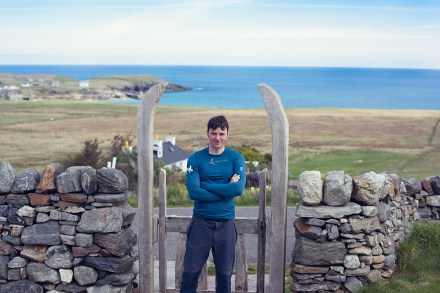
Before he died in 1973 at the age of 81, Neil Gunn was arguably Scotland’s greatest living novelist, a leading figure in its literary Renaissance and the author of 28 books (most famously his bestselling 1941 maritime epic The Silver Darlings). Now, to mark the centenary of his first novel, The Grey Coast, the independent Sutherland-based publisher North House Press is reissuing three of his works in nice clothbound editions. Taken together, they give an impression of his versatility and shortcomings.
Alone on a vast fjord, surrounded by whales, beneath the midnight sun

From our UK edition

As an angler in pursuit of fish across some 45 countries, I have travelled in a variety of precarious watercraft, from a Tahitian va’a to a coracle in Coorg, and remain convinced that all buoyant vessels are merely looking for somewhere to sink. In his study of the cultural history of small boats around the north Atlantic, David Gange, an academic historian and devotee of the kayak, argues that they are in fact transports of delight, and a key component in the survival of precious maritime communities.

Homage to the herring as king of the fishes

From our UK edition

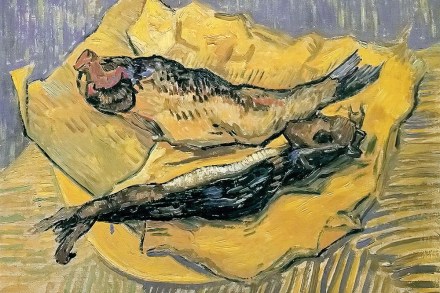
In 1755, Samuel Johnson (this was before his honorary doctorates) defined the herring as ‘a small sea-fish’, and that was it. By contrast, Graeme Rigby has spent 25 obsessive years documenting the cultural and economic importance of this creature. The resulting omnium-gatherum is like the bulging cod-end of a bumper trawl net, farctate with glistening details that embrace zooarchaeology, cooperage, otoliths, skaldic verse and Van Gogh’s ear. Clupea harengus is a highly adaptable, widely distributed marine teleost that can form shoals covering several square miles, and their milky spawning trails are so long they can be seen from space. The name may derive from the Germanic heer (army), and its nicknames include ‘Digby Chickens’.

Time is running out for the world’s great rivers

From our UK edition

That rivers have a life of their own is an ancient idea become current again. Shape-shifting, vital and recognisably capable of being sickened or damaged – as the state of our fragile chalk streams so starkly illustrates – there is good reason why fluvial myths have such historic potency and why the flow of water enjoys so many figurative associations. The late James C. Scott, an amateur hydrologist and professor of anthropology at Yale, who died in July last year, opens his nicely fluent study with an unequivocal assertion – ‘Rivers, on a long view, are alive.’ In Praise of Floods examines the several ways in which homo sapiens have sought to tame and exploit watersheds, and the importance of floodplains in human culture.

The hare-raising experience that changed my life

From our UK edition

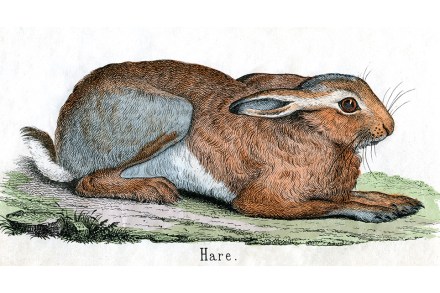
One wintry day during lockdown, the parliamentary political adviser Chloe Dalton discovered a new-born leveret on the track by her converted barn. It was only as long as her palm’s width, with a white star shape on its forehead. Ambivalent about interfering, she nonetheless gave it houseroom, despite being warned that brown hares can never really be domesticated. This book, her first, is the chronicle of how the animal changed her life.

‘I am haunted by waters’: Norman Maclean and his lyrical ‘little blue book’

From our UK edition

Although in his later years Norman Maclean was renowned for his nuanced and often lyrical autobiographical novella A River Runs Through It (subsequently filmed by Robert Redford, and known in angling circles – with mixed feelings – simply as ‘The Movie’), by all accounts he could be forbidding and ornery in person. He informed one Hollywood shyster: ‘When we had bastards like you out west we shot them for coyote bait.’ The novelist Pete Dexter once described him as ‘an old man who obviously takes no prisoners, looking at you as if you’d just invented rock’n’ roll’ – and that was only from a photograph.

Islands of inspiration: a poet’s life on Shetland

From our UK edition

Shetland comprises an archipelago of some 300 islands and skerries situated roughly half way between London and the Arctic Circle. Stereotyped by many outsiders as bleak and somehow ‘on the edge’, according to the poet Jen Hadfield’s stylish memoir – about her 17 years of living there – it can be more illuminating to see these places as somehow central to everything. Visiting Foula, Hadfield overcomes her vertigo, finding the island ‘peaceful and dreadful’ all at once Storm Pegs is as much an account of the author finding new personal bearings as a series of magic lantern slides about insular life. The title alludes to a traditional piece of perforated wood used by mariners to keep track of their whereabouts: you stuck the peg in a hole and navigated accordingly.

The wonder of the marine world is in serious danger

From our UK edition

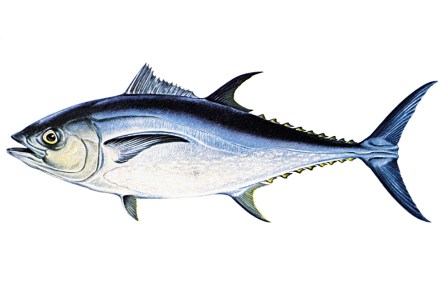
Streamlined, musclebound, warm-blooded and with fins that retract into body slots like a switchblade so it can attain swimming speeds of more than 40 mph, the Atlantic Bluefin Tuna is a wonder of the marine world – the Clan Chief of the Scombridae, that can weigh up to 1,500 lb. It has long been prized by sport fishermen, from Charlie Chaplin to the dentist-turned-bestseller Zane Grey, and there is nothing tentative about a tunny strike. In 1927, after a four-hour battle with one eight-foot giant, Grey wrote: ‘If it were possible for a man to fall in love with a fish, that was what happened to me. I hung over him, spellbound and incredulous.’ ‘If it were possible for a man to fall in love with a fish, that’s what happened to me.

A magpie proves a troublesome pet

From our UK edition

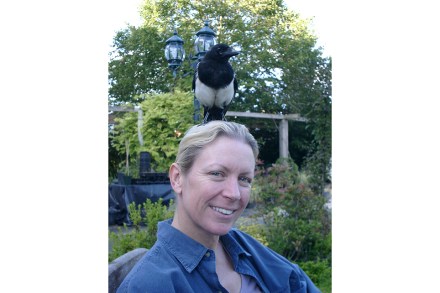
With his swashbuckling gait, ominous associations and garrulous demeanour, the magpie is the dandified razor boy of our avifauna and provokes ambivalent feelings (the ‘pie’ part signifies many a mixture). His pilfering reputation has inspired work from Rossini to the prog-rock band Marillion, and in lab tests he’s one of the few creatures brainy enough to recognise his own image in a mirror – even some Marillion fans can’t do that. But it’s hard to see how this corvid could be truly lovable. The artist and poet Frieda Hughes, however, fell for a little foundling Pica pica back in May 2007 when she was refurbishing her ramshackle new home. He was an unloved, unfledged orphan, and adopting him changed her life. George is a diary-based record of the sprightly saga that ensued.

Miller’s thumb and Mother-in-law’s garotte: the marvellous lexicon of angling

From our UK edition

Despite its many centuries of popularity – enthusiasts have ranged from Cleopatra to Eric Clapton – angling has been the subject of precious little historical scholarship, giving rise instead to anecdotalists or grim technicians. So Chris McCully’s latest animated and vigorous addition to the Bibliotheca piscatoria arrives as fresh and welcome as a run of summer salmon from the estuary. The lexicon of angling, he suggests, can encode cultural histories – and so it does. The result is a stargazy pie of a book rich in natural lore and quirks, assembled with etymological rigour and finished with crisp wit.

Britain’s recent darkest hour: the betrayal of the Chagos Islands

From our UK edition

Philippe Sands’s compelling new book opens in 2018 at the International Court of Justice in The Hague, where Liseby Elysé – ‘a distinctive lady dressed in black’, who can neither read nor write – is making a video statement before 14 judges. In Creole, she describes how, in 1973, she and the last of her 1,500 fellow islanders from Peros Banhos (part of the Chagos archipelago, south of the Maldives) were forcibly deported to Mauritius. They were herded in the dark onto a boat for a four-day passage, with neither notice nor explanation given, restricted to one wooden trunk of possessions apiece, homes abandoned and all their pets rounded up and gassed. The boat’s captain said he had ‘never transported people in such terrible conditions’.

A glimmer of hope for the blue planet

From our UK edition

You might think – with its feeding frenzies, vertiginous seamounts, perilous weather and deep history of the monstrous – that the ocean was a wild enough place as it is; but according to the environmentalist Charles Clover it has systematically been ‘de-wilded’ by decades of commercial overfishing, and our seas are now in urgent need of healing. I believe him. When it comes to conservation, fish hold less appeal than terrestrial fauna: they are perceived as cold-blooded, mostly invisible, lacking in charisma, and often delicious – plus, for centuries, there existed the comfortable delusion that their stocks were inexhaustible (even a proof positive of divine benevolence).