Michael Gove

Michael Gove

Michael Gove is editor of The Spectator.

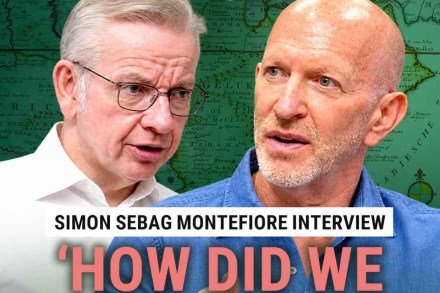
How the modern Middle East was made – and why it’s still at war | Simon Sebag Montefiore

From our UK edition

63 min listen

This week, Michael Gove is joined by historian Simon Sebag Montefiore to discuss the rulers, revolutionaries and nation builders who shaped one of the world’s most turbulent regions. From Ibn Saud’s dramatic conquest of Riyadh and Atatürk’s creation of modern Turkey to Ben-Gurion, Reza Shah and Nasser, Simon explores the extraordinary personalities who built states from the ruins of empire. What made these leaders so successful – and why did so many of their projects end in dictatorship, war or collapse? They also discuss Nasser’s rise as the champion of Arab nationalism, Gaddafi’s obsession with his Egyptian hero, and the strongmen who tried to remake the Arab world in their own image.

How the modern Middle East was made – and why it’s still at war | Simon Sebag Montefiore

To be a Spectator reader was to love Rod

Since becoming Spectator editor there was one observation I heard more often from readers than any other: ‘Rod is the first page I turn to every week.’ Whatever people’s politics, background or other interests, to be a Spectator reader was to love Rod. Rod did his best, of course, to be unloveable. At least in print. Nothing, and no one, apart from possibly Millwall, was spared from his criticism. Savage, foul-mouthed, merciless. But also hilarious, superbly well-informed and honest. Above all honest. There are all sorts of enlightened souls in and around journalism who pretend to that virtue.

'A most gigantic fraud' – The Jason Arday story goes on

Is Michael Gove missing Bridget Phillipson already? – and the Cambridge University saga continues

From our UK edition

The tale of the Cambridge professor, Jason Arday continues, as Michael and Maddie weigh in on the fantasy. How much of a role has Cambridge played in enabling such a serially misleading individual, and can the university claw back some respectability after this saga? – do they even feel a responsibility to do so? Maddie asks Michael whether Lucy Powell's broadside at his education reforms has made him nostalgic for the days of Bridget Phillipson. Also: Michael questions Maddie over recent drama in the political sketch writing world, and whether she will defend Quentin Letts amid a backlash from Labour MPs. Produced by Natasha Feroze and Henry Lloyd.

Burnham and Powell want to bring back stupid

From our UK edition

When the great Tory Lord Chancellor F. E. Smith gave his rectorial address at Glasgow University in 1923 he promised the undergraduates there assembled that the world offered ‘glittering prizes to those who have stout hearts and sharp swords.’ A century on and our new government takes a rather different view. Instead of glittering prizes, it wants the young to know their place, limit their horizons and settle for less. In its first few days in power the Burnham administration has shown itself resolutely anti-intellectual, hostile to ambition and backward-looking. The new Education Secretary Lucy Powell has promised us that she will end the ‘over-focus on academic outcomes’ in our schools. In other words – bring back stupid.

Katharine Birbalsingh: children are taught to hate Britain – I blame the adults

From our UK edition

50 min listen

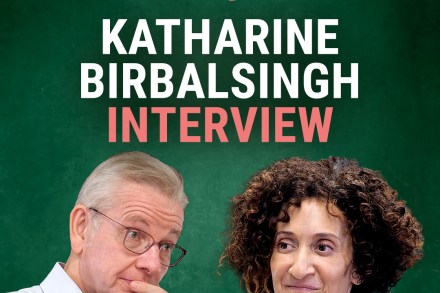
Katharine Birbalsingh is the founder and headmistress of Michaela Community School in Wembley, and has been dubbed Britain’s strictest headteacher. Under her leadership, Michaela has become one of the country’s most successful state schools, while openly challenging the progressive orthodoxies of the British education system. On Quite right!, Katharine argues that ethnic-minority pupils do not need to see themselves reflected in every aspect of a culture to feel that they belong – and that suggesting otherwise may itself be racist. She and Michael also discuss whether individualistic parenting has gone too far, why ritual should be at the heart of British schools and why children need a return to small-c conservative values.

‘He’s made enemies’ – inside Burnham’s brutal Labour takeover

From our UK edition

50 min listen

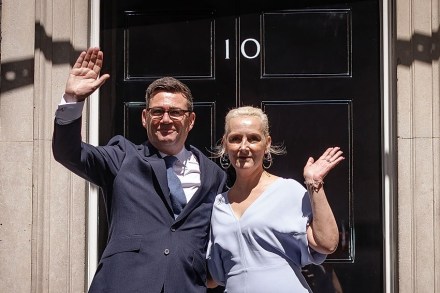
Andy Burnham has begun his premiership with a sweeping reshuffle, purging many of Keir Starmer’s closest allies and installing a cabinet in his own image. Has he ended Labour factionalism – or simply created a new faction of enemies? And does the appointment of John Healey as Chancellor suggest that Burnham wants a safe pair of hands rather than a rival power base? Michael and Maddie also ask whether Burnham’s early promises can survive contact with economic reality. With billions already pledged on defence, energy bills, transport and public ownership, where will the money come from – and what is his plan for growth? Plus: will Shabana Mahmood be allowed to get a grip on immigration? Can Ed Miliband be trusted at the Foreign Office?

Michael Gove, Count Binface, Michael Simmons & Graeme Thomson

From our UK edition

30 min listen

On this week’s Spectator Out Loud: Michael Gove explains why he is against more security for MPs; taking a brief break from campaigning in clacton as count binface, Jon Harvey explains why Christopher Nolan’s Odyssey is a triumph; Michael Simmons says shut up about your disability; and finally, Graeme Thomson reviews Madonna. Produced and presented by Patrick Gibbons.

Michael Gove, Count Binface, Michael Simmons & Graeme Thomson

Louis Mosley: Burnham is wrong to ditch Palantir – and how AI threatens the ‘lanyard class’

From our UK edition

50 min listen

Louis Mosley is the UK head of Palantir, one of the world’s most powerful – and controversial – technology companies. Its work with the NHS, the US government and western militaries has made it a lightning rod for criticism, with opponents accusing it of threatening privacy, enabling mass deportations and supporting military operations in Gaza. Louis therefore occupies an unusual position at the intersection of technology, politics and the British state. On the podcast, he explains what Palantir actually does, why fears over NHS data are misplaced and why scrapping its contract would be a ‘terrible mistake’.

Louis Mosley

I was targeted by a killer – but I’m still against more security for MPs

Reason, David Hume noted, is a slave of the passions. Arguments, especially political crusades, are often rooted in emotional responses, with the evidence assembled to justify a position which is heartfelt but often wrongheaded. So it is with the cry, from politicians, for more steps to be taken to safeguard the personal security of politicians. The killing of Ann Widdecombe, like the deaths of Jo Cox and David Amess, has generated new demands for action, and legislation, to protect those in public life from risk and danger. The transparent nobility of Ann’s life and the grotesque tragedy of her death make it emotionally difficult to resist the call for strengthened perimeters around our politicians.

Parliament’s greatest speeches – and Labour’s women problem

From our UK edition

35 min listen

In this week’s Q&A: does Labour have a women problem? Michael and Maddie discuss why the party has never had a female leader, whether its embrace of identity politics has created a rod for its own back, and why gender-critical feminists on the left have found themselves in exile. Also this week: why won’t any party touch the triple lock? Michael argues that the state pension has become an unsustainable transfer to the section of the electorate most likely to vote – but can any politician make the case for reform without being accused of ‘mugging granny’? Plus: Parliament at its best and worst. From Danny Kruger and William Hague to Hilary Benn, George Galloway and Tom Tugendhat – what makes a truly great Commons speech? Produced by Oscar Edmondson.

Farage’s gamble: is ‘the establishment’ out to destroy him?

From our UK edition

48 min listen

Nigel Farage has resigned as MP for Clacton and will fight a by-election in an attempt to turn questions over his finances into a referendum on ‘the people vs the establishment’. Is this a political masterstroke or a mistake? Has Farage taken back control of the narrative, or will the row over undeclared money continue to plague Reform? Michael and Maddie also discuss whether Dominic Cummings’s prophecy – that the establishment would try to destroy Farage by fair means or foul – has come true. Plus: Prince Harry has suffered a bruising defeat in court against the Mail. What does the ruling tell us about press freedom? Produced by Oscar Edmondson.

Am I a ‘spiteful class warrior’ too!? – Kemi vs Bridget 

From our UK edition

32 min listen

In this week’s Q&A: as Bridget Phillipson and Kemi Badenoch clash over Labour’s education policy, Michael asks whether he is a ‘spiteful class warrior’ too. He has written before about his scepticism over the charitable status of some of the country’s elite academic institutions, arguing that they should do more to earn it – but does he regret his comments? Also this week: as Britain edges closer to life under Burnham, Michael and Maddie discuss who is really pulling the strings behind the famous black door. What is a chief of staff: a vital part of the machinery of government, or a civil servant with an inflated sense of importance? Plus: Ken, Boris or Sadiq – who will be remembered as the best mayor of London? Produced by Oscar Edmondson.

‘All vibes, zero detail’ – Burnham’s plan to fix broken Britain

From our UK edition

42 min listen

This week: Burnham’s strategy – or lack of one – a ‘number ten of the North’ and why immigration is the real test.What is so wrong with the South: Andy Burnham thinks devolution is the answer to Broken Britain, but does his diagnosis amount to an actionable plan for government? And does his focus on the North come at the expense of some of Britain’s most deprived areas? Michael knows the machinery of levelling up better than anyone and Madeline was in the room as Burnham made his big pitch – they give their verdict. Plus: Shabana Mahmood’s immigration muddle. After a row with junior minister Mike Tapp, the Home Office has announced plans for new safe and legal routes for asylum seekers, modelled on the Homes for Ukraine scheme.

Can I save Britain from war with Russia?

From our UK edition

I t won’t be much of a consolation to Keir Starmer but I too was overwhelmed by the responsibilities of being prime minister. Fortunately for the country, I was only playing the role in a fictional coalition cabinet assembled by Sky TV to wargame the consequences of a Russian attack on the UK. My turn as make-believe premier began with unwarranted overconfidence, moved to fumbling crisis after crisis and ended with me almost alone in a bunker wondering how disaster had come so quickly. So very different from the real world. My cabinet colleagues – Nicola Sturgeon, Penny Mordaunt, Harriet Harman, Jim Murphy and Sayeeda Warsi – all gave a good account of themselves.

Starmer’s fall – and the rise of King Burnham

From our UK edition

45 min listen

This week: Starmer’s exit, Burnham’s rise – and the court of King Andy. As Keir Starmer resigns after less than two years in office, Michael and Madeline ask what really brought his premiership to an end. Was Starmer simply overtaken by events, or did his downfall reveal something deeper: a disdain for politics, a mishandling of Southport and the grooming gangs scandal, and a growing gulf between Labour’s governing class and the country? They also discuss Andy Burnham’s march on Westminster. Is he the charismatic, communitarian figure Labour needs to take on Reform – or a political people-pleaser surrounded by the wrong people?

LIVE: The Brexit Debate | Michael Gove & Claire Fox vs Dominic Grieve & Matthew Parris

From our UK edition

30 min listen

Watch The Brexit Debate in full at https://www.spectator.com/brexit Ten years on from the Brexit referendum, Britain is far from taking flight. Was Brexit a mistake – or are its promised freedoms simply yet to be realised? With the government unwilling to act boldly, smoothing Brexit’s edges rather than seizing its opportunities, are we quietly edging back into Europe’s embrace? This is a section of our special live event marking ten years since the referendum. Prominent critics of Brexit – barrister and former Conservative MP Dominic Grieve KC, and Spectator columnist Matthew Parris – will propose the motion ‘This house believes Brexit was a mistake’, with leading advocates, former Brexit Party MEP Baroness Claire Fox and Spectator Editor Michael Gove, opposing.

LIVE: The Brexit Debate | Michael Gove & Claire Fox vs Dominic Grieve & Matthew Parris

The Brexit decade: was it worth it?

It may not feel or sound like it but Keir Starmer is a born-again Brexiteer. His achievements in office may be nugatory, his search for a legacy tragicomic, but there are countless actions this government boasts of which simply would not have been possible if we had stayed in the EU. Earlier this year, Labour moved to protect our steel industry with a tariff package possible only because we have an independent trade policy. I was delighted this month when the minister in the Lords made it clear this was a Brexit benefit. Those same Brexit freedoms allowed the Chancellor last month to cut tariffs on more than 100 foodstuffs to ease the cost-of-living crisis.

SPECIAL: why Enoch Powell matters to modern Conservatism

SPECIAL: why Enoch Powell matters to modern Conservatism

From our UK edition

50 min listen

Enoch Powell is one of the most polarising figures in modern British politics. His infamous ‘Rivers of Blood’ speech – in which he warned that immigration would spark ethnic conflict – continues to shape some of today’s most important debates on race, identity and immigration. Michael Gove and assistant editor Madeline Grant sit down with Simon Heffer, author of Like the Roman: The Life of Enoch Powell, to explore Powell’s legacy. They examine how he became a model for populist rhetoric and discuss why understanding Enoch Powell is central to understanding the right today. This podcast was originally recorded as a live event. To find out more about future Spectator events go to: spectator.

Brexit 10 years on – have we changed our minds?

From our UK edition

18 min listen

In this special edition of Quite right!, Michael Gove and Rachel Johnson revisit the argument that divided British politics – and their own families – as the tenth anniversary of the Brexit referendum approaches. Rachel, who campaigned for Remain, gives her verdict on what Brexit has really delivered: not the buccaneering liberation Leavers promised, nor the apocalypse warned of by Project Fear, but something she calls ‘a bit meh’. Michael, makes the case that the benefits of sovereignty are still accumulating – from AI and gene editing to financial services and regulation. Have either of them changed their mind?  Produced by Oscar Edmondson.

‘It will be a bloodbath’: Rachel Johnson on why Starmer won’t go quietly

From our UK edition

30 min listen

This week: Keir Starmer’s legacy, Andy Burnham’s next move – and should there be a general election? With the Makerfield by-election just days away, Michael Gove is joined by Rachel Johnson to ask whether an Andy Burnham victory would spell the end of Keir Starmer’s premiership. Could Starmer really fight on – or is the Labour party heading for a regicidal ‘bloodbath’? They discuss Starmer’s record in government, whether Labour has become the ‘welfare party’, and if Burnham could offer the party anything more than a political glow-up. Also on the podcast: Kemi Badenoch’s revival, the threat from Reform, and whether the right is actually ready for a general election. Produced by Oscar Edmondson.

‘It will be a bloodbath’: Rachel Johnson on why Starmer won’t go quietly | Quite right!