Lead book review

The greed and hypocrisy of the opium trade continue to shock

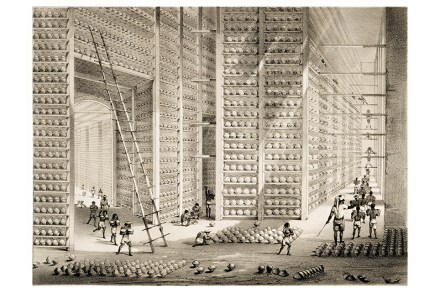
‘A fact that confounds me now when I think back on it,’ writes the acclaimed Indian author Amitav Ghosh at the start of this expansive and thoughtful book, ‘is that for most of my life China was for me a vast, uniform blankness.’ There were many reasons for this, he says. The war between India and China in 1962 might have played a part, along with the complex relationship between the two countries since then; but also the way that ‘an inner barrier’ has been ‘implanted in the minds’ of many around the world – one that blocks out China but allows in the ‘language, clothing, sport, material objects and art of the West’. Smoke and Ashes is a lovely blend of historical writing, travelogue and personal reflection stemming from what the author calls his ‘epiphany’.

A wealth of knowledge salvaged from shipwrecks

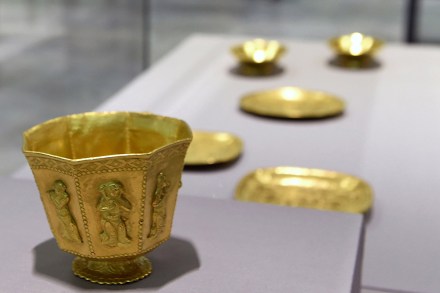
The flow of histories of the world, or parts of it, in a bundle of items never ceases, 12 years after Neil MacGregor presented world history through 100 objects from the British Museum. Many of these were of unknown provenance and therefore disconnected from their original context. By contrast, world history built around shipwrecks offers the opportunity to seize precise moments in time – most often when a sudden emergency has taken a ship to the bottom of the sea in the midst of everyday activities. In many ways, shipwrecks bring one nearer to daily life than almost any other archaeological sites. They are only surpassed by the remains of Pompeii and other cities overwhelmed by volcanic eruptions.

The problem with westerners seeking oriental enlightenment

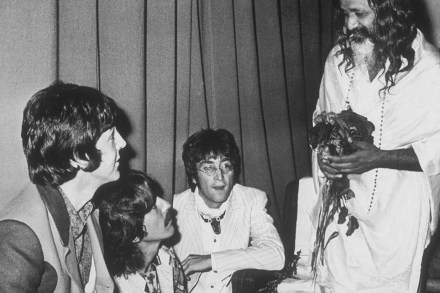
Call it a prejudice if you like. Living in Japan in the 1970s, I had a slight aversion to a particular type of westerner. He – for it was mostly a he – usually lived in Kyoto, sometimes wore a kimono and liked to sit in ancient temples chasing after that presumably blissful moment of enlightenment, awakening, satori, or whatever one wishes to call it. These seekers were less interested in Japan as a society of human beings. They wanted to float in higher spheres. As Christopher Harding explains in The Light of Asia, the Zen adepts, the Buddhist chanters, the rock-garden worshippers, the kimonoed fools (in my no doubt blinkered eyes) were part of a long western tradition. He identifies two ancient western perceptions of the ‘East’, by which he really means India, China and Japan.

Have we all become more paranoid since the pandemic?

As anyone who has ever been lucky enough to spend time in a psychiatric hospital knows, you don’t have to be completely mad to be there. A lot of us end up in the care of mental health professionals and jacked up on all sorts of crazy-person meds because something’s just not right: you know it, I know it, the dog in the street knows it. Those people are looking at us funny; those voices just won’t quieten down; it really isn’t safe out on the streets, so it must be better to draw the curtains, triple-lock the door and sit quietly in the dark eating only tinned fruit and bottled water.

The travails of Britain’s first Labour government

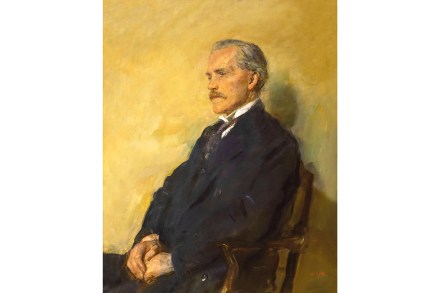
Once the working classes were allowed to vote it was inevitable that sooner or later they would elect a government which reflected their interests. That moment came with the appointment, in January 1924, of the first Labour government.    The circumstances could hardly have been less auspicious. There had been three general elections in as many years. No party had an overall majority. Labour, with 191 seats, was not even the largest, with the result that, throughout its short life, the government was entirely dependent on the goodwill of the Liberals, which soon ran out. With a couple of junior exceptions during the wartime coalition, no Labour MP had any experience of government.

The freedom fighters who dared to take on a communist superpower

In May 2020, as the planet grappled with the pandemic, China’s state media declared that there were ‘obvious deficiencies’ in Hong Kong law enforcement needing to be addressed. Any delusions this might have referred to intensifying police brutality in response to massive pro-democracy protests, let alone the unleashing of Triad thugs to attack participants, were dashed rapidly. Details emerged days later of a draconian new security law that criminalised any form of dissent, whether at home or abroad, with threat of life imprisonment. ‘When the world is not watching, they are killing Hong Kong,’ said Dennis Kwok, a lawyer and pro-democracy legislator. He was right.

Will the Caucasus ever be tamed? 

How to get your head around that searingly beautiful but complicated land that lies between the Caspian and Black Seas? The early Arab historian Al Masudi called the Caucasus jabal al-alsun, the mountain of tongues, and through the centuries the place has certainly seen its fair share of peoples, many of them troublesome, many of them troubled. Indeed, for somewhere you might think would be a transcontinental backwater, its outcrops, secluded valleys and expansive plains usefully separating its formidable neighbours – Russia to the north, Turkey and Iran to the south – it’s proved remarkably busy over the centuries; also persistently relevant. The turbulence of the region is rarely far from the news.

The splendour and squalor of Venice

Hard by the Rialto, in a densely packed and depressingly tacky quarter of Venice, the church of San Giovanni Cristosomo houses one of Giovanni Bellini’s most luminous and exquisite paintings. ‘I Santi Cristoforo, Girolamo e Ludovico di Tolosa’ is known to locals as ‘the Burger King Bellini’, after the fast food outlet opposite the church door. In any other city, the picture’s exquisite handling of light and complex mingling of Christian piety with Renaissance Neo-platonism would grant it a museum of its own, but in Venice its principal spectators are weary tourists in line for a Whopper. Martin Gayford’s paean to Venice as ‘a huge, three-dimensional repository of memory’ is constantly alert to such anomalies.

The British Empire’s latest crime – to have ended the Enlightenment

What is the Enlightenment, and when did it come to an end? Neither are easy questions to answer. The Enlightenment, as a historical phenomenon or a phenomenon of ideas, coalesced into an attempt to rid humanity of rigid superstitions and fanaticism and liberate it from tyranny of every sort. Its first movements were discernible in Europe in the 17th century, and it became a continent-wide experiment of thought in the following one. But when did it end – as the title of Richard Whatmore’s book takes for granted? There’s a good case for stating that it never came to an end. Once tyranny and religious certainty were dismissed as universal conditions of existence by the thinkers and writers who followed Voltaire, they could never be reinstated.

Surreal visions: the best of this year’s art books reviewed

Édouard Manet and Edgar Degas first met in a gallery at the Louvre. Degas was standing, etching plate in hand, copying a picture. How audacious, Manet exclaimed, to work without a preliminary drawing. ‘I would not dare to do the same.’ And thus he revealed the essential difference between the two. Degas was a supreme exponent of drawing, while Manet was a magician of the brushstroke. In many ways they moved on parallel tracks, each interested in subjects from contemporary life, both at odds with academic convention. But their talents were at a tangent. Famously, they fell out after Degas painted a double portrait of his friend and his wife. Enraged, Manet cut off a slice containing Mme Manet’s face. Making women look glamorous wasn’t something Degas did.

Was there ever a time of equality in human society?

Origin stories have always helped humans gain a moral compass. Locked in a tight embrace, the Maori deities Rangi and Papa are separated by their enveloped children, creating the distant father sky and nurturing Mother Earth, bringing light to the world. Mayan gods fashion man from maize after destroying earlier clay and wood versions, who are seen to have no soul. Adam and Eve eat from the Tree of Life but illicitly also from the Tree of Knowledge. One of the more touted modern human origin stories, ostensibly based on evolutionary science, speaks of a natural inequality between violent and promiscuous men and caring and faithful women. Having evolved to produce more of their sort, aggressive, lustful males hunted for game and exchanged meat for sex with coy female partners.

Why did Jon Fosse win the Nobel Prize for literature? It’s baffling.

The Nobel Prize for Literature this year was awarded to the Norwegian novelist and playwright Jon Fosse (pictured). He has long been admired by anyone in the literary world keen to advertise their seriousness. The Canadian critic Randy Boyagoda, writing of Fosse’s Septology in the New York Times, said that he’d ‘come into awe and reverence myself for idiosyncratic forms of immense metaphysical fortitude’. The technique is to bury statements of mystic vision or horror in piles of mostly tiny and uninteresting events Fosse is published in Britain by Fitzcarraldo Editions, that elegant firm bringing all sorts of high-minded writers to our attention in matchy-matchy formats.

Was the French Revolution inevitable?

In the middle of the 18th century, on the north side of the Palais Royal gardens in Paris, there stood a magnificent chestnut tree called the Tree of Cracow. In his presidential address to the American Historical Association in 2000, Robert Darnton explained that the name Cracow probably derived from the heated debates that took place in Paris during the War of the Polish Succession, but also from the French verb craquer: to tell dubious stories. News-mongers or nouvellistes de bouche, agents for foreign diplomats and curious members of the public gathered round the tree, which was at the heart of Paris’s news network, a nerve centre for transmitting information, gossip and rumours.

The mystery of Werner Herzog

Many movie actors are famous for their unmistakable voices – people like Sean Connery, John Wayne and Peter Lorre, who all pub comedians mimic. But how many directors are like that? Only one: the German auteur Werner Herzog, hero of the New German Cinema, who at the age of 81 has published this headspinning, free-associating memoir. Its German title, Jeder Für Sich Und Gott Gegen Alle, was also the original, anarchic title of Herzog’s 1974 film The Enigma of Kaspar Hauser, based on the true story of a boy reportedly brought up in an isolated darkened cell.

Seamus Heaney’s letters confirm that he really was as nice as he seemed

Seamus Heaney wrote letters everywhere – waiting for his car to be repaired at a country garage, sitting over a glass or more of Paddy late at night, and above all in aeroplanes, ‘pacing the pages against the pilot as he takes us in to Heathrow or Shannon’, as he wrote to a friend in 1995. So many eloquent missives were dashed off at high altitude that his editor suggests he might have had notepaper printed with the heading ‘EI 117’, the Aer Lingus flight between Dublin and Washington DC. This airborne activity is significant because it indicates two characteristics illuminated by Christopher Reid’s riveting collection: the pressures of life lived at an exceptional pitch of fame, and Heaney’s powerful need to keep faith with friends and fellow poets.

Learned necromancers and lascivious witches: magic and misogyny through the ages

Curses, conjurations, magic circles, incantations, abracadabra, gobbledygook... Why would any serious historian want to write a history of magic books?  Owen Davies issues a robust defence: magic is as old as human history, while a study of grimoires is a study of the book itself and its changing format over time. Through the lens of the grimoire (a book of magic spells and invocations), the parallel histories of religion and science are shown in an eerie new light. Perennial human desires, anxieties and aspirations for love, money and protection from harm bring people of the far past close to anyone today who reads a newspaper horoscope or consults the Tarot.

The astonishing truth about 007

The novel as a form is a fundamentally capitalist enterprise. It was invented at the same time as capitalism – Robinson Crusoe tots up his situation in the form of double-entry bookkeeping. Its interests dwell on the disparate and unequal natures of human beings and feed off rivalry, social transformation, moneymaking, profit and loss. No rigid feudal society has managed to create an effective school of novelists; and having once struggled through Cement, Fyodor Gladkov’s classic of socialist Soviet literature, I would say that systems dedicated to forcible equality also struggle.

The bloody prequel: a triumphant new translation of the Iliad

There is an ancient comment (on the work of a grammarian with the terrific moniker Dionysius Thrax) that the performers of the Iliad and the Odyssey changed costume according to which poem they were reciting: a dark blue crown for the sea of the Odyssey, red for the blood of the Iliad. Emily Wilson, whose brisk and clear-eyed translation of the Odyssey became a bestseller, has now switched her sea-blue crown for her blood-red one. Even the covers of the two books – the Odyssey had a blue-dominated cover depicting the Minoan fresco of ‘Ladies in Blue’; the Iliad is red and gold, with an image of Thetis giving Achilles his new helmet – reflect the shift.

‘My attachment to Giacometti grew into the bedrock of my existence’

Michael Peppiatt is an octogenarian English art historian, based in London and Paris, who has met many of the artists he writes about. But, sadly, he never met Alberto Giacometti. He was working as a translator when, in 1966, he applied for a junior editor’s job at Réalités magazine in Paris and, much to his surprise, got it. He went to say goodbye to his friend Francis Bacon,who offered to give him an introduction to Giacometti. Bacon wrote it in felt-tip on a torn-out page of Paris Match and told Peppiatt to take it round to Giacometti’s studio, which he did. But then he stood irresolute at the door, lacking the courage to knock.

The extraordinary life of 17th-century polymath Margaret Cavendish

Margaret Cavendish, the 17th-century Duchess of Newcastle, has been described as a heroine whose every doing ‘is romantic’ (Samuel Pepys); as being ‘so distracted... that there are many soberer people in Bedlam’ (Lady Dorothy Temple); as looking like ‘a devil in a phantom masquerade’ (King Charles II); as ‘the great atheistical philosophraster’ (anonymous 17th-century gossip writer); as ‘a picture of foolish nobility’ (Horace Walpole); as ‘a giant cucumber’ (Virginia Woolf); as a ‘crack-brained, bird-witted... fantastical... crazy duchess’ (Woolf again) and as ‘the empress and authoress of a whole world’ (herself). She has been seen as that most tiresome of types, a ‘character’.