Lead book review

The making of Van Gogh as an artist came at a terrible cost

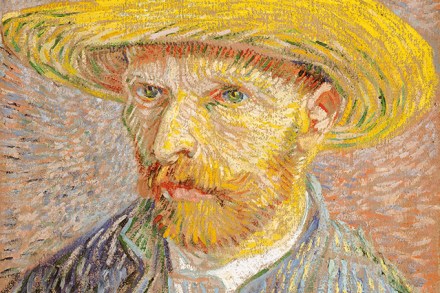
Six months before Vincent van Gogh’s death, the critic Albert Aurier, waxing poetical, wrote an article entitled Les Isolés on the then unknown painter. It raised to sainthood the solitary genius driven to insanity by an uncomprehending world. ‘Is he not one of the noble and immortal race which the common people call madmen but which men among us consider sort of saints?’ The man had already become myth. His life would be a sacrament and his suicide a reproach. It has remained that way ever since. Miles J. Unger thinks otherwise. He recasts our hero as the very opposite of isolé, a painter whose stylistic development was totally dependent on the artists and influences surrounding him in Paris.

William Blake still weaves his mystic spell

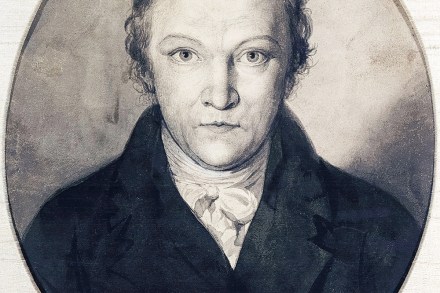
Everyone has their own William Blake and each age finds something new in the ocean of his work: revolutionary Blake, Christian Blake, humanist Blake, Jungian Blake, Freudian Blake, free-love Blake, hippy Blake, occult Blake, eco-Blake. The only time that missed out was his own – then he was mad, delusional and ignored Blake. Philip Hoare brings the fizz of his own sensibility to bear on the work of a man whose progeny of artistic spin-offs multiply with each passing generation. The result is a book that is neither Blake biography nor critical analysis nor legacy-tracing nor personal odyssey but a capacious mixing of them all. As the author of Leviathan or, The Whale, and Albert and the Whale and the film Hunting for Moby-Dick, Hoare begins by giving us whale Blake.

Poor little rich girl: the extraordinary life of Yoko Ono

David Sheff first met Yoko Ono in 1980 when Playboy commissioned him, then aged 24, to interview her and John Lennon. She asked him to send her his astrological and numerological charts before summoning him to the Dakota, where she and John occupied six apartments. (Elton John, a friend of theirs, wrote an excellent spoof: ‘Imagine six apartments/ It isn’t hard to do./ One is full of fur coats/ Another’s full of shoes.’) Yoko told him that his charts were good – ‘these are strong numbers’ – and that he would get on well with John. So they fixed a time to meet the next day. The interview lasted three weeks, during which Sheff went everywhere with the Lennons and got to know them and baby Sean well.

How Anne Frank’s photograph became as recognisable as the Mona Lisa

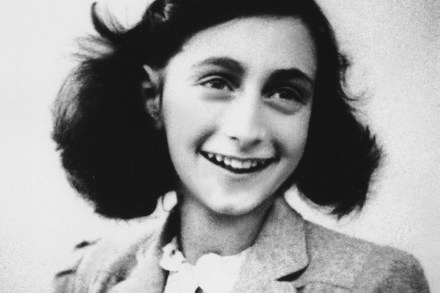
Anne Frank died of typhus in Bergen-Belsen in late February 1945. Her last days were spent in the sick barracks caring for her sister Margot, who had a high fever and smiled contentedly, her mind already wandering. Anne, too, had been feverish, but ‘friendly and sweet’, according to witnesses. Her last recorded words were: ‘Margot will sleep well, and when she sleeps I won’t need to get up again.’  Ruth Franklin’s superb and subtle book pivots around this moment, which is described in a starkly titled central chapter, ‘Corpse’. Half her study tells Anne’s story up to the tragedy of her death.

The dogged women on the trail of Dr Crippen

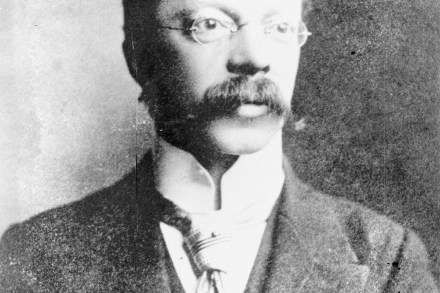
On 18 November 1910, 300 women marched on the Houses of Parliament to demand the right to vote. Their protest was met with shameless brutality: punches, kicks, beatings and sexual assault from policemen and male bystanders. Three weeks earlier, a young woman named Ethel Le Neve had been tried for her part in the most sensational crime of the new century, the ‘London Cellar Murder’. The portrait of Le Neve presented by her barrister had been one of ‘perfect Edwardian feminine innocence’, docile, gentle, lacking in agency – a reassuring contrast to the strident, determined suffragettes, whose refusal to conform to societal expectations were to culminate in the attacks at Westminster. The suffragettes had their jaws broken; Le Neve walked free.

The Bloomsbury Group’s precarious paradise

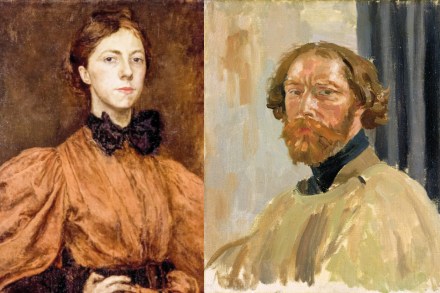
The artist Vanessa Bell, née Stephen, the wife of Clive Bell, is enjoying the limelight this year as an exhibition of her work travels the country. Hot on its coat-tails comes Wendy Hitchmough’s beautifully illustrated new study of Bell’s life and art. As the former curator of the painter’s home at Charleston, Hitchmough writes with insider knowledge, supported by an armoury of scholarship: the bibliography alone stretches to 14 pages and the notes to 45. Somewhere within this carapace is a uniquely original and talented artist struggling to get out – a true radical whose story was one long, rolling sequence of experiments in leading as creative a life as possible within or without the constraints of her time.

A war of words: circulating forbidden literature behind the Iron Curtain

If James Bond, now in American hands, re-emerges refreshed as an agent of the CIA, then it will be a homecoming of sorts, given that his creator played a role in drawing up the blueprint for America’s first foreign intelligence service. In May 1941, Commander Ian Fleming sat down in Washington with Colonel William (‘Wild Bill’) Donovan to sketch out an agency modelled on British naval intelligence. Under Donovan’s stewardship, this became the Office of Strategic Services and, in 1947, the CIA. The two men got on well and were not afraid to try things that had not been tried before.

The enlightened rule of the Empress Maria Theresa

The role of personality and charm in running a state is one theme of Richard Bassett’s superb book, the first English biography of the Empress Maria Theresa since Edward Crankshaw’s in 1969. The different parts of the Habsburg monarchy – Austria, Tyrol, Bohemia, Hungary, Croatia and Milan – had little in common except dynasty, geography and Catholicism. Yet, partly owing to Maria Theresa’s force of character, this complex tapestry of nationalities remained a great power After she came to the throne in 1740, she felt ‘forsaken by the whole world’. Encouraged by France, Austria’s neighbours Prussia, Saxony and Bavaria invaded the monarchy in order to divide it between them.

The supreme conjuror Charles Dickens weaves his magic spell

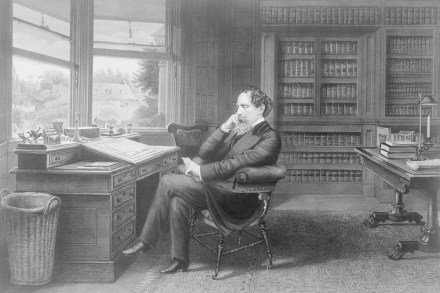
As Charles Dickens lay in his coffin, his will was read out to the assembled mourners. ‘I conjure my friends,’ he sternly instructed them, ‘on no account to make me the subject of any monument, memorial or testimonial whatever.’ It’s an appeal that later generations have studiously ignored, as can be seen in the piles of commemorative merchandise that are available to purchase online. These range from a fully poseable Dickens action figure (‘with quill pen and removable hat’) to a T-shirt featuring his face and the slogan ‘I put the lit in literature’. They can also be seen in the shelfloads of biographies and critical works published every year.

In search of Pico della Mirandola, the quintessential Renaissance Man

Edward Wilson-Lee writes rather chin-strokey, erudite books for the half-educated general reader with a strong taste for big ideas and the ever-so-slightly weird –which is to say people exactly like me and very possibly like you. The Catalogue of Shipwrecked Books: Young Columbus and the Quest for a Universal Library (2018); A History of Water: Being an Account of a Murder, an Epic and Two Visions of Global History (2022): autodidact catnip. He’s a gifted chronicler of the odd, the interesting and the esoteric. Think non-fiction Umberto Eco.

The pointlessness of the German Peasants’ War – except in Marxist ideology

The preservation of a strict social hierarchy rests very often on the enforcement of correct modes of address. In America today any university student may address any other as ‘dude’, but those who have attained a certain level of prestige will object if an unwary low-status blunderer ventures to call them ‘bro’. Rebels seeking to overturn rigid class systems will often start by violating such regulations. The German revolutionaries of 1968, for example, made a point of addressing everyone as arschloch, or ‘arsehole’ – a radical usage I remember being startled by it in mid-1990s Kreuzberg bars until it was explained to me that I wasn’t being insulted. Their other move, to use the intimate du, rather than the formal Sie, for ‘you’, has taken much stronger hold.

The international criminal justice system was prejudiced from the start

Three generations ago, Britain and the United States joined forces to propose the establishment of a revamped international rules-based system to remake the world. This was initially articulated in a document that came to be known as the Atlantic Charter, signed in August 1941. Other countries, including the Soviet Union, were persuaded to join the effort, part of a grouping that came to be known as the United Nations. The new rules would address trade and other economic matters, decolonisation, war and the fundamental rights of human beings. In the summer of 1945, the Statute of the Nuremberg Tribunal was drafted, reflecting agreement on a list of international crimes and the notion of individual criminal liability, up to the very highest levels of public office.

For all its fame, the Great Siege of Malta made no difference to the course of history

Strategically located in the narrows of the Mediterranean between Sicily and Tripoli, with a fine natural harbour, Malta has attracted the attention of successive conquerors for two millennia: Phoenician, Carthaginian, Roman, Byzantine, Arab, Norman, Aragonese, French and finally British. In 1565, the island was occupied by a power that was already beginning to look anachronistic: the Knights of the Hospital of Saint John of Jerusalem. The Hospitallers were an aristocratic order of monk-knights, founded at the end of the 11th century to shelter Christian pilgrims and defend the Holy Land during the brief period when it was part of the crusader kingdoms of the Levant.

Red-letter days for Gilbert & George

James Birch is a somewhat mysterious art dealer and curator, whose first great triumph was mounting a Francis Bacon exhibition in Moscow in 1988. He wrote a gripping book about that adventure, Bacon in Moscow, and has now written an even more gripping follow-up, about taking Gilbert and George to Moscow, Beijing and Shanghai. Mounting the Moscow exhibition meant getting drunk every night, but Birch carried it off with aplomb Birch was born ‘circa 1956’, according to Wikipedia, and grew up in Primrose Hill, London. Both his parents were artists and also communists, which he claims was not unusual in the 1960s (though I’d say it was, quite).

Once upon a time in Germany: the Grimms’ legacy of revenge and gory redemption

It might help if we stopped calling them ‘the Brothers Grimm’, which always makes them sound like characters in one of their fairy tales. We don’t talk about ‘the Sisters Brontë’, after all. In reality, Jacob and Wilhelm Grimm have been described, very accurately, as ‘visionary drudges’. The Children’s and Household Tales, the first edition of which was published in 1812, was only a part of their grand project to establish a German cultural and linguistic identity. The brothers were primarily philologists, concerned with the meaning and history of words, and their investigation of German folk culture, narratives, myths and legends was rooted in an austere examination of language.

Emilie du Châtelet – a lone voice among Enlightenment thinkers

Two things that amaze me about the European Enlightenment are the brilliance of its achievements and the stupidity with which it excluded much of humanity from its circle. Say, for example, you were an 18th-century Frenchwoman who wished to advance human understanding of the universe by doing experiments, discussing texts and comparing hypotheses with other experts. You could forget about joining any of the scientific or philosophical academies created for that purpose – they would not let you in. Instead, your best hope was to create a salon and make it fashionable. For this you had to be wealthy, so you could provide the snacks and wine, and you’d need a country château or a Paris apartment or both.

Celebrating Miss Marple

There’s a big difference between being a fan and being a super-fan. Not all fans would be able to differentiate between the two, but every super-fan understands, at a bone-deep level, the difference between themselves and those of their ilk (fellow super-fans) on the one hand and regular fans on the other. The unforgettable theory that it’s the weak characters who do the most damage appears in a Marple novel For example, I am a big fan of Richard Curtis’s 2013 movie About Time. I love it, recommend it to people and think it’s one of the best stories of both romantic and familial love that I’ve ever come across, as well as thoroughly inspiring from a ‘How to live a better life’ point of view.

Wagner’s Ring is a mythic mishmash

Wagner’s Ring is an ambitious cycle of four operas relating world history from Primal Swirl to End of Days. It took 26 years to write, takes 15 hours to perform, a double-size orchestra to play and a specially built opera house to stage. Michael Downes, the director of music at St Andrews University, places the fons et origo of the epic in Wagner’s frustration as a kapellmeister, when he wrote, unsolicited, to his boss the King of Saxony, proposing a total revamp of the royal music scene. No reply was forthcoming. A second proposal was also blanked. Furious, Wagner flung himself into the Dresden uprising of 1848, financing the manufacture of hand grenades and giving bloodthirsty speeches from the barricades.

Besieged Odesa is still caught in a conflict of identities

How can you break the mental manacles of an empire that has occupied not only your physical world but also your education, publishing, media, high culture and popular entertainment? In his endearing memoir of Odesa, Undefeatable, Julian Evans quotes the Ukrainian author Viktoria Amelina, who describes growing up in post-Soviet Ukraine surrounded by all things Russian. She attended a Russian school, acted in children’s Russian theatre, listened to Russian rock and prayed in a Russian Orthodox church: ‘There was an entire system in place that aimed to make me believe that Moscow, not Kyiv, was the centre of my universe.’ When she was 15, Amelina felt flattered to be invited to Moscow for a Russian language contest. She was thrilled to be interviewed on state television.

Is it time for Jordan Peterson to declare his spiritual allegiance?

Alan Isler’s novel Clerical Errors (2001) features a troubled priest who mocks the faith he has largely abandoned. ‘How can any rational creature not see in the story of Christ the pattern of countless pagan myths, the universal romance of the sacrificial god, his apotheosis and his rebirth?’ Jordan Peterson’s new book stands this argument on its head. That core Old Testament and gospel narratives are echoed in other cultures, past or present, is hailed as a mark of biblical universality. What applies to the resurrection also covers themes including sibling rivalry (Cain and Abel), pride and overreach (Noah’s Flood), deliverance from slavery (the Exodus) and the Fall itself. These archetypes abide in our collective unconscious for good reason.