Lead book review

Shalom Auslander vents his disgust – on his ‘grotesque, vile, foul, ignominious self’

The word is Yiddish, and is an expression of disgust. A decent translation of it into vernacular English would be ‘yuck’. Shalom Auslander has been feeling feh about himself for pretty much as long as he has been conscious. Born into a strictly religious family, with a mother given to quoting Jeremaiah and a father whose violence and cruelty were almost literally biblical, or at least strongly evocative of the Old Testament, Auslander grew up to be the kind of Jew who, when visiting the Wailing Wall in Jerusalem, writes ‘fuck you’ on a piece of paper and shoves it in a crack. It is more traditional for the pious to write a prayer. But that is Auslander’s prayer.

Paris is perhaps the greatest character in Balzac’s Human Comedy

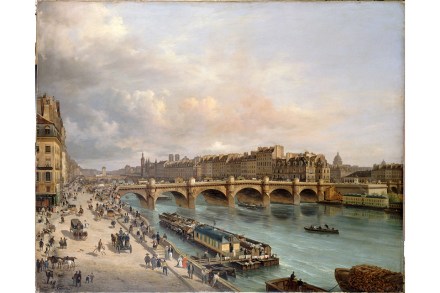
Open one of the major novels by Honoré de Balzac and you are likely to encounter a sentence such as this, from Cousin Bette: ‘Towards the middle of July, in the year 1838, one of those vehicles called milords, then appearing in the Paris squares for the first time, was driving along the rue de l’Université.’ Or this (from César Birroteau): ‘On winter nights there is no more than a momentary lull in the noise of the rue Saint-Honoré.’ It is the same story in Père Goriot (rue Neuve-Sainte-Geneviève), Cousin Pons (Boulevard des Italiens) and others. From the first words of the tale, the reader is cast into the drama of the street. One of the first things to beware of is the mud.

A long goodbye to Berlin

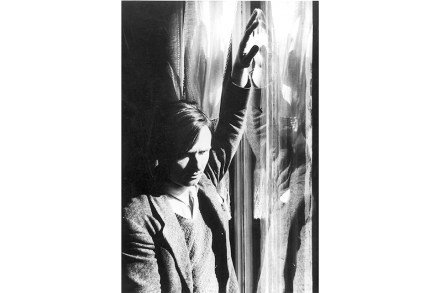
Christopher Isherwood pioneered what is now known as ‘autofiction’ long before it acquired that label. His best known work, Goodbye to Berlin (1939), which later inspired the musical Cabaret, was based on the diaries he kept while living in the Weimar Republic in his twenties. He’d already used the material before in Mr Norris Changes Trains (1935), a brilliant black comedy thriller that deserves to be read alongside more supposedly serious works of modernism. Forty years later, he reworked the experiences yet again in Christopher and His Kind (1977), in which he finally made explicit, for the new gay liberation era, what had been suppressed in the earlier works: his homosexuality, which had previously been outlawed.

Those magnificent men and their stargazing machines

Where is science bred? Is it where the physical circumstances are right – clear skies for astronomy, for example? Where raw materials are abundant – coal for organic chemistry? Where minds freely meet? Where the enlightened patron rules? Violet Moller’s first book, The Map of Knowledge, examined the spread through the centuries of the ideas of Galen, Euclid and Ptolemy by focusing on seven, mainly Mediterranean cities, from Alexandria to Venice, where scientific knowledge was gathered, augmented and promulgated anew, ensuring the survival of classical learning into the modern period. But why these men and these cities? Are people or places the drivers? Is geography a reliable guide, a storytelling device, or an artificial constraint? There are clearly losses in this approach.

The wry humour of Franz Kafka

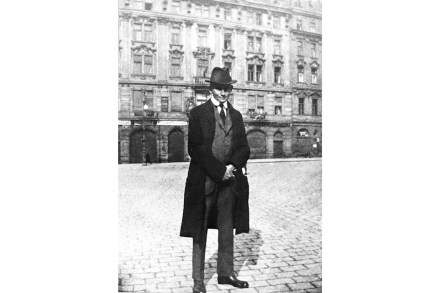
How do you see Franz Kafka? That is, how do you picture him in your mind’s eye? If you are Nicolas Mahler, the writer and illustrator of a short but engaging graphic biography of the man, you’d see him as a sort of blob of hair and eyebrows on a stick. The illustrations of Completely Kafka may look rudimentary, but they work. In fact they’re similar in style to the doodles Kafka himself would make in his notebooks. If you were Kafka, you’d see yourself as a spindly man, head on desk, leaning on your hands, arms bent, in a posture of defeat and exhaustion. That image is chosen for the cover of a translation by Mark Harman of Selected Stories.

What’s really behind the Tories’ present woes?

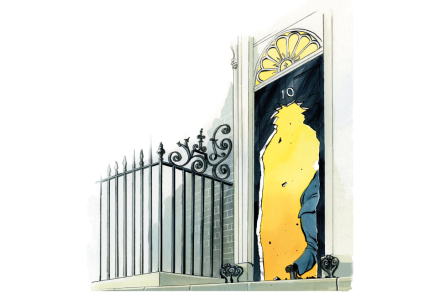
The problem is, we really need a Tory party. Whether we have one at the moment is another question. Political debate requires a significant and trustworthy proponent of personal freedom, of the limits of government, of personal responsibility, of strict limitations of government expenditure, of independent enterprise which may succeed through a lack of intrusive state control or may fail without hope of public rescue. Not everyone will share those values. But I think everyone should accept that it’s proved catastrophic that those values have apparently disappeared from public policy. History rhymes, but does not repeat itself. The lessons of previous periods when major economic policies of an interventionist sort were agreed with no serious dissent ought to have been learnt.

The joy of hanging out with artists

Lynn Barber is known as a distinguished journalist, but what she always wanted to do was hang out with artists. This book feels like a marvellous cocktail party, packed with the painters and sculptors Barber has interviewed over the years: Howard Hodgkin, Phyllida Barlow, Grayson Perry, Maggi Hambling. Sarah Lucas and Tracey Emin eye one another warily from opposite sides of the room; Salvador Dali’s ocelot weaves between the guests; everyone, naturally, is smoking. Lucian Freud is a no-show – though having refused Barber’s many interview requests, he did send a scrawled note explaining he had no wish to ‘be shat upon by a stranger’. Feuds and gossip are the making of any gathering, and A Little Art Education is not a book of art criticism.

‘There are an awful lot of my paintings I don’t like,’ admitted Francis Bacon

In 1959, Edvard Munch’s ‘The Scream’ was hanging above the bed where Francis Bacon nursed a fractured skull after falling downstairs drunk at his framer Alfred Hecht’s house on the King’s Road. It was there to be re-framed – a circumstantial detail Mark Stevens and Annalyn Swan report neutrally, en passant, in their 2021 biography Francis Bacon: Revelations. An inadvertent cry, nay a scream, for attention? Or a frame-up? It was a decade after Bacon painted his first screaming pope, a palimpsest obviously based on Velázquez but equally in hock to Munch. Francis Bacon: A Self-Portrait in Words is an annotated compilation by Michael Peppiatt of statements, letters, studio notes and selected interviews.

The Berkeley scandal of 1681 transfixed London society – and Aphra Behn soon capitalised on it

If you want to understand in detail what people in the past were capable of doing, thinking and saying, there is nothing like studying court proceedings. When restrictions were placed on other reportage of human behaviour, the courts had to find out about all sorts of activity. At a time when novelists could hardly write even in the most general terms about adultery, the 1869 prosecution of two homosexuals called Thomas Boulton and Frederick Park could be reported in truly startling detail. One of the best accounts of precisely how people talked spontaneously in the 17th century is the record of Charles I’s eruptions during his trial. Justice was no respecter of status.

The identical twins who captivated literary London

The dazzlingly beautiful identical twins Mamaine and Celia Paget were born in 1916 and brought up in rural Suffolk – not the greatest springboard, you would think, for lives at the intellectual heart of the mid-20th century. Yet the list of their friends reads like a roll call of literary notables: Dick Wyndham, Peter Quennell, Cyril Connolly, Bertrand Russell, Sacheverell Sitwell and Laurie Lee. Between them, the twins were proposed to by, among others, Arthur Koestler and George Orwell; had liaisons with Albert Camus and the formidably clever Oxford philosopher Freddie Ayer; quarrelled with Jean-Paul Sartre and Simone de Beauvoir; and received love sonnets from the historian and poet Robert Conquest. At the heart of this book, however, lies the girls’ twinship.

To Salman Rushdie, a dream before his attempted murder ‘felt like a premonition’

Salman Rushdie has long hated and struggled against the idea that the 1989 fatwa pronounced on him after the publication of The Satanic Verses should define his career or his life. It was, as he frequently pointed out, a book he published only a quarter of the way through his career. He wanted the life of a writer, and for his books – even ‘that book’ – to be read as books rather than as footnotes to an episode in his biography or tokens in some pre-digital culture wars. Two nights before the reading, Rushdie dreamt he was attacked by a man with a spear in a Roman amphitheatre He thought he had managed that. The only people who ever asked him about the fatwa, he told me when we met in 2020, were journalists: ‘to be dragged back into the late 1980s is boring.

We must never lose the treasured Orkneys

When, last summer, a group of Orcadians declared they’d like to leave the UK and join Norway, it became clear just how little most of us in the south understand Orkney. Friends who know I go there often ask me where it is (somewhere near the Hebrides?), how many Orkney islands there are, and whether they are mountainous or flat. As Peter Marshall explains at the start of this astonishing tour de force, the 70-odd Orkney islands lie just 25 miles north of Scotland, separated from the mainland by the Pentland Firth – the point, he says, at which ‘the North Sea meets the Atlantic, a place of hidden, treacherous whirlpools, and one of the world’s most powerful tidal currents’.

In the grip of apocalypse angst

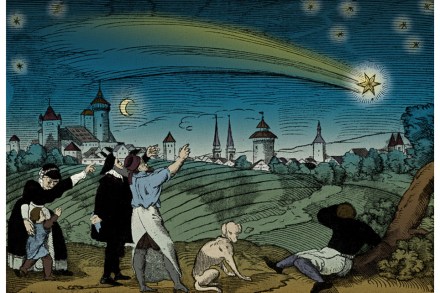
You have to love a book about the end of the world in which the first two references are to Saul Bellow’s Herzog and the HBO series The White Lotus, a high/low combo that preps us for authorial omniscience. In the next few paragraphs we get Marc Maron, Sally Rooney and Frank Kermode. Buckle up, kids, a cultural whirlwind is coming! The day of judgment is at hand, and the all-knowing Dorian Lynskey, who seems to have doomscrolled through every card catalogue on the planet, is just the person to provide live commentary. A capacious cultural history of ‘apocalyptic angst’, his Everything Must Go will make you happy to be alive and reading – until the lights go out.

How country living changed the lives of three remarkable women writers

Very fine hot day. (Bank Holiday). Sound of band in Lewes from the Downs. Guns heard at intervals. Walked up the down at the back. Got plenty of mushrooms. Butterflies in quantities. Ladies Bedstraw, Roundheaded Rampion, Thyme, Marjoram. This isn’t what we expect from Virginia Woolf, known for her caustic investigations of friends and filigree portraits of her own inner life. But in 1917, after three years of mental illness, she moved to Asheham in Sussex and began a slow but dogged recovery that took the form of these daily walks and list-filled diary entries, which rarely contain the word ‘I’.

‘Enough to kill any man’: the trials of serving Queen Victoria

Monarchy was as characteristic of the 19th century as nationalism and revolution. The Almanach de Gotha was a better guide to power than the Communist Manifesto. Constitutional monarchy, in particular, was considered the panacea of the age. On the first morning of her reign, Queen Victoria announced: ‘I have promised to respect and love the constitution of my native country.’ The Times declared her ‘steeped in the spirit of the constitution’. Gladstone said: ‘All the principles of the constitution have been observed by the Queen... in a manner more perfect than has ever been known.’ In reality, as Anne Somerset’s magnificent, disturbing and innovative history of Queen Victoria and her prime ministers shows, this was untrue.

The tyranny of 1970s self-help gurus

As any book about the rise of that most nebulous idea ‘wellness’, should, James Riley’s Well Beings begins with Gwyneth Paltrow, purveyor of ‘This Smells Like My Vagina’ candles, ‘Metabolism-Boosting Super-powder’ and nostrums about mindfulness and ‘self-care’ – for which read self-indulgence. In 2019 Paltrow’s company Goop chartered a luxury liner for a ‘Goop at Sea’ extravaganza, at which attendees were invited to spend $4,200 for the ‘basic’ cruise and a suite at the ship’s onboard spa, and a further $750 for the event itself, the highlight of which would be an appearance by the high priestess of wellness herself. Goop at Sea was cancelled due to Covid.

Before the Blitz: the dynamism of British architecture

Gavin Stamp was a prolific and unusually level-headed architectural writer and historian. Less emotional than Ian Nairn, pithier and more immediate than Nikolaus Pevsner (he knew both men), Stamp wrote definitive books on grand and humble subjects. These ranged from his hero Edwin Lutyens, to brutalism, to Sir Giles Gilbert Scott’s scarlet telephone boxes of 1935. The last he first defended in a piece for The Spectator 50 years later, which led to a campaign that saved a clutch of them. For Stamp, journalism and campaigning bled into one another. He co-founded the Thirties Society in 1979 – now the influential Twentieth Century Society – to save the era’s buildings.

Four months adrift in the Pacific: a couple’s extraordinary feat of endurance

It is every writer’s dream to glimpse, peeping out from behind a news story or feature, the contours of a book. Brian Masters was eating his breakfast on 12 February 1983 when he read in the morning papers reports of the arrest of a mildly spoken Jobcentre employee accused of strangling a number of men with whose flesh he had blocked the drains in his flat in Muswell Hill. Masters wrote to Dennis Nilsen. Nilsen wrote back: ‘Dear Mr Masters, I pass the burden of my life on to your shoulders.’ After Nilsen had filled 50 prison notebooks, Masters embarked on Killing for Company, surely the grisliest yet most poignant biography of a serial killer ever written.

It feels somehow improper to witness an author groping for the right words

The early stages of a literary work are often of immense interest. It is perhaps a rather tawdry kind of interest, like paparazzi shots of a Hollywood starlet taking the bins out before she’s put her make-up on. Of course it’s extraordinary to think that some of the most famous characters, events and lines in literature weren’t as we now know them but had to be struggled towards. Sometimes these efforts have the anachronistic but unavoidable sense of somebody getting it wrong. Textual bibliographers have carefully classified the different steps a work takes from manuscript to first edition and subsequent versions. Perhaps we could go further in search of a writer’s progress.

Lord Byron had many faults, but writing dull letters wasn’t one of them

In 1814, at the height of his fame, the poet, libertine and freedom fighter Lord Byron had his head examined. Not by a proto-psychiatrist but by the German phrenologist and physician Johann Spurzheim, who, after making a detailed study of the no doubt amused Byron’s cranium, pronounced the brain to be ‘very antithetical’ and said that it was an organ in which ‘good and evil are at perpetual war’. Two centuries after Byron’s death, this dichotomy is as pronounced as ever when it comes to analyses of the poet. His defenders point to his wit, his poetic genius, his heroic efforts in defence of Greek liberty and his personal flair; not for nothing has the word ‘Byronic’ entered the vocabulary as a largely admiring adjective.