Lead book review

Autocracy tempered by strangulation

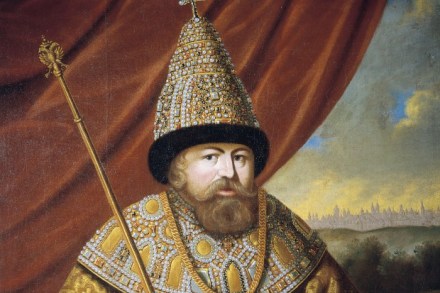
‘It was hard to be a tsar,’ Simon Sebag Montefiore writes in his opening sentence, and what follows fully bears this out. In his thought-provoking introduction, he stresses the unique nature of Russian autocracy and its perverse contradictions; the tsar was absolute ruler, yet he was bound by a tangle of restrictions. His subjects were prepared to accept his tyranny and any cruelty its exercise required, but claimed the right to punish him if he failed to provide strong leadership. The system was never meant to give one person tyrannical powers over everyone else. Nor was it intended to work for the greatest good of the greatest number.

Charlemagne’s legacy

Last month in the Financial Times, Tony Barber closed a gloomy summary of the European Union’s future with this comparison: Like the Holy Roman Empire which lasted for 1,000 years before Napoleon put it out of its misery in 1806, the EU may not disintegrate but slip into a glacial decline, its political and bureaucratic elites continuing faithfully to observe the rites of a confederacy bereft of power and relevance. This vivid comparison has much to commend it. Both institutions defy definition. As Voltaire sneered in 1756, ‘it’s not holy, not Roman and not an empire’.

One for all

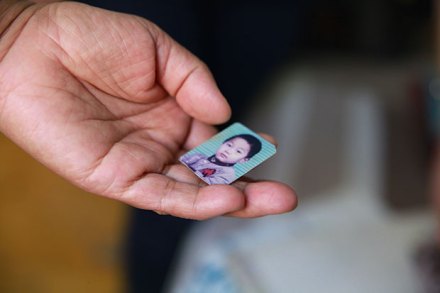
Mei Fong tells the routine story of a girl who managed to conceal an illegal pregnancy until the baby was almost due, when family planning officials surrounded her hiding place at night. ‘She ran and ran and ran until she came to a pond. Then she ran in, until the water was at her neck. She stood there and began to cry.’ Through her tears she explained that she needed the baby to stop her husband and his parents abusing her for not producing a son. This was the mid 1990s, but the same thing could have happened in rural China at any point in the past 1,000 years, except for the dénouement. Officials dragged the girl from the water, and hauled her off to hospital where the baby was killed.

Between the woods and the water

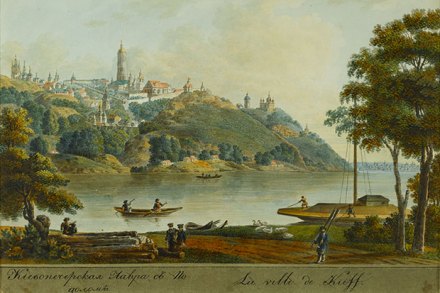
At the beginning of the historical record, the lands that we now call Ukraine were a reservoir of fantasy. Achilles probably did not sail from a Greek port on the north of the Black Sea up the rapids of the Dnipro River to find his final resting place, as some Greeks once believed. Nor is it likely that Ukraine, or the Pontic steppe as the Greeks had it, was the homeland of the Amazons. That said, it was Herodotus who supplied the south-to-north physical geography that Serhii Plokhy wisely follows: the ports of Crimea and the coast, the rich steppe heartland, and the forests. For Plokhy, the formation of Ukraine is the establishment of a unity among these three zones, and his themes are ‘geography, ecology and culture’.

A touch of class | 31 December 2015

The New Yorker, not far off its centenary now, has moved beyond rivalry to a position of supremacy among American magazines. It has attained this not by taking a particular political position, although it certainly has one — it represents, obviously, a metro-politan, liberal, outward-facing attitude to the world. Rather, its pre-eminence is down to its valuing, above all, the quality of writing. Of course, aspects of the New Yorker have always irritated people. It possesses a somewhat supercilious quality — the one-page comic sketch, ‘Shouts and Murmurs’, invariably leaves me straight-faced, and sometimes even a bit depressed. I can never decide whether the restaurant reviews are meant to be a joke, so absurd do they make their subjects sound.

Casual, funny, flirtatious, severe

When The Waste Land first appeared, there were rumours that it was a hoax. It seemed so strange: 400 lines in many languages, and even the sections that were in English looked as if the author was only teasing. ‘Twit twit twit’ ran one line: ‘Jug jug jug jug jug jug.’ Eliot’s long poem was published first in Criterion in October 1922, and then in an American magazine the following month. Eliot had also sold the rights to publish it as a book, but his publishers feared that the poem alone was too short. To make it a little longer, Eliot added half a dozen pages of sporadic notes. The notes Eliot added are as odd as the rest of the poem. They give a handful of helpful references while denying others.

George and Martha Washington were an odd first First Couple

‘Would Washington have ever been commander of the revolutionary army, or President of the United States, if he had not married the rich widow of Mr Custis?’ asked John Adams. The answer, says Flora Fraser, is no. We like to see our ‘men of destiny’ as striding the world alone before stepping onto the customary plinth, so some might find it inconvenient to consider the role, in George Washington’s glorious career, of America’s first First Lady. But in her lifetime, no one put Martha in the corner. George and Martha Washington is a balanced and vivid account of a marriage which was both remarkable and strikingly down-to-earth.

The four men who averted the Apocalypse

In March 1987, as Professor Robert Service records in his new account of the end of the Cold War, Margaret Thatcher visited Moscow. She had been reluctant to do so, largely out of fear that such a visit would only make it easier for a credulous Reagan — as she saw him — to offer Gorbachev even more concessions. She had also been worried that it would produce nothing for British interests. Her hesitation to travel to Russia, let alone, as her advisers had urged, solicit an invitation, was perhaps surprising. She and Gorbachev had got on famously — shoes off, in front of a blazing fire — when she had entertained him, then only the Politburo member responsible for agriculture, at Chequers just before Christmas 1984.

A further selection of books of the year — the best and most overrated of 2015

Daniel Hahn  I suspect many people won’t bother to read Katherine Rundell’s The Wolf Wilder (Bloomsbury, £12.99) because it’s a children’s book. Don’t be one of those people. You’d be depriving yourself of a ferociously paced, brilliantly imagined piece of gorgeous, immersive storytelling — and really, why would you want to do that? Set in Russia a century ago, it’s the story of a girl and her friends (some of whom are wolves) forced to be brave, and to right some great wrongs. We began 2015 with the introduction to another bright new talent, following the publication of The Vegetarian by Han Kang (Portobello, £12.99), superbly translated by Deborah Smith.

Celebrity lives

I learned from this little lot that if one has read The Diary of a Nobody, then one can derive pleasure from even the most pedestrian life story, as there’s always an unintentional chuckle to be had. The former racing driver Nigel Mansell’s Staying on Track (Simon & Schuster, £20) delighted me with its Pooterish charms, from bullied boyhood : One time I was due to race for England abroad. The school announced the exciting news in assembly one morning... that afternoon I was attacked viciously with a cricket bat in the playground. I thought the other children would be proud of me. How wrong can you be? — to triumphant adulthood, bashing himself up for pleasure and profit: Let me tell you about the time I told a priest to get lost.

Books of the Year: the best and most overrated of 2015

Anna Aslanyan  My top title of the year is Satin Island by Tom McCarthy (Cape, £16.99), convincing proof that the best writers of our time are anthropologists, and that James Joyce, were he alive today, would be working for Google. I also enjoyed Ben Lerner’s 10:04 (Granta, £14.99), a self-deconstructing novel whose metafictional plot speaks of the nature of time and of things being endlessly interconnected. My non-fiction pick is Iain Sinclair’s London Overground: A Day’s Walk Around the Ginger Line (Hamish Hamilton, £16.99), the psychogeographer’s passionate take on 21st-century London, a place of perpetual change and chronological resonances.

The best British short stories — from Daniel Defoe to Zadie Smith

Philip Hensher, the thinking man’s Stephen Fry — novelist, critic, boisterously clever — begins his introduction to his two-volume anthology of the British short story with typical gusto. ‘The British short story is probably the richest, most varied and most historically extensive national tradition anywhere in the world.’ Take that, ye upstart Americans, with your dirty realism and your New Yorker swank! Read it and weep, ye Johnny-come-latelys! Look to your laurels, Chekhov and Carver. Jorge Luis Who? Maupassant? Bof! And there’s more — much much more.

Through the Looking Glass

‘Have you got over your father yet?’ the 26-year-old David Cornwell was asked by MI5’s head of personnel when he joined the agency in the spring of 1958. And the answer, more than half a century later, has to be ‘no’. We knew of his conman father Ronnie’s cartoonish presence in Cornwell’s life, but never the extent to which he has dominated his very being. After leaving Lincoln College, Oxford, Cornwell taught for a couple of years at Eton, where he disliked the ‘Herrenvolk doctrine’ expounded in what he called the ‘spiritual home of the English upper classes’. So he sought a return to the secret world that he had glimpsed as a gap-year student in Bern, after leaving Sherborne and before going up to Oxford.

The swastika was always in plain sight

In 1940, when Stephen Spender heard a German bomber diving down towards London, he calmed himself by imagining that there were no houses, and that the bomber was ‘gyring and diving over an empty plain covered in darkness’. The image consoled Spender with his ‘smallness as a target, compared with the immensity of London’. But it also exposed the ‘submission of human beings to the mechanical forces that they had called into being’. It seemed to Spender that entire nations were gripped by the ‘magnetic force of power’. People ‘no longer had wills of their own’. As Tolstoy complained in the second epilogue to War and Peace, this sort of thinking is tautological.

Margaret Thatcher’s most surprising virtue: imagination

In almost every one of the many biographies of Margaret Thatcher that now exist, the story is told of her being congratulated for her good luck in winning a prize when she was nine — either for reciting poetry or for playing the piano. She indignantly replied, ‘I wasn’t lucky. I deserved it.’ Now, in Charles Moore’s biography, we reach the splendid zenith of Mrs Thatcher’s career in the form of her second administration of 1983–7. We have to ask the question again: was she lucky, or did she deserve it? Clearly, one of the chief reasons that she was re-elected in 1983 after a period of staggering unpopularity was the Falklands triumph of 1982, with which Moore concluded his first volume.

Retracing The Thirty-Nine Steps in Buchan’s beloved Borders

Like Richard Hannay, I had to run to catch the early morning train from London to Edinburgh. Thankfully, unlike Hannay, I wasn’t wanted for murder — I’d merely overslept again. As the train pulled out of King’s Cross, I fished out my old Penguin edition of The Thirty-Nine Steps, Hannay’s first — and most famous —adventure. Each time I reread it, I marvel at what a brilliant book it is — how modern it still seems, how easily it draws you in. As we raced through England towards Buchan’s beloved Borders, I rejoined Hannay on his mad dash across the country, urging him on in his heroic quest to save Britain from the beastly Hun. By the time I’d turned the final page, we’d already reached Berwick.

Big is beautiful: A crushing case for brutalism — with the people left out

First things first: this is one of the heaviest books I have ever read. Eventually I finished with it resting uncomfortably on my knees, as I perched on the edge of my bed. It reminded me of when I met Jennifer Worth (of Call the Midwife fame) and she showed me her hardback copy of my own substantial tome Austerity Britain — neatly spliced in half to make two separate manageable entities. Reluctantly I can now see her point; but in the case of Elain Harwood’s Space, Hope and Brutalism, the doorstopper’s doorstopper, I doubt if I would have the strength to do the same.

Poet as predator

In Testaments Betrayed, Milan Kundera says: ‘Biographers know nothing about the intimate sex lives of their own wives, but they think they know all about Stendhal’s or Faulkner’s.’ In The Silent Woman: Sylvia Plath and Ted Hughes, Janet Malcolm says: ‘The transgressive nature of biography is rarely acknowledged, but it is the only explanation for biography’s status as a popular genre.’ She also shrewdly remarks on the ‘mantle of judiciousness’ that biographers are forced to deploy. Jonathan Bate informs us that over a period of five years he has read and taken notes on nearly 100,000 pages of Ted Hughes manuscripts.

Theatre of politics

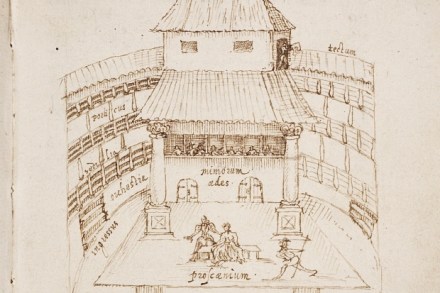
We don’t usually pay all that much attention, as James Shapiro points out, to the Jacobean Shakespeare. We’re in the habit of thinking of him as an Elizabethan playwright: look in most cradle-to-grave biographies for ‘what Shakespeare was doing after James came to the throne in 1603 and there usually aren’t many pages left to read’. That’s to scant his decade-long engagement with the dawning of the Stuart era. Also to ignore that, as Shapiro argues, only three cultural artefacts created during the first decade of King James’s reign still matter 400 years later: the King James Bible, the mythology of the Gunpowder Plot, and Shakespeare’s late plays. Shakespeare, as 1606 began, was 41.

A terrible beauty

Good pottery appears to be cool and silent — something vulnerable that, with luck, can outlast many human generations. A white porcelain dish seems calm and decorous; one knows that skill went into its evenness, into the exact whiteness, into its lightness. But when I began to think about pots I had no idea of the extreme violence, happenstance and risk that are an intrinsic part of the maker’s art. The chemistry is complex; the potter needs to study it intimately — the composition of different clays, of glazes, of rare and valuable pigments (cobalt for instance), and of the firewood that makes the fire. Pottery-making can be poisonous from fumes, and tasting deadly dyes. The history of the art is littered with terrible disasters.