Lead book review

The raw material of fiction

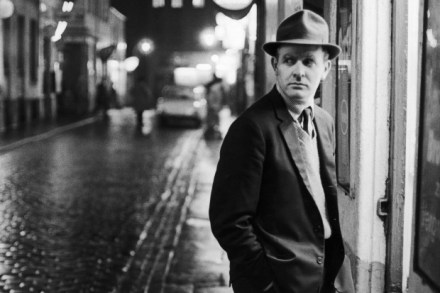
Saul Bellow died in 2005. He won the Nobel Prize for Literature in 1976. The first installment of Zachary Leader’s exemplary, scrupulous, dispassionate, detailed, well-read, enthralling biography runs to over 800 pages and takes us only as far as 1964. The length is important. It allows Leader to adjudicate calmly, weigh the evidence — sometimes

The blood-dimmed tide is loosed

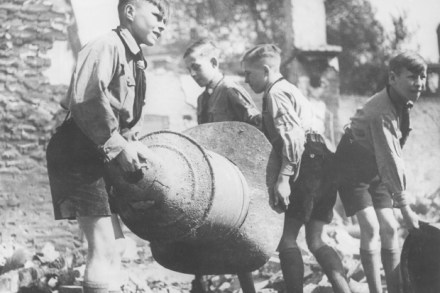
As Lytton Strachey remarked of the Victorian era, writing the history of the Irish revolution is inhibited by the fact that we know too much about it. As the centenary of the 1916 Rising approaches, an avalanche of books, articles and television programmes is bearing inexorably down; even the re-enactments have begun, with Dublin’s city centre

Too little, too late | 16 April 2015

For most of us, the centenary of the Great War means recalling the misery and sacrifices of the Western Front: Ypres, the Marne, Arras, Verdun, Passchendaele, the Somme. Few of us give as much thought to the Eastern Front and, apart from regular studies of the ever-popular, self-mythologising Lawrence of Arabia, fewer still dwell on

That unmistakable touch of Glass

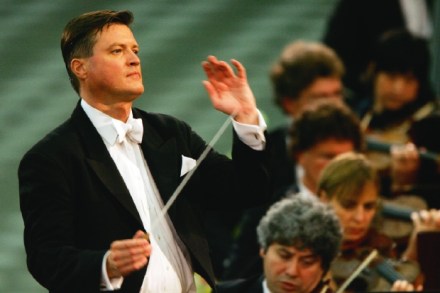
Philip Glass is by now surely up there in the Telemann class among the most prolific composers in history. There must be an explanation, preferably a non-defamatory one, for how his technique has enabled him to produce such an enormous quantity of music. A glance at my iPod shows that Varese’s collected works are over

The other trenches: the Dardanelles, 100 years on

In August 1915, in his tent at GHQ on the Aegean island of Imbros, General Sir Ian Hamilton, commander-in-chief of the Gallipoli expedition, woke from a dream in which someone was attempting to drown him in the Hellespont. ‘For hours afterwards,’ he wrote in his diary, ‘I was haunted by the thought that the Dardanelles

Darius III: Alexander’s stooge

In 1891, George Nathaniel Curzon, ‘the very superior person’ of the mocking Balliol rhyme, and future viceroy of India, arrived at Persepolis. Torched in 330 BC by Alexander the Great, it had once been the nerve-centre of an empire that stretched from the Aegean to the Hindu Kush. For Curzon, whose tour of Iran had

The forgotten flowering of the medieval mind

For those who imagine the medieval period along the lines of Monty Python and the Holy Grail — knights, castles, fair maidens, filthy peasants and buckets of blood and gore (you know, all the fun stuff) — Johannes Fried’s version may come as something of an aesthetic shock. His interests lie in the more rarefied

A window on Chaucer’s cramped, scary, smelly world

Proust had his cork-lined bedroom; Emily Dickinson her Amherst hidey-hole; Mark Twain a gazebo with magnificent views of New York City. Where, then, did the father of English poetry do his work? From 1374 till 1386, while employed supervising the collection of wool-duties, Chaucer was billeted in a grace-and-favour bachelor pad in the tower directly

Mecca: from shrine to shopping mall

Mecca is the greatest paradox of the Islamic world. Home to the Kaaba, a pagan-era cube of black granite said to have been built by Abraham and his son Ishmael, it is the lodestar to which 1.6 billion Muslims direct their five daily prayers. Mecca is the single point on the planet around which Muslims