Adam Zamoyski

Poland was no walkover for the Reich

From our UK edition

‘The victor will never be asked if he told the truth,’ Hitler remarked on the eve of invading Poland in September 1939. Nobody believed his claim that Germany was acting in self-defence; but they did believe his carefully crafted propaganda to the effect that the Poles were so dumb they used cavalry armed with lances against tanks. In this timely and authoritative book, Roger Moorhouse dispels this and other myths concocted by German and Soviet propaganda. He has trawled through an impressive quantity of unpublished Polish and German sources, as well as a wealth of eyewitness testimonies from both sides, to produce a balanced account of this much neglected yet important episode of the second world war which is both harrowing and inspiring.
Autocracy tempered by strangulation

From our UK edition

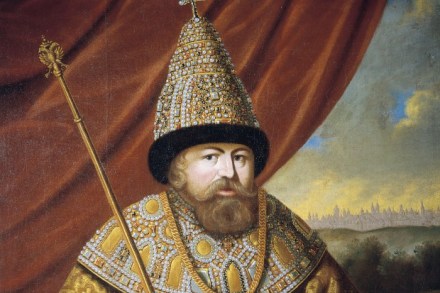
‘It was hard to be a tsar,’ Simon Sebag Montefiore writes in his opening sentence, and what follows fully bears this out. In his thought-provoking introduction, he stresses the unique nature of Russian autocracy and its perverse contradictions; the tsar was absolute ruler, yet he was bound by a tangle of restrictions. His subjects were prepared to accept his tyranny and any cruelty its exercise required, but claimed the right to punish him if he failed to provide strong leadership. The system was never meant to give one person tyrannical powers over everyone else. Nor was it intended to work for the greatest good of the greatest number.

The men who invented Napoleon

From our UK edition

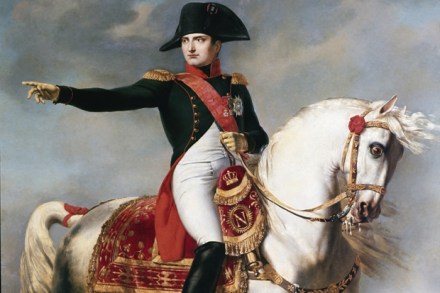
Writing about Napoleon is a risky business. It exposes the author to the brickbats of the blind worshippers for whom he is a numinous hero and the equally challenged detractors who see in him only the petty tyrant. By the same token, most historians find themselves negotiating a slippery path between approval and censure of this most controversial and somehow still very relevant figure. It is one of Philip Dwyer’s great merits that he remains so detached from his subject that he makes the reader forget his own prejudices. He approaches it with the discipline of a chemist in his laboratory: he is understanding of his protagonist but not sympathetic.

Ghostly traces of a vanished land

From our UK edition

This is an entirely pointless but curiously engaging and even tantalising book. A youthful love affair in Montreal with a girl of Latvian descent plants the word ‘Courland’ in the author’s mind. He finds it mellifluous and somehow magical. The girl’s beauty and otherworldliness add a sense of mystery. An Alsatian cousin whose father, drafted into the Wehrmacht, had been killed there in 1945, prompts darker reflection. The discovery that a workmate at the Paris paper he works for is a descendant of the legendary Duchess of Dino, granddaughter of the last of the Dukes of Courland, introduces an intriguing note of nostalgia for a lost elegance.

Fatal entrapment

From our UK edition

I am no great fan of spy thrillers and positively allergic to conspiracy theories, but I found this book difficult to put down. In an earlier study, Edward Lucas examined Russia’s use of energy as a weapon against the EU and the Atlantic alliance. In this one, he dives below the surface into the murky waters of the country’s security apparatus and demonstrates that, while it has shed the old KGB image, it remains as pervasive and just as menacing. Before the fall of the Berlin Wall, the battlelines were clear cut and so was the role of the Soviet Union’s defenders. At home, they silenced any criticism of the system. Abroad, they carried on an ideological struggle for dominance with the United States and its allies.

The end of the affair | 28 March 2009

From our UK edition

Given the anti-Americanism displayed on every possible occasion by the French since the days of De Gaulle, and the crudely expressed contempt with which Americans have responded, particularly over the past decade, it is easy to forget that the two nations once enjoyed a relationship even more ‘special’ than the supposedly exclusive one between Britain and the United States. That relationship, which began with Benjamin Franklin’s seduction of French society and Lafayette’s participation in the American revolution, blossomed into a love affair in the two decades following the Great War. Many Americans who had fought in it stayed behind. The comparatively low cost of living permitted penniless writers and artists, as well as society ladies, to congregate in Paris.

Obsessed by Ukraine

From our UK edition

This is the story of a very unusual man. ‘Wilhelm von Habsburg,’ Timothy Snyder tells us, ‘wore the uniform of an Austrian officer, the court regalia of a Habsburg archduke, the simple suit of a Parisian exile, the collar of the Order of the Golden Fleece, and, every so often, a dress. He could handle a sabre, a pistol, a rudder, or a golf club; he handled women by necessity and men for pleasure. He spoke the Italian of his archduchess mother, the German of his archduke father, the English of his British royal friends, the Polish of the country his father wished to rule, and the Ukrainian of the land he wished to rule himself.

No redeeming features

From our UK edition

Until fairly recently, the name Thyssen-Bornemisza held generally positive associations — with vibrant German industrialism, responsible capitalism, pan-European cosmopolitanism, artistic connoisseurship and philanthropy, all tinged with a pleasant whiff of Hungarian nobility. Just how deeply erroneous these are revealed to have been is staggering. August Thyssen, who created the family fortune in the second half of the 19th century, was neither an inventive manufacturer, nor an adventurous entrepreneur, nor a creative capitalist. He made his money by marrying sensibly, associating with the right people and taking advantage of opportunities. He was a careful, thrifty, cost-cutting, cheese-paring and exploitative industrialist, more of a quartermaster than a captain of industry.

Correcting received opinions

From our UK edition

Norman Davies is always at his best challenging received ideas and inherited perceptions, and the areas covered by these essays provide him with rich hunting-grounds for both. The title is misleading in that he ranges around Australia, California and Siberia, not to mention the Middle East, as well as Europe, and takes swipes at prejudices held by the pundits of many nations and cultures. I have to confess a slight prejudice against compilations of essays and lectures. There is always an element of unevenness in quality, a lack of unity and a certain amount of repetition. Ideally, each piece should be read on its own, independently of and at least a few days apart from the others, not a luxury a reviewer can permit himself. Above all, lectures are best listened to, not read.

A long losing run

From our UK edition

This is indeed a story of war, passion and loss. But those looking for a bittersweet tale of romantic Polish aristocrats stoically facing their doom at the hands of the Nazis and Soviets will get a great deal more than they bargained for. This is Gone with the Wind scripted for the Addams family. The sorry tale opens in 1914 with the author’s grandfather running out of the bedroom on his wedding night and shooting himself with a revolver. He survived, and whatever his problem may have been, it was eventually resolved: he produced a brace of children, to which his wife added an extramarital supernumerary. It might have been better if they had remained childless. Hushed-up adulterous affairs between close cousins had led to his marrying his aunt.

Grande horizontale et verticale

From our UK edition

One of those little footnotes to history that has always intrigued me is that the Bolsheviks planned and carried out the October Revolution in the palace of the Tsar’s mistress. The idea of Lenin, Stalin, Trotsky and the rest of them strutting about the marble-clad halls and damask-swathed boudoirs of the great courtesan’s mansion in their cloth caps, smoking and plotting bloody mayhem, is grotesque but also somehow fitting when one considers the moral squalor and the shoddy grandeur of their political enterprise. I longed to know more about this Bolshevik Bethlehem. This book has done more than satisfy my curiosity. The story it tells is an extraordinary one in every way.

Solving the Polish conundrum

From our UK edition

The Warsaw uprising of August 1944 was one of the most tragic episodes of the second world war, resulting in the destruction of the city and some 200,000 of its inhabitants. It is also one of the least well known. The fact that the Red Army had stood by while the city was pounded to rubble by the Germans meant that the subject was a touchy one in postwar communist Poland. And it was no less embarrassing to Poland’s wartime allies in the West, who had also failed to help. It was avoided by historians, as it aroused unease in those who liked to see the war as a straight- forward fight against the Nazi evil, and distaste in those with pro-Soviet sympathies.