Lead book review

Books of the year | 17 November 2016

Michela Wrong Back in 2006, David Cornwell, aka John le Carré, hired me as guide for his first trip to the Democratic Republic of Congo (DRC), to research The Mission Song. Evenings were spent on the terrace of the Orchids Hotel in Bukavu, watching pirogues languidly traverse Lake Kivu, ice cubes clinking in respective glasses of Scotch. It was easily the most entertaining ten days of my life, despite the stonking hangovers. Cornwell proved to be a thespian manqué. The wry, extremely funny anecdotes about his career as diplomat, spy and writer, his charming conman father, his peripatetic childhood and his encounters with the likes of Yasser Arafat, Richard Burton and Rupert Murdoch were all gloriously enriched by the fact that he can do all the voices.

Books of the year | 10 November 2016

Craig Raine  Philip Hancock’s pamphlet of poems Just Help Yourself (Smiths Knoll, £5): charming, authentic, trim reports from the world of work — City and Guilds, pilfering, how to carry a ladder, sex in a van (‘From the dust-sheet, wood slivers/ and flecks of paint stick to her arse’). One poem is called ‘Knowing One’s Place’; these poems know the workplace. Nutshell by Ian McEwan (Cape, £16.99) was hilarious and compelling. The Pier Falls by Mark Haddon (Cape, £16.99) was grim and compelling. Both books are ripping, gripping yarns — narrative Velcro. Paul Johnson  John Bew’s biography of Clement Attlee, Citizen Clem (Riverrun, £30), is a winner, though it might have been improved by cutting.

When the music changes

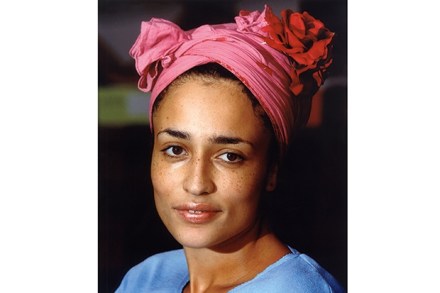
In 2011 the New York Times’s chief dance critic, Alastair Macaulay, asked: How should we react today to ‘Bojangles of Harlem’, the extended solo in the 1936 film Swing Time in which Fred Astaire, then at the height of his fame, wears blackface to evoke the African-American dancer Bill Robinson? No pat answer occurs. Zadie Smith’s fifth novel is a brilliant address to that question. In the prologue the unnamed narrator, who has recently lost her job as assistant to a Madonna-like star, goes to the Royal Festival Hall to hear an Australian director ‘in conversation’ and sees a clip from Swing Time — ‘a film I know very well, I watched it over and over as a child’.

Fierce indignation

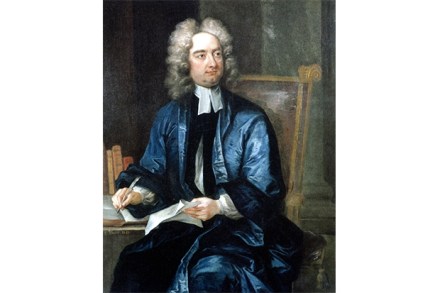
In an autobiographical note written late in his life, Jonathan Swift set down an astonishing anecdote from his childhood. When he was a baby in Dublin, he was put into the care of an English wet nurse, and one day she heard that one of her relatives back in England was close to death. Hoping for an inheritance, the wet nurse jumped on a boat back to Whitehaven in Cumbria, taking the infant Swift with her. ‘When the Matter was discovered,’ Swift wrote, ‘His Mother sent orders by all means not to hazard a second voyage, till he could be better able to bear it.’ So the wet nurse kept Swift in England for two or three years, and by the time he returned home, Swift recalled, he could read the Bible from cover to cover.

Intoxicated with ink

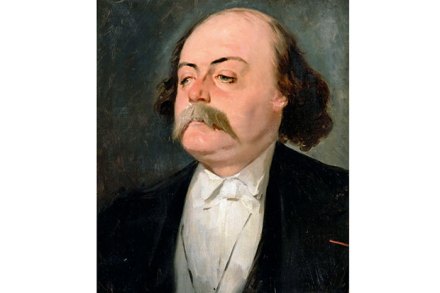
One of the charms and shortcomings of biography is that it makes perfectly normal situations sound extraordinary. According to Michel Winock, Gustave Flaubert (1821–80), the author of Madame Bovary and L’Éducation sentimentale, contracted ‘an early and profound aversion to mankind’. To Gustave the schoolboy, man was nothing but a coagulation of ‘mud and shit… equipped with instincts lower than those of the pig or the crab-louse’. This might have been the influence of his freethinking father, an eminent Rouen surgeon, but perhaps it was just the spirit of the age. The Napoleonic adventure was over; the sun of Romanticism had set.

Behind the fringe

‘Sexual intercourse began / In nineteen sixty-three,’ Philip Larkin famously announced in his poem ‘Annus Mirabilis’, ‘Between the end of the Chatterley ban / And the Beatles’ first LP.’ But the key line is a far more private confession, caught in parentheses like a gloomy thought bubble: ‘(which was rather late for me)’. Few of Larkin’s contemporaries would have been more sympathetic than Alan Bennett.

Thoroughly bewitching

Angela Carter was a seminal, a watershed novelist: perhaps one of the last generation of novelists to change both the art she practised and the world. Reading this splendid biography, it is hard to avoid the false conclusion that she always knew exactly what she was doing. Her life, in its swerves and unexpected corners, always turns out to be contributing to her work; how clever of her, one starts to think, to get a job on a local news-paper, to go to Japan, to have an array of dotty, oppressive or plain witchy aunts, mother and grandmother…. Of course it was not like that. Carter’s life seems rich and inevitable in the retelling because she made use of almost everything. There was not much that she wouldn’t look at with interest.

Cocktails, castles and cadging

Here is a veritable feast for fans of Paddy Leigh Fermor. This is the story of a well-lived life through letters. The first is from a 24-year-old recruit eager to do battle with the enemy in 1940. The last is by a tottering nonagenarian of 2010, still hoping, 75 years after his ‘Great Trudge’ across Europe, that he might just finish the final volume that had eluded him for decades. The anthology offers the most vivid explanation yet for why he didn’t. Letters were flying to and from all corners of the world — Adam Sisman reckons that Paddy wrote a whopping 5,000 to 10,000.

A woman of some importance | 22 September 2016

Searching for a 12-month stretch in the life of Elizabeth Jane Howard (1923–2013) that might illuminate the kind of person she was and the circumstances of her fraught and chaotic career, I settled on the year of 1955. Our heroine, then living in a maisonette flat in Little Venice and reading manuscripts for the publishing firm of Chatto & Windus, was hard at work on her well-received second novel, The Long View (1956). She was also having an affair with Arthur Koestler, who, when they entertained, her biographer tells us, expected her to ‘produce a three-course meal, look demurely beautiful and say as little as possible’. And so the year winds on. Koestler dazzles her with his volcanic temperament, gets her pregnant and then fixes an abortion.

Tomorrow’s world | 1 September 2016

It may be difficult to believe when you think of Donald Trump, but the age of super-humans is almost upon us. Some people are confident that over the next century genetic engineering, electronic implants, new drugs and the medical defeat of ageing will give rise to a race of beings with capabilities far beyond our own. And what will they do with them? What will clichéd fears about ‘playing God’ mean to our descendants who, by comparison with us, will effectively be gods? Such questions exercise the historian authors of these two books.

The key to a hidden kingdom

It’s a modern pastime to hypothesise about what makes a good relationship. One evening not long ago in a Berlin bar, I listened to a friend diagnose how things were going with his partner: ‘We might have become a bit too symbiotic.’ Surprisingly earnest perhaps, but that’s what you get when a sociologist dates a psychoanalyst. On the way home, I wondered why symbiosis, apart from the obvious dangers of parasitism, might not be that desirable coexistence all our theories point toward. After all, the OED recommends that this ‘interaction between two different organisms living in close physical association’ is ‘typically to the advantage of both’. The darker side of symbiosis, I suppose, is the risk of losing yourself.

Seeing red | 18 August 2016

Early on in his excellent and protean biography of a colour, Spike Bucklow quotes Goethe, writing in 1809: Every rope in the English Navy has a red thread running through it, which cannot be extracted without unravelling the whole, so that even the smallest length of rope can be recognised as belonging to the crown. Bucklow’s book follows a red thread through human history, whose twin strands are material extraction — the animal, vegetable and mineral lives of red — and the extraction of meanings from redness itself. All colour is cultural. We have our private definitions — the unshareable conviction as to what is and is not red — but it is societies that ‘make’ colours and their associations.

A meeting of two minds

This lovely, modest and precise book tells the story of the most productive friendship among the modernists, and the most surprising. Stanley Price calls James Joyce and Italo Svevo two of the four great modernists, along with Kafka and Proust. That may overstate the case for Svevo, but no reader will reach the delightful, happy ending of their friendship and begrudge a biographer’s warm enthusiasm. Few encounters between a paint manufacturer and a teacher of English as a foreign language have ever ended in a mood so like a fairy tale. In 1904, Joyce arrived in Trieste with a woman he had met only four months earlier called Nora Barnacle. It was not a carefully considered destination.

A gentleman among players

I once played in something called the Writers’ World Cup. A lot of people in publishing (novelists, journalists, editors, agents) like to think that if their lives hadn’t been poisoned by books, they might have really made something of themselves — as ballplayers, among other things. This is probably one of the more pleasant delusions. The star of the tournament was a stocky bull-chested essayist who, rumour had it, used to play in some Hungarian minor league. Nobody could take the ball off him. Afterwards the writers got together in some theatre that the organisers had hired and talked for several hours in turns about the meaning of football. I guess this is what we were good at. George Plimpton spent a large part of his writing career putting this delusion to the test.

A five-ring fiasco

The ambitions of the founding father of the modern Olympic Games, the Frenchman Baron Pierre de Coubertin — that they should be ‘the free trade of the future’ and provide ‘the cause of peace’ with a ‘new and mighty stay’ — were at once wildly optimistic and strangely prescient. Considering that they were first conceived of as a festival of sporting excellence in a spirit of internationalism, the Olympics have had an enduring habit of stirring up displays of humanity at its worst. To anyone who believes that the excesses of the Games over the past 50 years or so have betrayed a purer original legacy, these two books by Jules Boykoff and David Goldblatt provide bracing correctives.

Russia’s dumping ground

Almost as soon as Siberia was first colonised by Cossack conquistadors in the 17th century, it became a place of banishment and punishment. As early as the 1690s the Russian state began to use Siberia as a dumping ground for its criminals, as though its vastness could quarantine evil. Katorga — from the Greek word for galley — was the judicial term for a penal sentence where inmates performed hard labour in the service of the state. The sentence was commonly imposed in place of death from the reign of Peter the Great onwards. And in many ways Siberia truly was a House of the Dead — as Daniel Beer, who borrows the title of Fyodor Dostoevsky’s prison novel for his masterful new study, recounts in horrific and gripping detail.

A familiar life (revisited)

A Life Revisited, as the modest, almost nervous, title suggests, mainly concerns Evelyn Waugh’s life with comments on but no analysis of his books. There have been at least three major biographies already, as well as large volumes of diaries, letters and journalism and many slighter volumes. There is more to come. Waugh’s grandson, Alexander, who has defied current trends by writing a fine book on the males of the family, is editor-in-chief of The Complete Works of Evelyn Waugh, with the first of 43 volumes coming out next year. He has also collected an unrivalled archive containing unpublished notes, letters and interviews, and commissioned this book for the 50th anniversary of his grandfather’s death. All of which presents Philip Eade with a problem.

Food for thought | 7 July 2016

Elisabeth Luard has a fascinating and rich subject in the relationship between food and place. Humans eat differently according to where they live. Their diets both in daily life and in feast-day magnificence are influenced by seasonal and regional availability, sumptuary laws, convention, history and even political diktat. I was in Norway last week, and was repeatedly tempted by the offer of grilled whale, though less so by the pseudo-cheese Brunost or Gjetost. (When a lorry carrying Gjetost crashed and burst into flames in a tunnel in 2013, the load of sugar in the ‘cheese’ fuelled an inferno that the firefighters could not approach for four days.

The laureate of repression

In 1927, while delivering the lectures that would later be published as Aspects of the Novel, E.M. Forster made a shy attempt to get to know his Cambridge neighbour, the classical scholar A.E. Housman. At first all appeared to be going well. After one lecture the two men dined together, and Housman told Forster ‘with a twinkle’ that he enjoyed visiting Paris ‘to be in unrespectable company’. Emboldened by this confession, Forster ‘ventured to climb the forbidding staircase’ that led to Housman’s rooms in Trinity College. The door was firmly closed against him. He left a visiting card; it was equally firmly ignored. What might have been the start of a long and happy friendship turned out to be the academic equivalent of a one-night stand.

Misadventures in Libya

If photographs of ‘the deal in the desert’ made you queasy — you remember, Tony Blair and Muammar Gaddafi shaking hands for the cameras in 2004 — imagine how you would have felt if you were in exile in London and your father under torture in Gaddafi’s cells at the time. Now Blair is not looking forward to the Chilcot report, Gaddafi is dead and Hisham Matar, who was the helpless onlooker, has published The Return, a memoir about his father and about Libya which will attract many readers and prizes. It may also help focus our ideas about whom we protect, whom we betray, and how we deal with the devil. Gaddafi’s death might not have been a source of sorrow to Blair (and co).