Sherard Cowpercoles

The four men who averted the Apocalypse

From our UK edition

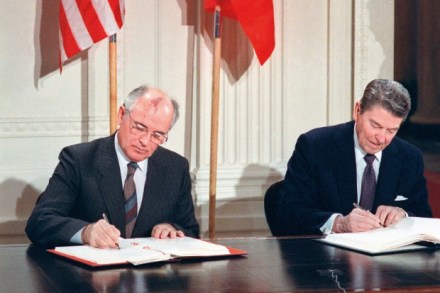
In March 1987, as Professor Robert Service records in his new account of the end of the Cold War, Margaret Thatcher visited Moscow. She had been reluctant to do so, largely out of fear that such a visit would only make it easier for a credulous Reagan — as she saw him — to offer Gorbachev even more concessions. She had also been worried that it would produce nothing for British interests. Her hesitation to travel to Russia, let alone, as her advisers had urged, solicit an invitation, was perhaps surprising. She and Gorbachev had got on famously — shoes off, in front of a blazing fire — when she had entertained him, then only the Politburo member responsible for agriculture, at Chequers just before Christmas 1984.
A hero of our time

From our UK edition

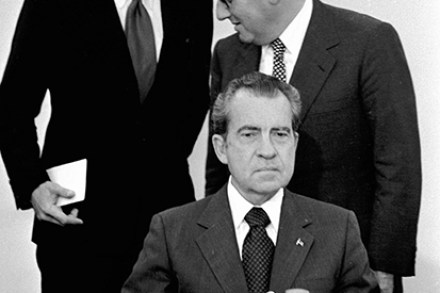
I have met Dr Kissinger, properly, only three times. First, in Cairo, in 1980, when, as a junior diplomat escorting Edward Heath, I had to secure for an almost desperate former British prime minister a meeting with the former US secretary of state, also in town. Once with Kissinger, Heath promptly subsided into a deep slumber. I had the alarming experience of trying to keep the conversation going. The other occasions were more recent, but almost as scary. My hostess at the ‘secret’ (but much publicised) transatlantic talkfests which Kissinger (92 this year) still attends twice summoned me to sit beside the great man at dinner. On each occasion I felt like the luckless passenger in the Economist’s vintage television commercial.

Afghanistan withdrawal: Sherard Cowper-Coles on what the Soviets did right

From our UK edition

History doesn’t show us only mistakes to avoid. It also gives us examples of success to be emulated. We would do well to study the way in which the Soviet Union left Afghanistan. Like Barack Obama in 2009, in 1985 the new Soviet leader, Mikhail Gorbachev was faced with the challenge of how most elegantly to extract his country from Afghanistan. Unlike Obama, Gorbachev was being told by his military advisers — who had mostly been doubtful about the whole campaign from the start — that the war was unwinnable. Unlike Obama, he decided that the right course was to follow the playbook for countering insurgencies. The first task was to ensure that an essentially tactical military campaign was enfolded in a coherent political strategy.

Breaking rank

From our UK edition

Nearly five years ago, a friend in the diplomatic service was hovering outside the permanent under-secretary’s room in the Foreign Office. Through the open door, he overheard the senior official telling ‘Jock’ not to worry, the FO would be sending a ‘big hitter’ as ambassador to Kabul. They would make sure that the surge of British military forces into Helmand was matched by a diplomatic surge into Kabul. ‘Jock’ was the then chief of the defence staff, Air Chief Marshal Sir Jock Stirrup, and the ‘big hitter’ was — though I didn’t yet know it — me, sitting in blissful ignorance in Riyadh, starting my final year as ambassador to Saudi Arabia.