Lead book review

Books of the year II – chosen by our regular reviewers

Andrew Lycett Describing how individuals get drawn, often haphazardly, into a bloody conflict such as the English Civil War is not an easy task. But Jessie Childs manages it superbly in The Siege of Loyalty House (Bodley Head, £25), which tingles with a discerning historical imagination. Lily Dunn’s memoir Sins of My Father (Weidenfeld & Nicolson, £16.99), about her mixed reactions to her beloved dad’s dive into a religious cult and subsequent alcoholism, is notable for its emotional truthfulness, sure sense of time and place and appealing tone of delivery. The novel which gave me most pleasure was Winchelsea by Alex Preston (Canongate, £14.99), a rip-roaring yarn about smugglers and seafarers in Romney Marsh and its coastal hinterland in the 18th century.

Books of the Year I — chosen by our regular reviewers

Philip Hensher There were some very good novels this year, but they came from surprising directions. It is astonishing that one as original as Kate Barker-Mawjee’s The Coldest Place on Earth (Conrad Press, £9.99) couldn’t find a major publisher. A friend recommended this wonderfully controlled and evocatively written novel about a heart coming to life in the depths of Siberia.  I always enjoy Mick Herron’s half-arsed spy thrillers, but Bad Actors (Hodder & Stoughton, £18.99) took a big step into literary excellence. The dazzling, Conrad-like structure turned an entertainment into a major literary statement. Sheila Llewellyn’s Winter in Tabriz (Hodder & Stoughton, £8.

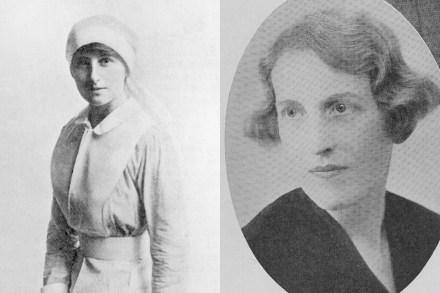
Who needed who most? The complex bond between Vera Brittain and Winifred Holtby

These letters between Vera Brittain and Winifred Holtby cover 15 years of a remarkable friendship that began at Somerville College, Oxford in 1919 and ended only with Holtby’s premature death from kidney failure in 1935. Brittain went up to Oxford in 1914, but left to serve as a nurse in the first world war. She returned freighted with tragic experience, having lost both her lover and her brother and tended the wounds of horribly injured soldiers close to the front. She disconcerted younger undergraduates with her fiercely competitive and forthright views combined with fragile looks and a general air of suppressed trauma.

We love you, Uncle Xi!

In 2015, I had lunch with an old chum of Xi Jinping. He described how China’s most powerful leader since Chairman Mao was born into the Communist party’s ‘red aristocracy’ but had to toughen up fast when his father was jailed in the Cultural Revolution. The young Xi briefly became a street hoodlum who swore like a trooper, smoked like a chimney and drank like a fish. He survived by turning ‘redder than red’, climbing the party ladder from a branch secretary in a lowly village all the way up to the top job in Beijing. ‘I am fond of Xi, but he is isolated from his old friends and there is a danger of emperor syndrome,’ the friend warned me. ‘I think Xi will want to rule for 20 years.

A complex, driven, unhappy man: the truth about John le Carré

It is often said that the age of letter-writing is past. This forecast seems to me premature. I have edited three volumes of letters, in each case by writers labelled (though not by me) as ‘the last of their kind’. Yet here is another one, and I feel confident that more will follow. Few now write letters, but those who still do tend to take care what they write. And it will be some decades before we have used up the legacy of the living. John le Carré, who died almost two years ago at the age of 89, was one such. His work is likely to be reassessed over the next few years and his place in the canon is not yet secure. But he is undoubtedly the pre-eminent spy writer of modern times, and arguably the definitive chronicler of the Cold War.

The lonely passions of Emily Hale and Mary Trevelyan

This year marks the centenary of the publication of The Waste Land, the poem that made T.S. Eliot famous. His story is familiar and yet still surprising. What is well known: Ezra Pound whipped The Waste Land into shape, it was published in The Dial and then The Criterion, and it was quickly recognised as a poem of great importance. Eliot emerged as the poet of his age and his views on the ‘impersonality’ of poetry would dominate the next several decades of poetry and criticism. What is less well known is how Eliot’s work was shaped and influenced by a few key women. This dynamic is what Lyndall Gordon’s The Hyacinth Girl and Mary Trevelyan and Erica Wagner’s Mary & Mr Eliot set out to explore. Gordon has written about Eliot before.

The unpleasant truth about Joseph Roth

Endless Flight is the first biography in English of the novelist Joseph Roth. This is very surprising, since Roth’s short, violent life traverses some of the most compelling episodes in 20th-century European history. He was a supremely elegant, intelligent and clear-sighted writer, despite living out of suitcases, in hotel rooms, always on the run. If most of his novels are flawed in one way or another, they are all interesting in others. He also wrote what must be one of the dozen greatest European novels, The Radetzky March, translated at least three times into English since 1933. (We are now lucky to have Michael Hofmann’s superb, comprehensive translations, which perfectly convey Roth’s native skill in language.

Vaughan Williams’s genius is now beyond dispute

Classical music plays hell with people’s posthumous reputations, as any admirer of the works of Ralph Vaughan Williams will tell you. In 1972, on the centenary of his birth, ample respects were shown. Not only were there special concerts of his music but the Post Office, which is now more focused on commemorating gay pride, issued a stamp. Since the composer’s death in 1958 he and his works had gone into an eclipse, not least because of the atonalists who controlled the Third Programme and many of our concert halls. These were people who believed the British music-loving public should be fed on a diet of what Kathleen Ferrier called ‘three farts and a raspberry, orchestrated’. The eclipse resumed after 1972.

The sheer tedium of life at Colditz

They say each generation needs its own biographies of Cleopatra, Joan of Arc and Napoleon, not just when more evidence is unearthed but because the lens through which we view character and motive changes. The same is true for the great set pieces of history. According to Ben Macintyre, the story of Colditz and its second world war POWs with their ‘moustaches firmly set on stiff upper lips, defying the Nazis by tunnelling out of a grim Gothic castle on a German hilltop’ has been unchanged and unchallenged for more than 70 years. In his latest page-turner, Macintyre includes the stories of those heroes who were not straight, white, moustachioed or even male, and others who were at once courageous, arrogant and bigoted.

Ian McEwan’s capacity for reinvention is astonishing

McEwanesque. What would that even mean? The dark psychological instability of The Comfort of Strangers and Enduring Love? The gleeful comedy of Solar and Nutshell? The smart social realism of Saturday and The Children Act? The metafictional games of Atonement and Sweet Tooth? Ian McEwan’s brilliant capacity for reinvention is a hallmark of his literary career. It’s simpler to say what McEwanesque is not: baggy, meandering, plotless, long. Yet all of these adjectives could be applied to his surprising new novel, Lessons. This cradle-to-grave (well, seven-ish to seventy-something) narrative concerns the life and times of Roland Baines, born, like McEwan, in 1948. Roland shares more than just a birth date with his author.

An old Encyclopaedia Britannica is a work to cherish

Two thousand years ago, a young Cilician named Oppian, wanting to rehabilitate his disgraced father, decided to write Halieutica, an account of the world of fishes, as a gift for Marcus Aurelius. It was a mixture of possible fact and definite fiction – if only there were octopuses that climb trees and fishes that fancy goats – and it was a success. His father was forgiven, and the son’s written work accepted as authoritative knowledge.

How the quarrelsome ‘Jena set’ paved the way for Hitler

Today, the German city of Jena, 150 miles south-west of Berlin, is the world centre of the optical and precision industry; but in the 1790s it spawned an even more marketable commodity. It was then a small medieval town on the banks of the river Saale with crumbling walls, 800 half-timbered houses, a market square and an unruly university. Here, in the philosophy department, Johann Gottlieb Fichte, a young professor inspired by Immanuel Kant and the French Revolution, proclaimed from the pulpit his theory of the ‘Ich’. ‘A person,’ he roared, ‘should be self-determined.’ In an age of absolute power and the divine right of kings, the idea of free will was an incendiary device and Fichte freewheeled his way through each lecture.

Nothing is certain in Russia, where the past is constantly rewritten

Enforced brevity focuses the mind wonderfully. And when the minds in question are two of the West’s most interesting historians of Russia, the result is a distillation of insight that’s vitally timely. Sir Rodric Braithwaite was Britain’s ambassador to Moscow from 1988-92 during the collapse of the USSR (where he was the boss of Christopher Steele, of Trump dossier fame), then chaired the UK’s Joint Intelligence Committee. He went on to write the brilliant Afgantsy, a history of the USSR’s disastrous Afghan war and its impact on the Soviet Union’s collapse, and Moscow 1941, a people’s history of the heroic Soviet fight against Nazism.

Our long, vulnerable childhoods may be the key to our success

The central question in Brenna Hassett’s book, put simply, is: why are our children so very useless for so very long? Or: ‘What is the possible adaptive value of teenagers?’ If we consider maturity, or adulthood, to be the point at which an animal can play its own role in the evolutionary process – i.e. have its own babies – why is it that we have evolved to mature so slowly; and, even when mature, to delay having children until many years after we’re first physically capable of doing so? The framework in which Hassett sets out to answer this is one to do with investment and return on investment. An animal invests energy in growing its young.

The Nazi influence in Egypt

The law of supply and demand is a powerful thing. In the aftermath of the second world war there were many thousands of suddenly underemployed German and Nazi rocket scientists, jet engine technicians, military leaders, chemical engineers, propagandists and other specialists on the international market. While many were snapped up by the Americans and Soviets, voluntarily or otherwise, there was no shortage left for countries such as Argentina and Egypt, which reckoned they could learn a thing or two from the market leaders in internal repression and weapons of mass destruction. As the government communications specialist and Middle East watcher Vyvyan Kinross reveals in this darkly gripping story, this wasn’t a question of a handful of advisers.

Lord Northcliffe’s war of words

‘What a man,’ enthused Wilhelm II from exile in 1921. ‘If we had had Northcliffe we would have won the war.’ The Kaiser wasn’t describing a general or politician but a not- so-humble newspaperman, Lord Northcliffe, the pugnacious proprietor of the Times, Daily Mail and a host of other print publications, who had ended the Great War pumping news into Germany as the British government’s director of propaganda in enemy countries. Northcliffe brought to that post the drive he had shown building up his media empire over three decades.

The impossibility of separating Scotland from Britain

Most histories of the United Kingdom fail to account for, or even acknowledge, just how unusual a country it is. One of the strengths of a history of Scotland within the United Kingdom is that it cannot avoid emphasising the sheer strangeness of Britain. It is a country quite unlike other European nations for it is, at heart, a composite state: a Union of four other nations creating a fifth which exists alongside – and sometimes above – its constituent parts. The tensions and interplay between these identities form part of Murray Pittock’s handsome new history. Although titled a ‘global history’ of Scotland, it is also, inescapably, a history of Britain itself, albeit one written from an ultra-northern perspective.

What is the metaverse, actually?

There is a concept in tech and innovation – branded by an expensive consultancy company, naturally – known as the Gartner Hype Cycle. Any innovation, be it NFTs (a means of owning ‘unique’ digital art), blockchains (the technology powering crypto-currencies like bitcoin), self-driving cars or wearable tech, will go through distinct (buzzword-heavy) stages before it is adopted by the mainstream. First, it will head to a ‘peak of inflated expectations’, before entering the ‘trough of disillusionment’. As people then work out what the tech might actually deliver it climbs the ‘slope of enlightenment’ to the ‘plateau of productivity’.

‘Jerusalem’ is a rousing anthem – but who knows what the words mean?

The spontaneous mass adoption of deep feeling is always interesting. Jason Whittaker has a very good subject, in the journey of the cryptic lyric section of the preface to William Blake’s incomprehensible epic Milton, written and illustrated between 1804 and 1810, to its becoming the de facto national anthem of England. ‘And did those feet...’ only took on its familiar title ‘Jerusalem’ (which has nothing to do with Blake’s poem entitled ‘Jerusalem’) after it was set to music by Hubert Parry on 10 March 1916. The following day, Parry handed over his composition to his colleague Walford Davies, saying insouciantly: ‘Here’s a tune for you, old chap. Do what you like with it.

Is Gone with the Wind to blame for Trumpism?

‘America is merely a story the nation tells itself,’ the historian and cultural critic Sarah Churchwell writes in The Wrath to Come. Of the many American stories, few are more disturbing than the complex one represented by the rioter Kevin Seefried inside the Capitol on 6 January 2020. He carried the Confederate battle flag to a place it had never before been: the hall outside the United States Senate chamber. There is a photograph of him standing between two portraits – one of Charles Sumner, an abolitionist beaten half to death on the Senate floor for his views; the other of Senator John Calhoun, one of the South’s most ardent enslavers and advocates of disunion.