Lead book review

The phoney mystics who fooled the West

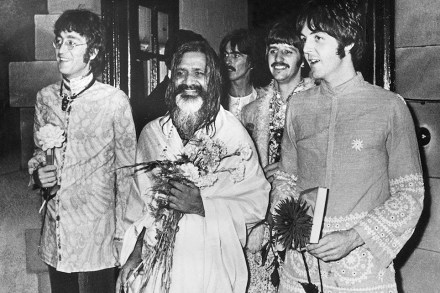
In recent years when we’ve talked about the relations between India and the West, we’ve gone back to stressing the impossibility of interchange. A hundred years ago, E.M. Forster ended A Passage to India with the certainty that Aziz and Fielding could not be friends. Forster thought things would be different after Indian independence, but the spectres of cultural appropriation and the assertion of ongoing imperialist guilt have discouraged equal exchange.  Meher’s spiritual energy was soon devoted to persuading Hollywood to make a massive movie about his life That may explain why the excellent story Mick Brown tells in The Nirvana Express has hardly been covered in the past.

The Hundred Years War ends in England’s agonising defeat – but triumph for Jonathan Sumption

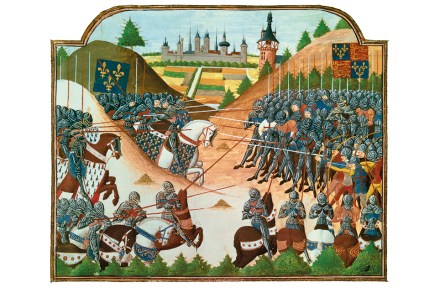
On 5 February 1328 the last Capetian king of France was laid to rest in the royal mausoleum of Saint-Denis. It is now 33 years, and more than 3,000 pages since Jonathan Sumption’s first readers followed Charles IV on his last journey, as his funeral procession wound its slow way from Notre-Dame across the Grand Pont and out through the streets of Paris into the open countryside to the north of Europe’s most populous and richest city. The death of Charles IV led to a crisis of succession that for the next four generations would embroil France and England in a war of unimaginable savagery.

Complicated and slightly creepy: the Bogart-Bacall romance

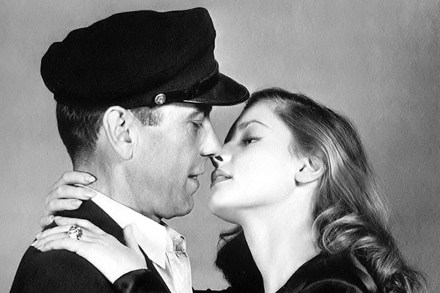
Whenever an actor and an actress begin an affair on the soundstage they like to believe they are the new Burton and Taylor. Actually they’ll be lucky to resemble Christopher Timothy and Carol Drinkwater, who had a fling on that vet programme – and now here are Humphrey Bogart and Lauren Bacall to live up to as well. Of their love story, William J. Mann avers: ‘It was wonderful; it was passionate; it was complicated.’ Also, it was creepy. Bacall was 19, Bogart 45. There was a ‘significant power differential between them’ when they met in 1944 during the filming of To Have and Have Not. Mann is probably pointing the finger at Bogart, the established Hollywood star.

George Orwell’s unacknowledged debt to his wife Eileen

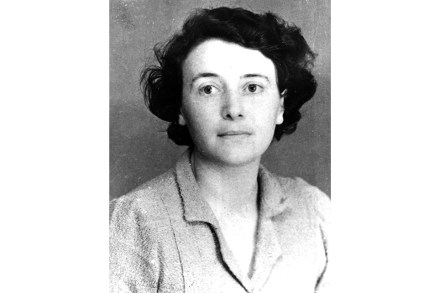
Anna Funder, the author of Stasiland, is a premier-league writer who can roll fiction, reportage, criticism and memoir into glinting prose, her sentences like handheld treasures you keep turning over, admiring their graceful contours and crafted precision. Lately she’s published little. In fact Wifedom is a book wrenched from the swirl of domestic duties that drown out women’s voices – the lifeline, in this case, being a chance find at a moment of ‘peak overload’ when she stumbles on a rare edition of George Orwell’s collected non-fiction. Eileen’s fingerprints are all over Animal Farm, a book that displays a psychological acuity Orwell lacked Diving into his essay ‘Why I Write’, she looks for self-recognition and pauses over a sentence.

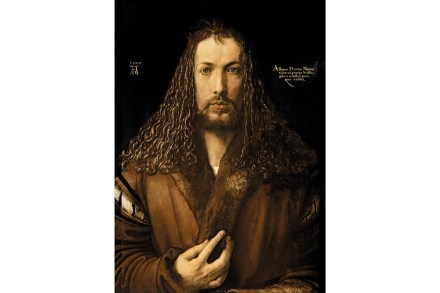
Albrecht Dürer’s genius for self-promotion

Albrecht Dürer, one of the most narcissistic artists that ever lived (and it’s a crowded field), would have loved this book. It lays out methodically, with academic brilliance, the marketplace, techno-aware basis of the ‘Dürer Renaissance’ and the artist’s rise to immortal fame. With a glorious accumulation of detail, assiduous research and – as she acknowledges before her exciting journey begins – the benefit of ‘magnificent institutional support’, Ulinka Rublack, a history professor at Cambridge University, delivers a deluxe book, with chapter and verse to support her grand subtitle: ‘Art and Society at the Dawn of a Global World’.

A cherry orchard, three sisters and a summer romance: Tom Lake, by Ann Patchett, reviewed

Two plays guide the reader through Tom Lake, Ann Patchett’s ninth novel: Thornton Wilder’s Our Town, the story of ordinary lives in a small New Hampshire community in the early years of the 20th century, which, with its radically stripped-back staging, sets time and place in the context of all time and place, and enjoins its audience to ponder what is truly valuable in human life; and Anton Chekhov’s The Cherry Orchard, the story of the battle for an estate that throbs with conflict, violence and, ultimately, destruction. Patchett’s mind is on the twin forces of preservation and entropy: our desperate attempts to cling to the local and the familiar as the wider world threatens and besieges us; our need to both depart and return, to embrace and exclude.

Should vintage comedy be judged by today’s standards?

The British sense of humour is a source of power, soft and otherwise. The anthropologist Kate Fox observed that our national motto should be ‘Oh, come off it’, and a patriotic raised eyebrow has been cited as our chief defence against demagogues. We see ourselves through a comic lens, a nation of Delboys and Mainwarings, Brents and Leadbetters, Gavins and Staceys. But despite comedy being as central to British culture as music, books on it have few equivalents to Jon Savage’s England’s Dreaming (on punk), Rob Young’s Electric Eden (folk rock) or Simon Reynolds’s Energy Flash (rave). A nice fat volume about our national comic self-image by an astute music writer is exactly what the funny business needs.

What, if anything, have dictators over the centuries had in common?

Big Caesars and Little Caesars is an entertaining jumble with no obvious beginning, middle, end, or indeed argument. But there is an intriguing book buried underneath it which asks more or less this: where does Boris Johnson stand in the historical procession of would-be strongmen or, as Ferdinand Mount calls them, ‘Caesars’? How successful was Johnson’s attempt – overshadowed by the Brexit noise, his personal scandals and his Bertie Wooster act – to turn Britain into a more authoritarian state? Even when Caesars are kicked out, they weaken a country’s institutions Mount, now 84, comes at this from a long Tory past that in recent years he has seemed to disown.

Ireland’s most notorious murderer still casts a disturbing spell

Mark O’Connell was three years old when Malcolm Macarthur – a silken-tongued toff in a bow tie – went on his killing rampage in 1982, and 33 when he was released from prison in 2012. Eight years later, when he began this book, O’Connell describes stalking Macarthur around Dublin in the hope of securing the kind of interview that would cause Ireland’s most famous murderer to ‘tremble in terror and awe at the moral magnitude of his iniquity. I wanted to witness the breaking down of his ego defences, the revelation of some terrible emotional truth within’.

What ‘pax’ meant in Rome’s golden age of imperialism

The Roman emperor Domitian began life as a spare. At the end of the 1st century CE, while his brother Titus was the heir to their father Vespasian, the younger boy’s ‘sense of resentment and frustration had festered’, writes Tom Holland. ‘Rather than stay in Rome, where his lack of meaningful responsibility was inevitably felt as something raw’, Domitian moved away with a wife whom his family disliked, ‘doomed forever to be a supernumerary’, paranoid, attracting gossip, avoiding any company in which ‘innocent mention of baldness’ might be viewed as ‘mockery of his own receding hairline’. In most judgments by posterity this Prince Harry of the early empire fulfilled all this lack of early promise. Big brother Titus became emperor only briefly.

Lorrie Moore’s latest novel is deeply troubling, but also consoling

Sometimes a novel’s means are so strange, however compelling its final effect on the reader, that a straightforward account of it will be most helpful. I’ve read, or part-read, this novel three times now. On the first reading I gave up, shaking my head. On the second I got to the end, but thought it absurdly wilful, self-absorbed and idiosyncratic to the point of whimsy. The third reading – something, after all, must have drawn me back – exerted an appalling power, and I emerged shaken, troubled, but also consoled. Take your pick. This is a book that is going to divide people, and one that can look very different to the same reader in different lights. Finn visits the cemetery – and there is Lily.

The trial of Marshal Pétain continues to haunt France to this day

In September 1944, a few months after being greeted by cheering crowds in Paris, Marshal Philippe Pétain, the head of the wartime État Français, was driven across the German frontier into exile under Gestapo escort. He no longer had access to the national radio service, so, as he passed through France, typed copies of his last speech had to be thrown to passers-by from the window of his car. Julian Jackson, the author of a previous magisterial biography of Charles de Gaulle, now undertakes a more complex task in telling the story of Pétain’s subsequent three-week trial for treason in 1945. The novelist and resister François Mauriac summarised the ordeal as the ‘trial that is never over and will never end’.

The problems of being a Bee Gee

For quite some time, the prospect of death has held a fresh terror. The British Heart Foundation’s step-by-step guide to cardiopulmonary resuscitation advises performing chest compressions ‘to the beat of “Stayin’ Alive” by the Bee Gees’. This means that the last sound some of us will ever hear is ‘Stayin’ Alive’, with our chests as the drums: Feel the city breakin’ and everybody shakin’And we’re stayin’ alive, stayin’ alive!Ah! ah! ah! ah!Stayin’ alive! Stayin’ alive! Despite their success, the Bee Gees have always been regarded as naff. They are to pop music what Fanny Cradock was to cookery or Julian Fellowes is to the world of letters. Bob Stanley is on a mission to rescue their reputation.

Shakespeare sceptics are the new literary heroes

Let’s start with the basics. Despite widespread disinformation, including in Shakespeare was a Woman and Other Heresies, there is in fact ample historical evidence from the period that a) attributes the plays and poems to William Shakespeare, b) registers the same William Shakespeare as an actor and shareholder in Lord Chamberlain’s, later King’s Men, and c) connects this William Shakespeare with the William Shakespeare of Stratford-upon-Avon. Only if you believe that all this evidence is fabricated does the authorship question become a question. And once the question is admissible, all that mass of documentation is no longer sufficient to answer it.

Haunted by Old Russia: Rachmaninoff’s lonely final years

Ask a roomful of concert pianists to pick their graveyard moment in Rachmaninoff’s Piano Concerto No. 3 (1909) and they’ll almost certainly point to five or so pages halfway through the last movement where an ant nest of piano notes infests a sparse orchestral threnody. When an elderly Vladimir Horowitz performed this passage – lank, dyed pageboy hair framing his Bela Lugosi face, hands darting over and under each other like butterflies – he looked more like a weaver at his loom than a virtuoso at his instrument. There are flickers of concentration, but the overall impression is one of extreme insouciance. ‘I am a Russian composer, and the land of my birth has influenced my temperament and outlook’ The originator of this style of playing was Sergei Rachmaninoff himself.

Why are we so squeamish about describing women’s everyday experiences?

The way that language is shaped by the facts of biological sex is a rich subject. (The way that biological sex is framed, and sometimes refuses to be shaped, by language is perhaps one for another day.) Some languages have evolved forms which are distinctly those of male or female users. Japanese has speech patterns described as male or female, such as (male) the informal use of da instead of desu. There are scripts used exclusively among women, such as the syllabic Nüshu in Hunan, China. Many languages have gendered grammatical forms in ways that are not just metaphorical. Nouns such as ‘boy’ and ‘girl’ are masculine and feminine in French, but ‘girl’ is neuter in German. Some have masculine and feminine forms of adjectives and other parts of speech.

Jim Ede and the glories of Kettle’s Yard

Jim Ede started early. At the age of 12 he used £8 of his hard-won savings to buy a Queen Anne desk. No bicycle, air pistol or football for him: this solid piece of old furniture was the thing, the first step in a long life of acquiring objects that lived, breathed and spoke to him. To call him a compulsive collector is to understate the passion that over the years saw the desk followed by an avalanche of stuff, from porcelain and glasses to pebbles and feathers, textiles and above all paintings, drawings and sculpture. Each acquisition admired, loved, cherished and shared for its uniqueness – what Gerard Manley Hopkins would have called its ‘instress’.

Daniel Chandler aims to bring new values to British politics – so how will that work out?

As this country stumbles towards a Labour victory at the next election, the mood on the left remains subdued. The problem is not Keir Starmer’s personal charisma, achingly absent though that may be. No, it lies much deeper than that, in what Tony Benn liked to call the ishoos. The cry goes up from focus groups across the land: what does Labour really stand for? What are its Big Ideas? Does anyone know? Well, perhaps they will quite soon. Step forward Daniel Chandler, a Cambridge-educated policy adviser and think-tanker who is now completing a doctorate at the LSE.

Central Europe has shaped our culture for centuries – yet we still find the region baffling

It is easy to overlook the importance of Central Europe, writes Martyn Rady at the start of this fascinating book. For some modern writers the region is best typified by similarities, or differences, over postboxes, popular preferences for spirits over wine or ‘the heavy smell of boiled cabbage, state beer and a soapy whiff of overripe watermelons’. For others, it is an exotic world of ‘small nations’ east of Germany, where one has to wait for the end of the sentence to learn the operative verb: a place of ‘baffling’ languages ‘written with an abundance of consonants, odd diacritical marks and, in places, even a different alphabet’. Take a step back, and Central Europe takes centre stage.

Is there anything safe left to eat?

The chapter headings alone are enough to induce a panic attack: ‘Disrepair – how modern diets harm brain health in childhood, adolescence and young adulthood’; ‘How ultra-processed food hacks our brains’; ‘How solving the last crisis in the food system caused the current one’. It’s not a new thing for books examining our food system to be doom-laden, but there has been something of an avalanche of them recently. Within the space of a couple of months we have had four, which may discuss different aspects of how our food is produced, but when it comes to the effects are as one: this is a manmade problem, and without serious intervention the future is bleak for humanity and the Earth. It can all induce apathy, even nihilism – and it’s hard not to feel berated.