Lead book review

The attraction of freethinking humanism

One rather surprising fact emerges from a history of humanism: most humanists were nice people. This might, on the surface, appear a totally fatuous observation. There is not much value in debating whether, say, architects, chancellors of the exchequer, engineers, surgeons or gardeners have been obviously nice people, and we would roll our eyes if a reviewer started speculating whether Wagner or Dickens were personally agreeable. But perhaps humanists are in a different category.

The Spanish Civil War still dominates our perception of modern Spain

Nigel Townson’s history of modern Spain begins with disaster – or, more specifically, with the Disaster. When an ignominious defeat in the 1898 Spanish-American war lost the country its last major colonies, a crisis of confidence followed, and the ‘Generation of 1898’ set about trying to diagnose Spain’s problem. Since the scope of Townson’s book runs from that year to ‘the present’ (roughly the spring of 2022), there are plenty of crises to cover. Spain has been unfortunate in its governments. The Penguin History of Modern Spain is a chronicle of ineffectiveness and corruption at the highest levels, and of failures to implement reform. As such, it sometimes reads like a history of missed opportunities.

As special enclaves proliferate, what are the consequences for democracy?

When the British announced the withdrawal of their navy from Singapore in 1967, a Dutch adviser from the United Nations, Albert Winsemius, offered the Singapore government two pieces of advice. The first was to crush the communists: I am not interested in what you do with them. You can throw them in jail, throw them out of the country, you can even kill them. As an economist, it does not interest me; but I have to tell you, if you don’t eliminate them in government, in unions, in the streets, forget about economic development. The second piece of advice was to let the statue of Sir Stamford Raffles, the founder of Singapore, remain standing.

The remarkable prescience of Alexis de Tocqueville

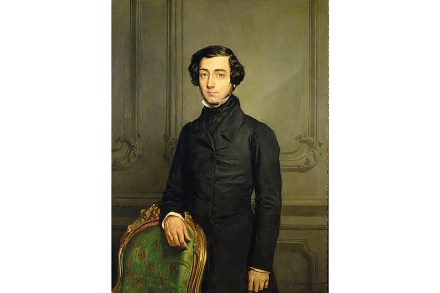
Alexis de Tocqueville (1805-59) produced what his biographer Hugh Brogan called ‘the greatest book ever written on the United States’. Among the most remarkable things about this work – Brogan was referring to the first volume of Democracy in America, not the more abstract second volume – is that Tocqueville’s journey to the United States lasted just nine months, and was undertaken when he was in his mid-twenties, never to return. Yet the book’s publication, when Tocqueville was still only 29, made him an instant celebrity. The young French aristocrat was especially pleased by its reception in America, where an unauthorised edition was published in 1838.

The biography Noël Coward deserves

‘In the prison of his days,’ W.H. Auden wrote, ‘teach the free man how to praise.’ Noël Coward’s last performance, possessing, like so much of his work, a scene-stealing quality, was in the 1969 film The Italian Job. He plays the gangster Mr Bridger, masterminding a gold robbery in Turin from his prison cell. In his final appearance he walks like a Ziegfeld heroine down the central stairs of the jail to the fervent acclamation of the other inmates, acknowledging the ovation to left and right. Coward had abundant worldly acclaim; and he knew very well where the walls lay, and the doors that would not be breached. That knowledge has served him extremely well.

Is this the end of travel writing?

Thirty years ago, in the days when friendships were sustained not by email but by air mail, a friend of mine was spending time in some exotic faraway place. He would send me beautiful, florid accounts of his travels and I would read out the most hilarious passages to the flatmates I was living with at the time. When I next replied to him, I sent him their regards and let him know how much they had enjoyed hearing about his adventures. The next letter was angry. Although part of me understood why (I suppose I had rather naively and stupidly shared something that was supposed to be private), another part of me struggled with an expression that was new to me. I had apparently committed what he called an act of ‘cultural appropriation’.

A radical new theory about the origin of the universe may help explain our existence

The deeper you get into physics, the simpler it becomes. The starting point of this wonderful book about Stephen Hawking’s ‘biggest legacy’ (which no one outside of physics has heard of) is the problem of our insignificance. Make a change in almost any of the slippery, basic physical properties of the universe and we’re toast – life would not be possible. If, for example, the universe had expanded even slightly more slowly than it did after the Big Bang it would have collapsed in on itself. Result? No us. A fraction faster and no galaxies would form, let alone habitable planets. In the incandescent beginning of the universe, each of these basic physical properties was as vacillating as a dream: they could have ended up being pretty much anything.

The world has become a toxic prison – and a volcanic winter lurks on the horizon

Civilisation pollutes. Every improvement will bring poison and entropy in its wake. Apparently infinite resources are always finite. Immediate gain is inevitable loss. Lip service to ideals of balance and moderation is as old as humanity and has never been enough. Peter Frankopan’s story of our relationship to the world across all planetary space and human time is necessarily vast – 660 pages of text, with footnotes relegated to 212 pages online – in which the grand cycle is enacted again and again.

What, if anything, unites Asia as a continent?

‘Asia is one’, wrote Okakura Kakuzo, the Japanese art historian, at the start of his The Ideals of the East in 1901. Nile Green disagrees in this sparky and impressive book. There is no reason why ‘Buddhism, Confucianism or Shinto should be more intelligible to a “fellow Asian” from the Middle East or India than to a European’. For one thing, ‘Asia’ is home to a vast number of language groups, including ‘Sino-Tibetan and Turkic, Indo-European and Semitic, Dravidian and Japonic, Austroasiatic, and others’, as well as ‘to a far wider variety of writing systems than Europe, Africa and the Americas combined’. So how and why, then, did the clumsy label come into being and stick? The blame, argues Green, lies with Europeans.

The Cultural Revolution is still a part of China today

This year is the Chinese Year of the Rabbit. The spring festival began on 22 January, and in Chinese culture the rabbit represents the moon. Some say it is because the shadows in the moon resemble the animal, but it also reflects its characteristics. The rabbit’s quiet personality hides its confidence and strength: it is moving, steadily moving, towards its goal, whatever the obstacles. Some also say that it lives in fear all the time, finds it difficult to open up to others and often turns to escapism. I never really thought about the meaning of a ‘rabbit’s pure characteristics’ in Chinese daily life until I read these two books about the Cultural Revolution.

Has Salman Rushdie become his own pastiche?

If there were ever a Spectator competition for the best pastiche of the opening words of a Salman Rushdie novel, a pretty good entry might be: ‘On the last day of her life, when she was two hundred and forty-seven years old, the blind poet, miracle worker and prophetess Pampa Kampana completed her immense narrative poem about Bisnaga.’ By coincidence, these are also the opening words of Victory City, a book Rushdie finished not long before last summer’s stabbing.

Here be dragons, dog-headed men and women growing on trees

I have to confess that this book sat on my desk for several months. The words ‘Harvard University Press’ cast a strange and unsettling spell which prevented me from even opening it. Let’s be honest: academic presses are not always synonymous with rollicking reads, nor indeed are academics. They can ask an awful lot of the general reader – that would be most of us. Given how short life is, there is no good reason why reading should be more of a pain than a pleasure. Thankfully, the spell finally wore off, which was fortunate, because this book about a book, like the book it describes, is a rare and marvellous thing.

The radicals of 17th-century England began to think the unthinkable

It was the best of times. It was the worst of times. It was the century, as the historian Kevin Sharpe wrote, summing up the Whig view, ‘in which the champions of law and liberty, property and Protestantism triumphed over absolute monarchy and popery and laid the foundations for parliamentary government’. It was a century of recurring plagues and fire and bloody civil war. It saw successive waves of witch hunts, the beginnings of the Enlightenment and the founding of the Royal Society. It saw revolution and regicide followed by restoration and revolution again.

Spare reviewed: Harry is completely disingenuous – or an idiot

A surprising number of royal personages have published books under their own names, and sometimes they have even been written by the purported authors. The first, I think, was the Eikon Basilike, published shortly after Charles I’s execution and presented as his account of himself and of events. The authorship of this highly effective piece of propaganda has been questioned, but its simple, direct, haughty tone is very similar to the king’s recorded speech at his trial. After Prince Albert’s death, Queen Victoria published two journals of her life in the Highlands. We know that she was an enchantingly vivid writer from her diaries and letters, with a novelist’s ear for dialogue.

The imaginative energy of Katherine Mansfield

A hundred years ago, in a former Carmelite monastery 60 kilometres south of Paris, Katherine Mansfield ran up a flight of stairs to her bedroom and died of a haemorrhage.  She was 34 years old. She had known for five years that she had tuberculosis. After joining the spiritualist therapeutic community at Fontainebleau-Avon in October 1922, under the guidance of the Russian guru George Gurdjieff, she had been careful to avoid stairs, or only to take them very slowly. But on the 9 January 1923, her husband, the writer and editor John Middleton Murry, came to visit and they enjoyed an evening watching other members of the commune dancing.

The collectors’ obsession with rare medieval manuscripts

Why do people collect? Cicero said of the Roman governor of Sicily Gaius Verres that his appetite for Greek sculpture was called a passion by himself but a mental illness by his friends. Freud attributed the collector’s mania to bad toilet training. Others claim to have proved that it is due to abnormalities in the medial prefrontal cortex. Psychologists have filled thousands of pages on the subject in peer-reviewed journals. It is safe to assume that Christopher de Hamel has not read any of them. But in this fascinating book he presents 12 case studies of men and women with just one thing in common. They were all obsessed with acquiring, selling, making or in one case forging medieval manuscripts.

Tales of old Hollywood are always entertaining – even when they’re apocryphal

Despite being known as a visually driven town, Hollywood has a rich oral history. This may be due to the fact that it is (like most literary communities) a small, gossipy village in which everybody knows everybody else and what everybody is saying about them. It also testifies to the fact that while Hollywood’s ‘players’ may often produce stupid films, they aren’t actually stupid themselves. Most of the time they know exactly what they’re doing – which is what makes them so perplexing. According to this hefty book, which assembles more than half a century’s worth of interviews conducted by the American Film Institute, Hollywood’s early days weren’t as glamorous as the later ones, but they certainly seemed a lot more fun.

Friedrich Hayek: a great political thinker rather than a great economist

Despite being awarded a Nobel in economics in 1974, Friedrich Hayek was a great thinker rather than a great economist. He called himself a ‘muddler’. His own attempt to build an economic theory floundered. His major contribution was to emphasise the limitations  of economic knowledge, and thus the inevitable frustration of efforts to build economic utopias. His theorising was abstract, but his purpose was practical: to make the case for a liberal economic order which would be proof against the political and economic wickedness and madness through which he lived: the two world wars, the Great Depression and the rise and fall of fascism and communism. Hayek’s was a slow-burning flame.

Anne Glenconner: ‘I took my courage from Princess Margaret’  

Craig Brown is responsible for the astonishing late flowering of Anne Glenconner. It was his biography Ma’am Darling: 99 Glimpses of Princess Margaret that so enraged her that, in an effort to stick up for her friend, whom she served as a lady-in-waiting for 30 years, Lady Glenconner started writing in her mid-eighties. She hasn’t stopped since. First came an internationally best-selling memoir, Lady in Waiting, then two pacy novels. And now, coinciding with her 90th birthday, as well as (no flies on her) the new season of The Crown, Christmas etc, she publishes this volume of ‘life lessons’ – a catch-all, really, for any other top toff reflections from this most likeable of survivors.

A sunken wreck of a novel: Cormac McCarthy’s The Passenger reviewed

Is Cormac McCarthy among the last generation of novelists to possess a Style? Of course all writers have a characteristic style, however unassuming; but not many these days have a Style in the grand manner, the sort that Kingsley Amis (I think writing about Nabokov) described as a high level of flutter and wow. There are conversations about what I think of as ‘novelists’ science’, not really intended to be understood The great beasts of American literature have often aimed for prose that couldn’t be mistaken for anyone else’s – Hemingway, Faulkner, Bellow, Updike. Though there were always intensely mannered novelists in England, they had less of a heroically manly quality – Firbank, Wodehouse, Elizabeth Bowen, Henry Green.