Lead book review

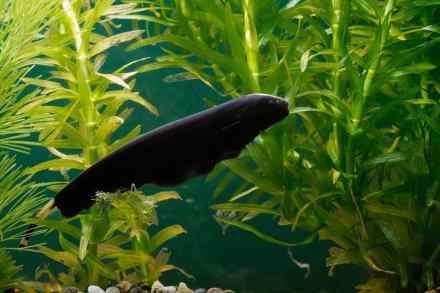
Fish that swim backwards – and other natural wonders

In the Zhuangzi, a collection of tales attributed to the eponymous 4th-century BC Chinese philosopher, a frog that lives in a well boasts about its comfortable way of life to a visiting sea turtle. When the turtle describes its own existence in the vast expanse of the ocean, however, the frog has no idea what to make of it. The story is, of course, a humorous parable about typical human limitations and the possibility of stepping beyond them. But it could serve almost as well as an introduction to Ed Yong’s new book, which confirms in rich detail what Zhuangzi intuited: the nature and range of different forms of animal perception is astounding, and a greater appreciation of them has the potential to enrich human life.

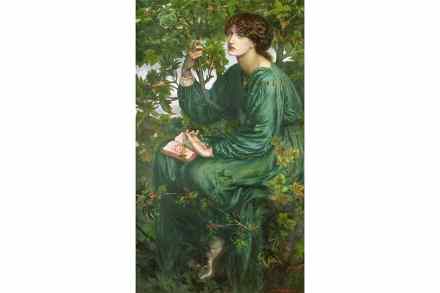
Was Jane Morris a sphinx without a secret?

William Morris was the son of a stock-broker and Jane Burden was the daughter of a stablehand. He was raised in a mansion in Walthamstow (now the William Morris Gallery) and she grew up in a hovel in Oxford. Had she not been talent-spotted by Dante Gabriel Rossetti when she was leaving the theatre one night, Jane would have become a college servant rather than an artist’s muse. She married Morris when she was 19, after he had reproduced her as ‘La Belle Iseult’, trapped in a room between a window and a bed, and put her through intensive elocution lessons as well as a crash course in music, art and literature.

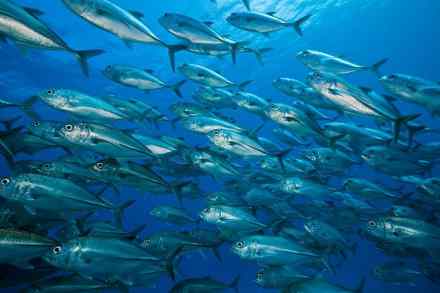
A glimmer of hope for the blue planet

You might think – with its feeding frenzies, vertiginous seamounts, perilous weather and deep history of the monstrous – that the ocean was a wild enough place as it is; but according to the environmentalist Charles Clover it has systematically been ‘de-wilded’ by decades of commercial overfishing, and our seas are now in urgent need of healing. I believe him. When it comes to conservation, fish hold less appeal than terrestrial fauna: they are perceived as cold-blooded, mostly invisible, lacking in charisma, and often delicious – plus, for centuries, there existed the comfortable delusion that their stocks were inexhaustible (even a proof positive of divine benevolence).

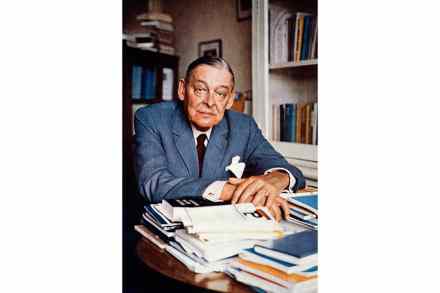
Is T.S. Eliot’s great aura fading?

For much of his life T.S. Eliot was surrounded by an aura of greatness: people accepted it, and behaved accordingly. That kind of consensus is not helpful for a writer or his works, as Eliot himself clearly saw, observing that nobody had ever written anything significant after winning the Nobel Prize for Literature – true at the time and mostly true since. His work is now in the position of Hamlet when he wrote a famous essay on the play: that the universal agreement of its greatness had hidden an understanding of its failures, its strangeness and what it couldn’t do. We take the greatness of Eliot’s poetry pretty much for granted; but in the centenary of The Waste Land, some cracks are beginning to appear in a once unassailable reputation.

The lonely genius of Bronislava Nijinska

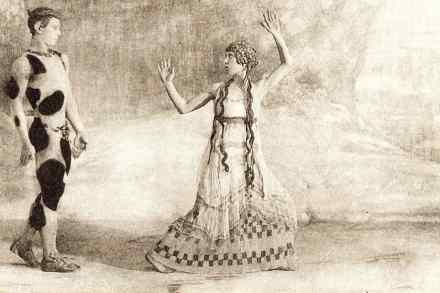
Even in her lifetime, people had a habit of overlooking the talent of Bronislava Nijinska. Her famous brother Vaslav Nijinsky initially refused to recommend her to his lover Sergei Diaghilev when the impresario was signing up dancers for the 1909 Paris season of Ballets Russes. He didn’t introduce her to his friends, either and – in what can only be seen as an act of cruelty – took away her roles in the ballets she had helped him create. Diaghilev himself, whom she regarded as a father figure, treated her with something like disdain, declaring: ‘I cannot have two geniuses of the dance from one family’, and asked her to dye her hair red ‘and dress more like a ballerina’.

The unbearable brutality of the Bolsheviks

For far too long,’ Sir Antony Beevor writes, ‘we have made the mistake of talking about wars as a single entity.’ In Russia: Revolution and Civil War he sets the record straight for the bitter years between 1917 and 1921, revealing the myriad ways in which individual actions constellated and 12 million people perished. This is not a story about winners and losers. As the war correspondent Martha Gellhorn once wrote about every conflict everywhere: ‘There is neither victory nor defeat; there is only catastrophe.’ It seems wrong to categorise this book as military history. It is like reading a film. Typhus-bearing lice in hospitals at the front are so abundant that they crunch under nurses’ feet ‘like sugar’.

Light and shade in the Holy Land – a century in spectacular images

Roger Hardy is a romantic. That much I deduce from the language he uses to describe how photographers were drawn to the special quality of light in Palestine. Their images, he writes, ‘capture the play of light and shade on the limestone walls of Jerusalem’s Old City, the glistening watermelons on sale at open-air markets, the white apartment blocks of the new metropolis of Tel Aviv, the dusty rubble of houses blown up by soldiers during the rebellion of the 1930s’. The last few words reveal a steely realism, too, a quality developed, no doubt, during the more than 20 years he worked as a Middle East analyst for the BBC World Service.

Disregarded for decades, Jean Rhys stayed true to her vision of life

Jean Rhys, who died at the age of 88 in 1979, lived to be forgotten and rediscovered. Like many readers, I first came across her through her novel Wide Sargasso Sea, which imagines the pre-history of Jane Eyre’s ‘madwoman in the attic’, the Creole heiress married off to Mr Rochester and then incarcerated by him at Thornfield Hall. When it came out to great acclaim in 1966, it marked the rebirth of a writer who hadn’t published a book for more than a quarter of a century and who had even been presumed dead.

You can make anything up about the royal family and it will be printed as fact

There are quite a few things that Tina Brown doesn’t know: what ‘jejune’ means; when Louis XIV came to the throne; what the passive voice in prose is (not ‘recollections may vary’); what members of the aristocracy are called (Lady Romsey becomes Lady Penelope Romsey) or what members of the royal family are called (the ‘Dowager Duchess of Gloucestershire’ puts in an appearance).

Nymphomaniac, fearless campaigner, alcoholic – Nancy Cunard was all this and more

The title of Anne de Courcy’s riveting new book might give the impression that Nancy Cunard had no more than five lovers. In fact she had many, many more. Born in 1896, Nancy was the only child of fantastically ill-matched parents. Her mother, Maud – she later changed her name to Emerald – was an American heiress and socialite. Her father, Sir Bache Cunard, was a fox-hunting squire busily engaged in spending the fortune he inherited as the grandson of the founder of the shipping line. Maud neglected Nancy, leaving her in the charge of an odious governess. The only person who had any time for the lonely little girl was the writer George Moore, her mother’s lover. Some said he was Nancy’s father, but this seems unlikely.

A pure original: the inventive genius of John Donne

Perhaps it was all because of his name. John Donne: for a poet this must have felt a little like destiny, and even in the most unlikely of moments he couldn’t resist making puns. He sat down to write a letter to the enraged father of the teenage girl he had just married in secret. A lesser man might have chosen to play this fairly straight, but not JD. ‘It is irremediably done,’ he wrote to his new father- in-law, and of course he spells it ‘donne’. His young bride’s family name was More; the jokes pretty much wrote themselves. The couple had 12 children and were, he later said, ‘undone’ by their marriage. It is difficult to read Donne and not to like him, at least some of the time.

Norman Scott has the last word on a very English scandal

I’m glad Norman Scott can say he has ‘always had the ability to laugh at the absurdity’ of his existence because, as detailed here in a long-awaited memoir, I too couldn’t stop shrieking, he is so tragic. When he came home unexpectedly as a youngster, for example, and witnessed his mother having sex in the lounge with a telephone engineer, he was so shocked he dropped his tortoise. ‘The terrible guilt over my tortoise stayed with me,’ he writes – maybe until just the other day. Scott is now 82. He’ll always be remembered of course for the Jeremy Thorpe trial, when the judge, Mr Justice Cantley, called him a fraud, a sponger, a whiner and a parasite; and Scott’s haplessness is truly in a class of its own.

Pablo Picasso in love and war

The decade 1933-43 was one of busy erotic multi-tasking by the deft and diminutive Pablo Picasso. It took him the best part of ten years to effect a separation from the reluctant Olga Khokhlova, his ex-ballerina wife, retired injured from the Diaghilev Ballets Russes. Legal proceedings were triggered by her discovery of Picasso’s affair with Marie-Thérèse Walter (aged 17 when Picasso picked her up in 1927 outside the Galeries Lafayette). On 5 October 1935, Marie-Thérèse gave birth to Picasso’s daughter, Maria de la Concepción, later known as Maya. By then Picasso was fornicating on many fronts: with Alice Paalen, the wife of an Austrian painter, and the 49-year-old Valentine Hugo, an ex of André Breton.

Another fallen idol: the myth of Ferdinand Magellan debunked

Who would you choose to judge you long after your death? How about a professional historian? How about Felipe Fernández-Armesto? Much lauded and read, this professor of history at Notre Dame, Indiana is the author of many books including short histories of humankind and the world and longer ones of exploration, Hispanic America and the year 1492. As you begin Straits, his account of the life and voyages of Fernando de Magallanes, known in English as Ferdinand Magellan, the explorer credited with the first European navigation from the Atlantic to the Pacific via the straits at the tip of South America in 1520, you may quail at the thought of his searing judgments. He can be waspish, uncompromising and cutting.

When Oxford life resembled a great satirical novel

Evelyn Waugh’s Oxford friend Harold Acton, immortalised as Anthony Blanche in Brideshead Revisited, once bumped into the wife of John Beazley, a lecturer in ancient Greek pottery, while she was exercising their pet goose in Christ Church’s Tom Quad. Hopping over the bird, Acton intuitively doffed his hat. Here, Marie Beazley declared, was ‘a true gentleman’. Mrs Beazley was famous in academic circles for her unpredictable remarks. Over dinner with undergraduates she once announced: ‘My husband can make sparks fly from my loins.

Graham Robb deserves to be a French national treasure

This is a ceaselessly interesting, knowledgeable and evocative book about France over thousands of years. Is it at all likely to have been produced by a French writer? Though it’s about some deeply serious subjects, it’s very amusing; it makes no attempt to constrain itself within an overarching theoretical framework; it would be impossible to extract from it a grand statement beginning ‘The French are all…’; it is pragmatic, full of enterprising scholarly initiative and a gift for observation without intruding. Most strikingly, it’s a book about France in which the author has profitably spent a good deal of time outside Paris.

The fuss over Mary Seacole’s statue has obscured the real person

Who would have thought that a statue of a West Indian-born nurse in south London has a role in today’s culture wars? Unveiled in 2016, it stands three metres tall outside the great teaching hospital, St Thomas’, and depicts Mary Seacole, an extraordinary Creole woman who was loved and renowned for giving succour to British troops, first in her native Jamaica and then in Crimea during the bloody and prolonged war with Russia of 1853-6. It is controversial on two main counts. First, it stands on hallowed ground at the hospital where Florence Nightingale pioneered nursing as a profession after returning from Crimea.

Truly magnificent: the splendour of Suleiman I

In this luminous, erudite book, Christopher de Bellaigue tells the story of the early years of Suleiman the Magnificent, the best known and most powerful of the Ottoman sultans.It is far from a standard narrative history. Drawing on sources in English, French, Italian and German, de Bellaigue has written a gripping account that evokes an epic poem, saga or ‘book of kings’ rather than a familiar biographical plod. It is as ‘immersive’ as the blurb claims, conjuring the world of the eastern Mediterranean, Anatolia and south-eastern Europe in the early 16th century with the limpid clarity of the many gems that stud its pages. The maps alone are worth the price of entry. De Bellaigue has done this in a variety of ways, all audacious, all largely successful.

Masters of the opium trade: the fabulous wealth of the Sassoons

Just before I started to read this book I had been immersed in the letters written by Jewish merchants based in Cairo from the tenth to the 12th centuries describing the trade they conducted across the Indian Ocean all the way to the Malabar coast. These letters are written in a difficult cursive Hebrew script and in a Judaeo-Arabic dialect, so one needs greater expertise than I possess to read them in the original. It was therefore with what was almost a sense of dejà vu that I encountered Joseph Sassoon’s fascinating account of the rise and fall of the Sassoon family, from the beginning of the 19th century to the disappearance of their trading name in 1978.

Watcher of the skies: John Constable, painter and meteorologist

A surprising amount of classic painting turns out to have specific, often literary meaning, even in genres which tend to strike us as innocent observations of reality. Dutch flower paintings, for instance, might be celebrations of wealth or contemplations of mortality; still lifes were seldom just renderings of a few bits of fruit and vegetables lying around on the kitchen table; and landscapes were hardly ever merely depictions of handsome tracts of land, whether by Rembrandt or Richard Wilson. John Constable’s work, which rarely emphasises explicit significance, was something new.