Lead book review

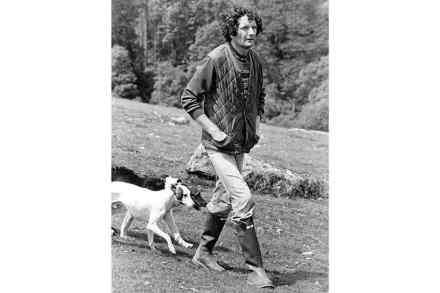
The disappearing man: who was the real John Stonehouse?

November 1974 was the month to disappear. On the 7th, Lord Lucan went missing, and a fortnight later John Stonehouse MP dis-appeared from a beach in Miami. Lucan was never found, so remains prominent in our national mythology. Nothing endures like a mystery. Stonehouse, on the other hand, was discovered in Melbourne six weeks later,

The US tech companies behind China’s mass surveillance

In January, the United States declared that China’s brutal treatment of the Uighur people in Xinjiang amounted to genocide. ‘I believe this genocide is ongoing, and we are witnessing the systematic attempt to destroy the Uighurs by the Chinese party-state,’ said Mike Pompeo, the former US secretary of state. British MPs made a similar declaration

How William Hogarth made Britain

Has any artist ever had a wider impact on the world than Hogarth? He was the motivator behind the most important legislation protecting artists’ copyright, meaning that artists from ordinary backgrounds no longer had to depend on the whims of rich patrons. Like Dickens, he used his art to laugh at and root out abuses

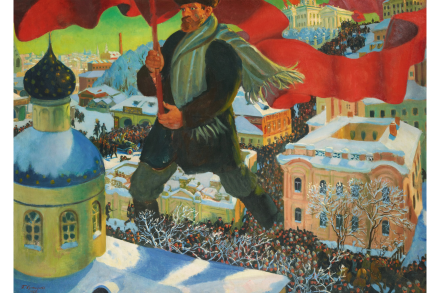
A divided city: the Big Three fall out in post-war Berlin

When did the Cold War start? Not when the second world war ended. There were many differences between the Soviet Union and its western allies, but they did not then seem insuperable. It was not obvious that the post-war world would be divided by ideology. On the contrary, the victorious United Nations hoped for an

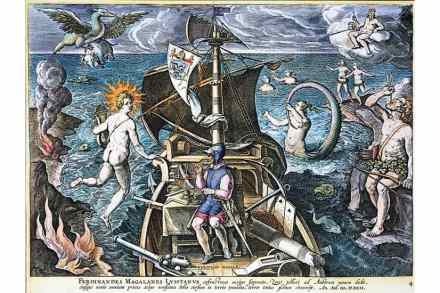
An orange or an egg? Determining the shape of the world

Thirty-two years ago the young Nicholas Crane, who would go on to become one of England’s most esteemed television geographers, set out to woo a young woman by spiriting her off to the unfailingly romantic landscape of Chimborazo and Cotopaxi. The couple spent their high-altitude idyll walking the hills in hobnail boots, making river passage

Straight lines and grandiose schemes — Napoleon the gardener

On 1 January 1806, a little over one year after his coronation, the Emperor Napoleon ordered the abolition of France’s new republican calendar and a return to the old Gregorian model. Over the past seven years republicans had grown used to ‘empire creep’, but even for those who had been forced to watch the principles

Why should art have ever been considered a male preserve?

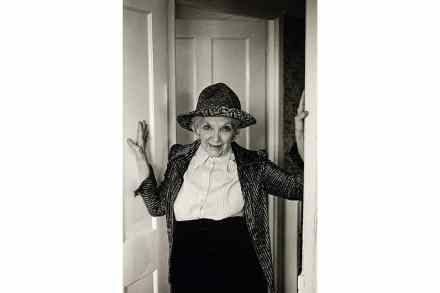
‘I’m a lady,’ insists the improbable damozel in David Walliams’s Little Britain sketch. I’m a lady, I kept thinking, reading these two books. More: I’m a lady art historian. Oughtn’t I to like books by other lady art historians about lady artists and ladies in art. Why don’t I? Why so out of sync with

An unsuitable attachment to Nazism: Barbara Pym in the 1930s

Novelists’ careers take different paths, and sometimes don’t look much like careers at all. It’s true that some start publishing between 25 and 35, and write a novel respectably every two or three years until they die, like Kingsley Amis. Others don’t start until they are 60, like Penelope Fitzgerald, or stop abruptly without warning,

Philip Roth — most meta of novelists, and most honest

On page 532 of my preview copy of this biography of Philip Roth there is a footnote. In it, Blake Bailey quotes from Roth’s novel Deception, where the character of Philip Roth asks his mistress what she would do if she was approached after his death by a biographer. Would she talk to him? She

The making of a monster: Paul Kagame’s bloodstained past

In June, Commonwealth heads of government will meet in the Rwandan capital Kigali, a city advertised by their Tutsi host, the 63-year-old Paul Kagame, as ‘the Davos of Africa’. Kagame, Rwanda’s de facto leader since 1994 — and boasting more honorary degrees than Barack Obama, although he never finished high school — has become the