Greg Garrett

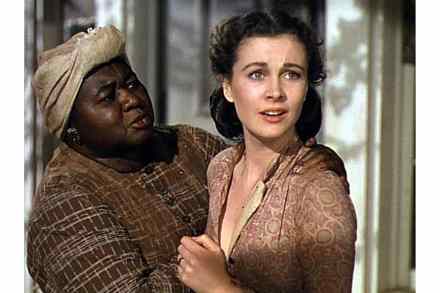
Is Gone with the Wind to blame for Trumpism?

From our UK edition

‘America is merely a story the nation tells itself,’ the historian and cultural critic Sarah Churchwell writes in The Wrath to Come. Of the many American stories, few are more disturbing than the complex one represented by the rioter Kevin Seefried inside the Capitol on 6 January 2020. He carried the Confederate battle flag to a place it had never before been: the hall outside the United States Senate chamber. There is a photograph of him standing between two portraits – one of Charles Sumner, an abolitionist beaten half to death on the Senate floor for his views; the other of Senator John Calhoun, one of the South’s most ardent enslavers and advocates of disunion.
The enduring appeal of Watergate

From our UK edition

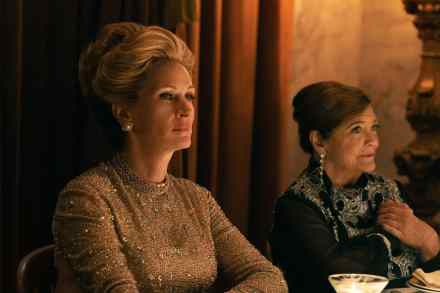
On 24 April the series Gaslit, starring Julia Roberts as Martha Mitchell and Sean Penn as Watergate-era U.S. Attorney General John Mitchell, will premiere on Starz. It joins a multitude of books, films, and TV shows about Watergate, starting with the Oscar-winning All the President’s Men (1976) running through to 2017's The Post. Granted, Watergate was one of the most disturbing moments in American political history. But why do films and TV shows continue to emerge 50 years after the event itself? Perhaps because they not only speak to long-standing myths about the power of the individual and the resilience of American democracy, but also to deep-seated fears about its fragility.

A keepsake – and to-do list – of Europe’s greatest cathedrals

From our UK edition

In his new book on Europe’s cathedrals, Simon Jenkins begins with the claim that the greatest among them are our most important European works of art. Greater than the paintings of El Greco or Berthe Morisot? More momentous than the buildings of Mies van der Rohe or Norman Foster? More important than the organ music of J.S. Bach or the Duruflé Requiem? Still, I see his point.

The complex character of Tricky Dick

From our UK edition

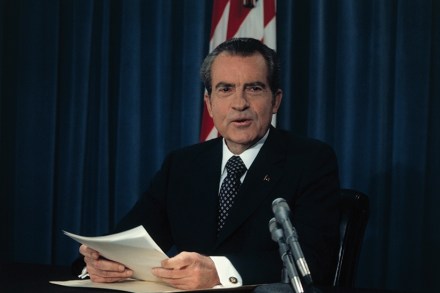
In this Age of Trump, as we cast about for some moment in American history that might help us make sense of the present, the name Richard M. Nixon keeps resurfacing. Nixon, who resigned the presidency in 1974 after being swept up in investigations into the crimes and cover-ups known collectively as Watergate, offers easy comparisons with Donald J. Trump: two corrupt American presidents who left office in disgrace; who considered the press their enemy; who accused the previous administration of surveilling them; who weaponised racism as a way to win elections; who employed the politics of division as a way of keeping power; who possessed and indulged an outsized thirst for revenge.

James Baldwin’s radicalism was part Marxist, part Christian

From our UK edition

Great biographies try to answer questions about the complicated relationship between their subjects’ inner life and outer workings. How did Winston Churchill turn the pain of his early life and his years in the political wilderness into the words that galvanised the free world? How did Frida Kahlo’s physical impairment shape her vision as a painter? I am endlessly interested in the inner and outer lives of the African–American writer and activist James Baldwin, for my money not just the most important black writer of the past 100 years, but one of the most important American writers ever.

Sympathy for literature’s least heroic characters

From our UK edition

Whether we see the primary cause as being postmodernism (for decades we’ve been told that our master narratives no longer connect us to each other) or cultural fragmentation (apart from worldwide phenomena such as Game of Thrones and the World Cup, we possess few shared encounters), the intellectual consensus is that we don’t talk meaningfully to each other because we lack communal stories. Leavers and Remainers, Trumpers and Never Trumpers seem to read the same experiences in entirely different ways. This failure to communicate is what makes Alberto Manguel’s Fabulous Monsters such a charming and essential book.

Which came first?

From our UK edition

Those who study culture — or think about public policy in relation to it — often wrestle with the classic post hoc dilemma: did a work or movement in popular culture influence events in real life, or did it simply reflect the zeitgeist? Were, say, ‘video nasties’ responsible for an uptick in violence and sadism in a generation of British youth? The Daily Mail seemed to think so, although today their hysterical headlines appear faintly ridiculous. Were the two broken boys who committed the Columbine shootings in Colorado shaped by The Matrix? Or did they simply recognise in that film a stylish myth in which to dress their murder/suicide pact?