Features

Syria’s war in miniature: meeting the Christians driven out of Qusayr

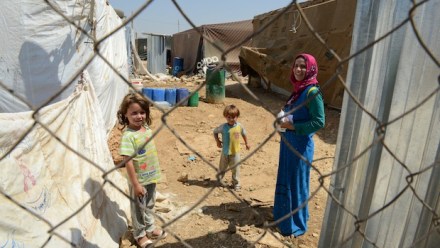
 Beirut Ilyas was, he told me, the very last Christian to flee Qusayr. He had been one of just a handful in the town to join the revolution — an odd thing for a Christian to do because the Free Syrian Army (FSA) were and are mostly Sunnis, and the Christians mostly sided with Assad. Still, it didn’t save him. One day he heard banging on the door and saw men with Kalashnikovs standing there. There were familiar faces, some he had known for years. He said: ‘They told me: “You’re a Christian – you’re not welcome here.”’ Qusayr is a grim little town of 30,000-40,000, a few miles into Syria from the Lebanese border. It was once around three-quarters Sunni Muslim, one-quarter Christian, all living peacefully together.

Notes on…The Peloponnese

Island-hopping is for backpackers and binge-drinkers; if you want a real Greek holiday, the place to go is Koroni, Messenia, on the southwestern tip of the Peloponnese. It’s an old town — founded by the Greeks before Christ, absorbed into Byzantium, then squabbled over by Ottomans and Venetians. Its geography is ancient history: Olympia to the north, Sparta across the bay, and Nestor’s Palace, Corinth, Mystras and the amphitheatre at Epidaurus all nearby. Yet Koroni feels somehow young and unbothered. Sit in one of the cafés or bars along the harbour, and it seems like a jolly seaside town from the 1970s or 1980s — unpretentious and touristic enough to be easy to enjoy, but unspoilt.

Sorry – the Vikings really were that bad

Sometimes the really obvious take on history turns out to be the right one. For generations, we all assumed that the atrocities perpetrated by the Germans in Belgium at the outset of the first world war and enthusiastically reported in the British press were Allied propaganda. Yet recent research suggests that quite a lot of it was true. Well, the same goes for the Vikings. For almost half a century, the academic line on Vikings has been that our old idea of them as raping, pillaging bastards who’d sack a monastery as soon as look at it was a childishly transparent bit of propaganda, perpetuated by Christian monks who were obviously biased against the pagan Northmen.

Welcome to Big Venice: How London became a tourist-trap city

Queuing to gain admittance to the pavement of Westminster Bridge on a ferociously hot Sunday afternoon recently, I found myself trapped. Pinioned by a road to one side, a stall selling models of Big Ben and snow-dome Buckingham Palaces to the other, and bordered by the great bronze statue of Boudicca, I was caught in a corralled mass of tourists and going nowhere fast. It occurred to me that the last time I experienced such a peculiar blend of urban misery was in Venice. This might have been the Rialto in August. But it wasn’t the Grand Canal that we were crossing, it was the Thames, and it started me thinking about the similarities of life in London and Venice.

The last male space – why old-fashioned barbers are booming

For 14 years only one man has cut my hair. Actually, that is not strictly true. Last year I went elsewhere and I felt like a husband visiting a prostitute for the first time. It made me realise how attached I’d become to my barber, Kyri, a Greek Cypriot with a shop in Kensal Rise. I’ve been with him longer than any relationship, my marriage and most of my friendships. It was the nearest barber’s to my first flat in London. Since then I’ve moved further and further away but I always make the journey back to get my hair cut. Over the years Kyri has become a friend and a confidant. When I’ve had problems with work, relationships or family, it’s with him that I talk most openly. Visits to the shop take the place of therapy.

A secret sperm donor service in post-first world war London

These days there are sophisticated and scientific solutions to the dismal problem of unwanted childlessness — there are IVF, Viagra and well-established egg and sperm donor services. We think of these as recent advantages and give thanks for the modern age. But what only very few people are aware of is that long before sperm donation was practically or ethically possible, in the early 20th century, a secret sperm donation service existed for those women most in need. Helena Wright was a renowned doctor, bestselling author, campaigner and educator who overcame the establishment to pioneer contraceptive medicine in England and throughout the world. Kind, intelligent, funny and attractive, Helena had a way with words and a devoted set of friends.

Bats vs people

Imagine: it’s Sunday morning, and the warden of a medieval village church arrives to get the place ready for communion only to find the altar covered in bat droppings. As he gets scrubbing, he reflects on how he rang the officials at Natural England to request help getting rid of these bats — ‘Perhaps they could be relocated somewhere?’ he asked innocently — but their response was to read him the riot act about his responsibilities to the bats under EU law. To fulfil its obligations, the church had to install a leaded ‘bat flap’ to let the creatures in and out — a dedicated window the bats can use to come and go as they please.

Egypt’s Muslim Brotherhood should have learnt from Nasser

Egypt used to be good at revolutions. When Gamal Abdel Nasser’s Free Officers overthrew the monarchy in July 1952, hardly a shot was fired in anger, and jubilant crowds took to the streets of Cairo chanting ‘Long live the revolution’. Even the deposed King Farouq seemed to agree that Nasser had done the right thing. As the doleful monarch prepared to sail off into exile aboard the royal yacht Mahroussa from Alexandria, to the resounding echo of a 21-gun salute, Farouq cryptically remarked to General Muhammad Naguib, the head of the Egyptian armed forces, ‘You’ve done what I always intended to do myself.’ The creation of the Egyptian republic was not entirely without suffering.

The next Tory leadership battle is Boris Johnson vs Theresa May – and it’s already started

Parliament is out for the summer. David Cameron is on the European leg of his holidays. But Boris Johnson is still beavering away, using the summer months to seek advice from his eclectic group of confidants as to how he can make it to No. 10. Make no mistake: his ambition burns brighter than ever. He wants the top job, and he’s determined to get it. But Boris’s political calculations have been radically altered by his realisation that the main obstacle to him becoming Prime Minister is not David Cameron but the Home Secretary, Theresa May. The Mayor and May are, on the face of it, opposites. She is the epitome of caution, he throws it to the wind. He yearns to be loved, she wants to be respected. He revels in the show business of politics, she disdains it.

Why soon we’ll all be vegetarian

I know some lovely vegetarians but could never imagine joining their ranks. Something about a life fuelled entirely by plants fills me with dread. The veggie’s world is a pale planet, an insipid facsimile of the real thing. Think of the fear all true carnivores have of finding out at a dinner party that veggies are present or, worse, in charge; the wondering if at least there will be cheese, the troubling knowledge that those who deny the flesh often go the whole hog (mustn’t think of hogs… can always have a bacon sarnie when we get home) and so there possibly won’t be wine either. Vegetarians have often been on the wrong side of history. Muggeridge, Hitler, Paltrow. It is interesting how veggie activists like to co-opt the great and the dead to their cause.

Notes on…Walking in the Lake District

What is it about the Lake District? The weather is often filthy, the locals are famously surly (‘sup up and sod off’ reads the sign above the bar) and its lakes are dwarfed by the great waterways of the Alps. And yet I’ve been walking here more times than I can count. From childhood camping trips to grown-up get-aways, from tents and caravans to timeshares, I’ve measured out the holidays of half a lifetime in the Lakes. Its towns are humdrum, its altitudes are modest. So why do I keep coming back? For me, and countless weekend walkers like me, the main attraction of the Lake District is its artificiality. These bare fells were forested until our forebears cleared them to make fields for sheep. The sheep no longer pay their way, and tourism is taking over.

As an Anglican ex-bishop, I can tell you: Iran’s new president could be our best hope for peace

The installation of Hassan Rouhani as President of Iran next month heralds a new chapter for the country. It is clear that he was elected not only because it was felt — both at the highest levels and by the people — that he was best placed to negotiate with the West on Iran’s nuclear programme but also because he was the candidate most likely to appeal to reform-hungry Iranians. Rouhani is a protégé of the former president Muhammed Khatami, with whom I have had the chance to work. When he was President, I spent a whole day with him meeting political, civil society and religious leaders. Visiting him in Iran, I was always struck by his learning and his humility.

George Osborne is offering me a £75k bribe if I buy my council house. Should I take it?

As a council house tenant who despises the idea of right-to-buy, I have to admit that George Osborne has put me in a quandary. Like all Tories, the Chancellor likes home ownership — after all, people who own rather than rent are more likely to vote Tory. It’s hard for him to repeat Margaret Thatcher’s right-to-buy trick because it was so successful that there’s hardly any council housing left to flog. So he’s increasing the incentive. As things stand, this Tory Chancellor is making me an offer: play his game and I can have wealth that I’m unlikely to acquire otherwise. Stick to my left-wing principles, and I can expect to be left behind as my friends and neighbours move on to ‘better’ lives.

I’m sick of sponsoring you to suffer

Within waving distance of blessed solid ground, Susan Taylor lost her bid to swim the Channel — and, with it, her life. She was 34 years old, brainy and beautiful, gifted and giving; it is, indeed, a peculiarly bitter irony that it was the giving that killed her. For years she had been an avid fundraiser, facing all manner of challenges in charitable effort, and for this, her final swim, she even gave up her job as an accountant to train: admirable in intent, courageous in execution. What I find less admirable, however, is the general acceptance that this kind of stunt is a reasonable and even a desirable way to raise money for good causes.

The Contented Royal Baby: Gina Ford on how to bring up Prince George

I was delighted to hear that the Duchess of Cambridge had a healthy baby boy. The build-up to the royal birth during the last week has been phenomenal. Even my tiny ‘Contented Little Baby’ office has been affected by the birth of our future king — our email inbox is getting fuller by the day with inquiries from interested mothers about how I think the royal baby should be brought up — so much so that we have had to allocate a file called ‘Baby Cambridge’! The majority of emails ask what advice I would give the Duchess to help her through the early weeks of motherhood. The truth is that I personally don’t think that the royal couple will need much advice from outsiders, myself included.

The elderly are driving the recovery. It’s time for generational jihadists to say ‘thanks’

You can blame it on David Willetts. A while back, he published a book called The Pinch arguing that the older generation had swindled the young out of their rightful economic inheritance and should give it back. Baby boomers (those born soon after the war) had enjoyed free university tuition, affordable housing and a thriving economy. Yet the legacy they have left to the young was a crash, eye-watering tuition fees and a gargantuan national debt. The book drew a new dividing line between the young and the old. It was a manifesto for generational jihad. It was, of course, a fascinating and original thesis which has attracted many followers. But it was also deeply misleading and perverse, and grossly unfair to boomers.

Notes on…Normandy

There are some, I know, who for whom Normandy means the three Cs — cider, cream and calvados. But if, like me, you’re more of a three B person — beaches, bocage and the Bayeux tapestry — then the place from which to assault all three is the relatively unknown fishing village of Port-en-Bessin. Everyone visits the spectacular US cemetery of dazzling white marble and the pillboxes at Omaha beach, and rightly so, for together with the similarly well-preserved clifftop battery taken by the 2nd Ranger Battalion at Pointe du Hoc, it’s the perfect Saving Private Ryan experience.