Features

While Britain stagnates, America is roaring back

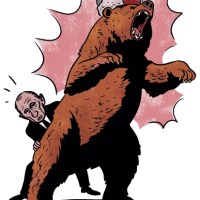
Predicting the decline of the United States has been in vogue since the birth of American hegemony. Sputnik, Vietnam, stagflation, budget deficits, trade deficits and even the end of the Cold War all triggered predictions of the end of America. With the 2008 financial crisis, however, there seemed to be a sense that this time was different. Tomes with titles like The Post-American World and The End of Influence began to appear on bookshelves. Germany’s finance minister confidently predicted that the United States was entering its last days as a financial superpower. Serious commentators spoke about how a ‘Beijing consensus’ would supplant the ‘Washington consensus’. America looked as if it would disappear in a vortex of debt.

NHS GPs should charge for appointments. Here’s why

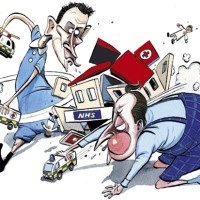
The Chairman of the Royal College of GPs recently said that ‘general practice has radically altered over the last five years, with ballooning workloads and more and more patient consultations having to be crammed into an ever-expanding working day.’ The blame for this tends to be put on a growing and ageing population or an ever-increasing range of ailments. It might also be put on the last Labour government for changing the way in which GPs work, by rewarding them for preventing, not just treating, illness. Whatever the cause, the solutions are more numerous and often ineffective. NHS Direct is for the most part staffed by poorly trained non-medics who regularly tell people to go to hospital for fear of being sued if the caller dies.

Investment special: Which shops to bet on as recovery begins

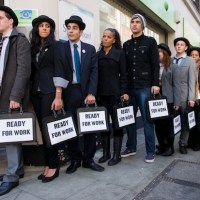
After a long, cold and sometimes lonely winter for shopkeepers, at last there are glimmers of sunshine. Retail sales volume surged in May as shoppers shelled out £6.8 billion a week, the highest figure since records began. Although the rise was partly a recovery from a miserable March and April, depressed by the coldest spring for 50 years, it was also seen as the result of rising consumer confidence buoyed by better economic news and less fear of unemployment. Intriguingly, a survey by American Express claims people using loyalty card rewards more aggressively added up to £3 billion to household budgets over the past year. Then there is the news that the housing market is finally picking up, as first-time buyers return in force.

Investment: Why does so much always go wrong in August?

The weather might not be what it once was, and the football season might start so quickly it feels like it has hardly been away, but there is one thing everyone can surely agree on about August. Nothing of any importance happens. As we head into the dog days of summer, everyone can sling their feet up on the desk and relax. All the people who really matter — the ones running the big corporations, the banks or the government — are off sunning themselves by a pool somewhere. As for the office, it’s about as busy as a job centre in downtown Athens. The only people left are the post boy and the interns busy updating their Facebook pages. It’s impossible to imagine anything of significance happening.

Lord Young: Investing in a start-up is the most rewarding thing I’ve done

Over the past few years we’ve all been living through a revolution — not one where crowds gather in Trafalgar Square and face water cannon, but a quiet revolution that has changed the way we work and live. When I first came to what was then the Department of Industry as an adviser in 1979, a ‘small firm’ was a company employing fewer than 500 people. Today we consider a small firm to be one that employs fewer than ten. As the size of companies has reduced, so the number has increased. There were just 800,000 in the whole country in 1979, there are about 5 million today; but of the five million, more than 95 per cent are firms employing fewer than ten. How did this come about?

Is Mark Carney about to bring Osborne’s cheap debt party to a close?

If free and open markets are the Wild West, inhabited by roving bands of asset managers, hedge funds, investment bankers and random traders, then the sheriffs are the central bankers. A change of sheriff makes a real difference to trading conditions. The focus of London traders and analysts has already shifted to a new sheriff with the arrival of Mark Carney at the Bank of England next week, and much anticipation of his new tool of ‘forward guidance’, which he is expected to unveil in August. Central bankers, far more than politicians, have long held sway over financial markets. That influence is at its greatest at times of economic tumult. We have been sharply reminded of this during the period after the great panic of 2008 and the subsequent great recession.

Is it my imagination or does Pimm’s get weaker every year?

Call me a terrible lightweight, but I’m a little wary of drinking cocktails when the sun is out. A summer drink should be like a good soak in the pool, but the sort of cocktails I love — martinis, manhattans etc — are all about a sharp injection of alcohol into the system, a sharp injection which can quickly turn to drowsiness or even irritability on a hot day. The fact that most cocktails need to be drunk quickly, so that they don’t warm up or become dilute, compounds the problem. Therefore what is needed during the summer is a drink that can take a little dilution from the ice melting and won’t get you drunk too quickly. Consider, for example, the negroni. I was introduced to this drink by my late Uncle Peter.

It’s vital that children translate English to Latin at GCSE

One of the most rewarding exercises a Latinist can attempt is to turn a piece of English prose into Latin. The reason is quite simple: it means getting under the surface of the English meaning — to ‘get beyond the word to the thought behind it’ (Gilbert Murray) — and transferring it into a form most closely corresponding to a Roman way of thinking and writing. It takes one to the very heart of how Romans made sense of their world. Only someone with a supreme understanding of the Latin language and its culture can do that effectively. That master prose-composer Colin Leach was once asked in an exam to translate ‘The hour brought forth the man’ into Latin. He came up with vir quantus, di boni, quanto in rei publicae discrimine!

In defence of individualism

It’s the funniest scene in Monty Python’s Life of Brian. A parable-seeking mob gathers outside Brian’s home. They think he’s the messiah and will dispense some wisdom they might live their lives by. Instead he tells them to think for themselves, because ‘You are all individuals’. ‘We are all individuals,’ the mob intones, robotically. ‘I’m not,’ pipes up a lone, individualist voice, only to be shushed by the unthinking crowd. Observing the current political debate about individualism, I often feel like that dissenting bloke in Life of Brian.

China: the Middle East’s new power broker

It’s exactly ten years since Iranian dissidents first blew the cover of a secret uranium-enrichment facility under a mountain at Natanz, in a bleak stretch of desert near Isfahan. Ever since, relations between Israel and Iran have headed inexorably towards war. Israeli leaders have insisted that they are ready to launch a military strike — unilaterally if necessary — against Iran if the uranium enrichment continues. Iranian leaders, liberals and hardliners alike, have been equally adamant that the centrifuges will continue to spin. For Israeli hawks like prime minister Benjamin Netanyahu, the question has been not whether to strike Iran, but when.

Daniel Radcliffe: why are the leaders of our political parties so uninspiring?

Daniel Radcliffe is wearing the standard rehearsal outfit of T-shirt, black jeans and trainers. ‘Ah, this is for The Spectator. I probably shouldn’t have worn my fake Che Guevara T-shirt.’ It’s the classic Guevara image with a cartoon smiley face substituted. ‘I bought it because I’m so sick of people using him as a fashion icon.’ Radcliffe is 5ft 5in and his head looks slightly big on his body. But it’s the big pale blue eyes that you notice. Under dark, chaotic eyebrows, they give him an air of innocent frankness before he’s said anything. Being cast as Harry Potter aged 11 and spending his teenage years as the lead in the highest-grossing film franchise of all time could have turned his head, but Radcliffe is modest.

First Syria, then Lebanon

  Beirut On New Year’s Eve 2011, I asked a senior Swedish diplomat, who had just crossed over from Damascus and was ready to see in the New Year Beirut-style, how long he gave Bashar al-Assad as Syrian president. ‘Longer than we think, but not as long as he thinks,’ he said with a wink. That was still in the days of what we naively called the Arab Awakening; we Lebanese assumed we could sit back and wait for Syria’s hated system to fall. But the weeks have turned to years, and not only is Assad still in place, he might just be prevailing. Lebanon, meanwhile, is falling apart.

Turkey’s agony – how Erdogan turned a peaceful protest into a violent nightmare

  Istanbul By now, everyone has heard of the brutal suppression of protests all over Turkey, which began with a peaceful sit-in in Istanbul to protect a hapless apology for a park from demolition. Right by the city’s unofficial centre, Taksim Square, Gezi Park had been slated to become yet another one of the ruling AKP’s signature Ottoman-cum-Disneyland construction projects. It was hardly much of a park, by London standards, but it was one of the last remaining places in the area with a few trees and a bit of room to stroll around. The protesters found the idea of losing that tiny refuge from Istanbul’s urban chaos unbearable.

Why Michael Gove is the best leader Labour never had

Michael Gove received a surprising amount of support from the opposition benches when he unveiled his GCSE reforms in the Commons on Monday. Among those Labour MPs saying they welcomed his proposals were David Blunkett, Barry Sheerman and, most unexpectedly, Diane Abbott, who said that they would particularly benefit working-class and black minority ethnic children. ‘Mr Speaker, I’m in love,’ said the Secretary of State for Education. ‘The honourable lady is absolutely right. If I had been a member of the Labour party, I would have voted for her as leader.’ Listening to this exchange, I couldn’t help but turn this hypothetical on its head: if Michael Gove had been a member of the Labour party, would Diane Abbott have voted for him as leader?

America’s Pacific Coast is no match for Cornwall

The first time my wife and I decided to rent a cottage in Cornwall in the summer holidays, the idea was to save money. Not that summer rentals are particularly cheap in Cornwall, but when you’ve got four children the cost of flying anywhere is prohibitive. There’s also the additional cost of renting a car to factor in — or rather a mini-van, because no car is big enough. If you live in London, as we do, one of the great advantages of Cornwall is that you can drive there in about four-and-a-half hours. I won’t pretend it was love at first sight. Cornwall is England’s poorest county and some parts of it are pretty run-down.

Recycled graves – coming soon to a cemetery near you

Two marble graves are side by side. One is grey and encrusted, with moss growing over the top. The other is smooth and shiny white. It looks new but, in fact, like the grave next to it, it’s more than 100 years old. It’s not just been cleaned — its top layer has been shaved off completely. On its front are potted plants, hydrangeas and a can of Guinness. These are tributes to its new resident. Its old resident, Robert John, died in 1894. His inscription is still there, on the back of the headstone. His remains are there, too, if they haven’t disappeared into the soil. John’s grave is among 700 or so that have been re-used, or ‘shared’, in the City of London Cemetery and Crematorium in east London. They are all at least 75 years old.