Johnnie Kerr

It is easy being green

From our UK edition

The problem with going green, I’m told, is that it often means spending a great deal of money on lots of equipment that could at any moment be rendered obsolete. When it comes to renewable energy, scepticism abounds. But the outcome of this cynicism is that our efforts to be greener have been incremental at best, and symbolic at worst. Just before I left school seven years ago we were told that all bedrooms were to be fitted with low-energy light bulbs. The school would reduce its carbon footprint a trifle, while also saving a bit of money (or vice versa). I remember thinking at the time that this was less an initiative than a gesture — a head-fake towards social responsibility to soothe their conscience.
A Waiting for Godot that’ll make you laugh as much as it’ll make you despair

From our UK edition

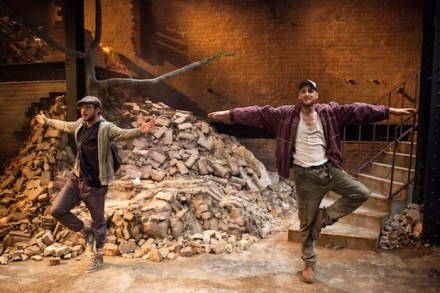
I have to remind myself that Waiting for Godot is a confounding piece of theatre. It’s supposed to be. The famous repudiations Beckett made to its interpreters, the ignorance he professed of its characters, were more than just cryptic obfuscation. ‘The only thing I’m sure of,’ he is said to have said, ‘is that they’re wearing bowlers.’ Likewise his sole description of the set: ‘A country road. A tree.’ All deliberately, maddeningly vague. And the tradition since has often been to treat the play as virtually untouchable, to dismiss any thought of embellishing Beckett’s wasteland with new ideas. So Vladimir and Estragon have always been imagined, by director after director, in bowler hats.

Notes on… Skiing in Austria

From our UK edition

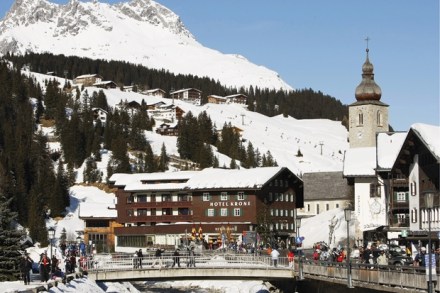
I have spent a week of every winter of my life with my family in Zürs, a small village in Arlberg, Austria. It isn’t at all the most famous resort in the region — with fewer slopes than Lech and a quieter nightlife than St. Anton — nevertheless, it possesses a quality that brings most who go there back, season after season. Part of the place’s attraction must be that it couldn’t exist at all without skiing, from which it derives practically its entire economy, and consequently great pride. Except for a few cattle it is entirely uninhabited during the non-season (rather like that hotel in The Shining), which effectively makes it one of the most wholesome ski resorts imaginable.

Travel special – Scottish borders: On the edge

From our UK edition

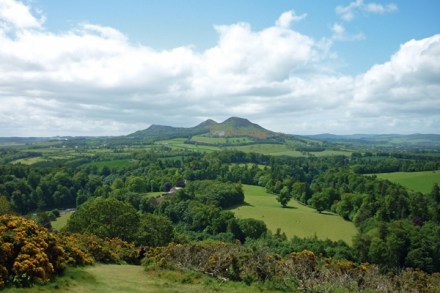
It’s odd, but most of the English faces we see in our wee corner of the Scottish Borders are merely ‘stopping’ for a night or two on their way north. What is the point, they wonder, in driving all this way only to settle a hair’s breadth past that gaudy ‘Welcome to Scotland’ sign? If they must visit Scotland, they think, they might as well do the thing properly. The Borders aren’t really Scotland, after all — just that last tedious leg of the A68 on the way into Edinburgh. They are, of course, gravely mistaken. You will find as strong a sense of Scotland here as in the grimmest Hebridean backwater. There is something surprising about the Borders, a quiet, unspoiled beauty, which sets them apart from the rest of the North.

Travel Extra: First steps on skis

From our UK edition

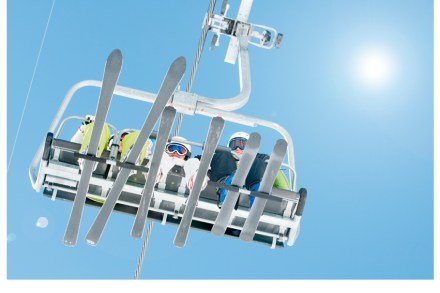
When I was just starting out on the slopes, a slip of a boy with nothing but training skis and a dream, there were a number of issues I wish someone had warned me about: 1. Don’t let your mother kit you out The piste is really just a massive catwalk. I look all right these days, but I had to learn the hard way: skiing on a hot day in a puffy bright yellow onesy, goggles and a crash helmet is apt to cause scoffing from overhead chairlifts. 2. Know your limits Stick to the blue runs (the equivalent of a 20mph zone near a driving school) and try to restrain yourself from jumping. If you remember nothing else, remember this: never under any circumstances attempt a black run (the equivalent of the A9 between Inverness and Pitlochry), unless you’re sure you’re ready.

In the middle of the march

From our UK edition

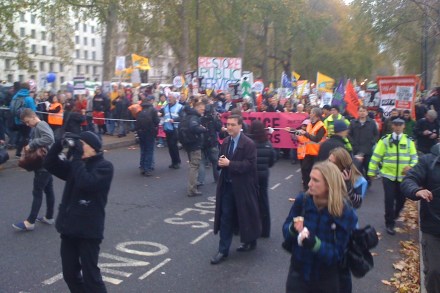
Walking through Parliament Square this afternoon, you’d be forgiven for wondering whether some kind of bomb threat had been made on Westminster Palace. The fleets of police vans and hoards of fluorescent-jacketed officers seemed absurdly disproportionate to the motley pickets of public sector strikers gathered serenely outside parliament’s gates. ‘Actually, I shouldn’t be working today,’ one officer told me, chuckling. ‘It’s my day off. That’s ironic, isn’t it?’ As Pete remarked this morning, there wasn’t a huge amount to see along the Westminster picket lines, apart from the policemen.

Heath on Heath

From our UK edition

‘I don’t know why I became a cartoonist,’ says Michael Heath. ‘I had no education during the war, so when I was twelve and war ended, I couldn’t read or write like children now. I suppose I sort of expressed myself by drawing.’ He is sitting in the conference room at The Spectator, surrounded by shelves of leather bound back volumes, almost sixty years worth of which are filled with his drawings. I’m shocked to learn he was born in 1935 — he doesn’t look anywhere near a man in his seventies. He still treks miles to work every day on foot.  Cartoons today, he tells me, aren’t at all what they were.

The policies behind your energy bills

From our UK edition

It may be a week old, but last Monday's episode of Panorama really is worth putting half-an-hour aside for, if you haven't seen it already. Its subject was energy prices, and it raised some very urgent concerns about the government's policies in that area. You can watch it on the BBC site, but here's a brief summary in the meantime. All in all, switching our dependence away from coal and oil is going to be enormously expensive. Some £200 billion of taxpayers’ money is to be spent on increasing renewable energy output from seven to thirty percent by 2020. And, because sources like offshore wind costs almost £100 an hour more than traditional generators, this policy’s most immediate effect will be to raise energy bills sky high.

A broad church

From our UK edition

The protesters outside St Paul’s are united in polite disagreement It’s really not clear why the doors to St Paul’s had to be closed. Perhaps the church will have concocted a reasonable explanation by the time it’s all over, but after an afternoon walking around the protesters’ camp, it’s hard to imagine that they pose any sort of threat. Already the site has the peaceful air of a hippy festival. Groups sit in circles, talking and picking at the piles of crisps and chocolates donated by supporters of the cause. Others are gathered on the steps, listening quietly to a man giving a speech through a hastily assembled speaker system.

A most unlikely hero

From our UK edition

What is it about George Smiley that makes him translate so well onto the screen? The man doesn't fight, he doesn't gamble, and he barely seems to notice women (apart from the wife who continually cuckolds him) — in fact the only hobby that appears to brighten him up a bit is a homely interest in old books. For a spy novel this is not what you might call 'a winning formula' — although, of course, clearly it is. Actually, John le Carré invention of Smiley as the 'anti-Bond' was a conception near to genius, a literary masterstroke that proved spies didn’t have to dodge bullets to be thrilling. But the idea that such a character might make good reading and good watching seems less fanciful than downright preposterous.