Features

Has Test Match Special lost its wits?

There’s a 13th man at the table at Lord’s this week as England resume the Ashes contest with Australia, which began so thrillingly at Trent Bridge, where England prevailed by 14 runs. For the first time in half a -century, -Christopher Martin-Jenkins is not present to renew one of the great rituals of the English summer. ‘CMJ’, who passed away on New Year’s Day at the less than grand age of 67, was always going to be missed and listeners to Test Match Special, the programme he adorned with his balanced commentaries, are cursing Time for being so vicious in his reaping. The graveyard, it is said, overflows with people once thought to be irreplaceable.

Sussex vs shale

Darkness was gathering as the villagers trooped down Church Road to the Red Lion, ducking their heads under the doorframe. Trade was brisk for a Monday. The landlady was busy: pulling pints, cracking jokes and assigning tables. Excitement was in the air. Most customers had come from a packed meeting at the village hall, called to organise opposition to a proposed shale exploration a mile beyond the village. A campaign was afoot, and Fernhurst,West Sussex, was exhilarated by the novelty of defiance. Fernhurst is a prosperous district in the newly created South Downs National Park, an area of outstanding natural beauty with an important cultural heritage. Alfred Lord Tennyson lived on Black Down Hill above the valley in which Fernhurst rests.

These days, even a good NHS hospital can be a frightening place

Let’s not pretend that it’s just those hospital trusts investigated, or put on ‘special measures’ by Jeremy Hunt that are the problem. On my weekly trot around the wards of a big London teaching hospital, everything seems fine, the patients reasonably clean and well cared for. But over the months I’ve noticed that, even here, the NHS service is just not what it was — so many bits are being pared away. First I met one of the hospital’s ‘Friends’, almost all of whom are now doughty ladies in their eighties. She mentioned that they are using some of their hard-won charity money to fund an art therapist who has been having a very good effect on stroke patients. The NHS no longer pays for them.

Colonial rule: Why Aussies, Kiwis and Canadians are running Britain

Last month, David Cameron convened a meeting of his most important advisers at Chequers. The Prime Minister, the Chancellor and the Conservative party chairman were all present, but there was little doubt who was in charge. The Australian strategist Lynton Crosby was dominant, doling out orders and drawing up ‘action points’. One of those in the room recalls: ‘Lynton was fantastic. He made sure there was an agenda, that everyone stuck to it.’ It might seem odd for an Aussie to be telling the British PM what to do, especially in this most English of settings, but it’s mainly because of his nationality that the ‘Wizard of Oz’ gets to call the shots.

Last orders at the Death Café

The coffee and walnut cake was excellent. As was the chocolate cake, and the tea and biscuits. The conversation was wonderful too. We talked about death. We were here, we dozen or so people in a meeting room in a small Suffolk market town on a sunny June evening, to do something British people never do: hold a conversation about the fact that we will all, in the end, die. Weather, football, the state of Kerry Katona’s finances — all these are acceptable topics for discourse. Death, on the other hand: not likely. There must be a subconscious fascination with the subject: otherwise why would Midsomer Murders get so many viewers? Yet no one discusses it openly. A new movement called Death Café has been established to challenge this.

What the Arab world really wants

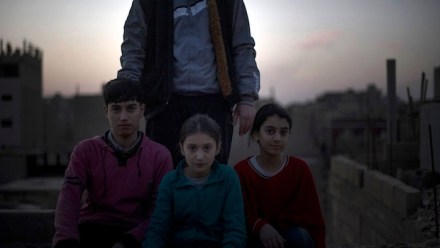
Two years ago, the West thought it recognised what was happening in the Arab world: people wanted democracy, and were having revolutions to make that point. Now, recent events in Egypt have left many open-mouthed. Why should the generals be welcomed back? Why should the same crowds who gathered in Tahrir Square to protest against the old regime reconvene to cheer the deposing of their elected president? Could it be that the Arab Spring was about something else entirely? I believe so. The Arab Spring was a massive economic protest: a demand that the poor should have the basic rights to buy, sell and make their way in the world.

Burlesque is not as bad as stripping. It’s far worse

A female friend asked me to a burlesque night she had organised. She honestly thought I would enjoy it. ‘Come and see naked women who aren’t being exploited,’ she said. My friend said this because I sometimes hide from the world in the dark caves of Hackney, where ladies collect pounds in a pint glass and then turn around a pole with all the joie de vivre of a rusty weathervane in a light gale. On a wet weekday afternoon there are typically six or seven punters in these stews, who half-watch the show while drinking lager, munching crisps and thumbing through Loot or watching the cricket on the screen in the corner. I like these places. Flesh, alcohol, crisps, cricket, literature — the five pillars of civilised manhood, all accessible from one bar stool.

Another good private school wants to join the state system. Why is Labour trying to stop it?

When my parents came to choose a secondary school, they were naturally keen to send little Sebastian to the best possible place — regardless of whether it was state or independent. Their first choice was Emmanuel College in Gateshead, where we lived — one of Kenneth Baker’s original city technology colleges and inspiration for Labour’s academy programme. The next was the fee-paying King’s School in Tynemouth. Emmanuel declined to offer me a place and King’s turned out to be too expensive. I ended up at a respectable, above-average comprehensive — so I was luckier than most. King’s would have been superb; it’s one of best schools in the north-east. But it is only open to those who can afford it. Until now.

James Delingpole’s letter to the royal baby

Congratulations, Baby Windsor. You have just been born a subject of Her Britannic Majesty (as it used to say on the passports) and have therefore won life’s lottery.  Actually, given the state of the nation and the economy, maybe ‘won life’s dog-eared scratchcard’ is more the phrase juste. Still, you’ve done amazingly well. Thanks to the freakiest odds imaginable you have, merely by the accident of being conceived by the right couple, leapfrogged to the covetable position of third in line to the British throne. So that’s the good news. The bad news is that it comes with a certain amount of baggage. Problem one: you’re a constititutional monarch.

Forecast failure: how the Met Office lost touch with reality

It has been a glorious sunny week in Britain — it feels as if summer is finally here. As Andy Murray was winning Wimbledon, temperatures on Centre Court exceeded 40˚C in the sun. Northern Ireland has been hotter than Cancun. The papers have begun their annual drip-feed of stories about ‘tombstoning’ — young people throwing themselves from cliffs and bridges into water. It is hard to believe that it was just a few weeks ago that the Met Office braced us for a ‘colder-than-average’ July and a decade of soggy summers. Not so hard to believe that they held a crisis meeting recently, to discuss why they have got the weather so wrong for so long.

Nicolas Roeg interview: ‘I hate the term “sex scene”’

‘Oh, some of my films have been attacked with absolute vitriol!’ said Nicolas Roeg, 85, and still one of the darkest and most innovative of post-war British directors. We were sitting in his study in Notting Hill; nearby in Powis Square is the house Roeg used for his 1968 debut, Performance, starring Mick Jagger as the rock star who entices a gangster (James Fox) into a drug-induced identity crisis. The film was shelved for a year before Warner Brothers dared to release it. ‘The critics didn’t always get it then — but they do seem to now,’ said Roeg. Roeg was born in 1928 in St John’s Wood into a vaguely bohemian background.

Philip Bobbitt on Machiavelli, Obama and David Cameron

It may be pushing it to compare Philip Bobbitt with Indiana Jones, on the basis that a constitutional lawyer will never have the exotic and uncommercial appeal of an archaeologist adventurer, even if he does look remarkably similar. Then again, a profile of him in the New York Observer called him the James Bond of the Columbia Law School, which also suggests impossible glamour. But you can see why his students and reviewers come over star-struck. He’s a courteous, urbane, well-connected (nephew of Lyndon B.

The world’s media are waiting for Mandela to die. Here’s why he’s disappointing them

 Johannesburg It was day 19 of the Nelson Mandela death watch, and my char, Mrs Gladys Dhladhla, had brought her grandson to work with her. Mlungisi is a stout little chap, 14 years old and bent on becoming a professional rugby player. His granny was counting on me to broaden his mind so Mlungisi and I drove to Mandela’s home in the suburb of Houghton and spent an hour or so chatting to the international TV crews camped on the sidewalk outside. One technician told us he’d been there since 8 June, the day the old man was admitted to hospital with a lung infection that was expected to be fatal. Nearly three weeks later, he was still refusing to die.

The new God squad: what Archbishop Welby and Pope Francis have in common

It’s a few weeks after the election of Pope Francis, and a notoriously leaky church source is talking about the revolution to come. The new leader of the faithful is a sharp operator who finds himself surrounded by ‘a medieval court system of hopeless characters, each jealously guarding their own silos of activity. There’s lots of crap people in key positions.’ Meanwhile, away from the court, bureaucrats churn out windy memos. They may not know it yet, but the process of ‘clearing out the weeds’ will start soon — possibly as early as this August. That might seem over-ambitious, but we’re not talking about the sleepy Vatican.

Watch out France: Nicolas Sarkozy is back, and he wants revenge

Nicolas Sarkozy is angry — a ‘caged lion’, one of his closest friends told Le Monde last week. He is angry about the state of France, the state of his party, his perceived persecution by the courts, but perhaps most of all about the fact that he isn’t in the Élysée Palace to clean the mess up. If the French were to clamour for his return, he is reported to have told a Goldman Sachs conference in London this month, he would come back ‘for duty’s sake’. But Sarkozy is no Cincinnatus. He would not be treading wearily back from his plough to assume office for the good of France. He would be more like Obelix spying a wild boar. He would smack his lips and bear down greedily.

In defence of Silvio Berlusconi

Ah Italia! Such a great place to get your head round great art and great women but what a crappy little country. How else can you describe a place that condemns a 76-year-old man to seven years in jail and bans him for life from public office for a crime that both he and his victim deny — a crime to which there were no witnesses and for which there is no evidence? That is what has just happened in Milan in the infamous Bunga Bunga trial at which three women judges (and no jury) found the media tycoon and three times prime minister guilty on Monday of ‘prostituzione minorile’ (Berlusconi of course is appealing).

Notes on…interiors

There have already been one or two accuracy-related gripes about the BBC’s summer extravaganza The White Queen, but one anachronism was especially interesting: it was a touching scene of a medieval mother waking her medieval children from their medieval slumber. They were all wrapped together in a lovely bed in lovely sheets and the room was a lovely whitewashed, heavily beamed yet airy attic, the windows of which were diaphanous with linen. It was more The White Company than The White Queen.

Why it’s wrong to be ashamed of Britain’s food banks

The very existence of food banks is taken as proof of something rotten in Britain. If Brits are queuing for charity food parcels, the state has failed. Labour MPs brim with righteous anger: they call the rise of these charitable centres a ‘scandal’. David Cameron, for his part, wishes people would stop talking about them. The political consensus is that having anyone depend on charity handouts is a disgrace. But that’s not what those who use the food banks think. Nor is it an opinion shared by those who run them. The Trussell Trust, now the biggest food bank provider, regards its growth as a sign of success. Standing in a warehouse crammed with tinned food, the Trust’s chief executive Chris Mould says his mission is to open a food bank in every town in the country.