Christopher Booker

How the first world war inspired the EU | 3 July 2019

From our UK edition

Christopher Booker has died at the age of 81. In 2014, he wrote in The Spectator about how the first world war inspired the EU, and why its supporters won't tell you: Among the millions of words which will be expended over the next four years on the first world war, very few will be devoted to explaining one of its greatest legacies of all, the effects of which continue to dominate our politics to this day. One of the best-kept secrets of the European Union is that the core idea which gave rise to it owed its genesis not to the second world war, as is generally supposed, but to the Great War a quarter of a century earlier.

The mathematical revolution behind ‘the greatest picture in the world’

From our UK edition

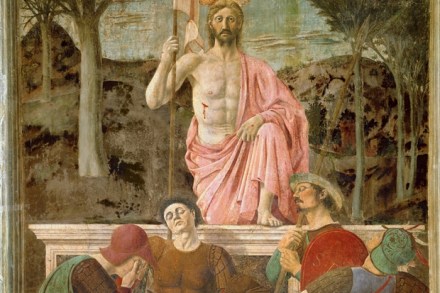
It seems odd to enter a room dominated by what Aldous Huxley famously called ‘the greatest picture in the world’ to find not another soul there. Looking down from an end wall of the mediaeval civic hall in the quiet little Tuscan town of Borgo San Sepolcro, Piero della Francesca’s ‘Resurrection’ is an image of astonishing power, showing a stern-faced risen Christ stepping out of his tomb in the dawn light of the first Easter morning like an unstoppable force of nature, exuding supernatural authority as he turns the leaves on the trees behind him from wintry death to the new life of spring. This is a painting like no other in the history of art.

Revealed: how green ideology turned a deluge into a flood

From our UK edition

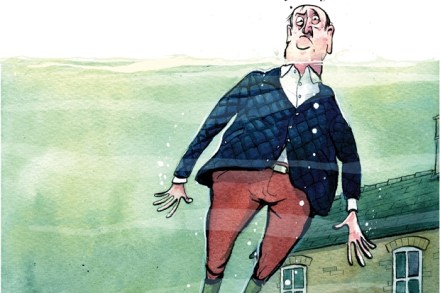
[audioplayer src="http://traffic.libsyn.com/spectator/TheViewFrom22_13_February_2014_v4.mp3" title="Christopher Booker explains how the EA failed to prepare for the floods " startat=60] Listen [/audioplayer]It has taken six long weeks to uncover the real hidden reasons why, from the West Country to the Thames Valley, the flooding caused by the wettest January on record has led to such an immense national disaster. Only now have the two ‘smoking guns’ finally come to light which show just how and why all this chaos and misery has resulted directly from a massive system failure in the curious way our country is governed. Because I live in Somerset, I first became aware that something very disturbing was going on back around the new year.

How the first world war inspired the EU

From our UK edition

Among the millions of words which will be expended over the next four years on the first world war, very few will be devoted to explaining one of its greatest legacies of all, the effects of which continue to dominate our politics to this day. One of the best-kept secrets of the European Union is that the core idea which gave rise to it owed its genesis not to the second world war, as is generally supposed, but to the Great War a quarter of a century earlier. It was around that time that the man who can be described as ‘the Father of Europe’ was first inspired to the detailed vision which only after 1945 was he finally in a position to launch on its way.
Old England died in 1963

From our UK edition

There is no better measure of the pivotal importance of 1963 than to recall what Britain was like in the early 1950s, as we slowly emerged from the shadows of the second world war. The great Labour experiment of 1945 had petered out in a grim slog through years of austerity and rationing. With Winston Churchill back in No. 10, life had begun to crawl back to ‘normality’. Conservative values ruled: respect for tradition, discipline and authority. The old class structure still stood. No extramarital sex or homosexuality. In the cinema we were entertained by cosy Ealing comedies and films portraying the ‘stiff upper lip’ spirit which had won the war. Pop music, hardly ever allowed on the BBC, centred on crooners such as Frankie Laine and adaptations of folk songs.

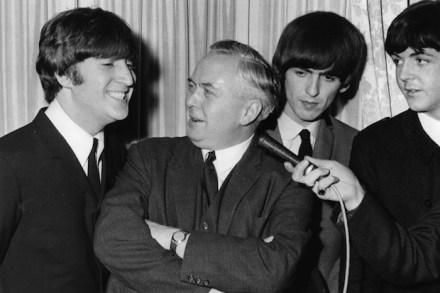
Profumo. Chatterley. The Beatles. 1963 was the year old England died

From our UK edition

Shortly before his death, David Frost rang to ask me to take part in a radio series he was making to mark the 50th anniversary of ‘the year, Chris, that I know is closest to your heart, 1963’. This was not because 1963 was the year when he and I worked together on the BBC satire show That Was The Week That Was (TW3), which overnight made Frost a television superstar. It was because he remembered the importance I had given to the events of that year in The Neophiliacs, a book I wrote long ago analysing the tidal wave of change which swept through British life in the 1950s and 1960s. By any measure the stream of scandals, shocks and sensations which poured through the headlines in 1963 made it as extraordinary a year in Britain as any since the second world war.

Botswana is persecuting its Kalahari bushmen — and we had a role in it

From our UK edition

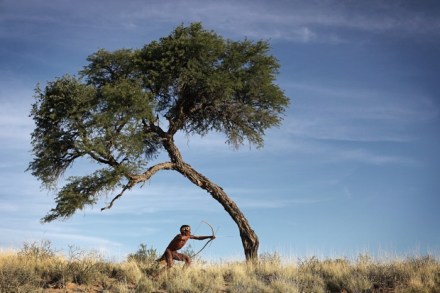
For 17 years I have been reporting on one of the most haunting tragedies of our modern world — the ruthless persecution of the last survivors of the original inhabitants of southern Africa, the bushmen, by a policy seemingly designed to wipe them from the earth. Those responsible are not wicked white colonialists but the government of Botswana, which, thanks to its vast diamond reserves, is per capita the richest country in Africa. We in Britain, however, should take a special interest in this story because through most of that time our Foreign Office has given full support to the policy which created this tragedy, in breach of a solemn pledge we gave to the bushmen in the 1960s. And now there has been yet another disgraceful twist to the story.

An Appetite for Wonder, by Richard Dawkins – review

From our UK edition

It is peculiarly apt that the author of this autobiography should be the man who coined that now fashionable term ‘meme’ — so long as it is written ‘me me’. His name is shown so large on the cover that one might miss the title printed below it. On the opening page he tells us that his full name is Clinton Richard Dawkins, which ‘serendipitously’ gives him the same initials as those of his greatest hero, Charles Robert Darwin. The time has come, he has decided, to tell the story of his life up to that seminal moment in 1976 when he published the book which made him famous, The Selfish Gene. He begins by describing where he has come from genetically, going back to the General Clinton who presided over the loss of the American colonies in 1783.

E.O. Wilson has a new explanation for consciousness, art & religion. Is it credible?

From our UK edition

His publishers describe this ‘ground-breaking book on evolution’ by ‘the most celebrated living heir to Darwin’ as ‘the summa work of Edward O. Wilson’s legendary career’. As emeritus professor of biology at Harvard, Wilson, now 84, is revered across the world as the doyen of Darwinists. And in announcing that he will offer a new answer to those three cosmic questions scrawled in the corner of a Gauguin painting — ‘Where have we come from? Who are we? Where are we going?’ — he leads us to expect some profound new insight into how a billion years of evolution have made us a species unique on earth.

Timothy Birdsall – the greatest cartoonist you’ve never heard of

From our UK edition

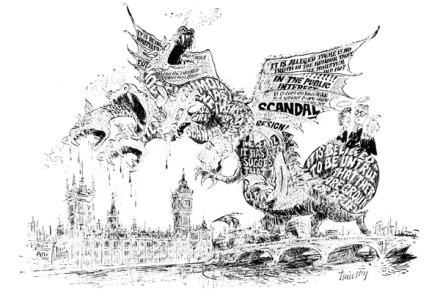
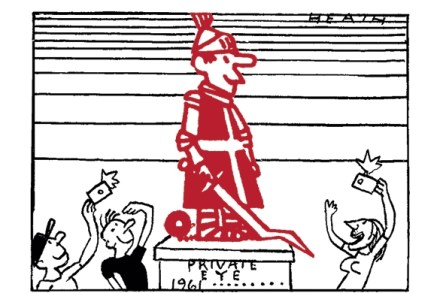
Few people under the age of 65 will have heard of the cartoonist Timothy Birdsall, who died 50 years ago on 10 June 1963, having produced his finest work in the last months of his life here in The Spectator and  in Private Eye. But had his career not been cut cruelly short by leukaemia at the age of only 27, he would today be revered as one of the outstanding cartoonists of our time. Tim was part of that talented late-1950s Cambridge generation, along with a galaxy of others later to become famous, from Peter Cook to Ian McKellen. On coming down in 1960 he was employed to do pocket cartoons for the Sunday Times, in the tradition that has led from Osbert Lancaster to Matt.

Global Crisis, by Geoffrey Parker – review

From our UK edition

Just before I was sent this huge tour de force of a book to review, I happened to be reading those 17th-century diary accounts by Pepys and John Evelyn which record a remarkable number of what would today be called ‘extreme weather events’. Repeatedly we see them referring to prolonged droughts, horrendous floods, summers and winters so abnormally hot or cold that their like was ‘never known in the world before’. These were the days of those London Frost Fairs, when the Thames froze so thickly that it could bear horses, coaches and streets of shops. This was the time of the Maunder Minimum, when for decades after 1645 sunspot activity was almost non-existent.

‘The Age of Global Warming’, by Rupert Darwall – review

From our UK edition

We scarcely need our fifth freezing winter in a row to remind us of the probability that future generations may look back on the panic over global warming which suddenly gripped the world in the late 1980s as one of the oddest scientific and political aberrations in history. Why did such an unprecedented scare blow up when it did, thanks to a moderate rise of just 0.5 degrees C in global temperatures, when earlier in the 20th century a similar temperature rise between 1910 and 1940 had been accepted as perfectly natural: as simply another phase in the general warming trend which had begun 200 years earlier, after four centuries of the ‘Little Ice Age’ when the world had cooled?

Somerset Notebook

From our UK edition

When we looked out of the window last Sunday morning to see thick snow blotting out the Mendip hills above our Somerset village, I’m afraid I immediately thought: ‘The Gore Effect.’ The previous evening, I had been reading how poor Al Gore had belatedly jumped on the latest warmist bandwagon by ascribing Storm Sandy to global warming. It was in 2004 that climate sceptics first noted the Gore Effect when his visits to Boston and New York to preach his warming gospel coincided with the lowest temperatures those cities had known for half a century. In 2006, his tours of New Zealand and Australia to promote An Inconvenient Truth coincided with abnormal snowfalls, including the first seen in Queensland for 65 years.

Diary – 25 August 2012

From our UK edition

When in 2009 I published a book called The Real Global Warming Disaster it provoked contrasting responses from two members of the royal family. Prince Charles, protesting that he was ‘bemused’ by my views on climate change, struck me off his Christmas card list, where I had been for 25 years since we became environmental allies back in the 1980s. I was, however, startled and delighted to have a long, thoughtful and sympathetic letter about the book from Prince Philip, whom I had met only once, and which, inter alia, led me to be far from surprised when he last year made headlines for having dismissed wind turbines as ‘absolutely useless’. Back in the 1960s, now to my shame, I once wrote a far from kindly profile of Prince Philip in Private Eye.

Butterfly effects

From our UK edition

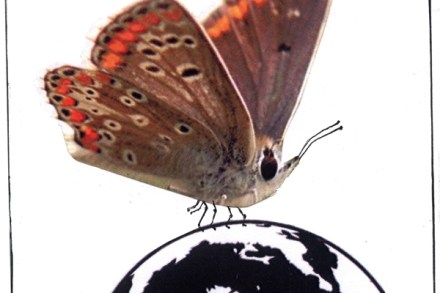
Under such headlines as ‘British butterfly defies doom prediction to thrive in changing climate’, the usual suspects (e.g. the Guardian and the Independent) recently publicised a study claiming that, thanks to global warming, ‘a once-rare British butterfly’, the Brown Argus, ‘is becoming a common sight in the English countryside’. A paper from York University, it was reported, showed that these butterflies have moved so far north that they can now be seen ‘within a few miles’ of York.

Rings of steel

From our UK edition

Last August I was intrigued to learn that the cash-strapped Cornwall county council was spending hundreds of pounds advertising for a ‘project officer’ at £400 a week to assist in ‘the successful delivery of the Olympic Torch Relay in May 2012’. The lucky applicant’s job would be ‘to raise awareness of this event throughout Cornwall’, while ‘stimulating excitement for the London 2012 Olympic Games’. My earliest memory of the Olympics is of getting up at 3 a.m. in 1948 to stand by a roadside in Chard, Somerset, to cheer a lone runner as he carried the Olympic flame past us in the darkness for that year’s yachting events in Torquay.

Debate denied

From our UK edition

The odd thing about the great debate on global warming is that there never really was a debate. As soon as the global warming scare exploded on the world in 1988, to its promoters there could be no argument about it. The scientists who that year set up the UN’s Intergovernmental Panel on Climate Change (IPCC) were already convinced beyond doubt that ‘human-induced climate change’ was a reality. Al Gore was soon already pronouncing ‘the science is settled’.

Private Eye’s private life

From our UK edition

The first editor of the magazine turns a quizzical eye on 50 years of a ‘national institution’ Not long after the 50th birthday of what was once the most successful humorous magazine in Britain, one of the best-known writers of the day delivered a damning judgment. Whereas in its early days, Max Beerbohm wrote in 1899, Punch had made a reputation by its youthful irreverence, wittily lashing out in all directions, it had now become staid and respectable, ‘a national institution’. How strangely has this been echoed in the coverage being given to the 50th anniversary of Punch’s successor, similarly hailing Private Eye as a ‘national institution’.

Scientists in hiding

From our UK edition

Academics who dare to question the scientific establishment’s consensus on Darwinism or global warming increasingly find themselves ostracised and demonised Three months ago I spent a fascinating few days in a villa opposite Cap Ferrat, taking part in a seminar with a dozen very bright scientists, some world authorities in their field. Although most had never met before, they had two things in common. Each had come to question one of the most universally accepted scientific orthodoxies of our age: the Darwinian belief that life on earth evolved simply through the changes brought about by an infinite series of minute variations. The other was that, on arriving at these conclusions, they had come up against a wall of hostility from the scientific establishment.

Poisoned spring

From our UK edition

Say Goodbye to the Cuckoo, by Michael McCarthy Wings and Rings: A History of Bird Migration Studies in Europe, by Richard Vaughan On a May night in 1967, walking home down a Dorset farm track, I counted the song of 13 nightingales. Today in those woods no nightingale is heard. For 40 years I visited a bridge on the Dorset Stour to watch sand martins nesting in the riverbank. Since 1984 they have vanished. In 2002 I wrote a letter to the Times, headed ‘The last cuckoo’, to note that for the first time in decades I had not heard the cuckoo arriving on the button (17 April in Dorset, 18 April in Somerset), My letter was not printed.