Michael Hanlon

There’s a global morality gap — and it’s getting wider | 10 February 2016

From our UK edition

Michael Hanlon, the science writer, has died at the age of 51. He was the science editor at the Daily Mail, and also wrote for the Independent, the Telegraph and The Spectator. A collection of his articles can be found here. In 2013, he wrote the following piece for this magazine, in which he asked why it was that some nations are moving forward on gay and women's rights, while others are moving backwards.  First World, Third World, East, West, North and South; every few years economists come up with yet another supposedly more acceptable way of slicing humanity into manageable chunks. Mostly these great divides are riven by wealth; sometimes (RIP Second World) by ideology.
All this airport security is utterly useless

From our UK edition

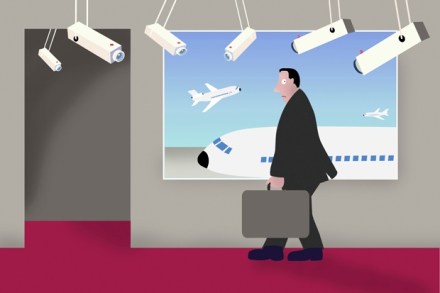
Here we go again: another summer of airport fun. This year it’s been announced that due to a ‘heightened’ security threat, any Brit attempting a holiday abroad will be subject to an even grimmer ordeal than usual: body searching, shoe removing, laptop searching and endless grinding queueing. Expect it to take twice as long to get through security, an official from the Department of Transport said. Superficially there are some excellent reasons for all the extra precautions and checks. ‘New intelligence’ from America’s security agencies suggests al-Qa’eda has developed clever explosives that can be soaked into clothing or concealed in human ‘body cavities’, and plastic explosives that masquerade as briefcases and iPads.

There’s a global morality gap — and it’s getting wider

From our UK edition

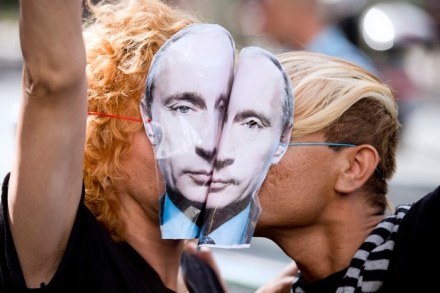
First World, Third World, East, West, North and South; every few years economists come up with yet another supposedly more acceptable way of slicing humanity into manageable chunks. Mostly these great divides are riven by wealth; sometimes (RIP Second World) by ideology. But I think it’s time to name a new divide, a more fundamental, more puzzling one — a split between worlds that will define the 21st century much as the Iron Curtain defined the 20th. I am talking about the morality gap. It is now clear, though not much talked about, that humanity, all 7.1 billion of us, tends to fall into one of two distinct camps. On the one side are those who buy into the whole post-Enlightenment human rights revolution.

Gibraltar isn’t the world’s weirdest border

From our UK edition

Borders are fascinating places. The subtle changes in scenery and atmosphere as you near the limits of one territory and enter the orbit of the other; the way fencing gets higher and fiercer. Then there’s the shuffling of papers and passports, the opening of suitcases, car boots and, sometimes, wallets. The nervous sweat in no-man’s-land as men who reek of tobacco and bad coffee judge your suitability to enter or, worse, leave. In nearly all ways the (more or less) borderless new Europe is a wonderful thing, but something has been lost along the way.

Why soon we’ll all be vegetarian

From our UK edition

I know some lovely vegetarians but could never imagine joining their ranks. Something about a life fuelled entirely by plants fills me with dread. The veggie’s world is a pale planet, an insipid facsimile of the real thing. Think of the fear all true carnivores have of finding out at a dinner party that veggies are present or, worse, in charge; the wondering if at least there will be cheese, the troubling knowledge that those who deny the flesh often go the whole hog (mustn’t think of hogs… can always have a bacon sarnie when we get home) and so there possibly won’t be wine either. Vegetarians have often been on the wrong side of history. Muggeridge, Hitler, Paltrow. It is interesting how veggie activists like to co-opt the great and the dead to their cause.

Why do greens hate machines?

From our UK edition

When George W. Bush last week stunned the world with his plan to curb greenhouse gas emissions, no one was more surprised than the green lobby. Human psychology being what it is, no one was more furious. It is not so much the scale of the planned reductions that have offended the eco-warriors: how could they possibly quibble with a proposal — supported by China, India, Japan, South Korea and Australia — to reduce greenhouse emissions by 50 per cent? No: what gets the greens’ goat is the methods that Mr Bush proposes to employ. What drives the greens nuts is the boundless technological optimism of Washington, and they have dismissed the plan in withering terms.

There’s no time like the present

From our UK edition

The world is, we are told day after day, week after week, going to hell in a handcart. After the most brutal, catastrophic and inhuman century in history, the new millennium has kicked off in the way it clearly intends to go on. War, famine and pestilence stalk the savannahs and forests of Africa. The Middle East is turning into a charnel house. And the planet itself is under a human onslaught the likes of which we have never seen before. Every day, it seems, there is new and ever-more persuasive evidence that the age of doom, if not quite upon us, must surely be very nearly nigh. Last week we learned that the North Atlantic’s population of seabirds was under grave threat: global warming was heating the sea and killing off their fish prey.

WINTER TRAVEL SPECIALBest avoided

From our UK edition

Another summer over and, once again, the question forms in my mind: where not to go on holiday next year? It seems a silly question – for the list, surely, is endless. There are all those places which have simply nothing worth seeing. The homes of light industry and flyovers, with no distinguishing architecture, scenery or climate. The Midwest, and its English equivalent, the East Midlands. The industrial towns of the German plains, the grim squalor that is the urban Third World. However, there is another – rather smaller – list of places that, although they are very much on the tourist circuit, have absolutely no appeal. This is not just because they are likely to be overcrowded or overpriced.

Bark, don’t bite

From our UK edition

Modern life is full of terror. We quake at global warming, Arab terrorists, gene-tinkered foods and rogue vaccines. New plagues from the East, our mobile phones and our railways all have the ability to induce panic. These are all new fears of new things. And all, to a greater or lesser extent, are irrational. But there is another, and I would argue even greater and more insidious, fear that has crept up on us in the past 20 years or so. The object of this fear is not new; but the fear itself is. And it is making life for a significant number of us quite miserable. What is it that we are frightened of? Children – especially other people's.

Science & Nature SpecialAstronomy

From our UK edition

One way to throw an astrologer into confusion – well, even more confusion than that under which they normally labour – is to find a new planet. When Clyde Tombaugh spotted Pluto in 1930, the third oldest profession found itself in a tizzy. So when a tenth planet, beyond Pluto, was announced a few months ago, the astrologers again let out a collective groan and started redrawing their charts. But it isn't just the stargazing charlatans who were bothered by the new discovery; the rest of us were just as bemused, not by the planet itself but by its name. Quaoar. Qua-oh-what? Hard to spell, harder to say. The only person I know who can pronounce Quaoar properly is a small boy who had to present a talk on the thing to his classmates.