Alex Brummer

Should you invest in nuclear power companies? 

From our UK edition

Power companies are the new banks as far as the public is concerned — but does that mean they’re not worth putting your money in? In any troubled marketplace there are always stocks to be picked, but current political turbulence makes that an unusually tough challenge in the UK energy sector. Much anger is currently directed at the  ‘big six’ energy groups — Centrica, Scottish & Southern (SSE), Scottish Power, E.on, RWE and EDF — and their pricing power in the domestic market. The recent round of tariff rises, ahead of the winter heating season and in the face of a moderating wholesale market, served to underline the suggestion that they are price-gouging.


What can we expect from Mark Carney?

From our UK edition

What the Mark Carney era may offer is a little bit more predictability on monetary policy. Under Mervyn King the main guidance came from the Bank’s quarterly Inflation Report press conferences, MPC minutes, and speeches by committee members. Under the Bank’s new remit, set by the Chancellor in the March budget, it’s likely that Carney, like Bernanke, will seek to link interest rates and monetary policy directly to growth and jobs targets There will be subtle changes but no one, as economists at HSBC have noted, is expecting ‘shock and awe’. The big question for Carney is which indicators to use as targets. The runners are unemployment (as in the US), real GDP, or the measure preferred by many economists: nominal GDP.

Is Mark Carney about to bring Osborne’s cheap debt party to a close?

From our UK edition

If free and open markets are the Wild West, inhabited by roving bands of asset managers, hedge funds, investment bankers and random traders, then the sheriffs are the central bankers. A change of sheriff makes a real difference to trading conditions. The focus of London traders and analysts has already shifted to a new sheriff with the arrival of Mark Carney at the Bank of England next week, and much anticipation of his new tool of ‘forward guidance’, which he is expected to unveil in August. Central bankers, far more than politicians, have long held sway over financial markets. That influence is at its greatest at times of economic tumult. We have been sharply reminded of this during the period after the great panic of 2008 and the subsequent great recession.

Investment special: Gaining from a housing recovery

From our UK edition

The long period of dormancy for Britain’s housing market looks as if it is coming to an end — though there are huge regional differences. Central London remains exceptional, with the influx of overseas buyers into Kensington, Chelsea and adjoining neighbourhoods creating a microclimate of surging prices that has little to do with economic fundamentals — and has the political left salivating at the thought of a ‘mansion tax’ on properties worth £2 million-plus, even if that means turfing elderly widows out of family homes. Some five years on from the financial crisis that brought many lenders and house-builders to their knees, there are signs of a broadly based recovery.

Turning toxic again

From our UK edition

Five years after the run on Northern Rock, four years after the epoch-making crash of Lehman Brothers, the clouds over Britain’s banking sector remain as dark as ever. We may have been the first country to recapitalise our banks when the crisis struck, but as the years have unfurled the sheer scale of the legacy of the ‘nice decade’ (1997-2007, ‘nice’ being the Bank of England governor Sir Mervyn King’s acronym for non-inflationary consistent expansion) has been revealed, and regulators have begun to wonder out loud whether further injections of capital may be needed before the repair job is completed. It is often forgotten just how big a role the wider financial sector plays in Britain’s economy.

Danger in the mines

From our UK edition

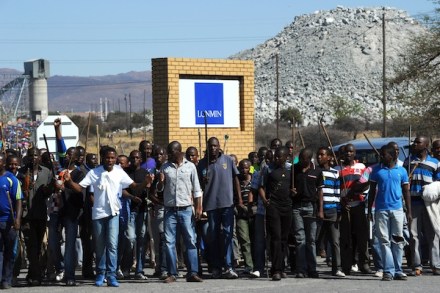
The London Stock Exchange recently unveiled a glossy new guide to best practice in corporate governance for companies quoted on its platforms. This must be regarded as a timely exercise, given the increasing domination of the FTSE100 by natural resources groups with operations in the most exotic corners of the world. In its desire to be the world’s IPO capital, the City through the ages has offered a haven to overseas miners. There has been a tendency, however, to overlook their governance, environmental and social failings. In general, mining firms based in the great Anglo-Saxon democracies of the United States, Canada and Australia offer their workers a decent wage and reasonable housing, and adhere to environmental and safety standards.

Investment Special: Patently profitable

From our UK edition

Here is something you may have missed if your eyes have been focused on the gyrations in bond and equity markets as euroland crises have come, gone and come again. The S&P 500 telecoms and IT index, the bellwether of digital stocks, has climbed 120 per cent from its 2009 low. All of us who lived through the exuberance of the tech bubble of 2000, when all you has to do was add ‘.com’ to a company name and watch the fireworks, have a right to be sceptical about this latter-day boom. The rise and rise of Apple to become the most valuable firm in the world, with a market capitalisation of more than $600 billion, has led some analysts to quote the S&P minus Apple to get a better perspective.

Investment Special: The great savings robbery

From our UK edition

The prudent among us can’t expect much reward from the Budget Three years ago, when the Bank of England embarked on its first £200 billion round of quantitative easing (QE), most of us — including some Bank officials — hadn’t a clue how this relatively untried policy would work. There were dire predictions from monetarist critics that ‘printing money’, as it was colloquially called, could only result in Zimbabwe-style inflation. That prediction has so far not been realised, largely because the economy has been operating so far below potential and the repair work, after Labour’s great boom of 1997-2007, is still going on.

Investment special: Flying through storms

From our UK edition

The financial crisis has unleashed a great debate about rebalancing Britain’s economy. The conventional wisdom is that our prosperity during the Nice decade (non-inflationary continuous expansion, that is) was over-dependent on finance and that we need to refocus our attention on high-quality manufacturing. Under New Labour, and the Tories before them, manufacturing was allowed to wither, declining from 18 per cent of GDP in 1996 to just 12 per cent now. The better news, however, is that what’s left behind is much better than what was lost. In certain sectors, including high-end engineering and aerospace, Britain has managed to retain a strong competitive edge.

Investment Special: The social network bubble

From our UK edition

It’s an irritating daily occurrence. The names of two or three people I barely know pop up in my inbox asking me to join their ‘professional network’, LinkedIn. Early on, I was tempted by the idea that being part of this family might widen my range of contacts, and perhaps also my story-gathering capacity. But then I realised that anything that had grown so big and amorphous was hardly likely to be a source of exclusive information. Nevertheless, social networks from LinkedIn to Facebook are the new investment fad. Having been wrong about Google when it first floated — my view was that legal disputes over content meant that it could never work — I hesitate to be dismissive about the current generation of tech giants.

INVESTMENT SPECIAL: Nature’s risks and rewards

From our UK edition

A beginner’s guide to investing in commodities The arrival on the London Stock Exchange of the Swiss-based mining and commodities behemoth Glencore, valued at £40 billion, has provided a rare insight into the mysteries of the natural resources world. This remains a relatively little understood sector even though the first commodities trades can be traced back to biblical times (there are whole Talmudic tractates on the subject) and the modern world of trading financial futures owes its origins to pork- belly and corn trading at the Chicago Board of Trade.

INVESTMENT SPECIAL: Passports to China

From our UK edition

One of the remarkable statistics to emerge from the euroland crisis is the scale of UK trade with the Irish Republic. Export traffic across the Irish Sea amounts to 7 per cent of the total: more than all our trade with the fast growing ‘BRIC’ economies — Brazil, Russia, India and China. The consequence is that UK plc looks to be missing out on the high-growth emerging markets which are forecast to power a 4.5 per cent expansion of the global economy in 2011. The coalition has sought to plug this gap with high-profile trade missions such as last year’s excursion to China led by David Cameron. The reality is, however, that all the missions seem to have achieved so far is $2 billion of orders for Rolls-Royce engines to power the A380 Airbus.

The bond supremacy

From our UK edition

The crash has led to a new boom in corporate bonds. When Tesco’s debt yields more than its shares, every little helps When the Bank of England began its £200 billion programme of quantitative easing — ‘QE’, its technical name for printing money — at the height of the credit crisis in March last year, it made two important discoveries. The initial plan of the Bank’s markets director, Paul Fisher, was to use the money to buy up bonds issued by major companies. This, it was hoped, would put cash into company balance sheets and help prevent the crisis cascading though the rest of the economy. But the Bank quickly learned that, apart from a few blue-chip companies, the market in UK corporate bonds was virtually nonexistent.

Despite BP, high yields are still worth chasing

From our UK edition

Alex Brummer says blue chip stocks that pay a handsome stream of dividends are — usually — a reliable bet First, I have a serious confession to make. For as long as I can remember, my informal advice to any UK investor considering a share purchase — particularly during the volatile years of the ‘great panic’ followed by the ‘great recession’ — has been to buy BP. In a world ever more desperate for energy, the oil price had only one direction to travel over the long haul and that is upwards. BP looked particularly well placed to benefit because of its exposure (around 40 per cent of its income) to the United States and its uncanny knack for making discoveries in safe political neighbourhoods from the Gulf of Mexico to Alaska.

Time to break the fat cats’ cartel

From our UK edition

A few months ago I appeared on a panel organised by a leading firm of pay consultants, Hewitt New Bridge. The audience, in the City, was packed with ‘human resources’ directors, pay experts and members of ‘remuneration committees’ — the directors who set pay in leading public companies — among whom there was broad acceptance that the current ‘Great Recession’ might require some kind of temporary pay restraint. But when I suggested that remuneration committees were lazy, easily bullied by powerful chief executives (such as former Royal Bank of Scotland boss Sir Fred Goodwin) and too often cosy cartels where directors engaged in mutual back-scratching, the room erupted.