Merryn Somerset-Webb

A warning from the small print on negative interest rates

From our UK edition

Mostly I wouldn’t suggest that too many of us pay any attention at all to letters noting minor looking changes to the terms of conditions of corporate deposit accounts at Natwest and RBS (which owns Natwest). Not so this week. This week we all need to pay a lot of attention. The letter in question notes that 'global interest rates remain at very low levels' – something I think we all know. But goes on to say that 'this could result in us charging interest on credit balances' in the event that the UK base rate falls below zero. Yes, instead of paying its business customers interest on their money, the bank is warning them that it may soon be charging them interest on their money. This wouldn’t be a global first of course: the ECB has a negative interest rate of 0.

Investment: Buy to lose

From our UK edition

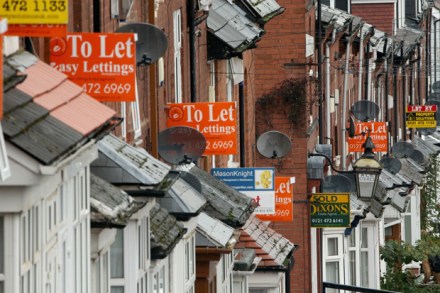
Take a quick look at the UK buy-to-let market and you might find it tough to understand exactly what it is that makes it so very popular. Dealing with tenants is difficult and boring. House prices have a horrible tendency to go down as well as up (Londoners — ask anyone living in the north of England about this). And rents have long been so low relative to prices that getting a worthwhile net yield is all but impossible after costs. Given this, you might wonder, why on earth would 14.5 per cent of all mortgage lending in the UK in the third quarter of last year have been to buy-to-let investors? Good question. The answer (as is the case with everything to do with modern money) is that it is all about leverage.

Worry about the eurozone crisis if you like. But profit, too

From our UK edition

If you want something to worry about, you need only cast your eye across the channel to find yourself spoilt for choice. There is the background noise of massive unrepayable sovereign debt levels. There’s huge youth unemployment. There are angry minority political parties — note the rise of Spain’s anti-austerity party Podemos. There is the battle between those who think the eurozone can survive as just a monetary union and those who know that it will only survive if it gives into political union. There is the threat of deflation (nice when you aren’t in debt, crippling when you are).

INVESTMENT SPECIAL: Sell the East, buy the West

From our UK edition

The end is nigh for the Asian boom – but parts of Europe look perky At the beginning of 2010 I was asked to announce my ‘trade of the decade’. Forecasting ten years ahead should be easier than forecasting short-term. But at the time the global economic outlook was more than usually uncertain. That made it tricky. So after a little thought I did what I normally do when stumped. I looked at what everyone else was predicting and went for the diametric opposite. Fund managers and financial advisers were nuts for emerging markets in 2009 and 2010. I could barely see over my desk for research papers extrapolating 10 per cent GDP growth in China forever. At the same time most observers were down on western markets, despite them being much cheaper.

What it means for your savings if Scotland votes yes

From our UK edition

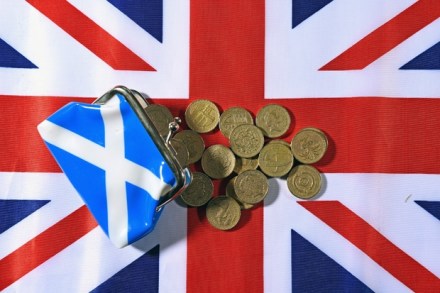
[audioplayer src="http://traffic.libsyn.com/spectator/TheViewFrom22_11_Sept_2014_v4.mp3" title="Fraser Nelson, Tom Holland and Leah McLaren discuss how we can still save the Union" startat=50] Listen [/audioplayer]I bet that until a few days ago you thought the referendum in Scotland was a mildly amusing sideshow. Perhaps you still do. Perhaps you are convinced that the ‘silent majority’ that Better Together are so sure will step up to the plate at the last minute really exist. Perhaps you think that the reasons many people are giving for voting ‘yes’ are so vague that voters will change their mind on the day. Or even if they don’t you might think it is all an irrelevance.

They made me sit an exam on giving financial advice. And I’m glad

From our UK edition

There was a time, not that long ago, when financial advisers as we know them today didn’t really exist. Pension and tax advice came from accountants. If you bought shares you bought them via a stockbroker (who gave you advice along the way). Unit trusts came directly — you responded to advertisements or perhaps got your accountant to do it for you. Occasionally you used an insurance broker. And that was that. It wasn’t particularly complicated and as a result no one (your accountant aside) was officially qualified to do anything. Brokers and dealers didn’t take exams to prove their proficiency and no one really thought they should. In the June 1963 edition of the Stock Exchange Journal, a Mr H.H.

How to make money from the Scottish referendum

From our UK edition

The best time to buy an asset is when no one else can stomach it. Great fortunes are made in uncertainty. The self-made rich aren’t the ones who hung around on the edge of an iffy situation thinking about the possible disasters. They’re the ones who calculated the odds and bought before anyone else was sure of the answers. So where is there uncertainty in the UK today? Most English people are utterly uninterested in the prospect of Scottish independence — or in Scotland generally. But if they were actually to look up north they’d see pretty serious turmoil. It is less than a year until every resident of Scotland gets to vote on whether they want to live with the devil they know or the devil they don’t.

If only more banks were more like Wonga

From our UK edition

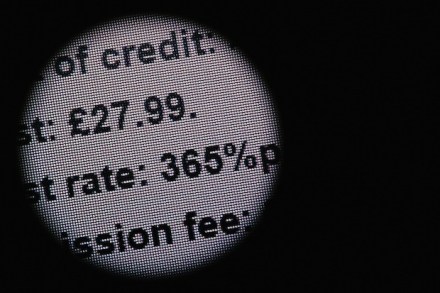
I know a lot of people who work in the financial industry. One on one, they are decent and kind. I’d trust them to look after my handbag in the pub while I went to the Ladies. But you know what? I wouldn’t trust many of them to look after my pension or my ISA. In fact I’m pretty damned sure that if I bought a financial product from them, they would devote themselves to slowly stealing my savings. I’m not alone in feeling like this. PressChoice does an annual survey asking journalists how much they agree or disagree with the statement ‘the financial services industry conducts itself in an open and honest way’. In 2008 the majority agreed.

George Osborne’s property bubble will lead to disaster

From our UK edition

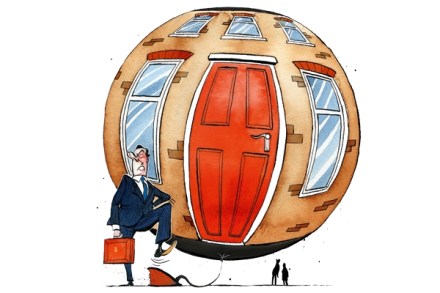
Imagine, if you can bear it, that you are a first-time buyer in the UK. You go to look at a 500-square-foot box masquerading as a two-bedroom flat in an average sort of area masquerading as an up-and-coming part of London. It’s a new build — one you can just about imagine downgrading your lifestyle expectations enough to live in. The problem is that you can’t quite afford it. The good news is that your Chancellor is behind you on this one. With you all the way. George Osborne really wants you to be able to buy a house. So here’s the question. Would you like him to help you do that by interfering with the market to ensure that you are offered a long-term loan you wouldn’t normally have been able to get?

Investment special: How Shinzo Abe has revived Japan

From our UK edition

Thank goodness for Shinzo Abe. Back in 2007, I wrote here that ‘over the next two to five years Japan will turn out to be one of the best investments UK-based investors can make’. By the middle of 2012, nearly five years on, that wasn’t looking like much of a prediction. Then prime minister Abe appeared on the scene. Since his election in November the yen has fallen 20 per cent against the dollar and the Japanese stock market has risen not far off 50 per cent. Phew. So what’s so great about Mr Abe? The short answer is that he has promised to do something about the Japanese economy after two decades of slow growth and semi-deflation, and — crucially — everyone believes him. He has what he calls a ‘three arrow’ strategy for change.

Reform at last

From our UK edition

A decade ago I wrote here about the way financial advisers are paid. I told you how, instead of giving you a bill, your adviser is allowed to sell you investment products in exchange for a commission from the product provider plus a cut of your assets every year for as long as you continue to hold those products. So if you buy an investment fund from an independent financial adviser (IFA), he will receive a payment up front and then another payment every year,  whether you ever have the good fortune to come across him again or not. All these payments will come out of your money — you just won’t know much about it.

Investment Special: Searching for income

From our UK edition

The outcome of last week’s Monetary Policy Committee meeting came as no surprise, but if you’re trying to live off income generated from capital, it was still bloody irritating. Once again, base rate was left at 0.5 per cent, its lowest level since records began in 1694. Once again, it was decided that quantitative easing must continue. So annuity rates will remain at record lows; deposit rates will remain below a level worth anything after inflation and tax; the squeeze on pensioner living standards will continue; and savers will feel forced to move into riskier markets to preserve the purchasing power of their cash. So what can you do? The first thing to note is that you don’t have to be bullied into moving out of cash. Deposit interest rates are not all bad.

INVESTMENT SPECIAL: The kids can wait

From our UK edition

The government wants you to save more. You might think that odd for two reasons. First, because if you are an average person you’re unlikely to have much extra to save; your mortgage payments may be lower than they were, but what the financial crisis has given you with one hand it is ripping away with the other. High inflation is destroying the purchasing power of your net income. Secondly, if you watch the news at all you will know about the paradox of thrift. If we all start saving at once our horribly ill-balanced, consumption-based economy won’t be able to cope: economic growth will continue to collapse and we will all end up worse off.

Any other business | 27 August 2011

From our UK edition

The shocks won’t end with the summer The world’s stock markets have had a ­pretty gruesome August. Listen to most of the financial press and you might think the reasons for this are ­hideously complicated. Not so. It boils down to the simple truth neatly summed up by Tim Price, director of investments at PFP Group: ‘What is unsustainable by ­definition cannot indefinitely last.’ If there isn’t enough real money around to repay debt, be it Greek, Irish and US sovereign debt or next door’s mortgage, it won’t get paid back.

My crystal ball sees disappointment ahead

From our UK edition

Merryn Somerset Webb doubts that markets will go on rising — and advises us how not to get poorer in 2010 Back in early 2007, an interviewer challenged my stance on the housing market. She pointed out that I had been bearish on the property market for several years but that the market did not seem much interested in my opinion. It wasn’t crashing. And that, she said, suggested that it never would. This is a pretty dimwitted argument. But it is much used when an asset class is rising for reasons connected to something other than its real value — its very rising is somehow used to justify its rise.

Private education

From our UK edition

School fees: a luxury you can’t afford The credit crunch is taking a terrible toll on the middle classes. They’ve started to give up their organic boxes (sales are down 10 per cent at some companies), their foreign holidays (can the new fad for camping really be a choice thing?), their Chelsea tractors, and even their privacy (their second homes are now available as holiday lets). So what’s next? Probably their children’s private education. School-fee inflation is running at well over 6 per cent a year, the average day school costs £3,000 a term, and top schools such as Eton and Wycombe Abbey charge £9,000-plus. Fifty-one schools in the UK charge more than £25,000 a year.

You wouldn’t buy Britain in this state, so why hold your cash in pounds?

From our UK edition

A few minutes reading the Daily Mail and you might think that there wasn’t a person left in Britain with a penny to their name. But it isn’t so. Half the nation may have spent the last five years churning credit cards and overpaying for city-centre new-build flats, but the other half has been busy getting rich. The long bull market, the housing bubble, the City bonus boom and an entrepreneur-friendly culture (yes, really — try starting a business in France) have all combined to make a lot of people a lot of money. The question now is what on earth they should do with it.

The City’s fascination with farming

From our UK edition

Everyone’s an expert on agriculture these days. Talk to anyone in the City: when they’re not boring you with how much copper wire it takes to build a satellite city outside Shanghai and what that means for mining shares, they’re telling you about soy bean yields in Brazil and the rising price of powdered milk. Fascination with food has been brought on by a sudden realisation in financial markets that there’s money to be made in farming. After several decades of stagnation, the prices of pretty much everything edible has started to soar.

The price of sex in the City

From our UK edition

Morgan Stanley has just hosted its first ‘early access’ event for young women: 75 girls from 15 top schools were taken on a tour of the trading floor (I bet there weren’t many traders off sick that day) Morgan Stanley has just hosted its first ‘early access’ event for young women: 75 girls from 15 top schools were taken on a tour of the trading floor (I bet there weren’t many traders off sick that day) and given ‘networking’ sessions in which they could talk to female staffers. Morgan Stanley says the event was part of its strategy to ‘bring women in’, and it is not alone in this worthy-sounding aim: most big banks now make similar noises. This seems odd.

Women and money make a perfect match

From our UK edition

The City summer party season has begun. I kicked it off with a fifth-anniversary party for Neptune Investment Management last Thursday. I like Neptune: they’ve got good funds and a good business, and offering drinks after hours at the Wallace Collection is clearly a fine way to win fans. But the party had one faintly off-putting aspect: the statue garden where we were gulping champagne was a sea of suits. There were one or two daintily dressed women dotted about but, with only one exception who I recognised, they were PR types or journalists. The fund managers themselves were all men. The same will be true at every money-related party this summer and I see it in every other kind of City event I attend or organise.