Arts feature

An artistic rebirth: reopening the Rijksmuseum

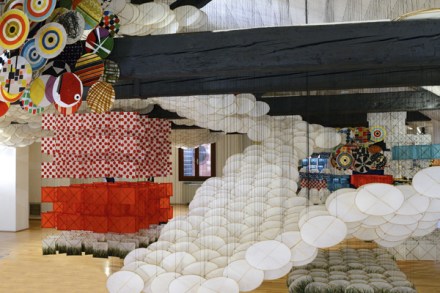
Hallelujah! The minimalist fashion for dreary acres of white walls is coming to an end. During the long decade that the Rijksmuseum has been closed — it was only supposed to be shut for three years — the taste for colourless voids has come and, please God, is going. Jean-Michel Wilmotte, the designer behind the museum’s new interior decoration, is obsessively anti-white. It kills anything on show, he says — that’s why he’s gone for a series of hangings of blue-grey shades as the background for objects and paintings. Occasionally, the fine gauze over the windows gives the place a touch of sepulchral gloom, but that’s a minor gripe. The sombre colours work, lingering backstage, not swamping the pictures.

The future of opera

‘It’s an occult-mystery film opera.’ This is how Michel van der Aa describes his new opera, which opened last Friday at the Barbican (and is reviewed here). I had similar difficulties in describing the nature of many of the shows that I produced at Mica Moca, a performance and exhibition venue in Berlin. Over the course of five months, we produced more than 350 different shows of every genre you could think of and some I’d never heard of (check out Japanese free noise) and yet, by the end, I felt that what we’d actually produced was one huge opera. We’re living in very interesting and exciting times for the world of performance — when boundaries between art forms are breaking down and audience’s expectations are shifting.

Why David Bowie is still underrated

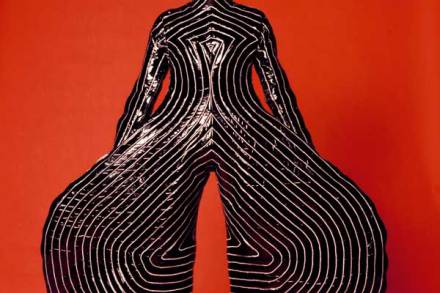
Is it just me, or is there quite a lot being written about David Bowie at the moment? Of course, there’s the fact that the V&A’s blockbuster exhibition has coincided with the totally unexpected appearance of his first album for ten years. (While putting the exhibition together, the curators could never have dreamed that on the day it opened, a new Bowie album would be number one in 40 countries.) Yet for some cynics on the internet — never hard to find — the recent outbreak of Bowie mania is a simple question of demographics: the media is now run by people who grew up with him, and apparently never get bored of banging on about it. Seeing ‘Starman’ on Top of the Pops!

Nicholas Hytner’s National Theatre: Ten years and a million cheap tickets

‘The house that Ho Chi Minh built.’ That’s how Nicholas Hytner refers to his ample north London home. In 1989, at the age of 34, he was hired by Cameron Mackintosh to direct the musical Miss Saigon. ‘It just felt like a huge lark,’ he said at the time. The show ran for ten years in the West End and on Broadway and the royalties enabled him ‘to do what I wanted to do thereafter. It was a massive stroke of good fortune.’ Artistic freedom has been the hallmark of his ten-year stewardship of the National Theatre. Hytner grew up in a prosperous south Manchester family and his fascination with music and drama asserted itself in early boyhood. Aged nine, he had a season ticket to the local concert hall.

Cross examination

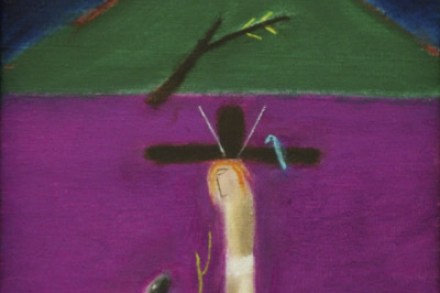
As Easter comes upon us in this bitter spring, many of us are drawn to contemplate the mystery of Christ’s passion: his Crucifixion, Resurrection and Ascension into Heaven. You don’t have to go to church to do this, for reverie or prayer can take place in a quiet landscape or by a cosy fireside, but there are various aids to meditation, and none better than the appropriate visual art. Although we live in an increasingly irreligious age, there have been religious painters of real power in recent years, and perhaps none more so than Craigie Aitchison (1926–2009).

When Picasso was a boy wonder

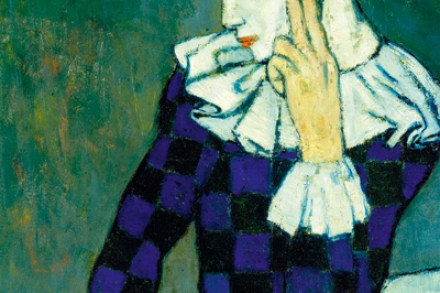
Exhibitions are only as good as the loans that can be secured for them, as was seen at the Royal Academy’s Manet exhibition recently. The exhibits at Burlington House were thin on the ground because in some cases promised loans were rescinded, and other items were simply not available. Whatever one thinks of that controversial figure Norman Rosenthal, for so many years exhibitions secretary at the RA, his ability to seek out and obtain loans amounted to genius, backed by two important characteristics: audacity and tenacity. When I first saw the Courtauld’s Picasso show, I immediately thought of a painting of the artist’s friend Casagemas on his deathbed, lit by a flickering candle.

Book of Mormon – religion hits the West End

Hitchhiking through Salt Lake City as a student in 1976, I asked a local man, who was out shopping, directions to the nearest Salvation Army hostel. Rightly assuming I was down on my uppers, the man gave me his huge bag of groceries and walked off with a ‘bless you’. Say what you like about them, Mormons in my book are lovely. In several days spent in the most boring city on earth, I never met a nasty one. The Church of Jesus Christ of Latter-day Saints is now the subject of the much-hyped The Book of Mormon, which is finally about to open in the West End after a year of total triumph on Broadway.

How Roy Lichtenstein became weighed down with superficiality

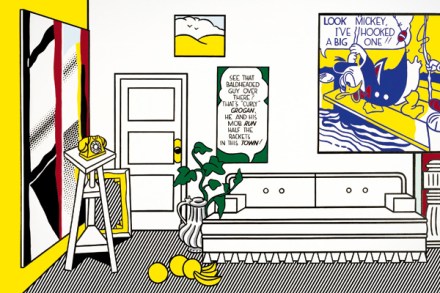
On both sides of the Atlantic there are still heated debates about who invented Pop Art, the Americans or the British, but it seems much more probable that concurrently each initiated their own brand in response to the zeitgeist of post-war consumerism. Certainly, the American Roy Lichtenstein (1923–97), after near-abstract beginnings, started in 1961 to paint large freehand versions of comic-strip frames, complete with speech bubbles, and exhibited them in New York in the first Pop Art shows. He moved on a bit from comic strips to Disney, advertising and the ordinary objects of the modern environment, and developed a style of measured drawing and stencils that broke up colour into what looked like the Ben-Day dots of mechanical reproduction familiar from newspapers.

David Inshaw: the great romantic

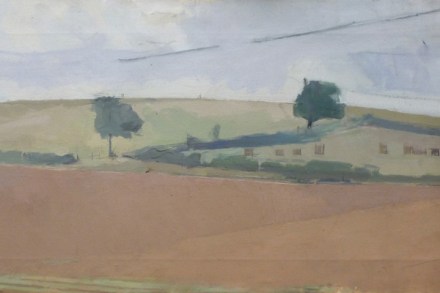
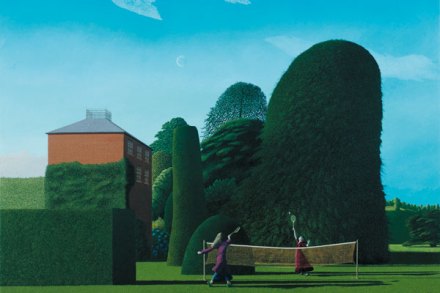
David Inshaw will celebrate his 70th birthday on 21 March, around the time of the spring equinox. On the eve of this grand climacteric, which will be marked by an exhibition of new and old work at the Fine Art Society, I went down to Devizes to interview him. He has lived for much of his life there, with brief interludes in Bristol, London, Cambridge and Wales. In Devizes he is surrounded by the countryside that has most inspired him — the Marlborough Downs and the open stretches of Salisbury Plain, the trees and hills of his beloved Wiltshire. Inshaw is a landscape and figure painter, known to many as a Ruralist (a group he co-founded in 1975 with his great friend Sir Peter Blake, and which he left in 1983).

The dark side of Benjamin Britten

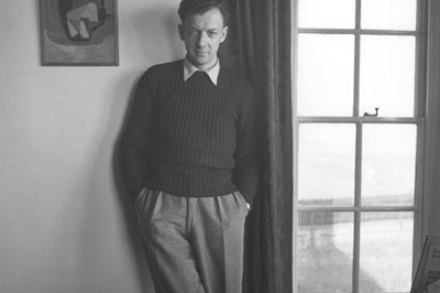
We are only two months into the Britten centenary year and already books, articles and talks (and, of course, performances) swell the flood of existing biographical studies and the six bulky volumes of diaries and letters. Dead for less than 40 years, Britten is as copiously documented as any English composer except Elgar. Have emails wiped out areas of research? I hope that some teenage composer, a latter-day Britten, is even now baring their musical soul writing candid and maybe scurrilous opinions on the current musical scene in a diary as the young Britten did from 1928. ‘The child is father to the man’ rings true in Britten’s case. Britten the man was  a Jekyll and Hyde, with Hyde perhaps too often gaining the upper hand.

Ice Age art at the British Museum: Geniuses of 40,000BC

The best way to approach any exhibition is with a clear and uncluttered mind, without expectations or prejudices. Of course this is often impossible, for all sorts of reasons, particularly when we have some familiarity with the subject on view. Inevitably we are besieged by images and opinions before we enter an exhibition of Manet or Picasso, but with Ice Age Art I was able to approach without any troubling preconceptions. I arrived at the British Museum in a state of pleasant anticipation, and within minutes I was entirely won over. The curator, Jill Cook, has given us an extraordinary glimpse of a long-distant age which yet feels incredibly fresh and relevant to us today.

Medieval mystery

Medieval castles are generally dark and forbidding places that look as if they were built to prove the proposition that ‘form follows function’: the function was to be impregnable, and their high walls, crenelated and machicolated battlements, and slits for firing arrows instead of windows suggest that everything was subordinated to that dour defensive purpose. Castles are gloomy, intimidating buildings that sink the spirits. They were meant to intimidate and depress the population, and they succeeded. They still do. But we may have the wrong idea about castles. Recent research suggests that, in Italy at least, far from being solidly monochrome blocks, they may have been a riot of colour.

Thoroughly modern Manet

There can’t really be many people who look at art with any regularity who continue to confuse Manet with Monet. But there are those who still think that Manet was an Impressionist, because so many of his friends and contemporaries were members of the group. In fact, Manet kept his distance and steadfastly refused to exhibit with them. His was an urban, studio-based art, not given to plein-air effects of atmosphere and local colour. He looked instead to the dazzling bravura of Franz Hals’s portraits, and the sombre and often majestic originality of Velázquez and Goya.

Obsessed with Pinter

It’s the size of a Hackney bedsit but the ambience is cosily expensive. Sonia Friedman’s tiny office above the Duke of York’s Theatre in St Martin’s Lane has warm, pinkish lighting and elegant armchairs with thick, deep cushions. The dark wallpaper is obscured by framed posters of hit West End shows. Sprawled across the sofa there’s a touch of pure kitsch: a six-year-old poodle, snuffling and dozing, whose fluffy white forelegs are sheathed in the armlets of a scarlet tank top. His name is Teddy and he looks like the victim of a stag-night prank contentedly sleeping off his hangover. Opposite me sits Sonia Friedman — pretty, blonde, in her mid-40s — who occupies a formidable position as one of the West End’s leading producers.

Go with the flow

Last November Lutfur Rahman, the independent Mayor of Tower Hamlets, confirmed that the borough intended to sell a Henry Moore sculpture entitled ‘Draped Seated Woman’ (1958–9) that had been historically sited in the borough. Rahman’s reasoning was twofold: the sculpture was too expensive for the council to insure and the money raised from the work’s sale at auction, which could be up to £20 million, would ease the £100 million budget cut that Tower Hamlets is faced with over the next three years. The announcement elicited a strong protest from the arts lobby.

Sex and sensibility

Being wary of men who wear novelty braces is one of those rules of thumb I’ve always tried to adhere to. So when I’m introduced to Ben Lewin, the writer and director of the lauded new film The Sessions and spy his bright-yellow braces, designed to look like a tape measure, my heart sinks for a moment. Am I, as my instinct suggests, about to be overwhelmed by ‘zaniness’? Thankfully, the answer proves to be no. Lewin, a short, slightly portly man who looks a touch older than his 66 years, is far quieter than his choice of braces suggests. He’s a happy man, too, smiling as he does throughout much of our time together, reminding me of a sitting Buddha. Lewin, who walks with the aid of crutches after suffering from polio as a child, has every right to be content.

Best in show | 3 January 2013

The National Gallery is limiting itself to two major shows a year in the Sainsbury Wing. The spring exhibition is Barocci: Brilliance and Grace (27 February to 19 May), the first major showing of Federico Barocci (1535–1612), who managed to fuse Venetian colour with the sense of drawing and pictorial design favoured in Central Italy. The autumn show is The Portrait in Vienna 1867–1918 (9 October 2013 to 12 January 2014), an examination of the punchy Viennese avant-garde of Klimt, Schiele and Kokoschka. Both sound very promising, and for lighter entertainment, there are smaller shows of Frederic Church’s oil sketches (6 February to 28 April) and Michael Landy’s kinetic sculptures (23 May to 24 November) in the main building.

New dawn for Newlyn School

‘The street scenes in Newlyn lack nothing of subject for the painter,’ reported the young Frank Richards from the Cornish art colony in 1895; ‘paved with cobblestone, some of the narrow streets are occasionally strewn over with fishheads and entrails, so that one’s progress in going “up” or “down”-along is sometimes considerably facilitated by an alarmingly quick slide to an unexpected destination.’ Thirty-six years earlier, Brunel’s bridge across the Tamar had connected England’s westernmost tip to the railway system, speeding the transport of fish one way and tourists the other. And, as elsewhere in Europe, before the tourists came the plein-air painters.

The art of Christmas

One of the most important and enjoyable Christmas decorations in our house is the profusion of Christmas cards. I am fortunate to number quite a few artists among my friends, and a good percentage of them make and send their own Christmas cards. Most of these tend to the secular and celebratory, but the range of image and technique is what really stands out. Literally, in the case of the sculptor Ann Christopher (born 1947), who makes wonderful little constructions of flexed and frayed silver card often decorated with stars, which balance three-dimensionally on the mantelpiece, like geometric Christmas trees.

Heavenly hands

The Hepworth has been garnering plaudits right and left as a new museum to be welcomed to the fold, and my first visit to this monolithic structure with its feet in Wakefield’s River Calder exceeded all expectations. Designed by David Chipperfield Architects, the ten linked blocks that make up this new suite of galleries are spacious and light-filled with excellent views out to the river and town. Restaurant, education centre and offices are on the ground floor, and upstairs the art comes into its own. At the top of the stairs is a room of six classic sculptures by Barbara Hepworth (1903–75), whose name the museum has taken since this significant figure of British Modernism was born in Wakefield.