Alasdair Palmer

Alasdair Palmer is a former Home Office speech writer.

Will the Red Wall revolt split the right?

From our UK edition

48 min listen

On the podcast this week: is Rishi ready for a Red Wall rebellion?  Lee Anderson’s defection to Reform is an indication of the final collapse of the Tories’ 2019 electoral coalition and the new split in the right, writes Katy Balls in her cover story. For the first time in many years the Tories are polling below 25 per cent. Reform is at 15 per cent. The hope in Reform now is that Anderson attracts so much publicity from the right and the left that he will bring the party name recognition and electoral cut-through. Leader of Reform UK Richard Tice joins Katy on the podcast to discuss.
The ECHR compromises British agents

From our UK edition

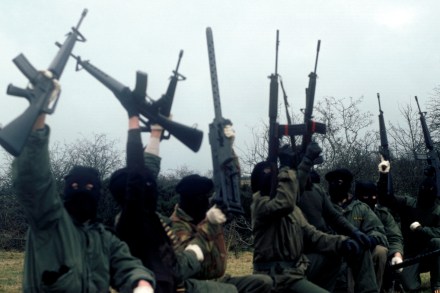
How should the state fight terrorism? That is the question addressed by Jon Boutcher’s report ‘Operation Kenova: Northern Ireland Stakeknife Legacy Investigation’. The report was precipitated by the claims that the British Army had an agent at the heart of the IRA. ‘Stakeknife’ was head of the IRA’s Internal Security Unit and was responsible for questioning, torturing and executing people the IRA suspected of being British agents. Stakeknife was himself a British agent, passing on information about the IRA – its plans, strategy and tactics – to his controllers in the British Army. What was the British state doing employing such a person?

From illegal to ambassador – the incredible story of Uran Ferizi

From our UK edition

The next Albanian ambassador to London will be Uran Ferizi. It is a remarkable appointment, not least because Dr Ferizi’s first encounter with Britain was when he arrived as an illegal immigrant in 1998. He was 17 years old, and he had nothing other than the clothes he stood up in. I first got to know Uran Ferizi over a decade ago, and learned about his story then. He told me he had been determined to get to Britain since he was 15. He decided he wanted to study at the University of Oxford – partly because his father had cited an Oxford education as an example of something his son could not possibly achieve. That had infused the young Uran with a powerful desire to prove his father wrong. He felt there was no future for him in Albania.

How to tackle illegal migration

From our UK edition

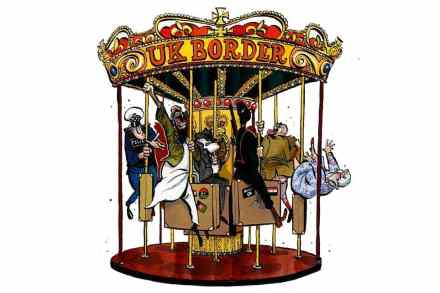
Immigration policy is a mess. For at least the past decade, it has been characterised by unrealistic targets and broken promises. Every government has promised to reduce dramatically the number of foreigners who arrive here in search of work, or justice, or hope. Every government has failed. The numbers keep going up. David Cameron promised to reduce immigration to below 100,000 a year. So did Theresa May. Boris Johnson claimed his version of Brexit would see immigration fall precipitously. None of them came close to keeping their word. Curbing immigration, both legal and illegal, is an immensely difficult problem, so perhaps it is not surprising that successive governments have failed. What is surprising is the stupidity of many of the policies which they have claimed would succeed.

Theresa May is right to be angry – the civil service is now at risk

From our UK edition

Theresa May is back, and this time she’s angry. Not about Brexit or the Ulster Unionists, but about the politicisation of the civil service. This is not a matter that arouses ire in many people or even many politicians – but it should, because it is the main reason why Britain is governed better than Uzbekistan. In Britain, we take for granted relatively uncorrupt and effective government, based on at least some degree of rational decision-making. Historically, this has been extremely rare, and even today, in many countries, it does not exist. But as economists often point out, it is – along with the rule of law, which is an aspect of uncorrupt government – the most important component in achieving and maintaining a country’s prosperity.

What is organised crime doing disposing of rubbish?

From our UK edition

There were headlines recently about how more than half of local councils had recorded a large increase in the number of ‘fly-tipping’ incidents: cases where rubbish and waste are collected, then illegally dumped and left to rot in open fields. That practice normally has dire consequences for the local environment, and sometimes for the health of animals and people who live close by. Various sources were quoted claiming that organised criminal gangs were usually responsible for illegal fly-tipping. On the face of it, that is an astonishing claim. What is organised crime doing disposing of rubbish? But no one seems interested in finding out what lies beneath it.

The stop and search race myth

From our UK edition

When I was working as a speech writer in the Home Office, under Theresa May, one of her special advisers told me that she wanted to give a statement to parliament on the police's use of stop and search. Part of the motive for doing this, he explained, was political: stop and search is a policy which consistently alienates members of the black community. I was told that it would help the home secretary's standing with Afro-Caribbeans if she made a statement that was critical of the police's use of stop and search. The grounds would essentially be that the tool was racist, or at least used by the police in a racist way: the statistics demonstrated that you were six or seven times more likely to be stopped and searched if you were a member of an ethnic minority.

The stop and search race myth | 13 November 2018

From our UK edition

When I was working as a speech writer in the Home Office, under Theresa May, one of her special advisers told me that she wanted to give a statement to parliament on the police's use of stop and search. Part of the motive for doing this, he explained, was political: stop and search is a policy which consistently alienates members of the black community. I was told that it would help the home secretary's standing with Afro-Caribbeans if she made a statement that was critical of the police's use of stop and search. The grounds would essentially be that the tool was racist, or at least used by the police in a racist way: the statistics demonstrated that you were six or seven times more likely to be stopped and searched if you were a member of an ethnic minority.

How did Britain ever have unarmed criminals?

From our UK edition

The release of Harry Roberts, the man responsible for shooting dead three policemen in 1966, has sparked a vigorous debate about whether he should have stayed in prison until he died. The idea that ‘life should mean life’ for anyone who kills a policeman is a police-pleasing policy that the Home Secretary promised she would implement in a speech to the Police Federation last year. But a more interesting aspect  of the Roberts story is what it shows about the changing nature of Britain’s career criminals, and the values — if that is the right word for them — that they share. Until quite recently, criminals in this country did not routinely carry guns. The relative rarity with which criminals went armed made it possible to have an unarmed police force.

Michelangelo’s vision was greater even than Shakespeare’s

From our UK edition

It is 450 years since the birth of William Shakespeare. The anniversary has been hard to avoid in this country, which is entirely appropriate. Shakespeare helped to shape not only our language but also our conception of character and our understanding of the human condition. Our experience of love, of facing death, of loss and of glory, contains echoes of Shakespeare, even if we hardly ever read him or see his plays. It is also 450 years since the death of Michelangelo. That anniversary has hardly been noticed here — although Michelangelo had as great an impact on visual arts in the West as Shakespeare has had on its literature. For centuries, every painter and sculptor felt the need either to emulate Michelangelo, or to escape his influence. Many still do.

Exhibitions: Tiziano

From our UK edition

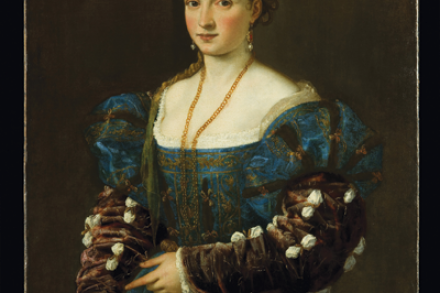
‘When Titian paints eyes,’ observed Eugène Delacroix, who spent a lifetime admiring, studying and copying the Venetian artist, ‘they are lit with the fire of life.’ The truth of Delacroix’s aphorism is on striking display in the magnificent exhibition of Titian’s paintings at the Scuderie of the Quirinale Palace in Rome. The exhibition does not pretend to be a comprehensive collection of Titian’s works. It is merely a selection of some of his greatest masterpieces. The gorgeous young woman known simply as ‘La Bella’ looks at you with a penetrating, unblinking gaze, her eyes so hot with the fire of life that you feel sure that, in just one moment, she will move.

Medieval mystery

From our UK edition

Medieval castles are generally dark and forbidding places that look as if they were built to prove the proposition that ‘form follows function’: the function was to be impregnable, and their high walls, crenelated and machicolated battlements, and slits for firing arrows instead of windows suggest that everything was subordinated to that dour defensive purpose. Castles are gloomy, intimidating buildings that sink the spirits. They were meant to intimidate and depress the population, and they succeeded. They still do. But we may have the wrong idea about castles. Recent research suggests that, in Italy at least, far from being solidly monochrome blocks, they may have been a riot of colour.

Mad money

From our UK edition

Daniel Kahneman is a very modest man — amazingly so for someone who has won the Nobel prize in economics. When I met him in the lobby of a London hotel, he never used his very great intelligence in the way that some very distinguished economists do, to bully or to intimidate. ‘But then I am not an economist,’ he says with a mischievous smile. ‘I am a psychologist.’ Prof. Kahneman smiles a great deal. His eyes sparkle behind his large spectacles. His cheeriness is infectious, but it is also disconcerting, given that he is not optimistic about humankind. He thinks, for instance, that it will be ‘miraculous’ if we manage to do anything to stop global warming.

Restoration tragedy

From our UK edition

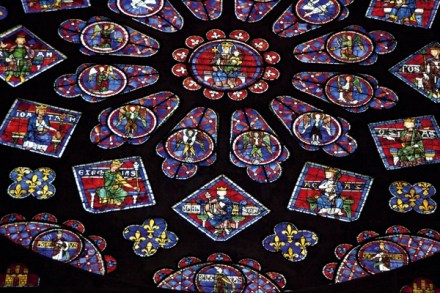
Alasdair Palmer questions the ill-conceived makeover of Chartres cathedral which robs us of the sense of passing time that is part of its fascination and mystery Should old buildings look old? Or should they be restored to a condition where they look as if they could have been put up yesterday? Those questions are raised in a particularly pertinent form by the work going on at one of the most beautiful and inspiring of all old buildings: Chartres cathedral in France. Most of Chartres cathedral dates from between 1194 and 1230, when the bulk of the colossal stone structure, with its nearly 200 stained-glass windows and thousands of sculptures, was built.

Medieval frescoes

From our UK edition

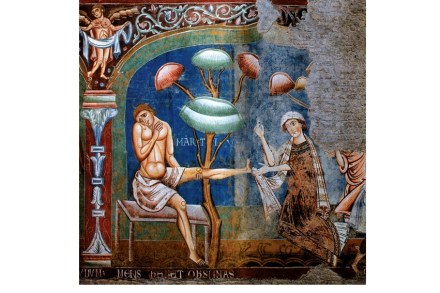
Rome contains many hidden treasures, but the most remarkable of the lot is concealed on the Caelian Hill, above the Colosseum, in the medieval monastery of Santi Quattro Coronati. It’s a cycle of frescoes dating from around 1250. It is extremely rare for painting from this period to survive anywhere, but it’s even rarer in Rome, where the rebuilding of the city by the Counter-Reformation popes destroyed almost all medieval painting. The paintings are in a vast vaulted gothic hall, the walls of which — about 800 square metres of them — were originally completely covered in frescoes. About half the original paintings remain: an earthquake, and the construction of additional windows, have destroyed the rest.

Paradise regained

From our UK edition

Alasdair Palmer marvels at a series of Veronese frescoes at Palladio’s Villa Barbaro It has included repairing the roof and strengthening the walls, as well as redecorating the interior, and it has taken almost as long as it took to build the original structure — but work on Andrea Palladio’s last building, the Tempietto at Maser, is finally complete. And what a glory it is! The building was finished in 1580, the year Palladio died, and he may never have seen it in its final form. It is the only church that he designed which isn’t in Venice. Marcantonio Barbaro, who commissioned it to be the chapel for his villa, was a long-time friend of Palladio.

Rewarding rubbish

From our UK edition

If you went on holiday to Italy this year, you may have come back with a plate, a mug or a jug — an item or two of the painted pottery still handmade (at least sometimes) by craftsmen and women, mostly in Umbria, but also in the Marche, and which you can see in the shops in Siena and Florence and in other places in Tuscany. If you went on holiday to Italy this year, you may have come back with a plate, a mug or a jug — an item or two of the painted pottery still handmade (at least sometimes) by craftsmen and women, mostly in Umbria, but also in the Marche, and which you can see in the shops in Siena and Florence and in other places in Tuscany.

Why the coalition’s police reforms will fail

From our UK edition

The Home Office has radical plans, but they won’t come to much, says Alasdair Palmer. Less money and fewer paid officers will inevitably mean more crime Last month when Theresa May, the Home Secretary, launched the coalition’s consultation document on the police, ‘reconnecting police with the people’, she said it would ‘herald the most radical reform of policing in this country for 50 years’. Unusually for a politician, that was probably an understatement.

Meeting Professor Torture

From our UK edition

Guantanamo Bay has just marked its fifth anniversary. John Yoo was instrumental in setting up the prison camp which the normally solidly pro-American Daily Mail has called ‘the sort of show that once only dictators like Joseph Stalin and Chairman Mao knew how to put on’. Yet Yoo’s infamy in America derives less from clearing the legal way for Guantanamo than from being the author of the ‘Torture Memo’, a legal opinion filed on 2 August 2002 by the Office of Legal Counsel (OLC), a section of the Department of Justice. It examined what methods of inflicting pain and suffering constitute torture, and whether the President can order torture if he thinks it necessary.

Saddam’s trial shouldn’t be fair

From our UK edition

When Mohammed al-Ureybi, the presiding judge at the trial of Saddam Hussein, started reading out that the court sentenced Saddam to death for killing 148 inhabitants of the Shiite village of Dujail in 1982, Saddam interrupted him. Just as the learned judge got to the part about the punishment for ‘crimes against humanity’, the deposed tyrant shouted, ‘Down with the traitors! Down with the invaders! To hell with your articles and your clauses!’ It is not how a man accused of crimes against humanity is supposed to react to a guilty verdict. According to the ideals of international law, he is supposed to accept his own guilt and bend his head in shame. Saddam didn’t even recognise the legitimacy of the court.