Arts feature

Art shows you simply mustn’t miss in 2014

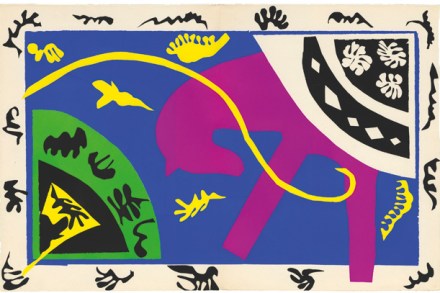
One of the great treats of the exhibiting year will undoubtedly be Henri Matisse: The Cut-Outs (17 April to 7 September) at Tate Modern. The last phase of Matisse’s productive career was devoted to making extraordinarily vivid images from painted paper cut with scissors, as the physical effort of wielding a paintbrush became too much for him. Matisse’s greatest strengths were as draughtsman and colourist, and the cut-outs combine these skills in abundant measure, releasing a new sense of joyous celebration almost unmatched in the history of art. The largest ever exhibition of the cut-outs, the Tate’s show will feature 120 works, many seen together for the first time. Unmissable.

There are too few masterpieces in Masterpieces: Art and East Anglia

The mood is celebratory in East Anglia: the University (UEA) marks 50 years since it opened its doors in Norwich, and the Sainsbury Centre, its visual arts flagship, is back in business after refurbishment by Foster & Partners. The first public building designed by Norman Foster, it opened originally in 1978, a huge glass and steel hangar to house the Robert and Lisa Sainsbury Collection, given to the University five years earlier. This impressive collection is wide-ranging, including a substantial group of early Francis Bacon paintings, an important collection of Hans Coper ceramics, and excellent things by Moore, Giacometti, Picasso and Epstein, as well as quantities of other artefacts, ancient and modern.

God in a stained glass window

Writing about Graham Sutherland in 1950, the critic Robert Melville observed: ‘When one looks at a picture one finds oneself over the frontier or one doesn’t. Criticism has no power of making converts to an experience which occurs without the intervention of reason ... Criticism considers the sensitive flesh of the image and discovers its spiritual stature: indeed, unless we pursue the meaning of the image as language, painting may well fall silent and rest content in the pride of its flesh.

Interview David Chipperfield: It is better to be fond of architecture than amazed by it

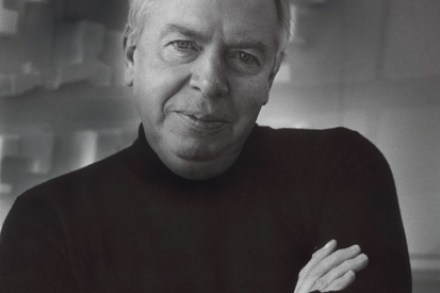
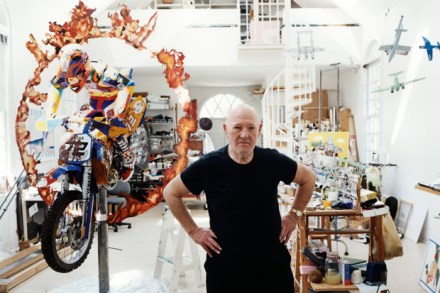
For a man who’s about to celebrate his 60th birthday, Sir David Chipperfield looks remarkably fresh-faced. His pale blue eyes are bright and piercing, his thick white hair is cut in a fashionable short crop. Clad in a dark polo neck, he looks almost boyish. This youthful vitality is reflected in his work. At an age when most of us tend to start slowing down, he’s busier than ever. His offices in London, Berlin, Milan and Shanghai employ more than 200 people. His current projects range from Paris to St Louis. I meet him in his groovy high-rise office overlooking Waterloo Station. He’s just flown in from Mexico City, where he’s built yet another new museum.

How to think like Chekhov or Turgenev

I recently met an A-level English student who had never heard of Pontius Pilate. How is it possible to reach the age of 18 — to be applying to university to read English and European Literature — and never to have come across the man who asked the unanswerable question: what is truth? This student had completed a course in theatre studies, having read hardly any Shakespeare, nor any of his contemporaries, none of the Greeks — Sophocles, Aeschylus, Euripides — nothing from the Restoration, no Ibsen, no Shaw, and certainly no Schiller — though he had been given the role of Hippolytus in a school production of Phaedra’s Love, which had to be cancelled when the head teacher came across a copy of the script lying on the staffroom table. Phew!

Ditchling Museum’s guiding dream

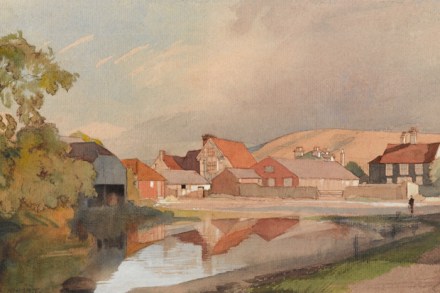
The charming East Sussex village of Ditchling lies at the foot of the South Downs, its narrow streets lined with ancient houses and pubs. For much of the 20th century it was home to a community of artists and craftsmen, the most famous of whom are Eric Gill and David Jones, master and pupil. In 1985, two sisters, Hilary and Joanna Bourne, founded a museum to preserve and celebrate the wealth of local creativity. It is this museum that reopened at the end of September after a major overhaul and redevelopment by Adam Richards Architects. The results are very fine indeed: this is one of the loveliest small museums I have visited, the lucid spaces well laid out, the plan and the detailing equally considered.

Do you think this painting is worth $48.4 million?

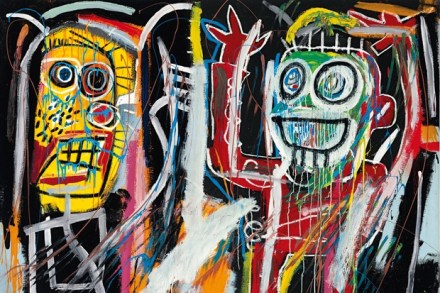
Earlier this year a painting by Jean-Michel Basquiat, depicting two figures stoned on the hallucinogenic drug PCP, was offered for sale at Christie’s in New York. ‘Dustheads’ was given an estimated sales tag of $25–35 million. In the end, the hammer came down at $48.8 million, a sum that easily broke the previous record for the artist, $26.4 million, which was achieved last November. It was the fourth time in 12 months that Basquiat’s record price had been smashed, and confirmed the artist’s dominance of the contemporary market. Such record-breaking at auction tends to elicit valedictory statements from auction houses and Christie’s Loic Gouzer duly obliged: ‘“Dustheads” is pure, concentrated energy, freedom and honesty.

‘You can’t handle the truth!’ — the greatest courtroom dramas of all time

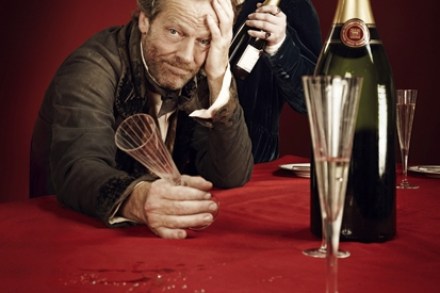
Our legal system is pure theatre and always has been. Many barristers stand accused of being failed actors and vice versa. Judges love the dressing-up box and a chance to give their gavel a good bang. With murmuring galleries, shocking verdicts, swooning witnesses, cries of ‘all rise’ and ‘take him down’, the flummery and drama of the courtroom has always supplied a rich genre for film, theatre and telly. Now there’s a chance to see one of the more serious courtroom classics in the West End. Twelve Angry Men — originally written for the screen and directed by Sidney Lumet — is about a grumpy New York jury deciding on the fate of an ethnic kid accused of stabbing his father. If guilty, it’s the electric chair.

How I learned to start screaming and love the horror movie

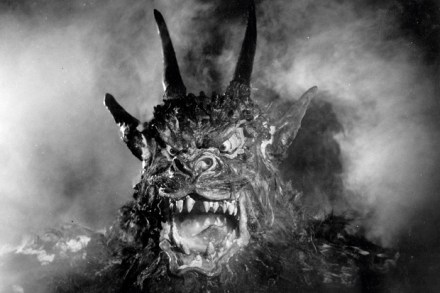
Buddy, you can keep your Christmases and your Easters, your Hanukkahs and your Eids. For someone like me, the annual celebration that really matters is the one that falls on 31 October — Halloween. This isn’t because I’m an inveterate trick-or-treater, out for candy and larks. It isn’t because I own shares in a pumpkin patch. It’s because I am a film fan, grateful for any excuse to indulge in horror movies as night’s dark curtains draw closer. No other time of the year offers such a perfect alignment of occasion and genre. ’Tis, after all, the season to be scared. And this season is shaping up better than most.

Welcome home, Malcolm Morley

The Ashmolean Museum has taken the radical step of embracing contemporary art, and is currently hosting (until 30 March 2014) a mini-retrospective of Malcolm Morley’s work, curated by Sir Norman Rosenthal and borrowed entirely from the prestigious American-based Hall Art Foundation. Morley (born London 1931) was the first winner of the ever-controversial Turner Prize (apparently David Sylvester threatened to resign as a judge if Morley was not awarded the prize), but has lived in America since 1958 and visits these shores rarely. The last time he was here was in 2001, for a full-scale retrospective of his work at the Hayward Gallery. We haven’t seen enough of his art in this country over the past decade, so this show is a most welcome event.

Tim Rice: How to get ahead in musicals

Like almost everyone else in the insane world of musical theatre, I don’t know how to create a hit. This hasn’t prevented me from contributing to, even originating, some. Most of these successes have come about by happy accident and could so easily have been disasters or stillborn but for matters or events beyond my control or totally unexpected. I suppose I could arrogantly claim that there was usually some artistic merit to the shows that did make it (and little to those that eventually flopped) but there must be many writers with wonderful musical ideas out there who have never had that vital unpredictable break. Like Napoleon, we all need lucky generals.

Ta-ra, Dame Edna — Barry Humphries bids goodbye to his chattier half

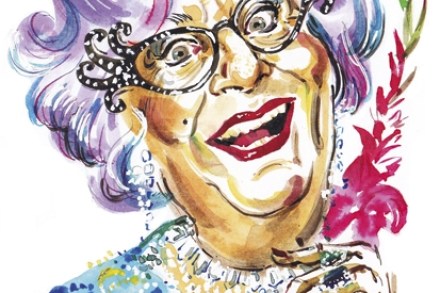
Dame Edna is hanging up her tiara. From now on the ‘failed comedian’, as Edna calls her alter ego Barry Humphries, will have to make do without her. Her current tour includes a run at the London Palladium but after she’s graced the provinces, it’s adios, possums. Her last ever live show is currently bringing (I paraphrase her website) a spooky old resilience to people’s lives through laughter, prayer and a life-enhancing enzyme called Vitamin E —  that’s E for Edna. The truth is, Barry can’t face touring any more. He is 79 and sick to the back teeth of trendy hotels with their moody lighting and minimalist nonsense.

The false paradise of Metroland

Gaily into Ruislip Gardens runs the red electric train… Near the end of the Metropolitan Line, where London dwindles into woods and meadows, stands a Tudor manor house, built within the moat of a motte-and-bailey castle. Now a quaint museum, charting the history of the farms that once surrounded it, this modest landmark shares its name with the local Tube station, Ruislip Manor. A century after they built it, the railway that runs through here still feels out of place. There are fields on one side, suburban semis on the other. Welcome to Metroland, the bizarre no-man’s-land between town and country, created by the Metropolitan Railway, which celebrates its 150th birthday this year.

Chris Ingram: from messenger boy to museum benefactor

Chris Ingram is a silver-haired, incisive man, with an air of quiet authority and decided opinions about the art he so passionately collects. A media entrepreneur who started work at 16 as a messenger boy in an advertising agency, Ingram has the strength of his convictions. Over the past dozen years he has built up a remarkable collection of some 500 paintings, drawings, prints and sculptures, of which 350 belong in the category described by auctioneers as Modern British. (Or, in other words, 20th century rather than contemporary.) He began by buying for the home and consulting his wife’s taste as well, but branched out when he bought for the office.

English embroidery: the forgotten wonder of the medieval world

Think of an art at which the English have excelled and I doubt you would come up with the word ‘embroidery’. As I muttered when my agent asked whether I should like to make a film for BBC4 about the golden age of this forgotten but brilliant native art form: ‘Embroidery? What, like sewing?’ But no, not like sewing. Or, actually, only a little bit. During the ‘high’ Middle Ages, English embroidery was one of the most desired and costly art forms in Europe. It was known as opus anglicanum or ‘the work of the English’ — a generic name that instantly conjured notions of craftsmanship, beauty, luxury and expense in the minds of those who heard it.

The grandson of Scott’s deputy makes music in Antarctica

As his father lay dying some six years ago, Julian Broke-Evans promised him that he would ‘keep telling the story’, the story being that of Scott’s ill-fated but heroic 1910–13 Terra Nova expedition to the South Pole. Julian’s grandfather was Teddy Evans (later Admiral Lord Mountevans), Scott’s second-in-command, who was to win fame in 1917 as ‘Evans of the Broke’ when he took on six German destroyers in the Dover Straits. Marrying a Norwegian, he embraced the land of Scott’s rival, Amundsen, with an enthusiasm that has passed down the generations and which is now inspiring an Anglo–Norwegian collaboration of rare beauty, set on a mountain-top above Gudbrandsdalen.

The boom in private museums

In the past ten years museums of modern and contemporary art have proliferated around the world. New institutions have appeared in Los Angeles, Venice, Doha and Beijing. Even Camden has seen a burst of activity — the Dairy Art Centre opened in April of this year, spread over the 12,500 sq ft of a former milk depot, with an exhibition of the Swiss artist John Armleder. A similar size space, The David Roberts Art Foundation (Draf), opened last year in a mews near the Mornington Crescent end of Camden High Street. They joined the Zabludowicz Collection, which has been housed in a former Methodist chapel on Prince of Wales Road since 2007.

Yorkshire: England’s sculptural heartland in the north

I am standing on the deserted shop floor of a Victorian mill in Wakefield, with the industrial history of Yorkshire spread out before me like a map. Down below, the River Calder, once so busy, is now a leisurely, peaceful place. Children play beside the water. There are fishermen on the banks. It’s a lot prettier than it used to be. It’s also a lot less businesslike. But among these redundant warehouses, a strange renaissance is taking place. This derelict mill reopened last month — not as a factory but as a new annex of the Hepworth, a museum that has welcomed nearly a million visitors in its first two years. Incongruously Yorkshire, a county built on hard graft, is becoming increasingly renowned as a centre of the sculptural arts.

Gregory Doran interview: ‘I wanted some big hitters,’ says the RSC’s new supremo

Gregory Doran has famously long glossy locks and is widely known to be a nice guy and an incurable Shakespeare nut. He has now taken over the reins at the Royal Shakespeare Company, with which he’s been associated for 26 years, working on both sides of the footlights, first as an actor and then a director. If you think he’s in the wrong job, blame Eileen Atkins. He first went to Stratford as a schoolboy to see her in As You Like It. ‘I went dancing out of the theatre and as we went back up the M6 in my mum’s beige Mini, apparently I turned to her and said, “That’s what I want to do when I grow up”.’ In fact, Doran, 55, has been putting on shows ever since the placenta hit the pedal bin, to use Maureen Lipman’s happy phrase.