Arts feature

A world-class orchestra in the heart of São Paulo’s Crackland

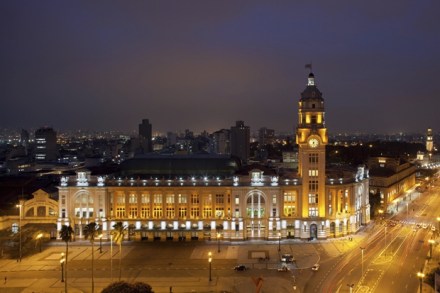
São Paulo has a concert hall that London’s orchestras would kill for. It was originally a railway station, a mighty space bounded by Corinthian pilasters in the style of a French palace, built by Brazilian coffee barons. Now the tracks are buried beneath 800 seats on the main floor, plus another 700 on the balconies and mid-air boxes facing the stage. But it’s the ceiling that produces gasps, or, in the case of a children’s concert I attended, earsplitting squeals of wonder. You’d think Superman had arrived. You see, the ceiling is made up of 15 huge, lavishly decorated panels that match the walnut floor. And they move! Up and down, independently, like monster elevators. Which, given that they weigh 7.5 tons each, is disconcerting.

Barry Humphries: in praise of Australian art

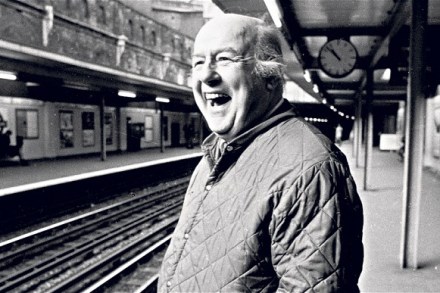
In my career as a music hall artiste I travel the world, mostly in the Dominions, the United States and the cleaner countries of Europe. Aside from giving incalculable pleasure to thousands of people, I love, on my days off, to visit picture galleries: usually the porticoed kind, in search of those overlooked little masterpieces that lurk, not seldom, in provincial museums. Today, most art galleries have a shop selling postcards of paintings from other museums, Magritte oven mitts and Piero della Francesca fridge magnets. They sell books as well, sometimes useless coffee table tomes like Art Deco Cufflinks Down the Centuries and London Transport Textiles and Their Creators.

Second city blues

Why are clever-clever people so rude about Birmingham? Bruce Chatwin dismissed his hometown as absolutely hideous, Kenneth Tynan called his birthplace a cemetery without walls. Britain’s second city has always been belittled, not least by those who’ve left it, and now the old slights have been revived in the current debate about HS2. Never mind the pros and cons of that controversial high-speed railway — it’s the destination which really gets London’s goat. If HS2 went to Liverpool we’d be sure to mind our p’s and q’s, but Brum has always been an easy target. As Londoners never tire of telling one another, ‘Fancy forking out all that cash, just to make it a bit easier to get to Birmingham.

Tell me a story! Anne Fine, Amanda Mitichison, Terence Blacker and Keith Crossley-Holland on the joy – and importance – of reading aloud

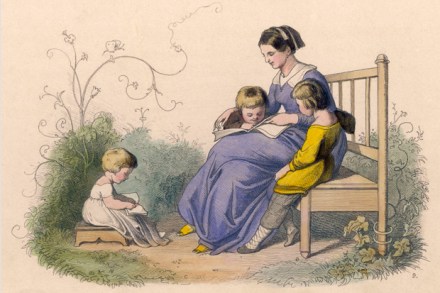
A dark afternoon in December, aged about ten, I was in a class waiting for double geography. Mr Blake breezed in, told us to put our books away and, as a treat, he read us a story. It was ‘Oh, Whistle, and I’ll Come to You, My Lad’, the famous ghost story by M.R. James. Heads resting on our arms, we listened to this chilling tale of a scholar who takes a winter holiday at an English seaside town, finds a whistle buried in the sand engraved with the inscription of the story’s title, and makes the mistake of blowing it. An evil thing is summoned — a flapping, sheet-like, blind thing with a ‘horrible, an intensely horrible, face of crumpled linen’. Once heard, never forgotten.

The next Joyce Grenfell at the Edinburgh Fringe

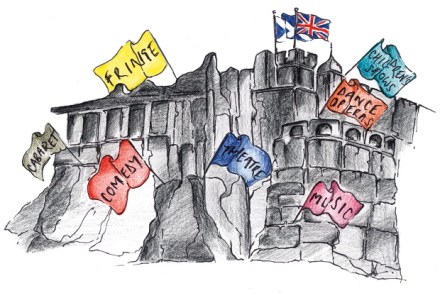
Strict bylaws in Edinburgh prevent you from buying off-licence booze after ten at night. You can, however, buy all the sauce you want from ten in the morning. (This may explain why alcoholism is so rare up here.) When midnight tolls, Festival revellers pour forth and fill the air with chanting and singing of variable aesthetic quality, and the only way to get any peace is to lapse into a Valium coma. By day I venture forth with sleepy eyes in search of great art. Lee Kern: Bitter Twitter (Gilded Balloon) wants to unmask the superficial malignity of Twitter. His tactic is to tweet silly questions to silly celebs and to recite their silly replies on stage in an angry voice. This doesn’t take us very far.

Highlights of the Edinburgh Art Festival

Few come to Edinburgh in August for the art but this year they should. The line-up for the official Art Festival is impressive and, happily, rich in painters. Foremost among them is Peter Doig, whose semi-retrospective No Foreign Lands is the main event at the Scottish National Gallery (until 3 November). Doig was born in Edinburgh in 1959 and is being claimed as ‘one of us’. That he left the country as a baby should not stand in the way here; we need painters like this. For too long now, perceptions of art in Scotland have been skewed by the consistent success of Glasgow artists in the Turner Prize. As Doig himself has said, the influential art prize should not be the Turner but the John Moores, the annual award for painting that Doig won in 1993.

How Manet was influenced by the artists of the Renaissance

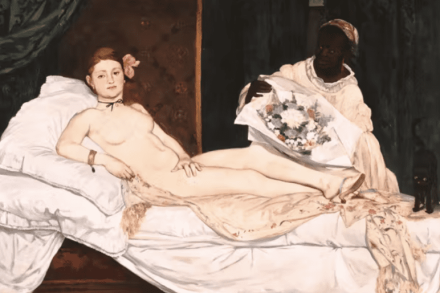
Manet’s paintings were regularly rejected by the Salon, yet he continued to submit them and declined to exhibit with the Impressionists, who regarded him as a father figure. Even when his works were accepted by the Salon, they were routinely received with outrage among both critics and the public. This response baffled him. When his ‘Olympia’ was shown at the Salon in 1865, along with his ‘Jesus Mocked by the Soldiers’, Edouard Manet wrote to Baudelaire in exile in Brussels: ‘I wish I could have your sound judgment on my pictures, because all this uproar is upsetting, and obviously someone must be wrong.’ And to Antonin Proust he said: ‘Only a fool could think I’m out to create a sensation.

Interview: David Haig on King Lear and The Wright Way

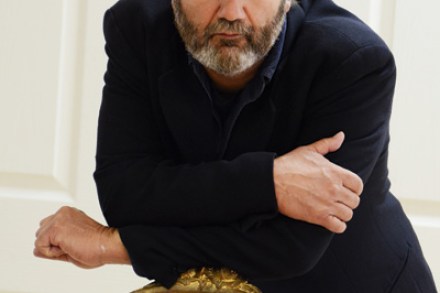
David Haig is one of those actors who can’t escape the visual identity of his characters. He’s the sad suburban salaryman. He’s the pasty-faced petty bureaucrat. He’s the bungling office curmudgeon with a volcanic temper. He just looks that way. Except that he doesn’t. I barely recognise the suntanned Bohemian figure who strolls up and shakes me by the hand. With his summery shirt and his trim grey beard he looks like a rakish Cretan sailor ready to pour himself a double ouzo and start reminiscing about the mermaids. He’s rehearsing Lear, at the Theatre Royal Bath, when we meet. ‘It’s an addiction,’ he says. ‘Any actor, past a certain age, wants to do it.

When a smartphone gallery is better than the real thing

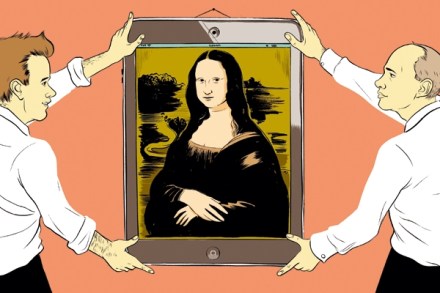
The best way to view some of the world’s greatest works of art is to go nowhere near them. Like other celebrities, the most famous paintings are hard to get close to and there are few less spiritual experiences than being cattle-prodded as part of a crowd through an overpacked exhibition. You may visit in the hope of communing with legendary art but, as often as not, gallery-going is anti-contemplative. While there is no way of replicating the experience of standing in front of a masterpiece, technology can at least allow you your personal space. Take Google Art Project, for example, a collaboration between the omnivorous internet search company and 151 museums, galleries and collections in 40 different countries.

Wanted: a producer for Peter Nichols’s four new plays

Gosh. I wouldn’t mind being Peter Nichols. Eighty-six this month and still enjoying the easy domesticity and professional stimulation he’s benefited from since the 1960s when he was propelled to stardom by his play about raising a disabled daughter, A Day in the Death of Joe Egg. He lives in a penthouse flat in north Oxford on the verge of cow-dappled meadows, tufty footpaths and a low grey canal full of quacky coots and ducklings. He’s fit, sharp-witted and fun to be around. (After our interview he and his wife called a cab and went off to Corpus Christi to knock back champagne at a summer party.) He dismisses his age with a paragraph of jokey self-evaluation.

Don’t believe the spin, this arts cut is a disaster

Department for Culture, Media and Sport (DCMS) spending review rounds always work like this: officials choose three figures of increasing severity and ask those they fund to model what would happen should their funding be cut by the corresponding amounts. The organisations duly devote considerable resources to trying to work out what they could cut or stop doing entirely, worrying staff and donors and driving speculation in the press. Then the culture secretary of the day proudly announces that he or she has fought culture’s corner and we all now only have to cut by the lower figure. Cue grateful thanks in public, and private pain as the agreed changes are made. This is no doubt the same across Whitehall, but in culture and the arts it seems a particularly merry dance.

Anna Chancellor: I vetoed a kiss with Dominic Cooper

We meet in the late afternoon at a jazzy little bistro near the Old Vic. I hadn’t quite prepared myself for the sheer visual impact of Anna Chancellor. Imposingly tall and wearing a simple glamorous frock, she rises to greet me. The dispositions of her face — the dimpled chin, the high cheekbones and the smoky blue eyes — combine in an extraordinary synthesis of softness, elegance and power. It’s like looking at a beautifully designed weapon. She’s playing Amanda alongside Toby Stephens, as Elyot, in Jonathan Kent’s production of Private Lives at the Gielgud. The show originated in Chichester last autumn. ‘I’m thrilled it’s going into town.

At last! The snobbish Tate has finally overcome its distaste for L.S. Lowry

One day in Berlin, I saw the rerun of the RA’s Young British Artists exhibition at the Hamburger Bahnhof, Berlin’s equivalent of Tate Modern. After that, I saw a superb retrospective of Lyonel Feininger at the Neue Deutsche Galerie. In the evening, I ran into the onlie begetter of the YBA show (which, with the exception of Ron Mueck’s amazing sculptures, had not given me much pleasure), my (unrelated) namesake Norman. I had no wish to discuss Norman’s pride and joy, the YBA, so turned the conversation to Feininger and asked whether Norman had seen it. ‘Ah,’ said Norman, ‘what a bore; I won’t waste my time on him.

Royal bling with the Tudors at the Queen’s Gallery and the V&A

As soon as the battle of Bosworth was won, Henry VII’s politically astute mother sent him appropriate clothing for his state entry into London. A king was expected to look like a king, having ‘a prerogative is his array above all others’. Sumptuary laws policed the system under the Tudors, with everyone — in theory — wearing only as much glitter and flash as their rank permitted. You really were what you wore. The Great Wardrobe Accounts of Henry VII and Henry VIII offer numerous unexpected insights into contemporary events. One sinister detail I spotted during my research on the period is a warrant issued in November 1498 for black damask to be made into doublet for the pretender Perkin Warbeck, then a prisoner in the Tower.

Venice Biennale: from unusual sexual obsessions to a primary school Open Day

William Empson believed that ‘the arts are produced by overcrowding’. But, as 20,000 invited guests and 4,500 accredited journalists surged through the pavilions of the Giardini and Arsenale on the 55th Venice Biennale’s preview days last week, it was more a case of overcrowding being produced by the arts. Over the past 20 years the Biennale has inexorably expanded with every edition. In 1993, 53 countries were represented. This year there are 88, with Angola, the Bahamas, Bahrain, the Ivory Coast, Kosovo, Kuwait, the Maldives, Paraguay, Tuvalu and the Vatican officially appearing for the first time. There are nearly 50 official collateral events and scores of other exhibitions around town.

‘Basically, we’re stuffed’

You might expect a chief executive of English Heritage to look quite English, and Simon Thurley certainly does. He has the pale eyes, and fine bones, of the English upper classes. He has the clipped vowels of the English upper classes, too. In his nice pink shirt, in his nice white office, in a nice big Victorian building near Chancery Lane, he has the air of a man who lives a nice, quiet, clean, ordered life. He also has a very big job. He looks after, or at least the organisation he runs looks after, more than 400 historical sites. He advises the government on ‘England’s historic environment’, which must mean he has to give an awful lot of advice. And he writes books.

Meet Fraser Neill, the Scots folk musician behind Eurovision’s Emmelie de Forest

To be a folk music fan in Britain today is to be jangling the keys to a cultural palace. For a variety of reasons, we seem to have produced the most brilliant young musicians in decades — but the rest of the world has always seemed rather more excited about the fact than we are. We have started to export musicians, from Spain to Novia Scotia, who go on to musical achievements that are seldom recognised, let alone celebrated, back home. Of the ten million Brits who tuned into the Eurovision song contest, not many would have guessed that the Danish winner was yet another young protégée of a British folk musician. Until a few months ago Emmelié Charlotte-Victoria de Forest was as unknown to Denmark as she was to the rest of the continent.

Painting begins at 90 – celebration of Jeffrey Camp, Anthony Eyton and Patrick George

The year 1923 was a good one for British artists, witnessing the birth of three painters who became friends and whose work epitomises a rich strand of realism in the native tradition. Jeffery Camp was born at Oulton Broad in Suffolk, and studied at Lowestoft and Ipswich Art Schools before going to Edinburgh College of Art in 1941. Anthony Eyton was born in Teddington, Middlesex, and attended the Department of Fine Art at the University of Reading for a term, studying under Professor Anthony Betts. He served five years in the army before continuing his education at Camberwell School of Arts and Crafts (1947–51). Patrick George was born in Manchester, studied at Edinburgh College of Art for a year (1941–2), where he met Camp, and then went into the navy.

Comic-book writer Mark Millar interviewed

In purely demographic terms, Mark Millar isn’t too different from the rest of us. He’s a middle-aged, wiry-haired, churchgoing Scot with two kids. He subscribes to The Spectator, and enjoys his ‘weekly treat’ of reading the latest issue in the bath. So, unless you have excavated this copy from the yellowing stack in your dentist’s surgery, he could even be scanning these words at the same time as you — right now. But demographics, often inadequate, are practically useless when it comes to Millar. He may tick the box marked ‘Spectator reader’, but he actually spends most of his time on bizarro worlds in distant corners of the multiverse. He’s surrounded by assassins dipped in blood and sadists wrapped in capes.

Artists Open Houses: Brighton’s alternative to gallery going

I’m standing in a palatial flat in one of the most beautiful squares in Brighton, in a huge whitewashed room flooded with natural light. The lucky man who lives here, Ted Davis, is showing me around. His home isn’t usually open to the public, but this month anyone can wander in. Ted is a photographer — rather a good one, in fact. His perceptive portraits adorn these walls, alongside his still lifes of wilting flowers,  and for the next four weekends his splendid apartment in Palmeira Square will become a temporary exhibition space. It’s part of an annual festival here in Brighton called Artists Open Houses, in which hundreds of local artists like Ted transform their homes into pop-up galleries. ‘It’s like hosting a party,’ he tells me.