Arts feature

Declaration of independence

Taking a break doesn’t come naturally to Michael Grandage. His decade-long run as artistic director of the Donmar Warehouse came to an end less than a year ago, but his latest big adventure is already set to begin. ‘The idea that I’d leave the Donmar and cruise for a bit would have been such a waste,’ he tells me, between mouthfuls of soup and crusty bread. Not even lunchtime can stop him. He is chatting to me during a break in rehearsals for Privates on Parade, the first show in a debut West End season for his new venture, the Michael Grandage Company. Four more productions will follow, all at the Noël Coward Theatre, and Grandage will direct each one. Did he not fancy a long holiday after finishing at the Donmar?

Lonely Lakelander

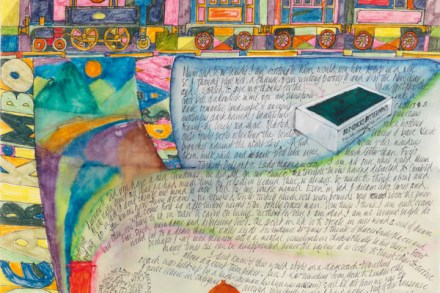
Five years ago I had never heard of Percy Kelly (1918–93). I knew the work of some Cumbria artists, and much admired the dark and moody landscapes of Sheila Fell (1931–79), for instance, but Percy Kelly had not then registered on my radar. He was already highly regarded in the Lake District, but it was not until after his death that his work was really exhibited and promoted. He was one of those artists who believe in their own value, and want others to share their high opinion, but are not prepared to sell their work to achieve this. Time and again Kelly was offered exhibitions and sabotaged them, while potential buyers were frustrated in their attempts to purchase the paintings and drawings they admired.

Everything goes

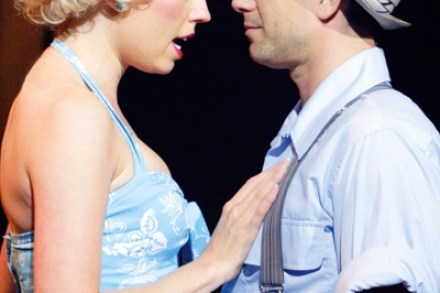
When I first began rehearsing a musical, I discovered to my genuine surprise that I was breaking an unwritten rule...that directors of serious ‘legitimate’ theatre should not dirty their hands by contact with such a lower form of entertainment! Since that time, it’s become almost impossible to name a leading play director who has not been successful and influential with musicals. It’s just possible that, back in 1986, our Royal Shakespeare Company show Les Misérables, which survived a universal critical drubbing in this country, was a vital step forward in proving that a musical could actually be about something — poverty, injustice, revolution, religious fundamentalism, that sort of thing.

Global power

Go back 90 years to the first radio broadcast by the newly formed BBC and you might think you’ve entered a time warp. The company (it became a corporation later) was obsessed about a government inquiry and accusations that it was elitist and biased towards London. How could it survive without the licence fee? How do you keep those troublesome regional stations happy? How do you stop your unruly artistes (as they were then so politely called) from landing you in the muck? Not much has changed in 2012. The BBC has always been at the mercy of the licence fee, set initially by the government at ten shillings (equivalent now to about £13).

Spanish encounter

Renaissance to Goya: Prints and Drawings from Spain opens well with a superb drawing by Zurbarán, ‘Head of a Monk’, and a Goya lithograph, ‘The Bulls of Bordeaux’. After that, turn left into the main print room and the disappointment starts. Have you ever wondered why we are not familiar with more Spanish artists than the few great names? On the evidence of this exhibition the answer is clear. The lesser names are simply not very good, so it is a relief to find the Italian Federico Zuccaro, a working visitor to Spain, among the likes of Vicente Carducho and Miguel Barrosso. However important a historical survey, this show only intermittently comes alive.

Addicted to Chekhov

One departs and three more come charging in. It’s always rush-hour for Chekhov in the capital. As the Young Vic’s production of Three Sisters is drawing to a close, the Vaudeville is preparing to host a star-studded version of Uncle Vanya. Up the road, at the Novello, another Uncle Vanya is about to arrive from Moscow. And rehearsals are already under way for The Seagull, starring Matthew Kelly, at Southwark Playhouse. For years, we’ve been recreational users of Chekhov. We’re now in danger of becoming hopeless addicts. How come we’re hooked? Chekhov’s career as a dramatist was short and full of trouble. Early plays flopped.

Green fingers

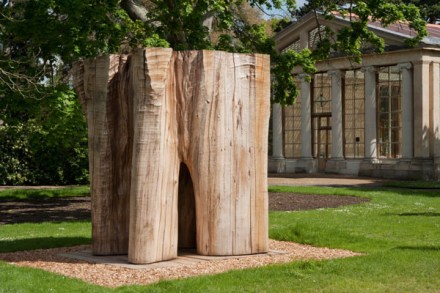
The last time I visited Kew was to see the installation of Henry Moore’s sculptures in 2007. Moore’s monumental bronzes made an enormous impact on the botanical gardens, so much so that the gardens were in danger of becoming merely a backdrop for the sculpture. Although a good many people came to see the exhibition, it was felt by the authorities at Kew that the crowds took away a greater appreciation of Henry Moore than they did of the Royal Botanical Gardens. So, when another sculptor was invited to show at Kew, the intention was that he or she would be involved more closely with the aims of the institution. Who better than David Nash (born 1945), known worldwide for his work with trees?

Back to the future | 11 October 2012

Two pop-up art fairs border Regent’s Park in London. To the south is Frieze London, an edgy fair-cum-fairground offering the thrills and spills of the latest and most innovative trends in global contemporary art. Launched a decade ago, it was unique among ambitious international art fairs in proving an instant and overwhelming success. Last year some 68,000 visitors walked through its doors. This year sees the launch of Frieze Masters, sited at the northern end of The Broad Walk, also running 11–14 October. Frieze Masters sets out to offer a fresh perspective on historical art — paintings, works on paper and sculpture — by highlighting the eternal dialogue between the old — at times extremely old — and the new.

The bigger picture

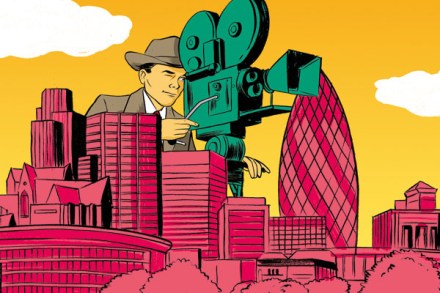
What used to be called the National Film Theatre, now BFI Southbank, is a weird sort of place. On the outside it is unprepossessing to the point of ugliness: a concrete mass sitting beneath the southern end of Waterloo Bridge, squat against the Thames, where it sulks away from the sunlight and overhead traffic. Whereas, on the inside, it offers a pretty jumble of conveniences for its clientele: a grand upholstered auditorium; a scattering of more utilitarian screens; a digital library of film called the ‘Mediatheque’; and a glassy bar and shop. The effect is rather like those ‘Ascent of Man’ diagrams that show the evolutionary links between monkeys and us, except in this case it’s for the movie theatre business.

Beguiled by bronze

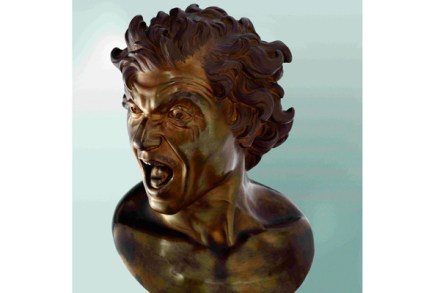
There are nearly 160 bronze sculptures ranged throughout the Royal Academy’s main galleries in Bronze, a glorious exhibition (until 9 December) covering a period of 5,000 years — effectively the entire history of the medium. The progression of this durable and universal art form is laid out at a relaxed pace in an exhibition that spans both grandeur and intimacy. Some people have complained about the installation, finding it difficult to follow or too competitively arranged, but I enjoyed it tremendously. This is a remarkable survey of a fascinating subject and the Academy must be congratulated on entrusting it to the capable hands of David Ekserdjian, Professor of History of Art and Film at the University of Leicester.

Fright night

Here comes Jane Asher. She swings through the doors of a small Chelsea hotel, chucks her bag on the floor, and sits down with an expectant look. Her voluminous red hair has attractive hints of something blonder on top. Her eyes are pale blue, and extraordinarily intense, and she has a fulsome rack of plump white teeth that hint at large appetites. But her figure is as trim as a teenager’s. We meet a few weeks before she begins rehearsing Charley’s Aunt, the classic Victorian farce in which she plays a Brazilian dowager, Donna Lucia d’Alvadorez. Does she think it’ll be more fun because the script is a bundle of laughs? ‘No, there are always those technical things that are just as tricky to do. And if it’s not funny, it’d be a disaster.

Connecting threads

The past few months have been busy for Jock McFadyen. Substantial commercial shows of his work have been held in London and Edinburgh, he has been elected a member of the Royal Academy, and a retrospective of four decades of his painting is currently on view at the Fleming Collection in Berkeley Street, Mayfair (until 17 October). Although Scottish by birth (he was born in 1950 in Paisley and brought up on the outskirts of Glasgow), he has lived most of his life in London. All the men in his family worked in the shipyards, but his father took a job in England when McFadyen was 16, so he came south in 1966 and stayed on to become an artist. He made his name in the 1980s with a brand of tough Hogarthian realism that focused on East London low-life.

The accidental director

She’s certainly a class act. But how did she manage it? Nina Raine, the 36-year-old writer-director, has established a formidable position in the British theatre. Her first play, Rabbit, opened at a pub venue in Islington in 2007. It transferred to New York and has since been performed all over the world. Last year she directed April de Angelis’s family comedy Jumpy at the Royal Court and the show has just transferred to the Duke of York’s in the West End. Yet, the way Raine tells it, her career has been nothing but a series of blunders and accidents. She left Oxford with an English degree and a few drama productions under her belt. ‘I thought about being an academic. For about five minutes. Both my parents are academics.

Downton for adults

For five weeks from 24 August BBC2 is doing a brave thing: serialising Parade’s End, Ford Madox Ford’s quartet of first world war novels. Arguably the first great modernist English novel and, according to Graham Greene, the greatest novel in English to come out of that war, this £12-million project is a brave thing to do for three reasons: it is the world of Downton but not Downton. It is not what we expect of war novels. And it was written by Ford Madox Ford. Ford Madox who? is the response that anyone writing about Ford has come to expect. He’s often confused with the Pre-Raphaelite painter Ford Madox Brown, his maternal grandfather, or even with Henry (no relation).

Double vision | 18 August 2012

If you were to condense everything that was most quintessentially English about quintessential Englishness — from the green man and morris dancing to Vaughan Williams and The Whitsun Weddings — feed it into a liquidiser, have it remixed by an electronica DJ, and then transformed into the soundtrack of some trendy arthouse film premièred at a festival in Brighton, what you might end up with is something like the work of Grasscut. I hope that doesn’t sound offputting. It’s quite possible that I’ve completely misrepresented them. For a more accurate assessment, I did try asking one of their two members Marcus O’Dair — who spends his spare time as a music journalist.

Eastern promise | 11 August 2012

The Olympic Legacy List has less to do with the Olympics than its name suggests. True, it is responsible for the long-term cultural programme in the 618-acre Olympic Park but, as one insider put it, the real work begins when the circus leaves town. The word on every Olympic panjandrum’s or British politician’s lips is legacy. There’s a lot that’s disingenuous about this. If regenerating the East End were all that mattered, a direct investment of £9 billion into infrastructure would have done very nicely, thank you. Still, just because the money could have gone further if it had been invested differently doesn’t mean that we have to gnash our teeth too much.

Northern lights | 4 August 2012

No one knows quite why we go. It’s not for the whisky (which is like drinking liquefied peppercorns), or for the shortbread (like eating undercooked biscuit-mix), or for the weather (like walking through a car-wash). Nor does the moaning falsetto of the bagpipes draw us north. But every year, without fail, the London media colony sets off for the Scottish capital to watch a gang of wackos and wannabes (mostly from the London media colony) making a bid for fame and glory. This is my tenth visit and here are my tips for maximising the fun. Big question first. How to avoid being engulfed in an avalanche of pretentious tripe put on by waffling preeners and self-adoring garbage-smiths? That’s easy. Don’t see anything at the International Festival (9 August to 2 September).

This troubled throne of kings

The jewel in the crown of Sir Michael Boyd’s decade as director of the Royal Shakespeare Company was his 2007–8 staging of the major Shakespeare Histories from Richard II, through Henry IV, V and VI, to Richard III. For a short, alas too short, period, the entire sequence of eight plays could be seen over a few days at Stratford. Fortunate indeed were those who were there, and I count it one of my greatest theatrical experiences. Boyd’s Histories would have enthralled only the tiniest fraction of the population. But with television it’s a different story. BBC2’s four Histories films, packaged as The Hollow Crown and broadcast on consecutive Saturday evenings, stand to have a far greater impact.

Gloom and doom

A young American documentary film-maker recently said to me, ‘Do you want to know why no British documentary film-maker would ever make a film about something like the Diamond Jubilee celebrations? There was no blood! No violence! No crack babies! No tears! People were happy, and one thing British documentary film-makers hate is happy people and happy endings. If you want to get a doc made and shown in Britain, you gotta go for gloom and doom.’ Of course my American friend was exaggerating — but by how much? Think British documentary and what comes to mind? For me it’s Pete Postlethwaite wagging a finger and making apocalyptic warnings of ecological disaster in The Age of Stupid.

A life less ordinary

‘I know it sounds arrogant but I think it’s undeniable that it has become fixed in the culture like a stately home,’ says Mark Haddon of his book The Curious Incident of the Dog in the Night-Time.   Arrogant or not, he is probably right. Haddon’s novel about an autistic boy’s attempt to solve the mystery of who killed his neighbour’s dog has sold more than two and a half million copies since its publication in 2003 and seems to have been read by everyone. As we chat in the basement of the Ashmolean Museum in his hometown of Oxford, Haddon doesn’t come across as an egomaniac. When he discusses Curious Incident he’s more like a proud parent marvelling at his child’s success.