Roderick Conway-Morris

The Venice Accademia

From our UK edition

The Accademia is one of the smallest of the world’s great art galleries, and picture for picture perhaps the most concentrated collection of masterpieces anywhere — though its rambling layout may surprise first-time visitors. But there are changes afoot as it expands into spaces once occupied by the Venice Fine Arts Academy. This means more works on permanent display and larger special exhibitions. In the days of the Venetian Republic, the city saw no reason to have a public picture gallery. Paintings were everywhere: in the Doge’s Palace, administrative buildings, churches, chapels, monasteries, convents, hospitals, orphanages, confraternity houses and in hundreds of private palazzi.
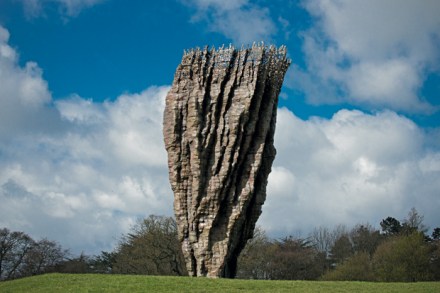
A wooden UFO lands in Yorkshire Sculpture Park

From our UK edition

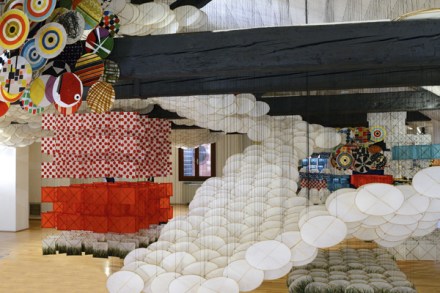
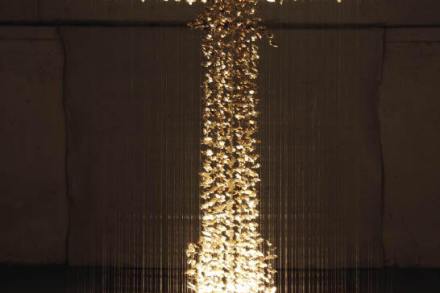
The New York-based sculptor Ursula von Rydingsvard comes from a long line of Polish and Ukrainian peasant farmers. She was born in Germany in 1942 on a forced labour farm to which her parents had been transported by the Nazis. Her early memories are of a wooden world — of huts, fences, domestic utensils and tools — on the farm and in postwar refugee camps.

How Richard Wilson made Wales beautiful

From our UK edition

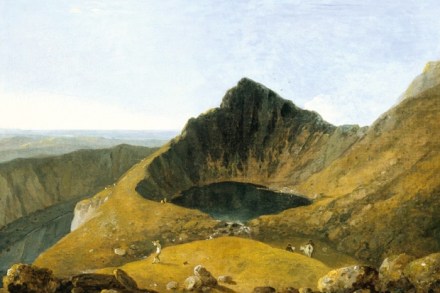
‘I recollect nothing so much as a solemn — bright — warm — fresh landscape by Wilson, which swims in my brain like a delicious dream,’ wrote Constable of his encounter with the Welsh artist’s ‘Tabley House, Cheshire’ after he visited the gallery of that house owned by Sir John Leicester. Recalling this epiphany, Constable went on to say of Richard Wilson: ‘He was one of the great appointments to shew to the world what exists in nature but which was not known till his time.

Alexander Pope, inventor of celebrity

From our UK edition

‘The Picture of the Prime Minister hangs above the Chimney of his own Closet, but I have seen that of Mr Pope in twenty Noblemen’s Houses,’ wrote Voltaire in 1733. Alexander Pope’s start in life was not promising. A crippled hunchback, suffering chronic ill-health, he was, as a Catholic, excluded from Court, allowed to live no closer to Westminster than Chiswick. His ‘Rape of the Lock’, a mock epic satirically inflating a ludicrously minor incident in polite society, became the first bestseller after the 1710 Copyright Act, but brought him a mere £22.15s. Yet the poet who, according to Samuel Johnson, ‘never drank tea without a stratagem’, knew how to exploit his work’s succès de scandale.

Modernism’s dreams – and nightmares – at the Venice Architectural Biennale

From our UK edition

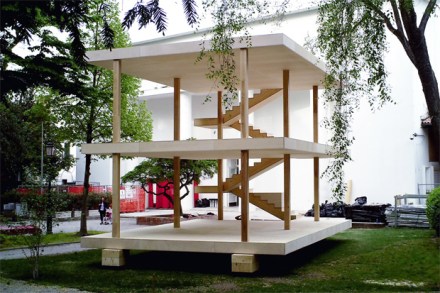
An eccentric English aristocrat who constructed a 20-mile network of underground corridors to avoid coming into contact with his fellow humans on his country estate; a Japanese dentist who has amassed an enormous collection of decorative details from buildings spanning a century, retrieved from Tokyo demolition sites; the German inventor of ‘Scalology’, who has spent 60 years studying staircases; and Inuit soapstone carvings of a Cold War early-warning station and of an airport terminal are among the surprises offered by the 14th Venice International Architecture Biennale. The Dutch architect Rem Koolhaas is this year’s artistic director.

The tubular joys of Fernand Léger

From our UK edition

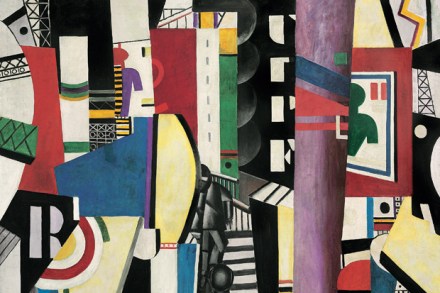
In 1914 Fernand Léger gave a lecture about modern art. By then recognised as a leading Cubist artist, he had the year before signed up with the dealer Daniel-Henry Kahnweiler, who already represented Picasso and Braque. ‘If pictorial expression has changed, it is because modern life has necessitated it,’ Léger argued. ‘The existence of modern creative people is much more intense and more complex than that of people in earlier centuries...The view through the window of the railway carriage or the motorcar windshield, combined with the speed, has altered the customary look of things. A modern man registers a hundred times more sensory impressions than an 18th-century artist.

What Emperor Augustus left us

From our UK edition

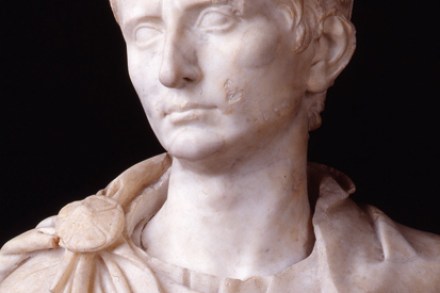
The symbol engraved on Augustus’ signet ring was a sphinx. Julian the Apostate described him as ‘a chameleon’. He seized power declaring himself the saviour of the Roman Republic, but in the process abolished it. He ruled as an autocrat but maintained the fiction that he was no more than the Republic’s First Citizen — and left as his legacy a new system of imperial government that was to continue for another 400 years in the West and until 1453 in Constantinople in the East. This year marks the 2,000th anniversary of Augustus’ death in 14 AD, on the 19th of the month by then named in his honour.

Turner’s seafaring ways — and his blazingly competitive art

From our UK edition

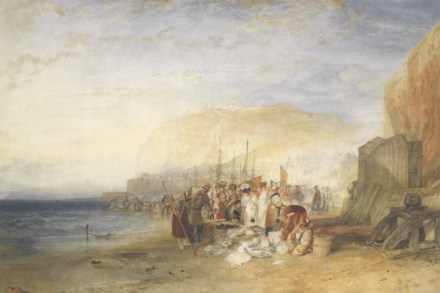
Turner’s contemporaries regarded him primarily as a marine painter. This perception extended to his persona, with many who met him commenting on his nautical gait, manner of speaking and other salty characteristics. He frequented ports and coastal parts, relished sailing in storms, was immune to seasickness and famously had himself lashed to the mast to experience the full force of the gale before painting one of his most controversially ‘indistinct’ canvases ‘Snow Storm’.

How Manet was influenced by the artists of the Renaissance

From our UK edition

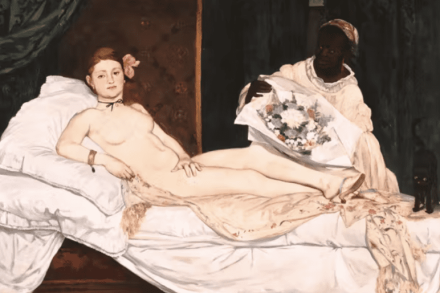
Manet’s paintings were regularly rejected by the Salon, yet he continued to submit them and declined to exhibit with the Impressionists, who regarded him as a father figure. Even when his works were accepted by the Salon, they were routinely received with outrage among both critics and the public. This response baffled him. When his ‘Olympia’ was shown at the Salon in 1865, along with his ‘Jesus Mocked by the Soldiers’, Edouard Manet wrote to Baudelaire in exile in Brussels: ‘I wish I could have your sound judgment on my pictures, because all this uproar is upsetting, and obviously someone must be wrong.’ And to Antonin Proust he said: ‘Only a fool could think I’m out to create a sensation.

Venice Biennale: from unusual sexual obsessions to a primary school Open Day

From our UK edition

William Empson believed that ‘the arts are produced by overcrowding’. But, as 20,000 invited guests and 4,500 accredited journalists surged through the pavilions of the Giardini and Arsenale on the 55th Venice Biennale’s preview days last week, it was more a case of overcrowding being produced by the arts. Over the past 20 years the Biennale has inexorably expanded with every edition. In 1993, 53 countries were represented. This year there are 88, with Angola, the Bahamas, Bahrain, the Ivory Coast, Kosovo, Kuwait, the Maldives, Paraguay, Tuvalu and the Vatican officially appearing for the first time. There are nearly 50 official collateral events and scores of other exhibitions around town.

Changing tack

From our UK edition

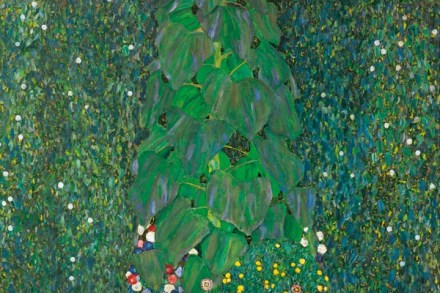
Gustav Klimt first came to Venice in the spring of 1899, in pursuit of Alma Schindler, the young stepdaughter of his friend and fellow artist Carl Moll. The nascent love affair between the artist, who was then in his late thirties, and the 19-year-old Alma was brought to an abrupt end when the girl’s mother read her diary and Klimt was asked to leave. Three years later she married Mahler. But before Klimt departed from Venice, Klimt and Alma had visited San Marco where, as Alma recorded, the Basilica’s mosaics, glittering in the half-light, made a profound impression on him.

Trading places

From our UK edition

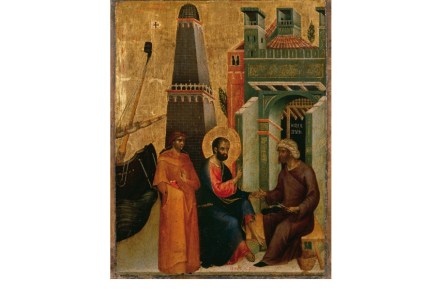
Venice and Alexandria were, as far as the Venetians were concerned, twin cities. According to legend, St Mark had visited Venice before going to Alexandria, where he preached, performed miracles and was martyred. When two Venetian merchants stole the saint’s remains from Alexandria in 828, they were merely fulfilling the prophecy of the Angel that had appeared to Mark in the lagoon and, addressing him with the ringing words ‘Pax tibi Marce, Evangelista meus’, had predicted that a great city would arise upon these waters, which was to be his last resting place. The origins of the mythical links between Venice and Alexandria were as much mercantile as mystical.

Power of invention

From our UK edition

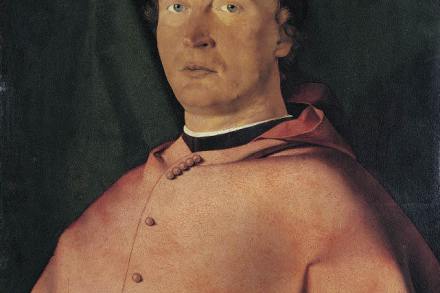
Lorenzo Lotto’s portraits alone should have secured him a place in history as a major Renaissance painter. Lorenzo Lotto’s portraits alone should have secured him a place in history as a major Renaissance painter. Yet, ironically, while his works continued to be admired, his name was all but forgotten. This paradoxical state of affairs came about because Lotto suffered from a steady series of posthumous misattributions, his works being assigned to the most bafflingly diverse range of other artists from Giorgione, Pordenone, Titian, Tintoretto, Dosso Dossi and Veronese to Perugino, Leonardo, Andrea del Sarto, Holbein, even Van Dyck, and an obscure 17th-century German Baroque artist Johann Carl Loth, known in Italy as Carlotto.

Fruit of the vine

From our UK edition

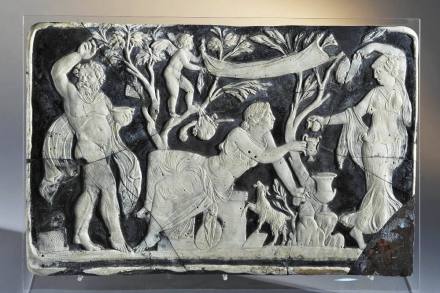
According to Athenaeus of Naucratis, the 2nd-century AD author of The Sophists’ Banquet, the ancient Sybarites kept the capital of their city-state in southern Italy supplied with wine through a network of ‘vinoducts’ that reached far out into the surrounding countryside. According to Athenaeus of Naucratis, the 2nd-century AD author of The Sophists’ Banquet, the ancient Sybarites kept the capital of their city-state in southern Italy supplied with wine through a network of ‘vinoducts’ that reached far out into the surrounding countryside.

Smoke and mirrors

From our UK edition

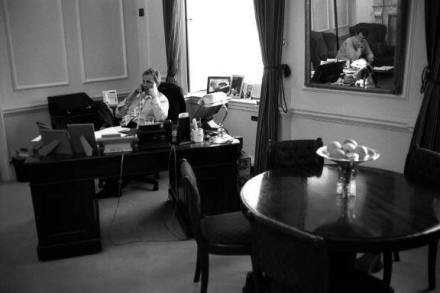
The Prince, according to Machiavelli, ‘should appear, to see him, to hear him, all compassion, all good faith, all integrity, all piety’ — which might be translated into Basic Blairish as ‘should appear a pretty straight kind of guy’ — but, as the Florentine Father of Spin emphasised, it was a great deal more important to seem to have, rather than actually to have, these qualities.

Sculpture: Earth to earth

From our UK edition

The park was founded nearly 25 years ago by a trio of friends from Borgo Valsugana, a small town near Trento in the Italian Alps: Carlotta Strobele, a philosophy graduate whose Viennese family’s connections with the area go back to when the region formed part of the Austro–Hungarian Empire; Emanuele Montibeller, a former market trader in fabrics and a local councillor; and Enrico Ferrari, an architect — all of whom shared a passion for contemporary art. It now covers a wide area in Val di Sella, a secluded valley of forest, glades and rolling meadows, high above Borgo, at the end of a narrow road that zigzags its way up precipitous and densely wooded slopes, beneath a chain of peaks over 6,000-feet high.

Seaside renaissance

From our UK edition

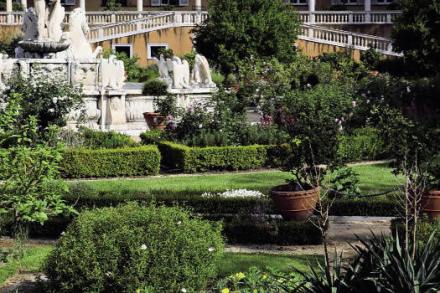
Roderick Conway Morris on how Genoa’s glorious Villa del Principe has been brought back to life Palazzo Doria Pamphilj houses the most important private art collection in Rome. But the family possesses another treasure, the Villa del Principe in Genoa. The Doria side of the family moved to Rome in 1760, when they inherited the Pamphilj titles and estates, after which the Villa del Principe suffered a slow decline, punctuated by two major disasters. But after 16 years of work it has now been restored and reopened to the public.

Caravaggio the confessor

From our UK edition

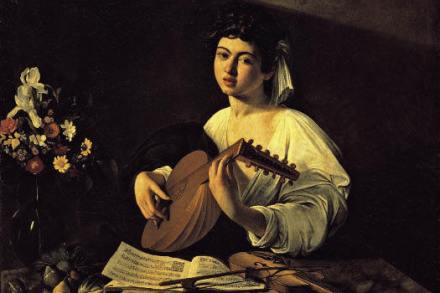
Caravaggio’s paintings were inextricably bound up with his life and provide a virtual narrative of his turbulent development, a story fraught with ambiguities and alternative readings. Caravaggio’s paintings were inextricably bound up with his life and provide a virtual narrative of his turbulent development, a story fraught with ambiguities and alternative readings. This almost confessional aspect of his works, along with the immediacy and extraordinary power of their emotional impact, have surely contributed to his current popularity. His documented career spanned only about 15 years, ending with his lonely death on the seacoast at Porto Ercole on 18 July 1610.

Working with Veronese

From our UK edition

Roderick Conway Morris talks to Peter Greenaway about creating a ‘painting with a soundtrack’ Peter Greenaway is standing against the backdrop of Paolo Veronese’s enormous ‘The Wedding at Cana’ in the Palladian refectory of the Venetian monastery of San Giorgio Maggiore and is in rhetorical mode: ‘When we put art and cinema in the balance, what do we have? At least 8,000 years of painting and a miserable 114 years or so of cinema. Nothing in cinema has not already been essayed in still images in painting at one time or another. So I think it a very good idea to have a dialogue between painting and cinema.

Dispatch from Venice

From our UK edition

Roderick Conway Morris on how the city is trying new ways to overcome its economic crisis When the Venice Biennale was founded in 1895 it was in many ways a response to the crisis facing the city. No longer an independent republic and marginalised in the newly re-unified Kingdom of Italy, Venice was seeking ways to re-invent itself, attract new types of visitors and boost the local economy. Most of the great exhibitions during that period were one-offs but the forward-looking poet, playwright and mayor of Venice, Riccardo Selvatico, and his circle could see the benefit of making the exhibition a regular event. This year’s edition, which continues until 22 November, is the largest ever, with 77 countries participating and with scores of associated shows.