Michael Kennedy

Happy 80th birthday, Dame Janet Baker

From our UK edition

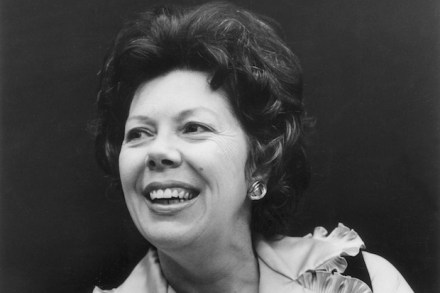
Raise your glass on 21 August to wish a happy 80th birthday to one of the greatest singers and singing actresses this or any other country has produced — Dame Janet Baker, the mezzo-soprano from Yorkshire, who never went to a music college and won the hearts of her audiences in a career spanning 35 years. Joining us in our toast will be some shades from the past who have much for which to thank and applaud her. Make way for Bach, Handel, Elgar, Monteverdi, Britten, Mahler, Strauss, Purcell, Schubert, Berlioz, Schumann and Wolf, all of whose music she has sung with penetrating insight. In the concert hall and the opera house she has lavished her art on theirs. It is now more than 30 years since she sang in public.
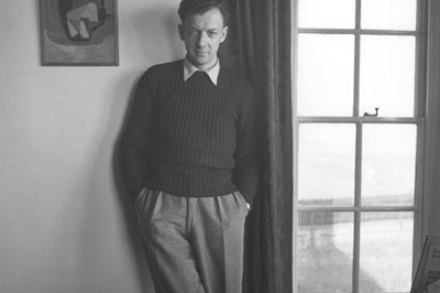
The dark side of Benjamin Britten

From our UK edition

We are only two months into the Britten centenary year and already books, articles and talks (and, of course, performances) swell the flood of existing biographical studies and the six bulky volumes of diaries and letters. Dead for less than 40 years, Britten is as copiously documented as any English composer except Elgar. Have emails wiped out areas of research? I hope that some teenage composer, a latter-day Britten, is even now baring their musical soul writing candid and maybe scurrilous opinions on the current musical scene in a diary as the young Britten did from 1928. ‘The child is father to the man’ rings true in Britten’s case. Britten the man was  a Jekyll and Hyde, with Hyde perhaps too often gaining the upper hand.

The unforgettable Ferrier

From our UK edition

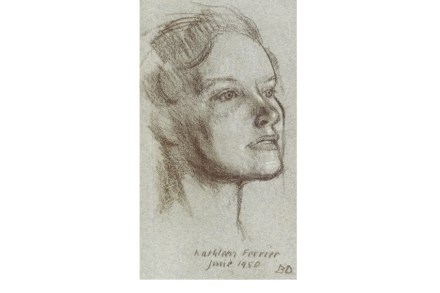
On the centenary of her birth, Michael Kennedy pays homage to ‘Klever Kaff’, occasional golfer, and inventor of Rabelaisian limericks Was she as wonderful an artist and woman as legend has it? Yes. Everything is true that has been said or written about the contralto Kathleen Ferrier, the centenary of whose birth is 22 April. She has been dead for 59 years, but through her recordings her voice — rich and always with a vein of melancholy — lives on, and could be mistaken for no one else and no one else for her. Never has a woman singer been so widely loved. The radiance of her personality suffused the music whether it was Bach or a folk song.

A golden age

From our UK edition

Was there a golden age of English music a hundred years ago? From today’s vantage-point there probably was. Was there a golden age of English music a hundred years ago? From today’s vantage-point there probably was. The years 1910 and 1911 still excite the imagination as one contemplates the extraordinary richness of the new works that were being introduced to audiences in London and at festivals at that period. If you believed in the Zeitgeist, the spirit of the age, there was plenty to support you. The spirit was changing — ‘Rarely, rarely comest thou, spirit of delight’ was the ambiguous line by Shelley that Edward Elgar inscribed on the score of his Second Symphony.

Mahler’s mass following

From our UK edition

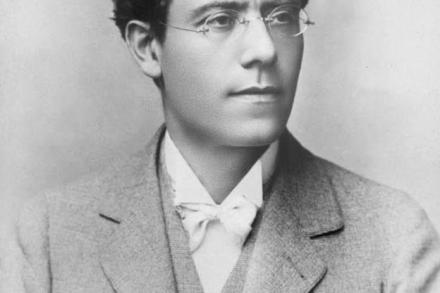
It is 150 years since the composer’s birth. Michael Kennedy on his remarkable popularity Approaching 60 years of writing music criticism, I have been wondering what I would nominate as the most remarkable changes on the British musical scene since I started. I decided there were three: the emergence of Mahler as a popular composer worldwide; the enthusiasm for the music of Janáček, especially his operas; and the establishment of regional opera companies. It is not as if Mahler’s music was completely unknown in Britain, even in his lifetime (1860–1911). But until about 1960 his impact on the general public was roughly the equivalent of, say, Szymanowski today. Now you cannot escape him.

Legacy of an Eminent Victorian

From our UK edition

‘Mr Hallé’s Band’ began giving concerts 150 years ago. Michael Kennedy on the great orchestra On the wet evening of 30 January 1858 in the Free Trade Hall, Manchester, which had been opened only two years previously, the 38-year-old Charles Hallé launched his privately funded series of orchestral concerts. On the same date next week, 150 years later, the orchestra still bearing its founder’s name will celebrate the anniversary with a programme introduced by Dame Janet Baker. In a century and a half it has had only ten chief conductors. The tenth, Mark Elder, will be on the rostrum. Carl Halle, as he was born, with no acute accent, was German and trained as a pianist although he conducted several operas in his home town of Hagen when he was 11.

Fighting Finn

From our UK edition

Where does Sibelius stand today? Twenty years ago, the answer would have been not very high. Today, 50 years after his death, I think it would be ‘on the up’ again, especially as we now know not just the symphonies and tone-poems but also the wonderful songs in performances by Karita Mattila, Soile Isokoski, Anne Sofie von Otter and Jorma Hynninen. In Britain during the first half of the 20th century Sibelius was regarded as the symphonic heir to Beethoven. There was no mention of Mahler and Bruckner in those days, except in very restricted circles. It almost seemed as if Sibelius was an honorary Englishman. The composer had first visited England late in 1905 to conduct in Liverpool.

A new home rich in history

From our UK edition

With its move into 22 Old Queen Street, The Spectator will occupy a house full of friendly ghosts and memories of grand occasions in the world of the arts in the first quarter of the 20th century. For this elegant mansion in Westminster was for over 30 years the London home of Leo Frank Schuster, known to all his circle as Frankie, a patron of the arts and friend of the composers Edward Elgar and Gabriel Fauré and of the conductor Adrian Boult and the poet Siegfried Sassoon. He was homosexual and very rich. Born in 1852, as a youth he had worked for a spell in his father’s bank in the City but decided that his share of the family inheritance was all he needed and he could not waste his life making any more money.