Tom Rosenthal

At last! The snobbish Tate has finally overcome its distaste for L.S. Lowry

From our UK edition

One day in Berlin, I saw the rerun of the RA’s Young British Artists exhibition at the Hamburger Bahnhof, Berlin’s equivalent of Tate Modern. After that, I saw a superb retrospective of Lyonel Feininger at the Neue Deutsche Galerie. In the evening, I ran into the onlie begetter of the YBA show (which, with the exception of Ron Mueck’s amazing sculptures, had not given me much pleasure), my (unrelated) namesake Norman. I had no wish to discuss Norman’s pride and joy, the YBA, so turned the conversation to Feininger and asked whether Norman had seen it. ‘Ah,’ said Norman, ‘what a bore; I won’t waste my time on him.

‘The Birth of an Opera’, by Michael Rose – review

From our UK edition

When, more than half a century ago, I was a student, deriving much of my education from the Third Programme, I was given, between 1955 and 1971, a crash course on opera by Hans Hammelmann and Michael Rose. The two of them were major opera historians and both were natural broadcasters, able to pass their enthusiasm on to the public; and more or less immediately I became a devoted operaphile. But, as the radio programmes grew fainter in the memory and one’s tastes were moulded by countless actual performances, so one craved the book of the series.Now at last Michael Rose (Hammelmann is dead) has written that book, and it is not only as scholarly, authoritative and entertaining as the broadcasts; it has also benefited by another 50 years of Rose’s study and mastery of the subject.

Subversive narrative

From our UK edition

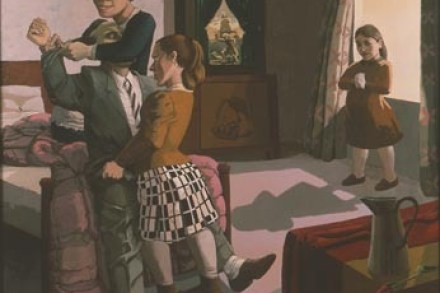
Paula Rego had a retrospective at Tate Liverpool a decade ago and a big show in her native Portugal, where she is properly regarded as the country’s greatest living artist, but both exhibitions seem niggardly in comparison with the more than 200 works shown in some 14 rooms at the Reina Sofia in Madrid. Even to someone who has made a close study of her work, this is a revelatory, even overpowering, display of both her versatility and her passion. The exhibition has been curated by Marco Livingstone who, in his elaborate catalogue, includes as well as his own lucid introduction, refreshingly free of artspeak, a fascinating interview with the artist. Rego says of the ever-present threads in her oeuvre: ‘I think bullying and revenge run all the way through.

Bare necessities | 28 July 2007

From our UK edition

The Naked Portrait Scottish National Portrait Gallery, Edinburgh, until 2 September, then Compton Verney, Warwickshire, from 29 September to 9 December The advance publicity I saw for this on the whole excellently curated exhibition contained a health warning: ‘Please note this show contains nudity. Children under 16 must be accompanied by an adult.’ The title comes from the phrase used by Lucian Freud for several of his nudes but, alas, for the prurient, there are few images that might disturb or inflame either adults or children, except perhaps one of a woman holding a silk rosette bearing the word ‘Boob’ against her own left breast mutilated (but not removed) by surgery.

Unfamiliar connection

From our UK edition

It was a dark and stormy night when I got to Liverpool and, on my way to the Tate at Albert Dock the next morning, a gale-force wind nearly propelled me into the Dock’s murky, choppy waters before I reached the sanctuary of the museum. Here, on a quiet lower floor, there’s a small but revelatory exhibition of little-known Lowry paintings and drawings of Liverpool. Revelatory because, while everyone is familiar with his endless explorations of Manchester and Salford, his Liverpool connection was, to me at least, unfamiliar. The pictures are housed in what Tate calls a Focus Room, an intimate gallery which, when I was there, was full of small, attentive school groups making notes and talking quietly among themselves.

Playing with the past

From our UK edition

Louis le Brocquy is 90 this year and his new show at Gimpel’s is merely one of four current celebratory exhibitions. (The others are at Tate Britain, The National Gallery of Ireland and Galerie Jeanne-Bucher in Paris.) He once wryly observed: ‘I’m aware that my age and vulnerability could be mistaken for some kind of authority.’ While the Gimpel show of his latest work does not in any way claim authority it also fails to exhibit any vulnerability. The whole subject of homage versus imitation could spark a book and here he gives us four homages to Manet’s ‘Olympia’ — which after all is not only an independent masterpiece but also a homage to Titian’s ‘Venus of Urbino’ and has echoes of both Giorgione and Ingres.

Mixed blessing | 11 November 2006

From our UK edition

The subtitle ‘Artist, Author, Word and Image in Britain 1800–1920’ sets out the aim of one of those curator-inspired delvings into the vast stock of a great and fairly ancient museum. It repays several hours of study as the devil, as so often, is in the detail. The Fitzwilliam — unlike many other, larger art museums — is particularly strong in rare books and literary manuscripts, which provide some of the most pleasing exhibits. For those who find many of our museums a little po-faced, the visitor could do worse than start with the last section ‘Where’s the Joke?

Light on a master

From our UK edition

It’s strange that while Britain has gone fairly mad over Mozart’s 250th anniversary, with vulgarities ranging from Mozart for Babies on Classic FM to Mozart mugs on coffee mugs, etc., we haven’t heard much about possibly his only cultural peer, Rembrandt. The Germans have now put us thoroughly to shame on the artist’s his 400th anniversary. At the Berlin Kulturforum, where the relatively new Gemäldegalerie is just across the road from the home of the Berlin Philharmonic, there are three superb commemorative exhibitions which together will lead up to a high-powered symposium on the latest debates of the Rembrandt Research Project.

Compelling vision

From our UK edition

, Oskar Kokoschka (1886–1980) was born in Pochlarn, Bohemia, studied in Vienna, enlisted in a smart cavalry regiment at the outbreak of the first world war, got shot in the head and bayoneted, went back into action after a spell in hospital in 1916 and suffered shellshock. He had a stormy affair with Mahler’s widow Alma, a very trying woman whose other husbands or lovers included Schoenberg, Franz Werfel and the conductor Willem Mengelberg. The Mahler affair ended badly, so Kokoschka had a life-size doll with her features built for him which was part model and, for some years, constant companion. But there also emerged from their relationship one of the greatest of Expressionist portraits and a masterpiece which still mesmerises visitors to the Basel Kunstmuseum.

Shipwreck of a genius

From our UK edition

Simeon Solomon ‘has his place, not far from Burne-Jones, in any record of the painting of the 19th century. Had circumstances been kinder to him, or had he been other than himself, he would have been a formidable rival,’ wrote Arthur Symons in 1925. This Birmingham exhibition is the most comprehensive assessment yet of Solomon’s art, more wide-ranging than the last important show, held at the Jewish Museum in Camden Town in 2001 under the title From Prodigy to Outcast. Poor Solomon needs these evocative titles to pull people in because of his relative obscurity. Happily, the Birmingham show is sufficiently large and well curated that while the epithet poor will understandably remain the obscurity should surely fade.

Serious wit

From our UK edition

Visiting this large (172 works) retrospective for Max Ernst (1891–1976) at the Metropolitan was in a way a sign of the times.

French connection | 30 April 2005

From our UK edition

When I started visiting Barcelona in 1961, its museums were both thin on the ground and impoverished, and the lingua franca between the Catalans and the British was French, without which it was, if one had neither Spanish nor Catalan, hard to survive. Today the city is awash with fine, well-funded museums and, for anyone under 40, English has replaced French as the second language. So it’s good to see that the links with French culture have not been severed and that the spring has brought two major French exhibitions to this intellectually vital city. The Picasso Museum, in addition to its unparalleled collection of his early work, has a wonderful series of galleries for temporary, non-Picasso exhibitions and now has a large retrospective of Jean Hélion (1904–87).

Memoirs of a genius

From our UK edition

Tom Maschler, son of a distinguished Jewish publisher, was born in Berlin in 1932 and came to England with his parents in 1939. After Leighton Park School, having turned down a place at Oxford, he worked on a kibbutz and as a tour guide, hitch-hiked round America and did a brief stint of National Service before getting himself discharged on health grounds. He then worked for various publishers: André Deutsch, whom he left because André wouldn’t increase his wages of six pounds to eight pounds a week, MacGibbon and Kee, where he wasn’t allowed to publish Alan Sillitoe’s Saturday Night and Sunday Morning, and Penguin. In 1960 he became Literary Director of Jonathan Cape only a month after Cape himself had died.

Rise, fall and rise of an artist

From our UK edition

It will be interesting to see if next week’s full-scale Wyndham Lewis (1882–1957) exhibition at Olympia will help, as previous Olympia shows have done, to cement the artist’s reviving reputation. Certainly the timing is good in relation to last month’s scholarly symposium and the excellent recent exhibition concentrating on his works on paper, both at the Courtauld, where the growing number of his pictures controlled by the Wyndham Lewis Memorial Trust are stored and available to researchers.