Arts feature

The play’s the thing

History, geography, politics, news, entertainment: the world is at our fingertips, staged before our eyes through the click of a mouse. Before the age of the internet was that of television, and radio before that. In the 19th century, you went for your weekly fix of politics, news, opinion and enlightenment to papers such as The Spectator — its name a nod back a further 100 years, to the first of the great periodicals that emerged from the coffee-house culture of the early 18th century. According to the influential historian and sociologist Jürgen Habermas, it was in that coffee-house culture of the Whig world of Joseph Addison and his Spectator that a new space for debate was created: the ‘public sphere’.

Madrid’s golden triangle

Under the statue of Charles III in the Puerta del Sol a hellfire preacher is competing for custom with a mariachi band. ‘Porque la paga del pecado es muerte!’ he shouts. ‘Ay, ay, ay, ay,’ they sing, ‘porque cantando se alegran, cielito lindo, los corazones.’ The weather is with the preacher: the cielo is not lindo. The El Greco cumulonimbus overhead flickers with lightning as God adds a rumble of thunder to the mix. Apart from the angry heavens and the five police vans lined up opposite — for prevención, they tell me — there’s little sign that Spain is on the brink. The leaning towers of Bankia may be tottering, but to judge from the queues outside the Prado the culture industry has not been affected.

The vast picture show

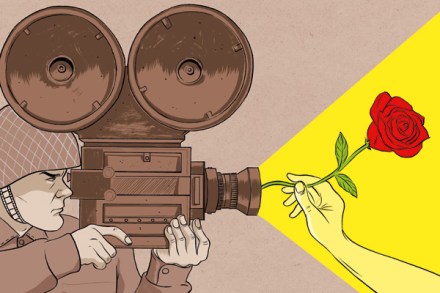
The awards season may be over, but can I nominate Neil White for a gong anyway? He genuinely deserves one. After all, he’s the chap from Nottingham who watched all of the 600 or so films that were released into British cinemas last year — and then blogged about them at www.everyfilmin2011.com. You might question his sanity, but you cannot question his dedication: hours and hours spent in the dark of cinemas across the country, and then further hours translating his thoughts on to the internet. And now? He is repeating the process for the current year. The rest of us would find it difficult to follow Mr White’s bleary-eyed example. After all, 600 films in a year equates to roughly 12 films a week, or nearly two films a day.

Art and soul

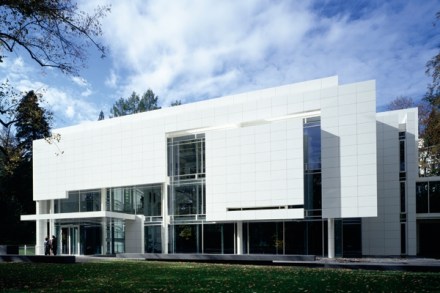
Imagine you had £20 million to spare, burning a big hole in your pocket. What would you spend it on? You could buy a stately home or a private jet, but that would be so boring. Surely the nicest way to spend it would be to ask one of America’s greatest architects to build a new museum in your hometown, to show the world your favourite paintings. Now that really would be fun. For the man I’ve come to meet today, this is no idle fantasy. It’s the story of his life. Ten years ago, Frieder Burda invited Richard Meier to design a gallery to house his art collection, here in Baden Baden. Since it opened in 2004, the Frieder Burda Museum has transformed this sedate spa town into a cultural oasis in the Black Forest.

The master’s lost voice

There is hardly ever one of Noël Coward’s old plays not on tour or in the West End. Sometimes you think the commercial theatre would collapse without him. A ‘new’ Coward is therefore an event. Never performed or published, Volcano was written in 1956 when Coward was living permanently in Jamaica as a tax exile. The play is the result of his life out in the tropics well away from the Angry Young Men in their winklepickers who were ruling the roost back in Britain. What a life it was! After a hard day’s snorkelling, Noël would sit outside his house, sipping a cocktail served by a white-coated native, the sun setting over the Caribbean, no cheap airline tourists to pollute his coral-fringed paradise.

The art of monarchy

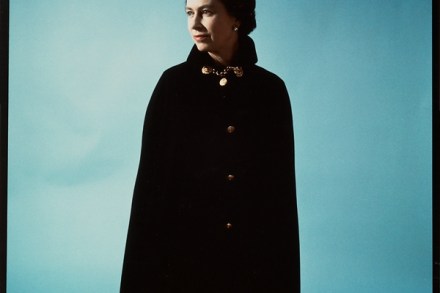
Andrew Lambirth reflects on the images that help shape our perception of the Queen Her Majesty the Queen has been a global celebrity for 60 years, and she carries her status with a naturalness and dignity that many of the more tearaway celebs would do well to emulate. She graduated from being a young and glamorous queen to a happy and fulfilled mother, but then had to settle for pausing in that most difficult of categories — middle age — for rather a long time, owing to the wondrous longevity of Queen Elizabeth, the Queen Mother. As the Queen now celebrates her Diamond Jubilee, in her own distinguished old age, it is revealing to consider how art and the mass media have helped to shape our changing perceptions of the monarch.

Revolting teenagers

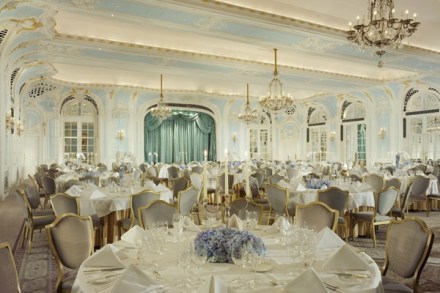
As 200 children descend on the Savoy, Niru Ratnam asks why corporations sponsor works of art In July, 200 teenagers from east London will head to the Savoy where they will take over the Lancaster Ballroom for the day. There they will be given the freedom to create a large-scale event — food and performances included. In the weeks leading up to it, they will have been prepped by Ruth Ewan, the artist behind the project, on the history of the Peasants’ Revolt in 1381. The preparation and the event itself will revolve around the teenagers’ interpretation of that historical moment when Wat Tyler led calls for the redistribution of wealth and was subsequently put to death in Smithfield by London’s mayor for his troubles.

Long revision

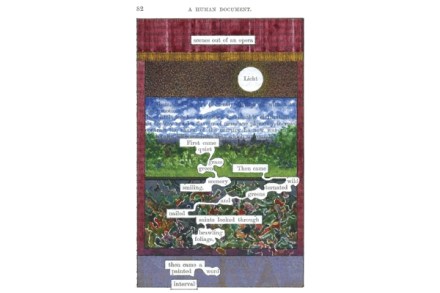
In 1966, under the influence of ideas about chance, the artist Tom Phillips pledged to take as the foundation for his next work the first book that he could find for threepence. That book, discovered in a junk shop on Peckham Rye, was a long-forgotten Victorian romance in journal form, A Human Document by W.H. Mallock. Phillips set about effacing the pages of this book with sketched line drawings and gouache swathes of colour. The result was A Humument, described by Evan Anthony in the early Seventies in this magazine as ‘one of the freshest and most original pieces of art-literary work you are likely to see’.

Outside edge

Unimpressed by the relentless barrage of blockbusters, Andrew Lambirth singles out some small-scale gems Although it can’t be easy to run a major museum in this country, and balance the books as well as fulfil a remit to provide the best possible conspectus of past and contemporary art for the general public, our museums are becoming increasingly narrow in what they offer. The range of art on show in London, for instance, has shrunk alarmingly, as the Whitechapel, the Serpentine and the Tate pursue very similar programmes, vying to be the first to put on the same internationally fashionable artists.

Restoration tragedy

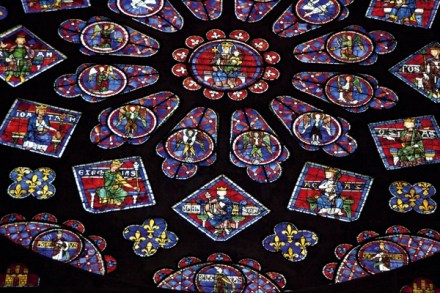
Alasdair Palmer questions the ill-conceived makeover of Chartres cathedral which robs us of the sense of passing time that is part of its fascination and mystery Should old buildings look old? Or should they be restored to a condition where they look as if they could have been put up yesterday? Those questions are raised in a particularly pertinent form by the work going on at one of the most beautiful and inspiring of all old buildings: Chartres cathedral in France. Most of Chartres cathedral dates from between 1194 and 1230, when the bulk of the colossal stone structure, with its nearly 200 stained-glass windows and thousands of sculptures, was built.

Grand designs

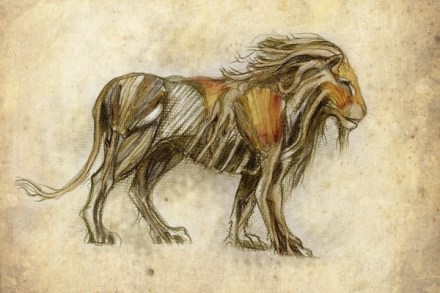
Lloyd Evans talks to the young, dynamic and much-in-demand Tom Scutt about the challenges of bringing to life Narnia and its inhabitants Barky? What does he mean, ‘barky’? We’re talking about Aslan and he says he’s aiming for ‘barky’. ‘Barky like a dog or barky like a tree?’ ‘Like a tree,’ says Tom Scutt, designer of The Lion, the Witch and the Wardrobe, which opens on 8 May in Kensington Gardens. ‘What I often do with Rupert [Goold, the director] is to imagine setting the whole show in one location. In this case, the wardrobe. So you trace the wood of the wardrobe back to a tree and Aslan has a link with a tree, something honest and true and majestic. That felt right.

On the waterfront | 28 April 2012

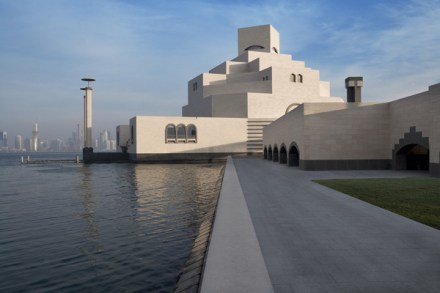
William Cook says that I.M. Pei’s latest building, Qatar’s Museum of Islamic Art, once again captures the spirit of the age Standing outside Qatar’s Museum of Islamic Art, in Doha, watching the sun rise over the Persian Gulf, you’re reminded of Mies van der Rohe’s dictum: ‘less is more’. Van der Rohe was a hero of the man who made this building, and I.M. Pei’s new museum sums up that minimalist rule of thumb. Doha’s modern skyline is a panorama of skyscrapers, but they all look trite and transient beside this discreet masterpiece. Pei’s Museum of Islamic Art is only a few years old, but it feels as if it’s stood here for a century. It’s part of the landscape, the way great architecture ought to be.

Playing with the Games

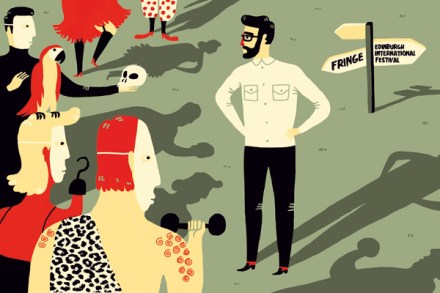
Once you grasp the essential triviality of the Olympics, the Cultural Olympiad falls perfectly into place, says Lloyd Evans. Even Shakespeare can’t escape Once you grasp the essential triviality of the Olympics, the Cultural Olympiad falls perfectly into place, says Lloyd Evans. Even Shakespeare can’t escape Funny business the Olympics. No one seems to want it. Clearly it doesn’t belong here or anywhere else. So what’s it for? The main athletic competitions — ‘track and field’ — are disciplines devised by Greek hill-farmers during the Iron Age to improve their skills in battle. The field events, like discus and javelin, teach you to throw heavy and/or pointy things at your enemy.

Adult entertainment

On 19 March, Adele’s 21 overtook Dark Side of the Moon to become the seventh bestselling album in British music history. A day or two later it caught Dire Straits’ Brothers In Arms napping, and eased into sixth place. So far 4.15 million copies have been sold. One in six British households has one. Ahead lie Thriller, (What’s The Story) Morning Glory?, Abba’s Gold, Sgt. Pepper and Queen’s Greatest Hits, still the daddy with 5.86 million registered sales. These five have been the top five for so long that industry experts with sad goatees thought they would never be caught. But records are made to be broken, or at the very least scratched.

The unforgettable Ferrier

On the centenary of her birth, Michael Kennedy pays homage to ‘Klever Kaff’, occasional golfer, and inventor of Rabelaisian limericks Was she as wonderful an artist and woman as legend has it? Yes. Everything is true that has been said or written about the contralto Kathleen Ferrier, the centenary of whose birth is 22 April. She has been dead for 59 years, but through her recordings her voice — rich and always with a vein of melancholy — lives on, and could be mistaken for no one else and no one else for her. Never has a woman singer been so widely loved. The radiance of her personality suffused the music whether it was Bach or a folk song.

Losing the plot | 24 March 2012

You know those sad, confused people you sometimes see, standing on street corners and shouting dementedly at passing cars. Well, the other week, that madman was me. I was in Sheffield to cover the Crucible’s Michael Frayn season, and had risen early to write my review. And then my usually reliable laptop failed to come up with an email connection. I kept trying, and failing, to get the copy across, then realised that unless I got a shift on I would miss my train. So I ordered a taxi and checked out. Only the taxi didn’t come and catching the train looked less and less likely. And it was then that I lost the plot entirely, shaking my fist at passing but occupied cabs, and shouting at God that I wished I were dead — all the symptoms of a certifiable nutter, in fact.

Poirot power

Will Gore talks to David Suchet about his forthcoming West End role and his debt to the Belgian detective The first thing I notice about David Suchet is his facial hair. It isn’t a stick-on Poirot tash, unfortunately, but a grey beard that he has grown for his latest role, James Tyrone, in the West End revival of Eugene O’Neill’s Long Day’s Journey into Night. The second thing is his smile. He greets me with a broad grin, and beams amiably throughout our time together. He has rehearsals to be getting on with, but is happy to let our scheduled 30 minutes stretch to an hour. Suchet is the most cheerful interviewee I’ve ever encountered. He’s unpretentious, too. Some actors, mentioning no names except Richard E.

Fairground attraction

Robert Gore-Langton talks to Professor Vanessa Toulmin about bringing the 27,000 Volt Girl and five-foot earwigs back into the public eye Vanessa Toulmin is that rare thing — an academic professor who grew up on a fair. From the age of ten she fried onions for the hotdogs, spun candyfloss, and took money for rides on the gallopers. She can remember, as a little girl, George the Gentle Giant (seven foot four) lurching home drunk with his chum Wee McGregor (two foot four) peeing on his shins. Her early life was like a Fellini circus film. As a teenager, Vanessa actually ran away from the fair to get some A-levels. Today  she has a chair at the University of Sheffield and is director of the invaluable National Fairground Archive.

At home with Rubens

William Cook believes that the British cannot really understand the artist until they’ve been to Antwerp In a quiet corner of Tate Britain there is a little exhibition that sheds fresh light on an artist whom the British have never really learned to love. Rubens & Britain (until 6 May) is a fascinating show, documenting his work in England, and like all good exhibitions it leaves you wanting more. There are Rubens in countless British galleries, of course, but really to understand him you have to travel to his hometown, Antwerp. Here, Rubens is everywhere, even on the toilet doors in trendy bars and restaurants. My first visit was a revelation, and I’ve been back several times since.

Down but not out | 3 March 2012

It’s not every J.D. Wetherspoon’s pub that has a preservation order slapped on it. In fact, I’m prepared to bet there’s only one: The Trafalgar in Portsmouth, Grade II-listed in 2002 for its mural by Eric Rimmington. Rimmington was 23 in 1949 when he won the commission to decorate the clubroom of the old Trafalgar House Services Club and chose to paint a view of Portsmouth and Southsea Station with passengers coming and going on the platforms. More than 60 years on, comings and goings on station platforms haven’t lost their fascination for the artist, though for his latest London show at The Millinery Works he has plunged down the metropolitan rabbit hole to pursue his observations underground.