Features

Features

Trump’s worrying appetite for war

As The Spectator goes to press, a great fleet of American war machines is whirring through the skies toward the Middle East. More than 50 fighter jets, plus stealth bombers and support aircraft, are joining what Donald Trump called an “armada” of US naval forces in the Arabian seas. The White House continues to say that it is pursuing a diplomatic solution with Iran. It’s possible that this latest military escalation is another of President Trump’s elaborate bluffs, designed to pressure the Iranian regime into accepting American and Israeli demands. But the President has been unusually mute about the situation on Truth Social.


war
bondi

Pam Bondi’s not-so-secret mission

On February 11, the arrow on the Trump administration’s “See ’n Say” pointed in the direction of Attorney General Pam Bondi, who spent four extremely contentious hours arguing with congressional Democrats on the House Judiciary Committee, who questioned her about her handling of the Epstein files. “Your theatrics are ridiculous,” she said, in a case of the pot calling the kettle black, to New York’s Jerry Nadler, who asked her if the Epstein files would lead to prosecutions. Bondi called Jamie Raskin, a former constitutional law professor, a “washed-up loser lawyer.

My theatrical Senate confirmation hearing

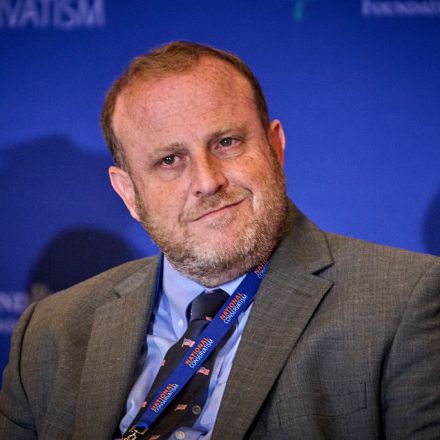
It’s a bit difficult to explain a Senate confirmation process to those who haven’t gone through it. It is, to put it in a single word, intense. Years ago, the first time I had a hit piece written about me, I wanted to crawl into a hole in the ground and die. During my confirmation hearing, my attitude was more, “Oh, Chuck Schumer is denouncing me from the Senate floor as a racist, anti-Semitic, white supremacist. It must be Monday.” I still haven’t even bothered to read the vast majority of press accounts or descriptions of me that have come out in the days since the hearing. It’s important in these processes to always know and remember who you are, because if you know that, what they are saying you are just doesn’t matter all that much.

Jeremy Carl Senate
nixon

The deep state vs Nixon

Americans took a break from their partisan vituperation in February to mull over newly revealed testimony that Richard Nixon gave to grand jury investigators in 1975, a year after the Watergate scandal drove him from power. James Rosen, a veteran Washington journalist and the biographer of Nixon’s attorney general John Mitchell, revealed the episode in the New York Times. Nixon had argued that his program of wiretaps had been made necessary by another spying operation that senior American military commanders were carrying out against him and his top aides.

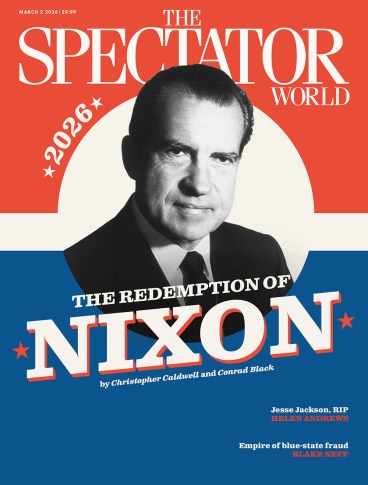
The redemption of Richard Nixon

In the last five years of his life, when I knew Richard Nixon, nothing described him better than Milton’s “calm of mind, all passion spent.” During the most tumultuous political career in American history he had come back many times, but the greatest comeback of all was in full swing. His enemies had seized control of the puritanical conscience of America to slay him, unjustly, and he was manipulating the same national conscience, which was founded on Plymouth Rock and has survived all the corruption and hypocrisy and violence of American public life, and when aroused, is insuperable. Since his political fall, and later his death, polls increasingly indicate public unease about the treatment of Richard Nixon.

fraud

The unfathomable depths of blue-state fraud

“The Somali pirates who ransacked Minnesota remind us that there are large parts of the world where bribery, corruption and lawlessness are the norm, not the exception,” said Donald Trump in his State of the Union address last night, as the Democrats booed and heckled him. Media commentators scoffed at Trump’s inflammatory rhetoric. But the President, who estimated that $19 billion had been lost to fraud in Minnesota alone, is if anything underplaying the scale of the problem. The extent of fraud across blue state (that is, Democrat-led) America is truly monstrous, and each week brings fresh revelations of swindling on a truly epic scale.

Inside the real jobs crisis

After much talk of an economic slowdown, February brought reassuring headlines. The official unemployment rate had fallen as another 130,000 jobs were added to the US economy, according to the Bureau of Labor Statistics. That is good news, but it is not the whole story. The official unemployment rate counts only people actively looking for work – it does not capture those who would like a job but have stopped searching. The official unemployment rate is so narrow that it hides long-term changes in the economy. In fact, things are far worse than the official figures suggest. This matters for more than just economists. We tend to treat employment statistics as dry indicators that exist in spreadsheets and quarterly results.

jobs labor

Who doesn’t want a better life?

Every couple of years a columnist-cum-novelist will inevitably stoop to shameless self-promotion. In my defense, at least the novel released this month is germane to the political moment. Lest its simple title, A Better Life, come across as lame, I asked the designers of my British and American hardback covers to use imagery that conveys the book’s focal subject matter: immigration. See, proponents of unfettered mass migration have eternally assured us that most illegal immigrants – or as the Biden administration instructed federal law enforcement to call them, ‘newcomers’ – are merely seeking ‘a better life’. This explanation is routinely trotted out as an irrefutable justification for a potentially near-infinite imposition of foreigners on western polities.

The truth about trans violence

The latest “trans violence” was committed by a heterosexual man who went to a hockey game in Rhode Island and shot his family, then himself. His daughter described him as sick and mentally ill. Robert Dorgan, who preferred the name Roberta, is just the latest in a long line of violent people claiming to be transgender. Last week, a 6ft 18-year-old boy, who wanted to be a “petite” woman, was identified as the main suspect in the worst mass shooting in Canada’s history. Last summer, a male called Robert Westman killed two children and injured many more at the Annunciation Catholic School in Minneapolis. The 2023 Nashville school shooter was a girl called Audrey, who identified as a man called Aiden.

trans
Trump

Trumponomics is working

Remember the old quip about economists? “That’s all very in practice,” they say, “but how does it work out in theory?” Nobel laureate Paul Krugman of the New York Times is a splendid example of that sort of folly. On the evening of November 9, 2016, Krugman skirled that the election of Donald Trump would precipitate economic Armageddon. “If the question is when markets will recover,” he said, “a first-pass answer is never.” How could they recover since the nation had just elected an “irresponsible, ignorant man who takes his advice from all the wrong people,” that is to say, he didn’t take advice from people like Paul Krugman.Reality check: the day Krugman wrote that, the market closed at 18,589. In the last few days the Dow broke 50,000.

Is James Fishback the right’s answer to Zohran Mamdani?

“First and foremost, I think Zohran and I are two good-looking guys in our thirties.” James Fishback, the controversial Republican running for governor of Florida, tells me that it is “not politically wise” to acknowledge his similarities with New York’s new mayor – but he can’t help himself. Both he and Zohran Mamdani are from privileged families, have taken on their own parties, have harnessed youth activism, are big on social media and have courted the same voters on the same issue: the rising cost of living. And, like 34-year-old Mamdani, at this stage of his campaign, Fishback, 31, needs a boost in the polls. Currently he is polling between 5 and 23 percent, while congressman Byron Donalds leads the Republican primary pack at 37 to 47 percent.

james fishback

How the Obamas marginalized Jesse Jackson

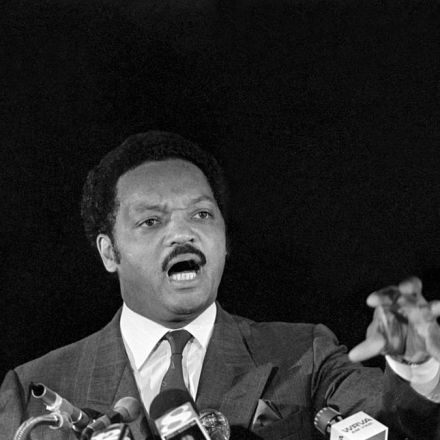
During a visit to Zimbabwe in 1989, Jesse Jackson was walking down the dirt trail leading to Victoria Falls when a group of three African men hunkered in the shade of a scrubby tree stood up to point at him. One asked, “Is this... is this the great Reverend Jesse Jackson?” His fame was global. He popped up in the most unlikely places: negotiating the release of hostages in Lebanon, lobbying for earthquake relief in Armenia, criticizing factory conditions in Japan. A photo spread of his career would show him face-to-face with Fidel Castro, Saddam Hussein and Slobodan Milošević. He hosted Saturday Night Live and appeared on Sesame Street, and he had a talk show on CNN that ran for eight years.

Why doesn’t the CDC care about Chinese biolabs in America?

If you rent a cheap Airbnb house in Las Vegas, you might not be altogether surprised to find dead crickets in the garage. But a thousand vials of medical samples in several freezers – and a centrifuge? After the cleaner and one guest fell ill at a property in the city’s Sunrise Manor neighborhood last week, federal agents raided it and found a whole laboratory’s worth of scientific kit of the kind more useful to medical scientists than, say, drug dealers. Curious. Curiouser still, the house belongs to a Chinese national named Jia Bei (Jesse) Zhu. He is currently in prison awaiting trial over a secret laboratory that (it is alleged) he was running in Reedley, California.

Biowarfare

How Jeff Bezos destroyed the Washington Post

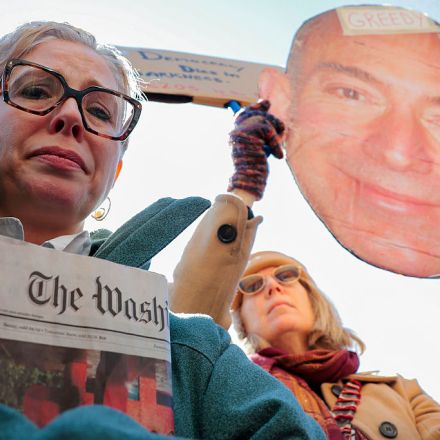
The debacle of the Washington Post’s hara-kiri last week dispatched the myth that a tech billionaire could save journalism. Jeff Bezos’s purchase of the paper in 2013 was greeted with euphoria, not just because he was a big fat wallet who would absorb the losses, but because we thought his Amazon wizardry was transferable to journalism’s battered business model. The man was a digital titan, for God’s sake. He started selling books online from his garage and built it into a $2.2 trillion consumer nirvana, with a Blue Origin side hustle of suborbital rockets. Surely he would figure out innovative new ways to bring the Post’s rigorous reporting to hungry new audiences?

The Bezos-Musk rivalry and the changing power of media

Elon Musk knows something Jeff Bezos doesn’t. Each has had turns as the world’s richest man, and both are media overlords. But whereas Musk’s purchase of Twitter arguably won a presidential election and briefly put the fate of the United States federal government in Musk’s hands, Bezos’s purchase of the Washington Post has bought him nothing but grief. No election victories, no sway in Washington, just the hatred of the journalists he subsidizes to the tune of hundreds of millions of dollars. Media power in the 21st century is about platforms, not publications. Bezos shouldn’t have needed Musk to teach him this: the whole strategy behind the business that made him rich, Amazon.

Bezos

Why are adults buying so many children’s toys?

On the fourth floor of Selfridges, in London, is the children’s toy department. Most of the vast space is given over to soft toys – mounds of synthetic fur, thousands of little beady eyes – and when I visited last Saturday afternoon the customers were almost all adults. I spent two hours there, standing by a tower of little Paddington bears, watching the shoppers in the queue for the register, and it was eye-opening. Almost no one was buying for a child. I saw two Chinese women with white toy lambs, a 17-year-old boy with a dragon, what looked like drug dealers waiting in line for Pokémon cards, and a genuinely troubling number of sad-looking women in their mid-twenties clutching long-eared toy bunnies made by a company called Jellycat.

My Epstein confession

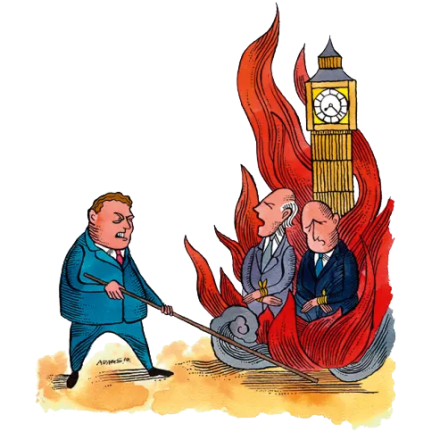
As the flames of the Epstein Inquisition burn higher, let me get my general confession into the public domain before the guardians of public morality come for me. Here begins my deposition. I, Matthew Francis Parris, do solemnly confess that I know slightly and have been on mostly friendly terms with former British ambassador to the US Peter Mandelson; and continue to believe him to have been a far-sighted force in the creation of a sane and successful Labour government such as we so notably lack now. I CONFESS: that I know former prime minister Sir Tony Blair, who knows Lord Mandelson, who knew Jeffrey Epstein, and appointed Mandelson to high office in the last century.

epstein

Nancy Guthrie and the gamification of crime

Nancy Guthrie had been missing for less than 48 hours when the game began. Not the investigation, which was already under way, with FBI agents crawling the Catalina Foothills and more than 30,000 tips flooding in from the public, but the thing building around her disappearance, the thing that one could generously call “journalism” in both its legacy and citizen varieties.

I don’t trust AI’s built-in ‘safety systems’

Cars ruined cities. Anyone can see that cities built before the invention of the automobile are incomparably more beautiful and serene than anything built after them. The contrast between Los Angeles and Prague is unmistakable. But people like things that move fast and make life easier, which means we’re stuck with the modern city hellscape whether we like it or not. And today, the same is true for AI. The contrast between the internet five years ago and today is unmistakable: content-slop, workslop, AI-generated comments, fake opinions and phony judgments, trite phrases, apocalyptic hysteria, the biggest intellectual-property heist in human history – all because of the invention of Large Language Models (LLMs).

ai

How Silicon Valley is calling the shots on the battlefields of Ukraine

Sometime in the late morning of February 4, somebody at SpaceX headquarters pressed a computer key. A command line was beamed to Starlink’s 9,600 satellites in low Earth orbit. Their onboard processors, circling 550 kilometers above the Earth, instantly obeyed the command and fractionally changed their operational settings. Back down on the frozen ground, in the trenches, bunkers and ruined cities of Russian-occupied Ukraine, hundreds of Starlink terminals lost internet connectivity. As another freezing night set in, the Russian army’s drones and tactical comms went dark. “We are left without communication!” complained a frontline Russian military officer in a video posted on the Telegram channel “Voenkory Russian Spring.

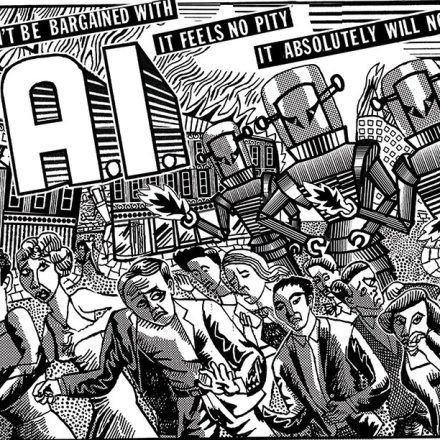
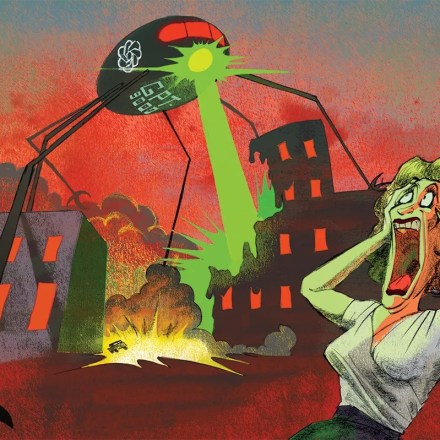
Where will AI strike first?

Homo sapiens, as a species, is programmed to anticipate death, disaster and apocalypse. The monster in the mere, the ague that comes from the east, the flood that wipes out all living creatures outside the Ark. The reason children – and adults in horror movies – are scared of the dark is because darkness is where predators strike. We have a sensible evolutionary fear of things that go bump in the night. For thousands of years it was possible to argue this primal fear of apocalypse was overwrought. No matter what humans did, or did not do, we were incapable of destroying ourselves and anything that might destroy us in toto – like the comet that erased the dinosaurs – was simultaneously so rare and so beyond our ability to resist that it was pointless worrying.