Margaret Mitchell

Margaret Mitchell

Margaret Mitchell is The Spectator’s US assistant editor.

The Pentagon’s holy war with Rome

America is having its Golden Age, Iran is about to get blasted into the Stone Age... and Elbridge Colby wants to go back to the Late Middle Ages? According to a Free Press report by Mattia Ferraresi, the Under Secretary of War for Policy summoned Cardinal Christophe Pierre, the Vatican’s then-ambassador to the US, to a meeting in which the Avignon Papacy was invoked. (For those of you who didn’t go to Catholic school: in the 1300s the king of France had Pope Boniface VIII captured and beaten after the pope excommunicated him; a few years later the papacy moved to Avignon amid continued threats from the French crown and instability in Rome.

pope leo catholic rome pentagon

The art of Schiaparelli

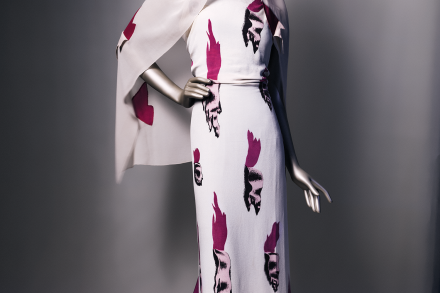
It’s a great shame that Elsa Schiaparelli is less widely known than her rival Chanel. Perhaps that’s down to how difficult her name is to pronounce. Is it ‘shap’, ‘skap’ or ‘skyap’? Tristram Hunt, director of the V&A, answers with a quip from Schiaparelli herself: ‘No one knows how to say it, but everyone knows what it means.’ The V&A’s new exhibition Schiaparelli: Fashion Becomes Art traces the web of influences around one of the great couture houses of the 20th century. Like Coco Chanel (I hate to compare them), Elsa Schiaparelli created clothes for the modern, independent woman – it is now conventional to say so but they ‘pushed boundaries’.

Frugal chic, the movement changing the way women shop

From our UK edition

It is, apparently, a novel concept in our age of overconsumption, that life can still be enjoyable even if you don’t have stupid money. ‘Frugal chic’ is the new lifestyle trend summed up by the 25-year-old influencer Mia McGrath, who coined and trademarked the term, as ‘living luxuriously while spending intentionally’. Frugal chic supposedly teaches young women – whose financial literacy typically lags behind young men’s – how to make their money go further with practical advice on investing and saving.

Jeffrey Epstein had the diet of a sick man

Comb through Jeffrey Epstein’s emails and you find frequent correspondence with his private chef Francis Derby about “beef jerky.” Online sleuths have speculated that it is a code word for something more sinister. We know Epstein was a sexual predator, but what if he literally preyed on human flesh? After all, Derby cooked at a restaurant called the Cannibal. Make of that what you will. I can’t quite bring myself to believe Epstein was devouring the teenagers he trafficked, but he did seem to have the eating habits of one. He was picky, entitled and equally fond of fad diets and junk food. He substituted Sweet’N Low for sugar in his morning coffee, while eating takeout pasta from Caravaggio and burgers from J.G. Melon for dinner.

epstein

The Catholic Church is getting swept away by ICE outrage

Cardinal Joseph Tobin, the archbishop of Newark and a close confidant of Pope Leo, called for the defunding of ICE during an interfaith prayer livestream. “If we are serious about putting our faith in action, we need to say ‘no,’” he said. As Congress debates ICE funding this week, Tobin urged Catholics to write to their lawmakers and encourage them to “vote against renewing funding for such a lawless organization.

Joseph William Tobin

The mindfulness behind the cooking of Buddhist nun Jeong Kwan

I am somewhat allergic to food nomenclature: zero-waste, plant-based, seasonal, small plates, “live cultures,” foraged, farm-to-fork. It’s not that these are inherently off-putting concepts, but I associate them with “foodie” fads, gimmicks and big egos. All of those trendy labels could apply to the food cooked by the “philosopher chef,” a Buddhist nun called Venerable Jeong Kwan, plus you could throw in a dash of mindfulness and eastern spirituality for good measure. Yet Kwan, who is venerated by Le Bernardin’s Eric Ripert and Noma’s René Redzepi, and has featured in an episode of Chef’s Table, is the furthest thing from an ego-chef.

Could military service become morally untenable for Catholics?

During his lengthy interview with the New York Times, President Trump was asked if there was anything that could check his power on the world stage. “Yeah, there is one thing,” he said. “My own morality. My own mind.” What are we to make of Trump’s morality? That’s between him and God, I suppose, and perhaps only the all-knowing could parse his mind. But it’s fair to wonder where morality factors into Trump’s foreign policy, and whether America’s moral justification of force has only ever been a convenient pretext for acting in our own interest.  At the World Economic Forum in Davos today, Trump said he “won’t use force” to take Greenland.

Pope

The battle for Anna Wintour’s Vogue empire

When Anna Wintour announced she was stepping down as editor-in-chief of Vogue in June, it appeared to be the end of the ice queen’s reign. Yet Wintour retained her large, chintzy corner office as well as her two other roles – as Condé Nast’s global chief content officer and Vogue’s global editorial director. If you looked closely, you might have seen a steely determination lurking behind her trademark sunglasses, the look of a generational editor intent on more power – and perhaps even revenge. The Condé Nast Union naively regarded Wintour’s move as that of a then 75-year-old drifting into quiet retirement, the old guard surrendering to youth.

James Heale, Margaret Mitchell, Damien Thompson, Rebecca Reid & Julie Bindel

From our UK edition

26 min listen

On this week's Spectator Out Loud: James Heale considers the climate conundrum at the heart of British politics; Rebecca Reid explains why she's given up polyamory; Damien Thompson recounts the classical music education from his school days; Margaret Mitchell asks what's happened to Britain's apples; and Julie Bindel marvels at the history of pizza.  Produced and presented by James Lewis.

Save England’s apples!

From our UK edition

On a grey autumn morning, the apples in the National Fruit Collection look vivid. They pile up in pyramids of carmine, salmon and golden-orange around dwarf trees, which have been bred to human proportions. Their branches are well within reach but picking fruit is forbidden. These trees are part of the world’s largest fruit gene bank. Neil Franklin, an agronomist and a trustee of the National Fruit Collection in Kent, describes it as ‘the Victoria and Albert Museum of the fruit industry’. The collection holds several types of fruit, but the apple is queen of them all: of the 4,000 or so fruit varieties here, more than 2,200 are apples. They’re used mainly for research into breeding and resistance to pests and diseases.

Can Spanberger offer Virginia more than vague platitudes?

Abigail Spanberger’s victory in the Virginia gubernatorial election should come as no surprise. In the last 50 years, the state has only once elected a governor who belongs to the same party as the president. While the outcome might not be out of the ordinary, it doesn’t bode well for the Republican party in next year’s midterms – Spanberger won by a 15-point lead, much wider than the two-point margin of the 2021 race. Spanberger is a former CIA officer who served three terms in Congress. Her opponent Winsome Earle-Sears has served as Virginia’s lieutenant governor since 2021, but failed to connect with voters in the way that Virginia’s incumbent Governor Glenn Youngkin did.

Was Dick Cheney a hero or a villain?

Former US vice president Dick Cheney died last night aged 84. He arrived in Washington as a congressman for Wyoming, then became secretary for defence under George H.W. Bush and served for eight years as George W. Bush’s vice president. He was considered by many to have pulled the strings behind the Bush administration. Throughout his life, Cheney held that what he had done was necessary What is perhaps his most lasting legacy is the 'Cheney Doctrine,' which influenced America’s decision to engage in wars in the Middle East. He campaigned for a military response to the 9/11 terrorist attacks, which drove his conviction that any country, organisation or individual that posed a threat to the US, or that might in the future, needed to be taken out.

Best of Notes on…

From our UK edition

29 min listen

The Best of Notes on... gathers the funniest, sharpest and most wonderfully random pieces from The Spectator’s beloved miscellany column. For more than a decade, these short, sharp essays have uncovered the intrigue in the everyday and the delight in digression. To purchase the book, go to spectator.co.uk/shop On this special episode of Spectator Out Loud, you can hear from: William Moore on jeans; Laura Freeman on Brits in Paris; Justin Marozzi on boxer shorts; Mark Mason on coming second; Michael Simmons on doner kebabs; Fergus Butler-Gallie on Friday the 13th; Hannah Tomes on rude place names; and, Margaret Mitchell on lobsters. Produced and presented by Patrick Gibbons, with an introduction from William Moore.

Is the Virginia election a referendum on Trump?

The Virginia state elections had looked predictable. Nearly every poll showed the Democrats poised to win all three executive offices of governor, lieutenant governor and attorney general. Then, a series of violent texts from the Democratic candidate for attorney general surfaced. In 2022, then-delegate Jay Jones had texted his Republican colleague Carrie Coyner saying that if he had a gun and two bullets, in a room with Adolf Hitler, Pol Pot and then-Virginia House Speaker Todd Gilbert, he’d shoot Gilbert twice. Then he called Coyner to say he wanted Gilbert’s wife to watch their children die in her arms.  Coyner expressed her horror over text. But Jones kept going: “Yes, I’ve told you this before. Only when people feel pain personally do they move on policy”.

The dying art of costume design

From our UK edition

At the receptionist’s desk in Cosprop’s studio and costume warehouse, a former Kwik Fit garage, the sloping bleakness of Holloway Road is held at bay by a small chandelier, brassy lighting and a bound guest book. It’s a bit stagey, like a filmset for a cheap foreign hotel or an expensive shrink’s office, quite out of place in the real north London high street. But as the entrance to a costume house that builds worlds and people out of bits of fabric, feathers and jewels, it’s appropriate. Suspend all disbelief, ye who enter here. Cosprop was founded by the costume designer John Bright in 1965.

The art of dining

From our UK edition

Ivan Day pulls out an old Habsburg cookbook from his library. The 300-year-old volume is so thick it’s almost a perfect cube, and by some miracle the spine remains intact as he opens it. ‘It’s like a big Harry Potter spellbook,’ he jokes while flicking through drawings of pastry baked in the shapes of dolphins, tortoises, pelicans and griffins. I recognise one design from the half-eaten pie in his kitchen: a cross between a soup tureen and an embroidered throw pillow. Ivan is a curator, self-trained cook and Britain’s premier historian of food.

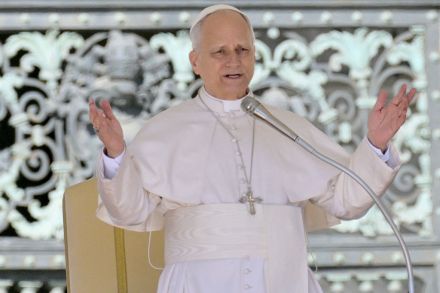
Why does Pope Leo think immigration is a pro-life issue?

On Tuesday evening, the Illinois pope weighed in on Illinois politics. A reporter from the Catholic news outlet EWTN asked Pope Leo XIV about the Archdiocese of Chicago’s decision to award Senator Dick Durbin with a “lifetime achievement award” for his work advocating for immigrants coming to America. “Some people of faith are having a hard time with understanding this because [Durbin] is for legalized abortion,” the reporter said. How should Catholics feel about that? “I am not terribly familiar with the particular case,” the Pope conceded, speaking in English. Then he spoke more broadly, and vaguely, about what it means to be “pro-life”. “Someone who says ‘I am against abortion’ but says ‘I am in favor of the death penalty’ is not really pro-life,” he said.

Pope Leo

I made the Epstein cookies

Is it wrong to bake cookies from a recipe addressed to a pedophile and sex trafficker? When I found the recipe for chocolate chip cookies on page 169 of Jeffrey Epstein’s birthday book, I read and re-read it expecting there to be some sinister inside joke, perhaps a hidden dash of adrenochrome or instructions to “massage” the dough. The surrounding page contains a woman’s redacted photograph and references Epstein’s “mentorship,” while the other 237 feel like a cross between various expressions of human depravity: part ransom letter, part porn magazine and part teenage girl’s diary. Where does an innocent cookie recipe fit in among this?

epstein cookies

Is it really ‘clear’ the Trump-Epstein birthday letter is fake?

The “bawdy” birthday letter from Donald Trump to Jeffrey Epstein, which the Wall Street Journal reported the existence of in July, has been released for all to see. The bawdiness is somewhat wanting – the “small arcs” of the naked woman’s breasts which the Journal described are indeed very small. There’s nothing explicit in its imaginary dialogue between the two men, which begins with a pensive “voice over” saying “There must be more to life than having everything.” It’s creepily cryptic, at worst.  Trump said in July that the letter was a “fake thing’ and a “fake Wall Street Journal story.

The Catholic influencers spreading the word of God

From our UK edition

Vatican City In an auditorium just outside St Peter’s Basilica, the Vatican’s Secretary of State, Cardinal Pietro Parolin, sat solemnly in the front row as a young crowd sang, danced and hopped around to a pop hymn. The cardinal, who is 70, was widely expected to become the pope earlier this year. Instead, he inaugurated the Catholic Church’s first social media influencer conference. Around 1,000 influencers attended last week’s Jubilee of Digital Missionaries and Catholic Influencers. In his opening remarks, Parolin described social media as not just an instrument of communication, but ‘a way of living in the world’.