Life

If we allow dogs at weddings, why not a python?

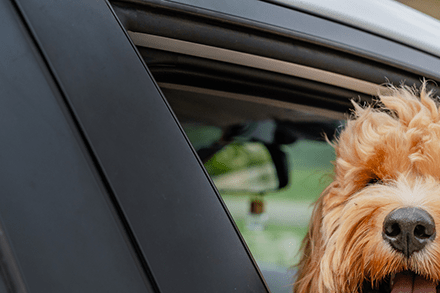
Three women in my Tuesday weights class are getting married. While we squat and thrust and fling our kettlebells around, there’s nonstop talk of veils, decorations, modes of transport to the venue and whether anyone eats wedding cake these days. Men are allowed in this weights class but, oddly, none ever shows up. The major update from one of the brides this week was that the local register office had given permission for her dog to attend the ceremony. She duly bought “a little tux” for Badger, so he could look the part. How do we feel about dogs at weddings?

dogs

The disappointment of DNA tests

​Those sending their saliva to ancestry.com and 23andMe might want to heed the advice Dr. Zaius gives to Charlton Heston as the stranded astronaut sets off to stumble upon his destiny in Planet of the Apes: “Don’t look for it, Taylor. You may not like what you find.” Exhibit A: our friend Peter, descendant along the Quincy line in Massachusetts – you know, the folks who more or less invented New England. Peter took an early iteration of one of those DNA tests and was told, to his astonishment, that he was – according to Science! – significantly Norwegian. Muttering the Yankee equivalent of “WTF,” Peter threw himself into a full-bore exploration of this putative heritage.

Varadero, Cuba’s unbeatable beach

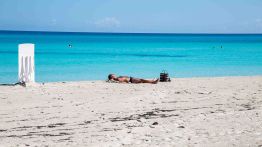
I have a sideline in travel writing, so am lucky enough to have seen some very lovely beaches. Few are as spectacular as Cuba’s Varadero. There are others I prefer – Cossies in the Cocos (Keeling), if you happen to be passing, or the hidden beach at Achmelvich in Scotland, where I shivered between granite walls in my childhood summers. But if classic sun, sea and sand is your thing, Varadero’s 12-mile, palm-fringed spit is unbeatable. It took me years of living in Cuba to visit. I believed that Varadero was all about package tourism – socialist package tourism. Then I went and walked those infinite sands at dawn, the water as clear and intoxicating as absinthe, and got over myself. Now my family and I have moved here for a month.

Canada’s greatest asset

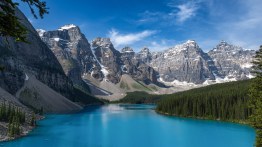
If Donald Trump wants to make Canada the 51st state, I suspect it’s for the wrong reasons. I just got back from a family holiday. We started in Vancouver, then drove to Whistler, before flying to Calgary and taking the Trans-Canada Highway – past places with names like Bearspaw and Dead Man’s Flats – into the Canadian Rockies and Banff National Park. I was telling a friend about the trip a few days ago and actually welled up when I was describing the deep azure hue of Lake Louise; the vastness of the forests and the astonishing beauty of the wildlife – from chipmunks to grizzlies – that seems to co-exist peacefully with the comparatively tiny human population. It was nature on a scale that made human beings feel refreshingly incidental.

Confessions of a dog hater

“Do you like animals?” asked the woman at the door, collecting for a zoo. “No, I hate them, they keep trying to kill me,” I said. That got rid of her. I feel a little ashamed of my hostility to animals, which I inherited from my mother. She was raised in rural Ireland and she loathed the countryside and all its nonspeaking inhabitants. To her, animals were either predators or ingredients, and she particularly despised geese, rats, mice, squirrels and dogs. “Vermin,” was one of her favorite nouns. And she regarded the word “pet” as a self-deluding fantasy. Which seems reasonable. Animals cannot be tamed but their owners can be deceived. Any beast will turn murderous when cornered. Dog-hate entered my soul. It festers there still.

Tears and terror on the front line of the French wildfires

Provence As soon as I opened my front door I could smell it. Along the path, flakes of white ash landed on my arms. Looking north beyond the cliff, I saw a rapidly increasing plume of brown-black smoke. Before long it filled a third of the sky. Not again. Ten years ago, almost to the day, the concrete shack I was renting in the woods a few miles from the village was almost engulfed. Jeremy was having a break and staying with me when a wildfire broke out in the valley below. The smoke and flames looked about a quarter of a mile away and firefighting Canadairs flew low overhead. Friends told us to leave but I refused. I’d left everything behind in Scotland 18 months before and couldn’t face doing so again. Jeremy asked if he’d have to knock me out and throw me over his shoulder.

wildfires

Sports are just a distraction from death

Pascal attributed royalty’s employment of court jesters to the king’s desire to forget or ignore, for however brief a moment, the fact of his own mortality. Carl Trueman, in The Desecration of Man, suggests that today’s star athletes and entertainers owe their remuneration, exceeding by many times the annual salary of the US president, to the major role they play in helping postmodern and post-Christian people to do the same.

sports
steeplechase

Steeplechase is a profoundly English sport

I spent years living in the UK buying and selling horses, but I didn’t know a thing about steeplechase until I moved to Maryland. Despite technically originating in 18th-century Ireland, the equestrian sport of steeplechase feels about as English as it gets. Riders race on thoroughbreds, barreling over tree-like jumps called timbers on long and wild tracks. Steeplechase combines every elite aspect of the horse world: racing, jumping, the rugged outdoorsmanship of foxhunting and the proud formality of English jockey silks. And with a season running through early spring and fall, the crowd of spectators is typically encased in tweed. Maryland, a state founded as a Catholic refuge, exists now as an inheritor of the English aristocracy – at least when it comes to the country life.

lemonade

The meaning of the lemonade stand

It’s a big week in my household. My London-born, New York City-raised eight-year-old is taking an initial tentative step into the glorious, promise-filled world of American capitalism: she’s setting up her first lemonade stand. If you’re not American, or you haven’t spent much time here, you may be wondering why I’m announcing this with the fanfare of an Ivy League acceptance letter. And sure, perhaps it’s evidence that I’m slowly morphing into the Type A Manhattan parent I so like to mock. But also: the lemonade stand occupies a somewhat mythical space in American culture. As well as a way for children to earn a few dollars during the summer holidays, it’s a rite of passage.

My friend the failure – and the star

“Altogether Elsewhere.” The title page of an unpublished travel book caught my eye during a recent clear-out. The author, Matthew Leeming, was a character who deserved to be famous but somehow never made it. He was imaginative, witty, fearless and greedy – wonderfully greedy. He inherited his father’s ceramics company and ran it for years with great success. He loved being rich. “Money,” he used to say wistfully, “eases the pain of being alive.” To pique women’s interest, he claimed to be off-limits. ‘I’m training for the priesthood,’ he confided He invented businesses out of thin air. In Oxford he lived in a neighborhood called St. Clement’s and he created a summer school by printing a ream of luxury notepaper with an imposing letterhead: “St.

matthew leeming

Trapped with the plane passengers from Hell

Under late June’s ferocious heat dome, during what turned out to be an almost eight-hour drive to join Martin Vander Weyer and his guests for three nights in the Dordogne, my car was telling me it wouldn’t start due to a recurring AdBlue emissions fault. And my old phone was pegging out. At home I hadn’t had hot water – or cold – for five days because the boiler was broken. There was also a leak. I had to turn the water on and off at the mains when I needed it. Life was turning out to be more troglodyte than I bargained for. Although the water, when it ran, was chilly, my brain was overheating even before the temperature hit 111 degrees in the Dordogne. Like in the UK, I don’t have enough income or savings to cover all my bills.

plane

Picnicking in the park on July 4

Our July 4 was low on bombast and high on fraternity this year. There were no stealth-bomber flyovers, no tanks treading ominously down Main Street or any other minatory displays of military hardware straight out of a Soviet-era Moscow May Day. Even Lee Greenwood left us alone. I’m told Washington was another story. For the first time since Covid, “Picnic in the Park” was back in Batavia. This much-loved festival of food, music, and smiling, “hey, how ya doin’?” encounters fills the bosky park across the street from the New York State School for the Blind. (One of Batavia’s many ironies is that the best view in town is from the blind school.) For years, my wife, daughter and I manned the Landmark Society’s strawberry shortcake stand at Picnic in the Park.

dsa

What the success of the DSA tells us

The success of the Democratic Socialists of America in the June primaries has prompted much speculation about what it means, not only for the Democratic establishment (the so-called “moderates” who are nowadays hardly that) but for US politics as a whole. The fact is that American politics as a process and a structure – the campaigns, the media coverage, the candidates’ basic strategies, the lies, the subterfuges – has barely changed. What has changed is the mentality of the winning candidates, which cannot be properly described as “political” at all in the word’s recognizable sense; it is simply a white-hot brain core of elemental rage. Rage at what, exactly, it is difficult to say, given its wildly unfocused and incoherent nature. Billionaires? MAGA?

Celebrating American independence… in Cuba

The US ambassador’s residence in Havana has a beautiful garden that steps down past a blue fountain to a hole in the hedge containing an eagle with spread wings. It’s a lovely place for a party. The trouble is, given the current state of relations between Cuba and the US, cocktails have become a continuation of politics by other means. The embassy invites people who disagree with Cuba’s communist government, and Cuba’s interior ministry stops them from coming. The eagle is pertinent. It once stood atop the monument to the USS Maine, a warship that blew up in Havana harbor in 1898, killing 266 sailors. It seems to have been a terrible accident, but the then-assistant navy secretary, Teddy Roosevelt, blamed Cuba’s then-colonial master, Spain.

Britain’s National Health Service believes in fairness – they treat everyone with equal contempt

Edward Gibbon was troubled by a swelling in his lower abdomen. I have the same condition. “Wow. That’s huge,” said my GP as he gazed at the affected area. “Huge?” I said, trying to sound nonchalant. “I wouldn’t know. It’s the only one I’ve ever seen.” My cyst has been expanding steadily for decades and I was told a few years ago that its intentions were peaceful. My new GP was trying to scare me, obviously. I don’t blame him. It’s dull work staring at sick bodies all day and he was trying to amuse himself with a spot of scaremongering. “You’ll need a scan within two weeks,” he added. “Cancerous perhaps?” I asked. He nodded with a sly grin.

national health service

Cuba is a lovesick country

When I first moved to Cuba, an ex-girlfriend said: “That sounds lovely, Ruaridh. What next, Thailand?” The Caribbean island has always come with a certain reputation – the writer A.A. Gill noted that the Cubans are the “most libidinously choreographed people in the world.” It wasn’t the revolution that made Cuba known for sex. The sleaze goes way back, probably to 1492 and beyond (naughty Tainos), but by the 1950s, Havana’s infamous Shanghai Theater was putting on live sex shows, performed by a gentleman called “Superman” – and not because he could fly. Such libertine ways – and the mob that controlled then – were part of the reason Fidel Castro gave for tumbling the then dictatorship.

A tower of nonsense

Western civilization believes in increasingly few Big Things, as the Greek poet Archilochus and the 20th-century philosopher Isaiah Berlin called them. This includes the One Big Thing, God, the numerous philosophical proofs of whose existence many claim to find insufficient and unbelievable. Among those things the West does believe in are the numerous discoveries that scientists have claimed for themselves, such as the recent discovery that the universe is expanding at its edges – that is to say, it is receding from us – faster than the speed of light, owing to the cumulative stretching of space: a thing that seems to me to be far more unimaginable and unbelievable than the existence of a single triune God who created that universe and everything in it.

The Knicks are New York itself

Earlier this year, a poll conducted by the University of Massachusetts and the market research firm YouGov found that 70 percent of Americans have a favorable impression of Dolly Parton, with just 5 percent expressing an unfavorable opinion. That makes the blonde phenom America’s most broadly liked public figure. In other words: old or young, Democrat or Republican, woman or man, black or white – chances are, if you’re American, you like Dolly Parton. Until recently, I was convinced the Knicks were to New York what the 11-time Grammy winner is to the whole country: the last remaining bastion of common ground. Everyone, I thought, had at least a soft spot for the Knicks. But now, though, I’m reconsidering.

The highs and lows of life as an artist

Provence “Painting is a stupid job. Do something useful and train to be a nurse,” commented a man beneath a column I wrote last month. Although well used to the vitriol leveled at artists from some quarters, I found this particularly annoying. I was a general nurse from 1981 to 1985, after which I completed psychiatric training and spent five years working in acute psychiatry in the East End of Glasgow. That was followed by a year as a district nurse and seven more as a practice sister. I nursed because my lower-middle-class background, with its discouragements and lack of contacts, didn’t equip me even to consider somehow making a living from the two things I’d loved most since I was a child: books and art.