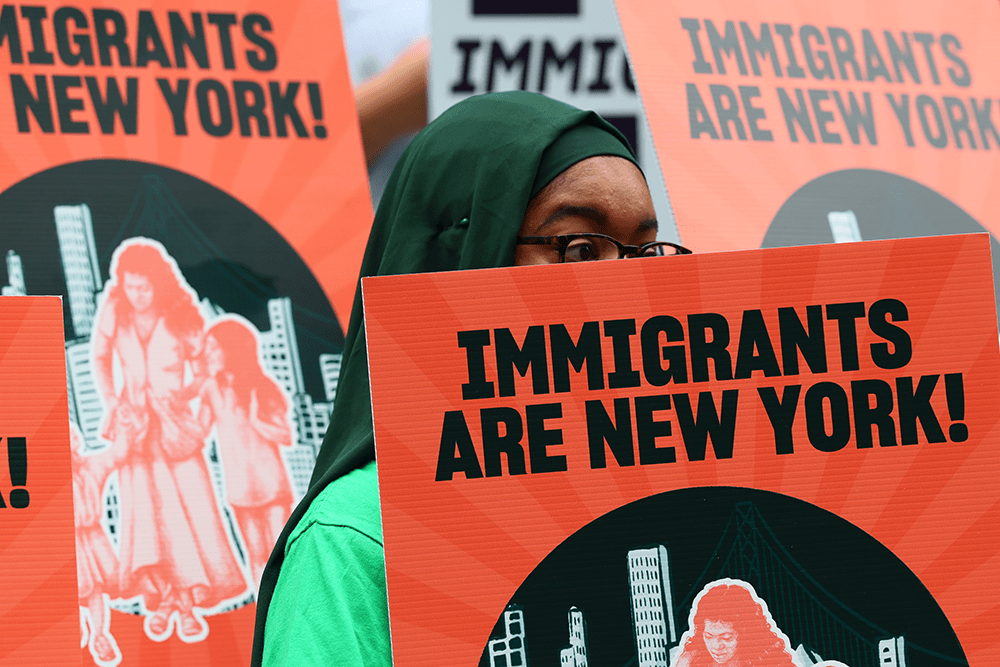


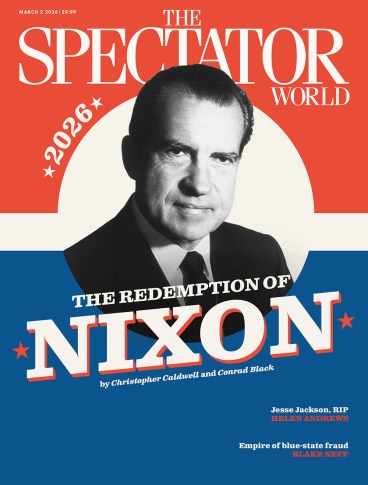
Every couple of years a columnist-cum-novelist will inevitably stoop to shameless self-promotion. In my defense, at least the novel released this month is germane to the political moment. Lest its simple title, A Better Life, come across as lame, I asked the designers of my British and American hardback covers to use imagery that conveys the book’s focal subject matter: immigration.
See, proponents of unfettered mass migration have eternally assured us that most illegal immigrants – or as the Biden administration instructed federal law enforcement to call them, ‘newcomers’ – are merely seeking ‘a better life’. This explanation is routinely trotted out as an irrefutable justification for a potentially near-infinite imposition of foreigners on western polities. After all, who doesn’t want a better life? Isn’t that a natural human yearning, and wouldn’t it be commensurately inhuman to hinder such innocent striving?
By implication, there isn’t a soul you should be able to keep out of your country if he or she wants to live there
This is a rare novel that looks more at the experience of a host population subject to a few too many visitors (as my protagonist notes, we can’t call their arrival an ‘invasion’ even though that’s what it is), rather than exclusively sympathizing with the questing immigrants themselves. Implicitly, then, my title presses the question: better life for whom? For the newcomers, without a doubt. Better for the providers of all that hospitality? Not necessarily.
Further, what does it mean to seek a better life? Everything we do is motivated in some fashion by a desire for a better life. If your life is not at least a tiny increment better with a new coffee grinder whose switch doesn’t keep shutting off, you don’t buy it. You take a new job because in relation to some factor your life will improve: a higher salary or lower property prices and so a more spacious home. You get out of bed because your life will be better not sleeping all day. You loan your extension ladder to your next-door neighbor because you like the feeling of being gracious, and a life in which you can both rely on each other for simple favors is better. I find a loo because when my bladder isn’t bursting my life is way, way better.
My point is to decode this would-be unassailable excuse for the wholesale violation of western immigration law. If I cross into another people’s territory without permission and stake a claim to remaining there purely to attain ‘a better life’, you may crudely translate: ‘I want that.’ I want what you have for myself and I am going to take it.

For the purveyors of this pat expression, which mysteriously excuses millions of strangers imposing themselves and their needs on stressed welfare states to which they have contributed nothing, this mere wanting of something obliges prosperous countries to satisfy that desire. But do we give people anything they want merely because they want it? I might want a warmer winter coat but (before the advent of wholesale shoplifting with impunity) I may not have one unless I fork out the cash. We impose conditions on satisfying other people’s desires, and sometimes we say no. Such as, you may want a lax, permissive immigration policy in Minneapolis – you think you’d have ‘a better life’ if your city weren’t subject to deportation raids – but your party lost the last presidential election, so you can’t have the policies you desire until and unless your side wins the next election.
Dig a bit deeper, and the ‘only seeking a better life’ advocates are playing on a guilty sensation of undeservingness in indigenous populations. (The word ‘indigenous’ has hitherto been reserved for, say, the Maori and the Cherokee; I think we should claim it for the ancestrally English and the broader American citizenry.) In comparison to the places many migrants leave, western countries are more affluent, orderly and safe. For the indigenous to reserve these advantages for themselves alone seems piggy. Surely fairness demands learning to share.
Underneath that ‘better life’ nonsense is a flat-out demand for open borders. These people want their better life, damn it, and you’ve no right to keep them from getting it. By implication, there isn’t a soul you should be able to keep out of your country if he or she wants to live there. If this means inviting the forces of chaos into your territory and potentially turning your home into the same sort of pit latrine that migrants flee, so be it.

I’m reminded of FDR’s famous but unwittingly catastrophic ‘Four Freedoms’ speech of 1941, in which the president promoted among four vital American liberties the ‘freedom from want’. He thus opened the door to the vast, ever-expanding welfare state which, in guaranteeing ‘freedom from want’ for some, removed the freedom from mass asset confiscation from everyone else. The de facto open-borders activists screaming ‘No hate! No fear! ICE has no business here!’ in Minneapolis (for you don’t maintain any kind of a serious border without robust deportation; see also: Britain) are effectively declaring FDR’s right to ‘freedom from want’ for the whole world.
A Better Life was inspired by New York City’s then-mayor Eric Adams’s 2023 announcement of a program that he never actuated: to pay New Yorkers to put up migrants in their spare bedrooms. I brought that stillborn program to life, and one Brooklyn family’s inviting a Honduran migrant to stay has dire consequences. During Joe Biden’s national Welcome Wagon era, New York was contending with hundreds of thousands of foreigners attracted to the city if only because its worthies had installed yet another idiotic ‘freedom from want’ initiative: the ‘right to shelter’, obliging the city to house anyone without a kip for free. Total disaster. What a surprise.
For anyone interested in the most complex and contentious issue of this century, I’ll be in London talking with Robbie Millen for the Times Book Club on 18 February and Allison Pearson and Liam Halligan for Planet Normal on 24 February. Apropos of Alex Pretti, please leave your sidearms at home.






Comments