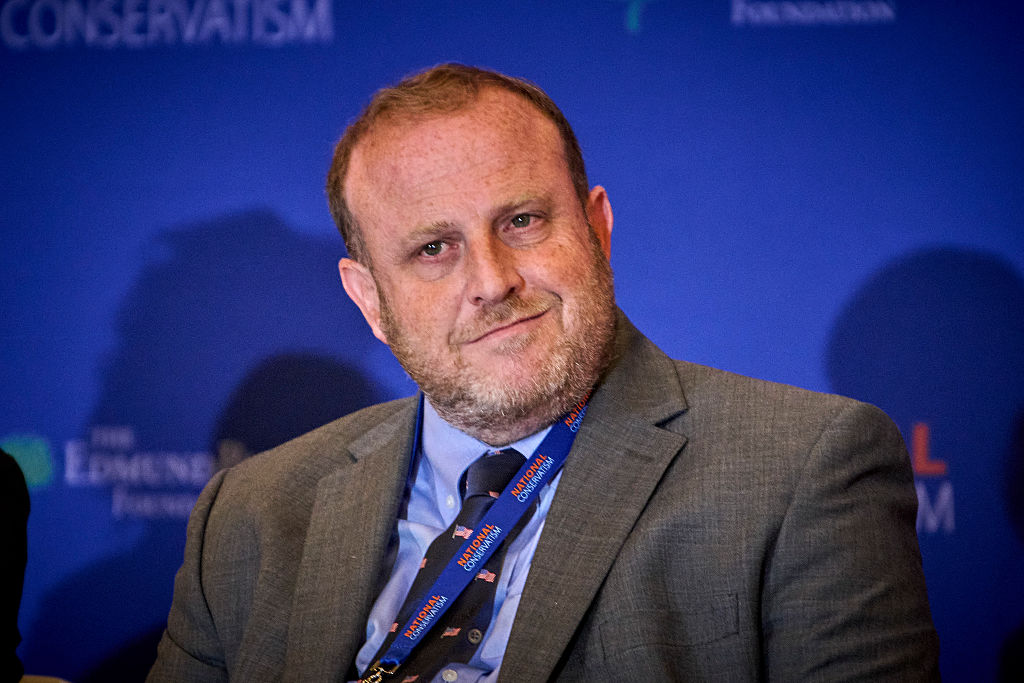
It’s a bit difficult to explain a Senate confirmation process to those who haven’t gone through it. It is, to put it in a single word, intense. Years ago, the first time I had a hit piece written about me, I wanted to crawl into a hole in the ground and die. During my confirmation hearing, my attitude was more, “Oh, Chuck Schumer is denouncing me from the Senate floor as a racist, anti-Semitic, white supremacist. It must be Monday.”
I still haven’t even bothered to read the vast majority of press accounts or descriptions of me that have come out in the days since the hearing. It’s important in these processes to always know and remember who you are, because if you know that, what they are saying you are just doesn’t matter all that much. The goal of your confirmation opponents is to take away your identity and sense of self. That is what is most important for you to preserve throughout the process. And it’s often a long process. In my case, it began even before Donald Trump’s inauguration, when a senior state department official offered me the role of assistant secretary of state for international organization affairs, pending the approval of the White House. That approval came formally last June, after a flurry of background checks, disclosures and interviews. I then waited six months for a hearing that was always going to happen “very soon.” My nomination eventually expired, before President Trump renominated me in January.
At almost every hearing, there is a designated “victim.” If you scan around your fellow nominees and can’t quickly figure out who that is, then it is you. My hearing matched me with two uncontroversial nominees – one for another assistant secretary of state position and the second for a director of the Asian Development Bank. These are the sorts of people, with no significant public controversies, who are “supposed” to be in these roles. Joining them was Billy Long, an auctioneer turned folksy former Missouri representative who has been nominated as ambassador to Iceland. He had a delightful way of talking around questions like a front-porch storyteller without ever answering them and, while he weathered some controversies in his past, they paled in comparison to mine, almost all of which relate to my writing, which addresses many controversial topics related to race relations and culture. I ended up fielding maybe 80 percent – a conservative guess – of the questions at the hearing. Mr. Long took almost all of the remainder.
I had gone into the situation very clear-eyed about what lay in store. I expected it to be brutal and I was not disappointed. As a candidate, I went through multiple so-called murder boards both official and unofficial (one set up by friends in the White House). These are mock hearings in which candidates are asked many questions related to politics, policy and personal matters. I met not just once, but three times with Democratic party committee staff, flying each time to Washington, DC at my own expense.
When the hearing day arrived, I was ready to go. I felt some degree of nervousness when I woke up, but by the time I arrived at the hearing I was calm. The hearing itself was actually much more upsetting to my friends, especially those unfamiliar with politics, than it was to me. The Democratic senators mostly circulated in and out of the room, did their ritual staff-written harsh denunciations of me and then after a brief back and forth with me, left for their next meetings.
When I attempted to defend my character and my record, I was almost invariably interrupted. “See it as theater,” I was told beforehand by my nominations team. Friends, knowing that I relish good intellectual combat, were surprised that I was able to remain so unmoved throughout the onslaught, and that I rarely directly challenged the Democratic senators’ assertions, no matter how ridiculous. But as nominees, we are trained to “avoid the argument” not “win the argument,” and calmness is at a premium.
After an hour and a half, it was over. I left the room and went back to my normal life, or what was left of it, letting the internet debate my character and performance in heated terms. There should be a better process for selecting senior government officials, but as long as this is the process we have, there will also be men and women willing to undertake it. The show must go on.
Jeremy Carl is a senior fellow at the Claremont Institute and President Trump’s nominee for assistant secretary of state for international organization affairs.




Comments