


On the fourth floor of Selfridges, in London, is the children’s toy department. Most of the vast space is given over to soft toys – mounds of synthetic fur, thousands of little beady eyes – and when I visited last Saturday afternoon the customers were almost all adults. I spent two hours there, standing by a tower of little Paddington bears, watching the shoppers in the queue for the register, and it was eye-opening.
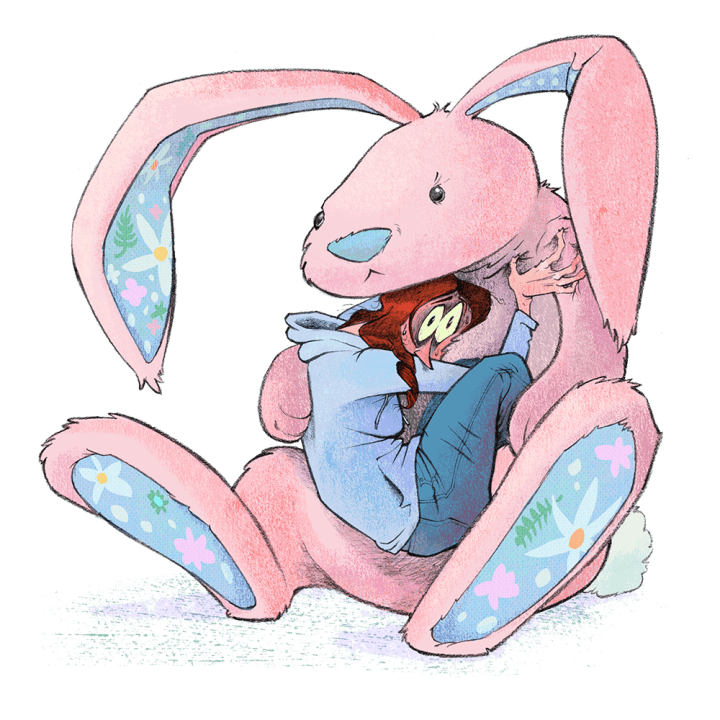
Almost no one was buying for a child. I saw two Chinese women with white toy lambs, a 17-year-old boy with a dragon, what looked like drug dealers waiting in line for Pokémon cards, and a genuinely troubling number of sad-looking women in their mid-twenties clutching long-eared toy bunnies made by a company called Jellycat. Often, the bunny-cuddlers were accompanied by their fiftysomething mothers, and sometimes they’d hold out the bunnies at arm’s length to admire them the way you might a baby. I counted eight of these mother/daughter bunny pairs.
Toy sales in both the UK and the US increased by around 6 percent last year; more and more adults are buying products designed for children. There is talk of a great age-regression – and by the time I left Selfridges, I understood that it is real.
Half of all visitors to Disney World are now grown-ups with no children
This isn’t the same phenomenon as the eternal teenager. In the late 1990s the writer Robert Bly, early guru of the manosphere, wrote The Sibling Society, accusing the young adults of the West of being perpetual adolescents, and those of us who grew up in the 20th century know all about that. We all knew, still know, Peter Pan characters, the men who stayed forever 17 even as their hairlines receded: restless, Porsche 911, not safe with teen girls.
But eternal teens are defined by their appetite for sex and risk. As the millennium came and went, the adults of the West regressed still further, away from rebellion into childhood, backwards from adolescence into pre-pubescence. It was in 2000 that grown-ups started flocking to movies made for children: Harry Potter and Shrek. Adult coloring books and adult ‘plushies’ (soft toys) appeared. The Spectator, ever prescient, ran a piece by Harry Mount on the infantilization of adult life. Publishers found that books written for 12-year-old girls were being read most by grown women.
This was the first real emergence of the ‘kidult’ market in the West and companies woke up to the profit potential. In Japan, kid culture, or ‘kidcore’, had already taken hold and toy companies were raking in adult money. In 1990, Sanrio – the Japanese company behind Hello Kitty – was skint. By 2000, the firm was worth more than $1 billion. The Kawaii (cute) aesthetic had spread across grown-up Japanese culture like pondweed, suffocating everything else. Last year, Sanrio’s value briefly topped $13 billion.
In America, Disney led grown-ups down the path to Neverland. It began to offer weddings in Disneyland, and targeted ads promised ‘a world of magic without the kids’. Almost half of all visitors to Disney World are now grown-ups with no children. ‘Non-family visitors’ Disney calls them. They call themselves ‘Disney adults’ and insist that they’ll never grow out of it. Disney til’ they die. If there aren’t already Disney-themed care homes, where geriatrics can wait in line to have Mickey Mouse change their catheter, it can surely only be a matter of time.

Japan and its grisly Kawaii culture may have infected the West, but Covid, the accelerator of every dismal trend, gave it a boost. Toy sales to adults in the US and the UK rose dramatically in lockdown, and Lego was so sure that this new market was stable that, in the summer of 2021, it opened a new flagship store in New York designed specifically with grown-ups in mind: a place for AFOLs (Adult Fans of Lego) to meet and arrange playdates.
In Selfridges, on my field trip, the adult Lego selection was on shelves at adult eye height, the way porn mags once were. I saw huge elaborate Lego Formula 1 cars, complicated Lego plants and, for Valentine’s Day, a Lego model of Paris called ‘City of Love’– for couples to build together and for men to complete in the small hours, long after the bored wife has gone to bed.
Serious newspapers now write serious reviews of adult Lego. For AFOLs in 2026, Erik Erickson of the New York Times recommends a replica of a 1970s transistor radio with Lego faux-wood paneling, which once built, he says, plays 12 small audio clips, including a surf-rock rendition of ‘Everything Is Awesome’ from The Lego Movie. Meanwhile, the Lord of the Rings Rivendell set costs £429 and includes elves with special bendy limbs so that they’ll sit around the Council of Elrond.
Colorful! Playful! Creative! The companies that profit attempt to portray kidulting as joyful nostalgia. Jellycat, the great British soft toy success story, has the tag line: ‘For the joy of it.’ But though Jellycat itself sure feels the joy – it doubled profits in 2024 – for the most part kidults seem sad. They’re not frolicking, or revisiting a carefree childhood they didn’t have, so much as alleviating chronic anxiety. An online review of Lego’s City of Love reads: ‘Definitely therapeutic. I finished it after work and it really helped ease my mind.’ The bunny girls queuing for the till compulsively felt and stroked the soft fur as they waited, and kneaded the little feet.
On Jellycat’s website, the company says: ‘Ask any collector and they’ll probably have a Jellycat story – about the one that’s always first into the suitcase, or the one that helped them through a tricky day.’ They know very well they’re selling medication.
One of the world’s most successful modern toy companies, ‘Build-A-Bear’, allows paying customers to design and make their own teddies. Adult ‘Build-A-Bear’ enthusiasts are a rapidly growing part of their market, but what are the adults doing with their bears, I wondered. Are the bears on the bed? Out and proud in the front room? Online, I found a group of adult Build-A-Bear fans discussing how they’d begin to cope if they couldn’t take their bears to work. The general consensus was that nobody could be expected to ‘regulate their emotions’ without a soft toy. ‘I take my Build-A-Bear Ninja Turtles in with me,’ said a 23-year-old shop assistant. ‘It helps me deal with my anger issues.’ Think of Sebastian Flyte as the patron saint of the 21st century.
How are any of these overgrown toddlers going to grow up enough to have children of their own – to be the comforters not the comforted? The answer increasingly is that they’re not. Men over 65 are now more likely to get married than those under 25, and I only wish that was because the under-25s are having too wild a time to settle down. Where Boomers once had orgies, the kids now have ‘cuddle parties’, where you can go just to be held, in a safe space, by strangers. Held. Seen. What happened to these people?
Back at the end of the last century when Robert Bly was examining the phenomenon of the eternal adolescent, he blamed the parents of the latchkey kids of the 1980s, and the spirit of individualism that had blown apart and atomized the American family. These children were neglected, he said, and, feeling no duty of care to their elders, they rebelled and became selfish.
The kids now have ‘cuddle parties’, where you can go just to be held, in a safe space, by strangers
The kidults of the 21st century are the products of a very different sort of parenting. If they don’t feel safe and can’t summon the inner resources to calm their anxieties, it’s more likely the fault of ‘curling parenting’ – named for the mothers and fathers who skate in front of their precious children, sweeping every obstacle out of their way. No friction means no resilience, so they create not rebels but nervous wrecks in need of constant soothing. Think back to those bunnies, held out like babies.
Now that you’re mentally prepared, I can tell you what was going on at the far end of Selfridges’ fourth floor last Saturday.
Jellycat makes soft toy animals, but it’s also cornered the market in cute toy food: little brown plush buns with faces, baguettes with faces, onions with faces, chips in hats. And the latest Jellycat wheeze is to ‘serve’ customers this fake furry food in a make-believe shop setting. I’m not joking about this. It’s a real and popular activity. You have to pre-book. At FAO Schwarz in New York, Jellycat have a ‘diner’ where kidults can buy soft toy hot dogs and pancakes with arms. In Paris there’s a Jellycat ‘patisserie’ where fans can be ‘served’ little cream puffs with eyes. And here in London, there is a chippy.
I left my post by the checkout line so as to bring you an authentic frontline account, and here’s how it looked from behind a shelf of ‘Mr Salty’ knitted salt cellars. The customer was a young twentysomething woman. She stepped up to the ‘chip-shop’ counter and looked at her menu. I have a copy of the Jellycat menu myself so I can tell you what she saw: a smiley fish pie (£40), a toy piece of fish called Lily (£40), and a packet of grinning ‘cozy chips’ (£50). ‘The chips please,’ she said, and so another woman, dressed in a chip-shop apron and hat, reached behind her into a pretend deep-fat fryer and pulled out the cozy chips.
Then she put them on newspaper in front of the girl. She handed the customer a Mr Salty: ‘Don’t forget the salt! Shake, shake, sha-ake!’ The lady customer looked shyly thrilled. After the salt, Mr Ketchup: ‘Tap, tap, ta-ap!’
The cozy chips were wrapped up in a bundle and the two women rounded off Jellycat’s ‘fish and chip experience’ by playing catch with it. It was like pass the parcel at a five-year-old’s birthday party, and perhaps that was the point. After a lifetime of being congratulated for every small success, for putting on their shoes, young adults just want someone to say ‘Good job!’ again. They want reassurance, affirmation, to be the princess at the party.
On the way home I stopped by Tottenham Court Road subway station to look in on the Outernet building, a skyscraper courtyard made entirely of LED screens. The ‘largest digital exhibition space in Europe’. An ‘immersive experience’. Sometimes there are storm clouds on the overhead and surrounding screens, or spiraling tunnels, or cartoons. That evening, the screens were displaying a jungle bright with butterflies, and men and women on their way home from work were watching as if hypnotized, like small children, reaching out their hands.






Comments