
The old saying, “It’s an ill wind that blows nobody good,” has received strong reinforcement during the recent unprecedented cold spell in the Palm Beaches. The rest of the world almost certainly thinks we lead a sybaritic life down here with the perennial sunshine taking the edge off the normal hardships that everyone else has to contend with.
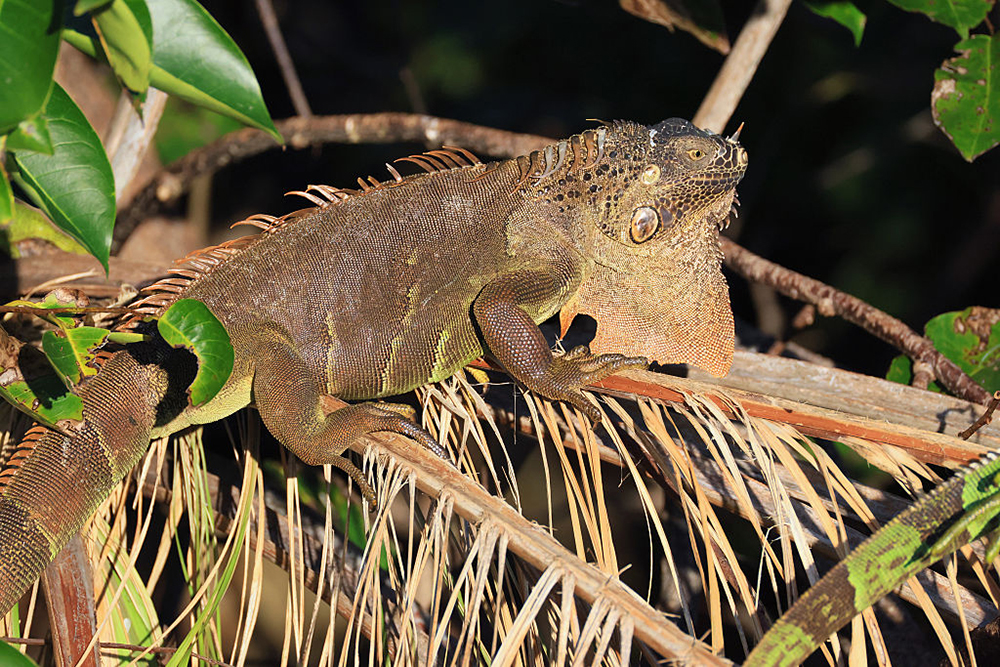
But one unusual side effect of the recent cold spell (and though it wasn’t cold by, say, Canadian standards, it was the coldest spell we’ve had here in 27 years) was the carnage it wrought on the iguana population. We have a love/hate relationship with iguanas here. When they first arrived in the early 1980s they were regarded as cute, but a decade later the mood changed. They are colorful reminders of our reptilian past, but they are also pests that the northern reaches of the US don’t have to contend with.

Being well camouflaged, most of the time they keep themselves to themselves, but they can damage flood-control canals, their burrowing can cause power outages and they enjoy feasting on the gray nickerbean, which is the host plant for the federally endangered Miami blue butterfly. They can grow to be six feet long and weigh as much as 17 pounds.
So you can imagine the reaction when, recently, the temperature dropped into the 30s and more than 5,000 – 5,200 in fact – of these beasts were “cold stunned,” going into a torpor state brought on by the cold, and simply started falling out of the trees where they were hiding.
The Florida Fish and Wildlife Conservation Commission swung into action, abrogated temporarily the law that forbids the handling and transporting of the creatures, and instead asked locals to collect these stunned animals and transfer them to local reception centers where they were put out of their misery by a special two-stage process of euthanasia.
This involves (look away if you’re squeamish) inserting a small rod into the top of the iguana’s head and “scrambling” the contents, or using what’s called “multi-directional movement, ensuring destruction of the entire brain.” This was approved by the American Veterinary Medical Association, according to Lisa Thompson, a spokesman for the FWC Division of Habitat and Species Conservation.
But here’s the rub. The FWC last year announced a partnership with Inversa Leathers. This Miami-based firm is already working with FWC contractors to collect Burmese pythons to turn their skins into “high-fashion boots, loafers, belts, wallets, jackets, dresses, skirts and purses.” Inversa also specializes in converting iguana skin into similar luxury accessories “in a number of colors and finishes.”
The company is very conservation-conscious and told a local rag here that each iguana hide “restores up to 80 feet of earth that supports seawalls and other critical foundations,” prevents 20 power outages a year and “saves $32,000 worth of losses for farmers.” The cold weather (by our standards) continues, but we have been warned that, as it goes on, any dead iguanas not removed to the euthanasia centers “will start to stink.” Nothing sybaritic in that.
On the other hand, the sudden acquisition of 5,000 hides is excellent news for Inversa and the luxury trade. However, it’s a private company, not publicly traded, so it can’t be invested in.
One unusual side effect of the recent cold spell was the carnage it wrought on the iguana population
The cold weather didn’t have the same dramatic effect on the Palm Beaches’ other exotic wildlife: manatees, the marine mammals otherwise known as sea cows. Some 160 of them – the highest number spotted this season – were observed in what has come to be called Manatee Lagoon, a stretch of water that sits near a Florida Power and Light Company power plant that releases heated water into Lake Worth Lagoon. Although there are some 8,000 manatees in Florida waters, they are still regarded as an endangered species. Cold weather is one reason for this, though the leading cause of manatee death is through unfortunate collisions with boats.
What are we to make of the case of Lexie Lawler? While the Palm Beaches can be kind and humanitarian in relation to animals, its record on humans is more equivocal. Ms. Lawler is a labor and delivery nurse who posted on TikTok a message about Karoline Leavitt, Donald Trump’s press secretary, who is pregnant, saying it would “give me great joy” if she had a painful and suffering birth, specifically to experience a “fourth degree tear,” a most painful complication during pregnancy. She then added: “I hope that you fucking rip from bow to stern and never shit normally again, you c***.”
Yes, this is an awful, ugly, vulgar and dismaying sentiment to wish upon anyone, doubly so in someone of her specialty, and she was, perhaps rightly, fired from her job in the hospital where she worked. But now James Uthmeier, Florida Attorney General, has announced that she is banned from working anywhere in the state. A GoFundMe page supporting her case had raised something more than $12,000 by the end of January. According to those offering support for Lawler, “she did not commit malpractice, harm a patient, or have any prior complaints. She has ten years of nursing. She spoke off the clock, as a private citizen. We are now fighting not just for her livelihood, but for the principle that professional licenses should not be used in this way.”
It’s a difficult one and so it’s a relief to turn to the latest Palm Beach fad: “burping” your house or apartment. This is, apparently, originally a German idea based on their practice of “Lüften,” which means something like “airing out.” To “burp” your home, you open all the doors and windows at the same time and leave them open for 15 to 20 minutes. This, it is claimed, refreshes the premises as nothing else can, and stops the air inside from getting stale and ensures we all feel healthier. And perhaps it will help our mood too and stop us from “burping” our antisocial outbursts on social media.






Comments